

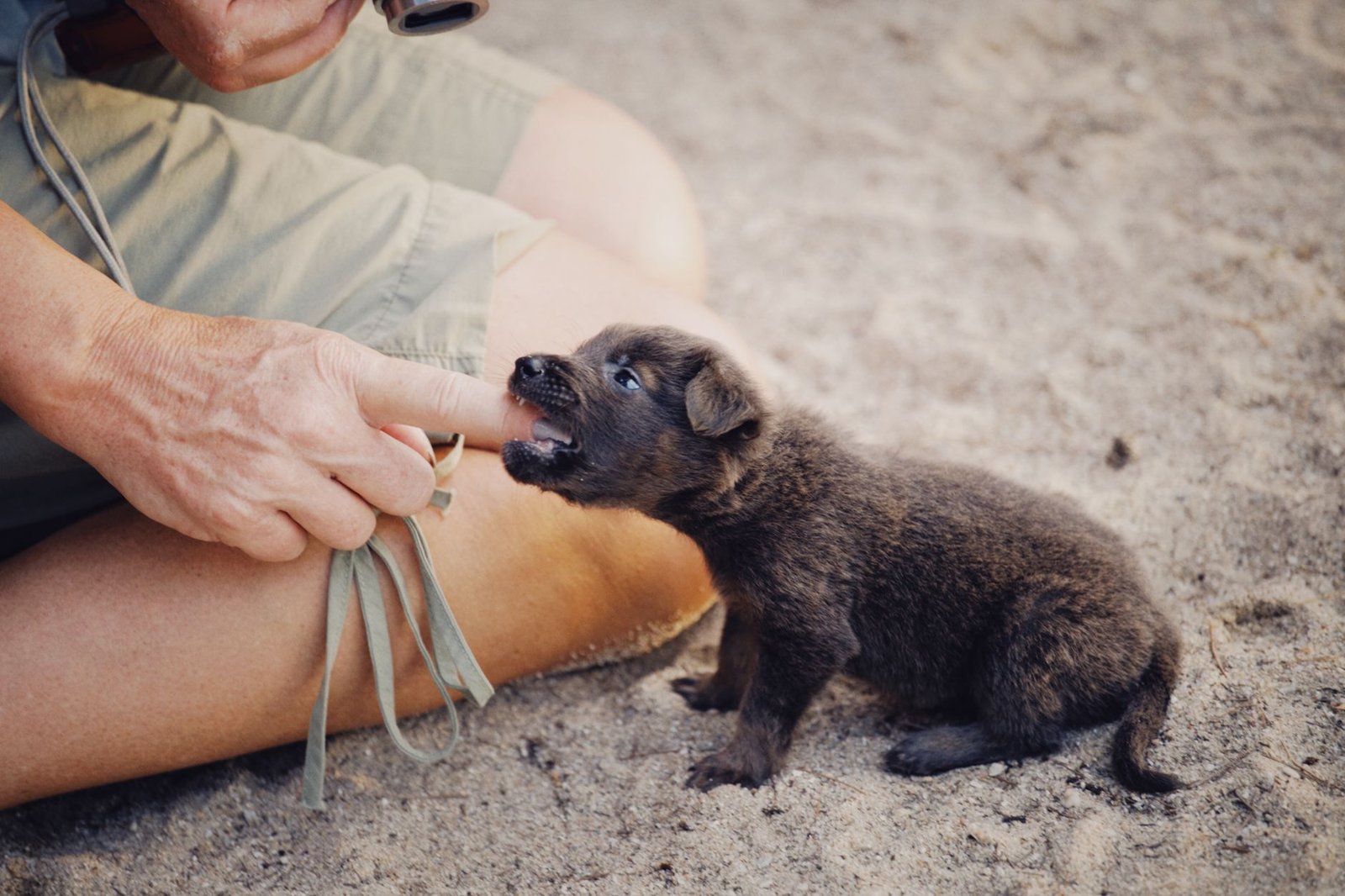
Those tiny puppy teeth are sharp. Like, really sharp. And it can feel like your sweet new puppy has turned into a little land shark overnight.
Here’s the good news: puppy biting is normal, and you can teach a better habit without yelling, swatting or scary tricks. These puppy biting training tips are kind, simple and they actually work with a bit of patience.
Why puppies bite so much
Biting isn’t a sign of a “bad” dog. It’s how puppies explore and play.
- Teething: adult teeth push through from about 3 to 6 months, and chewing feels good.
- Play: puppies wrestle with their mouths, the same way they did with littermates.
- Exploring: a mouth is a puppy’s hands.
- Overtiredness: a cranky, sleepy puppy often bites harder, not softer.
Littermates teach each other how hard is too hard. Your job is to keep that lesson going, gently.
Why punishment backfires
It’s tempting to tap a nose or hold a mouth shut. Please don’t.
- It can make biting worse. Many puppies treat rough hands as more play.
- It can teach fear. A puppy who’s scared of hands may bite for real later.
- It doesn’t tell them what to do. Puppies learn fastest when you show them the right choice.
Skip squirt bottles, shaking cans, pinning your puppy down and spraying anything in their face. Calm and consistent beats loud and scary every time.
Step 1: Always have a toy within reach
The core of the whole plan is simple: swap hands for a toy.
- Works for puppies, adults, rescues and seniors
- One page per problem, step by step
- Printable PDF, free
- Keep a soft tug toy or chew in every room, and in your pocket.
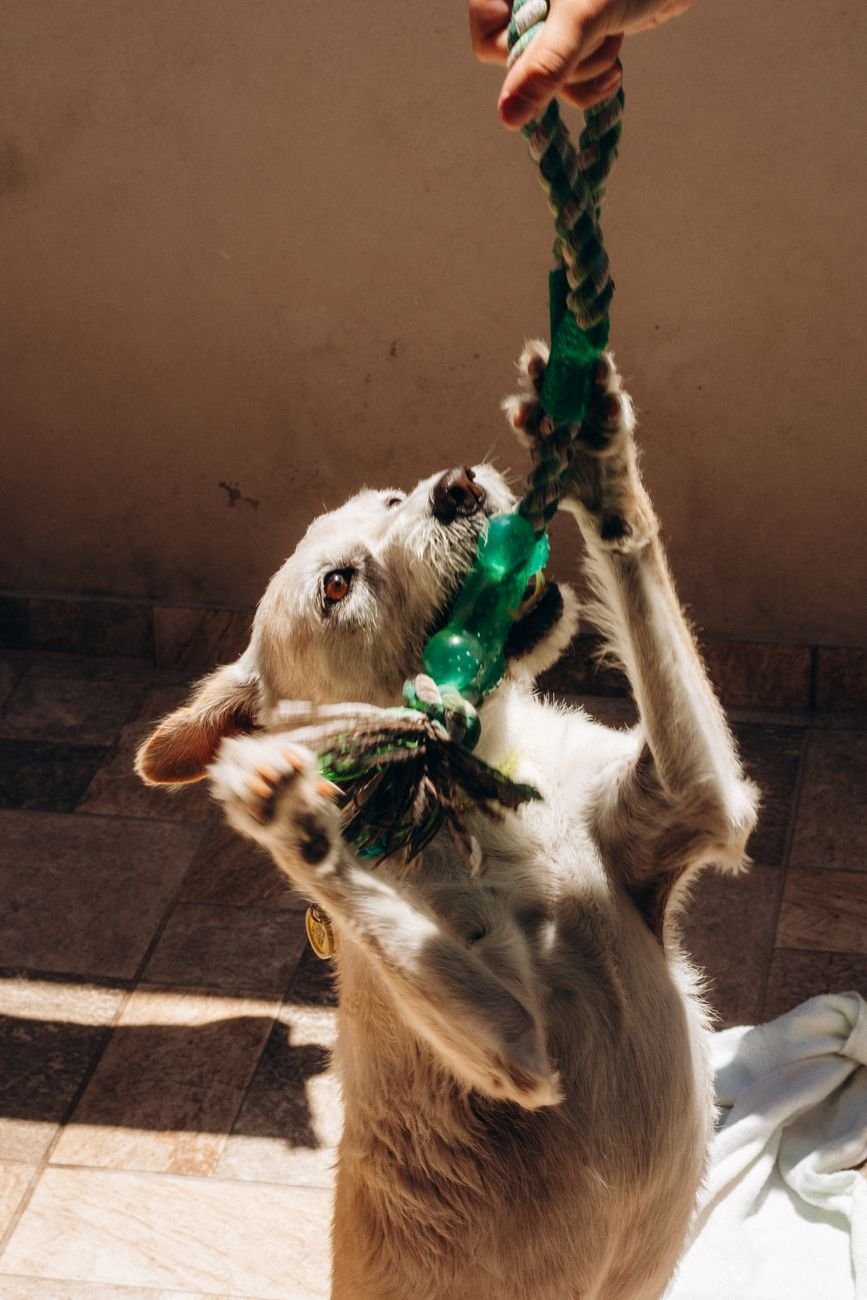
- The moment teeth land on you, offer the toy and make it move. Toys that wiggle are more fun than ankles.
- Praise as soon as your puppy bites the toy.
Homemade options work great too. Try these easy homemade dog toys, and always supervise so nothing gets swallowed.
Step 2: Pause the fun when teeth hit skin
If the toy swap doesn’t work and your puppy keeps going for your hands, the game stops.
- Calmly stand up, fold your arms and look away for 10 to 20 seconds.
- If your puppy keeps biting, step over a baby gate for a moment.
- Come back and start playing again, gently.
The message is “biting people ends the fun.” It’s not a punishment. It’s a pause.
Step 3: Protect nap time
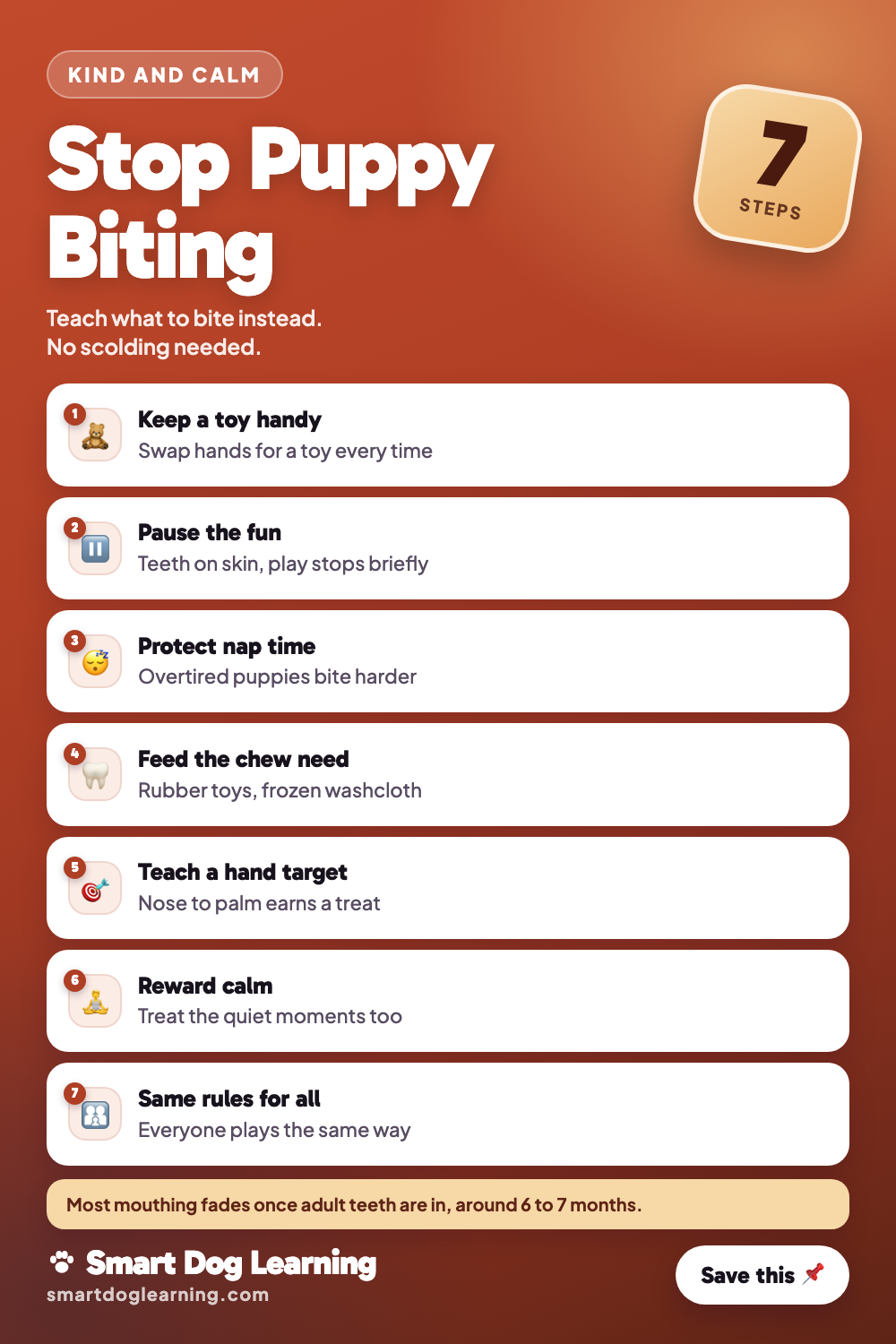
This one surprises a lot of new owners. Young puppies need a lot of sleep, often 18 hours a day or more.
- Watch for the zoomies and wild biting in the evening. It usually means “I’m overtired.”
- Put your puppy in a crate or playpen with a chew for a quiet nap.
- Build naps into the day after play, meals and walks.
A well-rested puppy is a much softer puppy.
Step 4: Give teething puppies the right things to chew
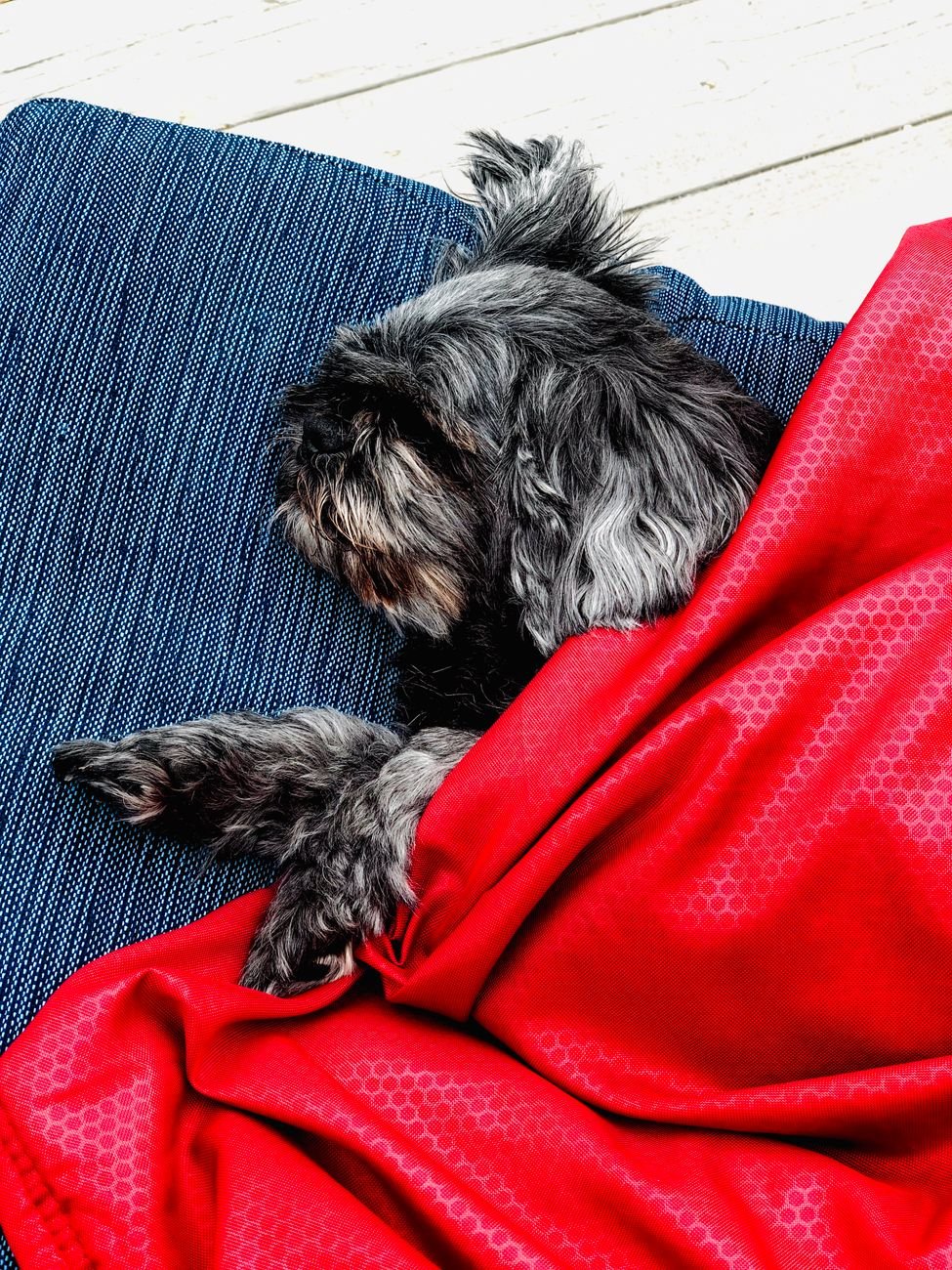
Teething is uncomfortable, and chewing helps. Give that need a safe outlet.
- Rubber chew toys sized for your puppy. Stuff them with a little wet puppy food and freeze.
- A frozen wet washcloth, twisted into a rope. Supervise and take it away if it starts to shred.
- Rotate toys every few days so they stay exciting.
Skip very hard chews like antlers or bones, which can crack puppy teeth.
Step 5: Teach a hand target
A hand target gives your puppy something fun to do with your hands besides biting them.
- Hold your flat palm a few inches from your puppy’s nose.
- When they sniff or bump it, say “yes!” and give a treat.
- Repeat 5 to 10 times, a few sessions a day.
- Add the word “touch” once they’re doing it reliably.
Now when your puppy gets mouthy, ask for a “touch” and reward that instead.
Step 6: Reward the calm moments
We tend to notice puppies only when they’re being naughty. Flip that around.
- Drop a treat between their paws when they lie quietly.
- Pet slowly and calmly. Fast, rough petting often starts a bite fest.
- Try a lick mat or snuffle game to burn energy without teeth on you.
For more calm-brain games, see these indoor dog enrichment ideas.
Step 7: Get everyone on the same page
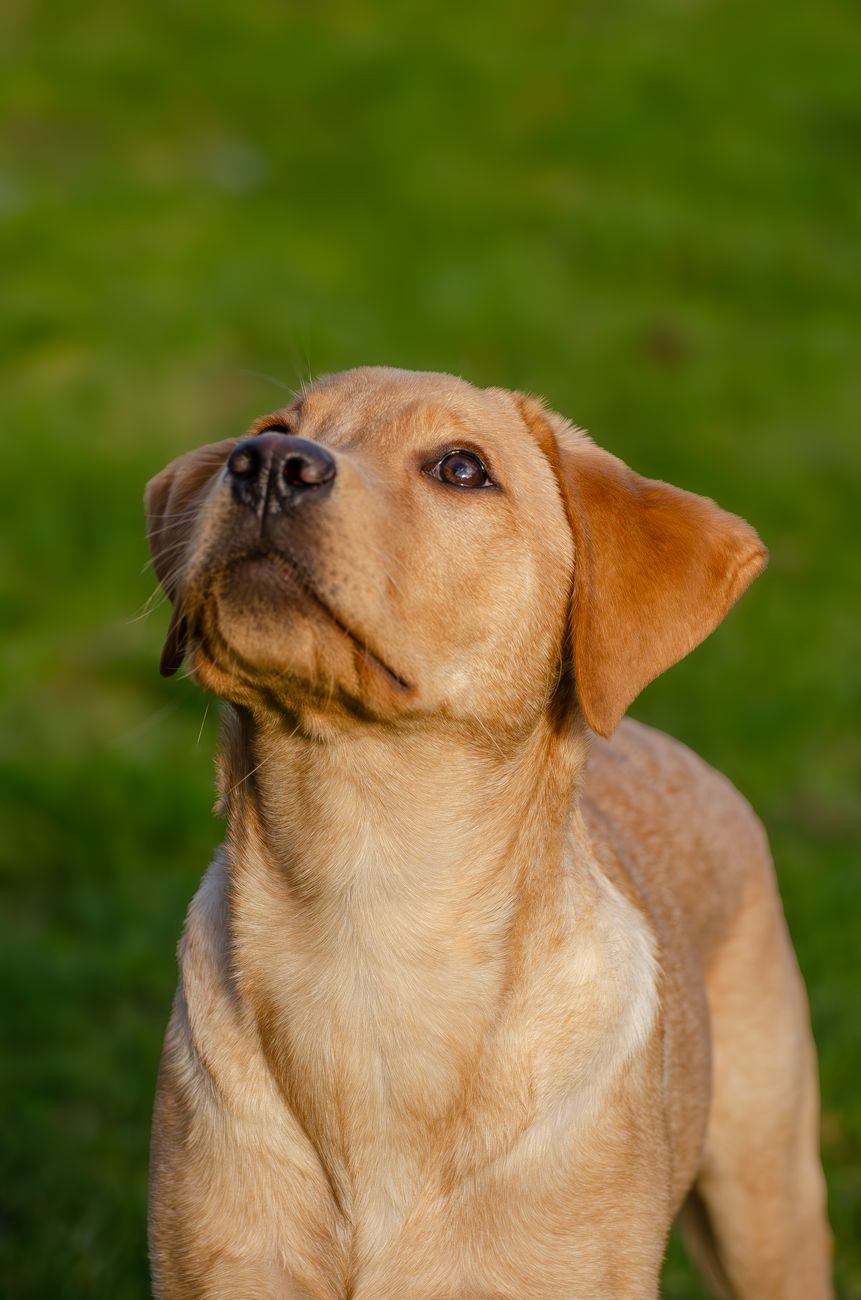
If one person plays rough and another doesn’t, your puppy gets mixed messages.
- No hand wrestling or “get my hand” games, for anyone.
- Everyone keeps a toy handy and uses the same pause.
- Kids stay calm. Running and squealing invites chasing and nipping, so ask kids to stand still like a tree.
- Supervise kids and puppies together, every time.
What about yelping “ouch”?
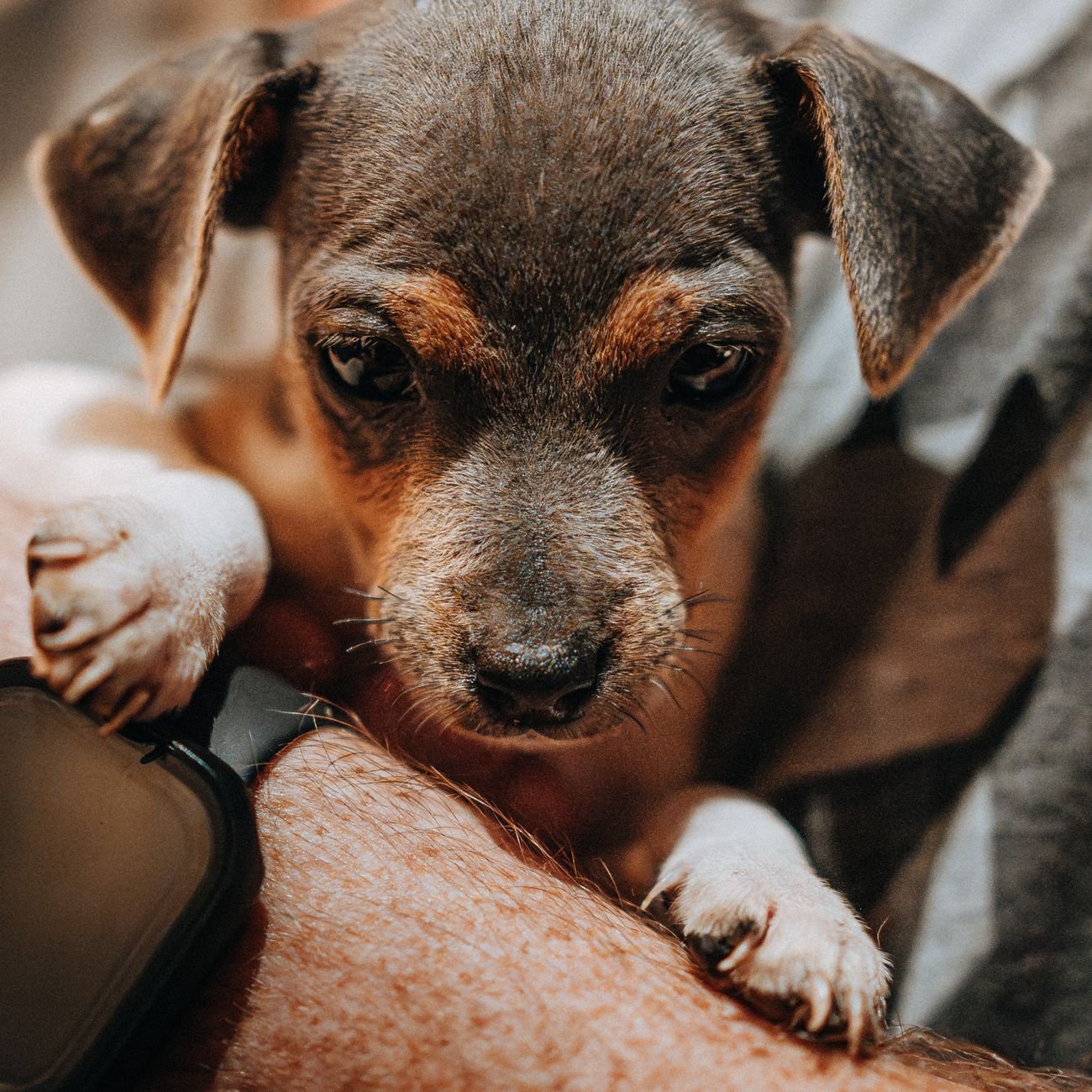
You’ll see this tip a lot. It works for some puppies, who back off when you yelp.
For others, the squeak makes biting even more exciting. Try it once or twice. If your puppy gets wilder, drop it and stick with the toy swap and the pause.
When to get help
Most puppy biting is play. But some signs mean it’s time to call your vet or a qualified, reward-based trainer.
- Stiff body, growling or a hard stare before a bite
- Guarding food, toys or resting spots
- Biting that’s getting harder, not softer, after 5 or 6 months
- Sudden biting when touched in one spot, which can point to pain
Just getting started? These dog training tips for new owners cover the basics.
Common questions
At what age do puppies stop biting?
Most mouthing fades once adult teeth are in, around 6 to 7 months, especially with steady training.
Is it normal for my puppy to bite my ankles?
Yes, moving feet are exciting. Stop walking, offer a toy, and reward your puppy when they bite that instead.
Should I use a time-out for biting?
A short, calm break in a playpen is fine, especially if your puppy is overtired. Keep it neutral, not angry.
Why does my puppy bite more in the evening?
Overtiredness. Plan a calm nap in the late afternoon and an evening chew to help them settle.
Does bitter spray stop puppy biting?
Bitter spray can protect furniture, but never spray it in your puppy’s face or mouth. Teaching what to chew works better.


Leave a Reply