

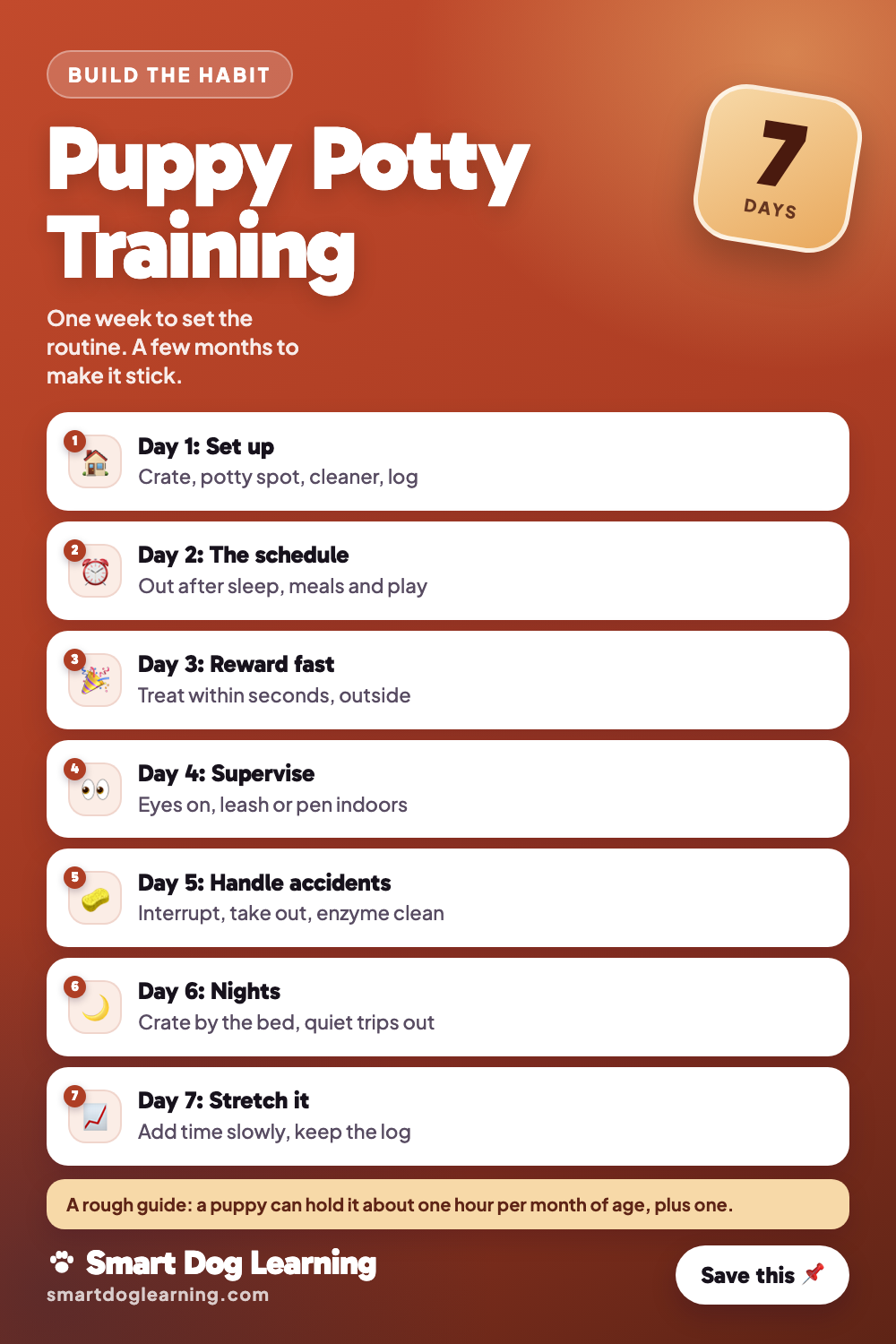
Let’s be honest up front. No puppy is fully potty trained in a week.
But a week is plenty of time to set up a routine that works. This plan for potty training a puppy gives you a clear job for each of the first seven days. Stick with it and most puppies have far fewer accidents by the end of the week, with full reliability coming over the next few months.
What to expect (so you don’t get discouraged)
Puppies have small bladders and little control at first. That’s biology, not stubbornness.
- A rough rule many trainers use: a puppy can hold it about one hour per month of age, plus one. A 2-month-old might manage about 3 hours.
- During the day, while playing, they’ll need to go much more often than that.
- Small breeds often take longer to be fully reliable than bigger ones.
- Accidents will happen. They’re information, not failure.
Day 1: set everything up
Get the house ready before the training starts.
- A crate just big enough to stand, turn and lie down. Too big and they’ll use one end as a bathroom.
- One potty spot outside, close to the door.
- Small, soft treats in a pouch by the door.
- An enzyme cleaner for accidents.
- A log on the fridge or your phone: time of each meal, nap, pee and poop.
Missing anything? Our new puppy checklist covers the full shopping list.
Day 2: start the schedule
Puppies are predictable. Take yours out at these times, every time:
- First thing in the morning, before you even make coffee
- Right after waking from any nap
- Within about 15 minutes after eating or drinking
- After play sessions or zoomies
- Last thing before bed
- Every hour or two in between, for young puppies
Feed meals at the same times each day. Regular meals mean regular potty breaks.
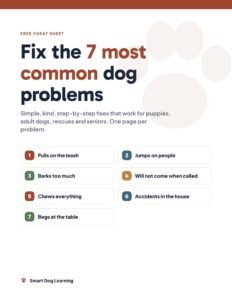
- Works for puppies, adults, rescues and seniors
- One page per problem, step by step
- Printable PDF, free
Day 3: make outside the best place ever
Timing your reward is the secret most people miss.
- Carry or leash your puppy straight to the potty spot.
- Stand still and be boring. Say a cue like “go potty” once.
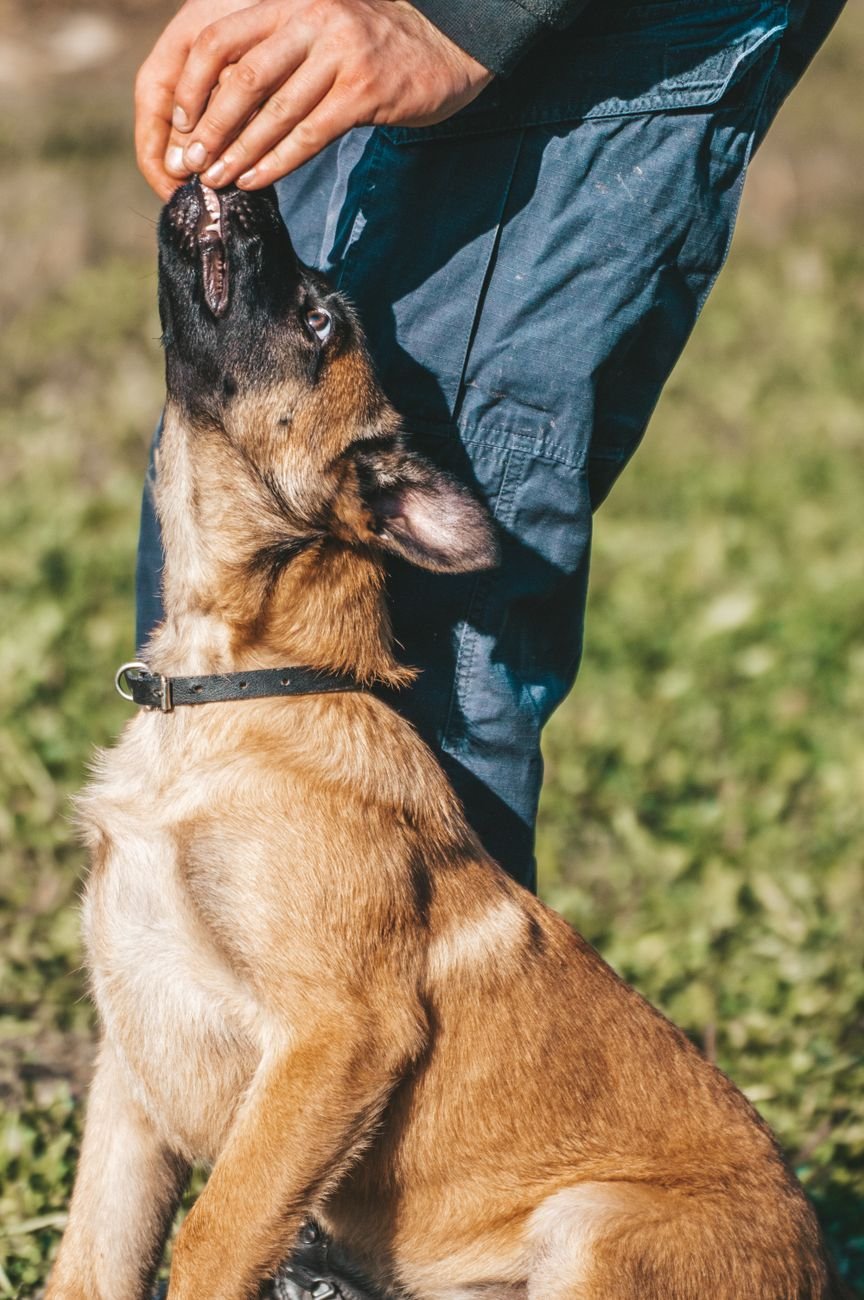
- The second they finish, praise and give a treat right there, not back inside.
- Then play for a minute. Going potty should earn fun.
If nothing happens in about 5 minutes, go back in, put them in the crate or watch them closely, and try again in 10 to 15 minutes.
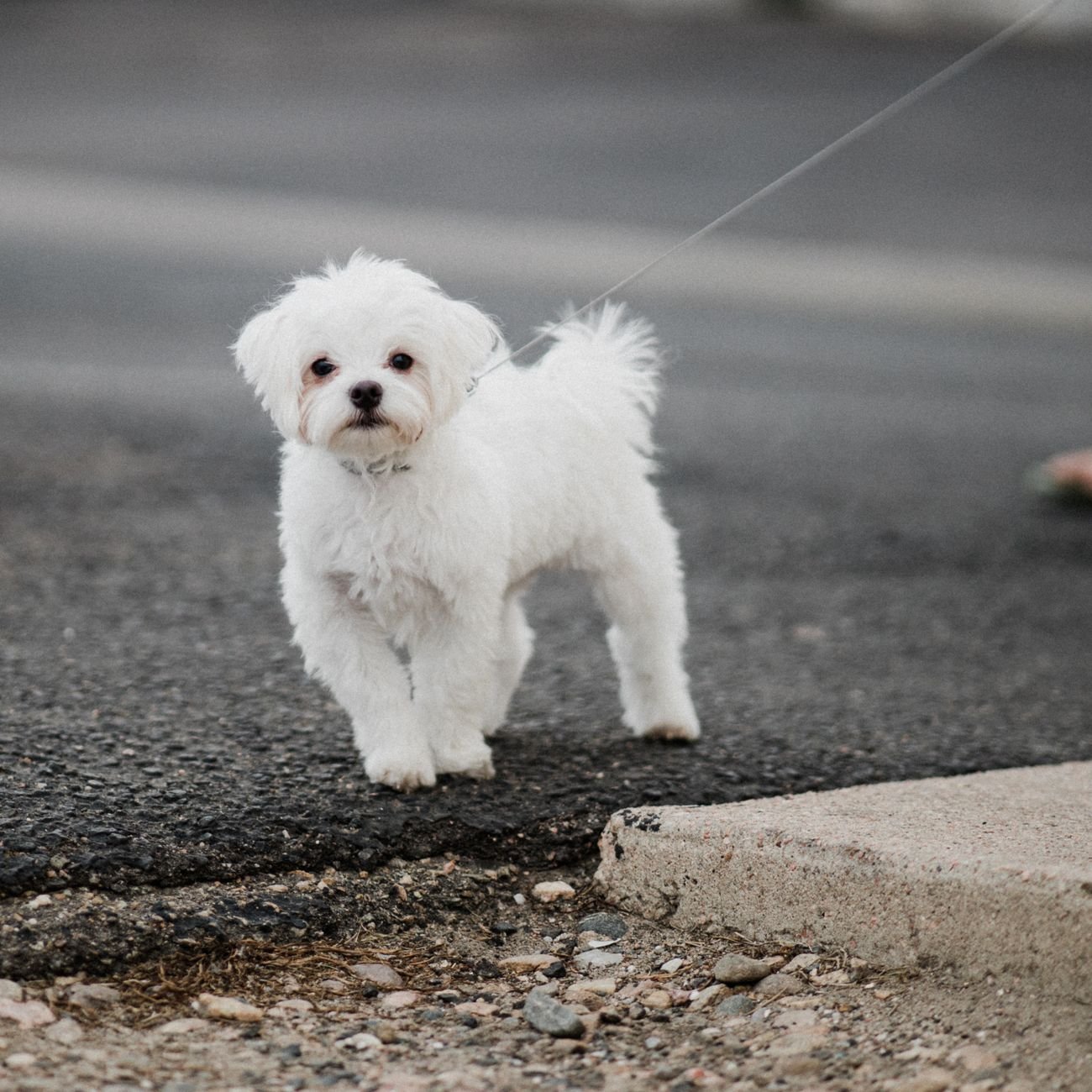
Day 4: supervise every minute
Most accidents happen when nobody’s watching. For the next few weeks, your puppy is either:
- Watched by you, in the same room, ideally on a light leash or behind a gate
- Resting in the crate or a small puppy pen
- Outside with you
Learn the warning signs: sniffing the floor, circling, wandering off, or suddenly stopping play. When you see them, head outside now.
Day 5: handle accidents the right way
Your reaction to accidents matters as much as the rewards.
- Caught in the act? Calmly interrupt with a quick “oops,” scoop them up and take them out. Reward if they finish outside.
- Found it later? Just clean it. Puppies can’t connect a scolding with something they did even a minute ago.
- Never punish. Yelling or rubbing their nose in it teaches them to hide when they go, which makes training harder.
- Use an enzyme cleaner. It breaks down the smell that draws puppies back to the same spot. Ammonia-based cleaners can smell like urine to a dog.
Day 6: sort out the nights
Nights are where many people struggle. A few tweaks help.
- Put the crate beside your bed so you hear them stir.
- Pick up the water bowl about an hour or two before bedtime, unless your vet says otherwise.
- Young puppies usually need one or two night trips. Keep them boring: lights low, no play, straight back to bed.
- Set an alarm if needed, so you take them out before they have to cry.
Most puppies sleep through the night as they grow. It may take a few weeks or more.
Day 7: review and stretch the gaps
Look at your log. You’ll probably see a pattern.
- Note when accidents happened and add a potty break just before that time.
- If the last few days were accident-free, stretch the gap between breaks by 15 to 30 minutes.
- Slowly give a little more freedom, one room at a time.
- If accidents start again, go back a step. That’s normal.
What about pee pads?
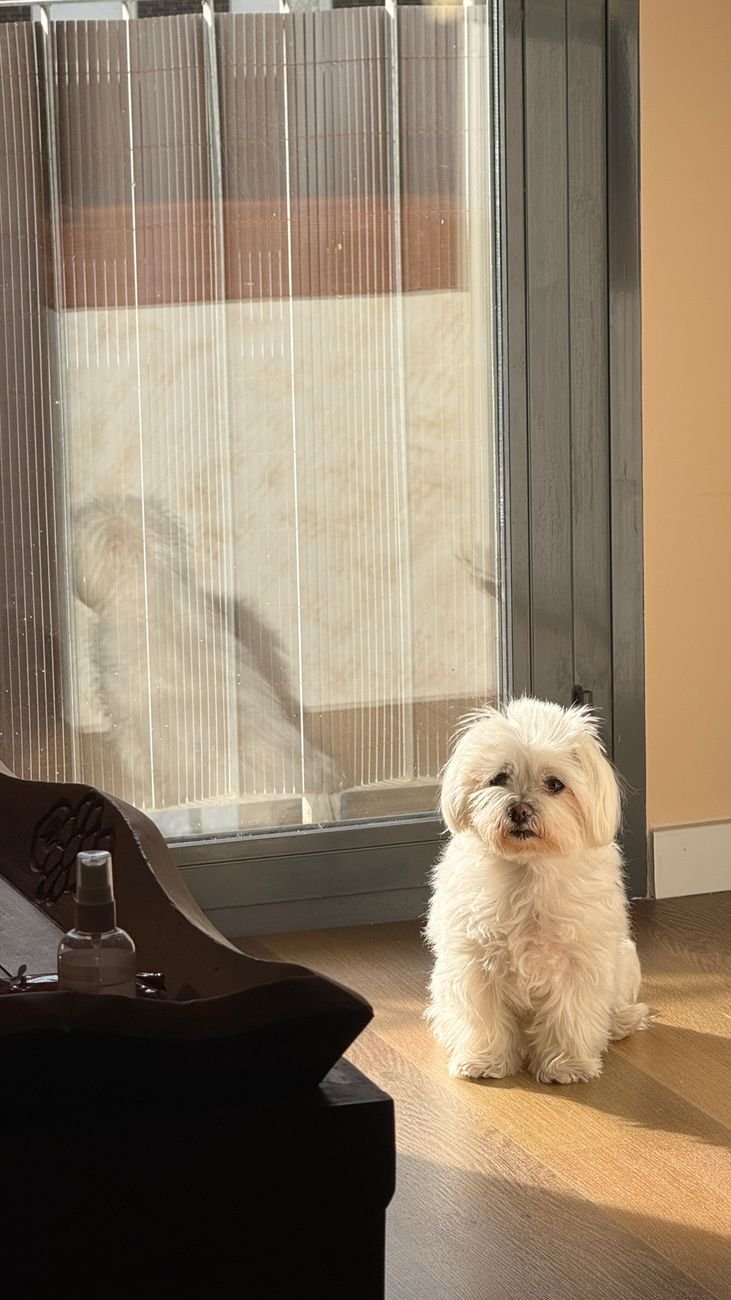
Pads can help in apartments or for tiny puppies who can’t go outside yet. They also can teach a puppy that indoors is fine.
- If you use them, keep them in one spot only, ideally near the door.
- Move the pad gradually toward the door, then outside.
- If you can take your puppy outside, that’s usually simpler in the long run.
Ask your vet when it’s safe for your puppy to visit public areas where other dogs go, based on vaccinations.
When to call the vet
Some potty problems aren’t training problems at all. Call your vet if your puppy:
- Pees very often, in small amounts, or strains to go
- Has blood in the urine or stool
- Has diarrhea that lasts more than a day
- Suddenly has accidents after doing well for weeks
Puppies can get urinary tract infections too, and a vet can check for one quickly.
Keep going after day 7
The routine you set up this week is the training. Keep the schedule, the rewards and the supervision for the next few months, then fade them out slowly.
For the rest of puppy training, like the crate, “come” and loose-leash walking, start with these dog training tips for new owners.
Common questions
Can you really potty train a puppy in 7 days?
You can build the routine in 7 days and see big progress. Most puppies need a few months to be fully reliable.
How often should I take my puppy out?
After sleeping, eating and playing, plus every hour or two for young puppies during the day.
Why does my puppy pee right after coming inside?
They got distracted outside. Stay out a little longer, keep it boring and reward the moment they go.
What age should I start potty training?
The day your puppy comes home. Even 8-week-old puppies can start learning a routine.
Should I punish my puppy for accidents?
No. Punishment makes puppies afraid to go in front of you. Clean it up calmly and supervise more closely.

Leave a Reply