

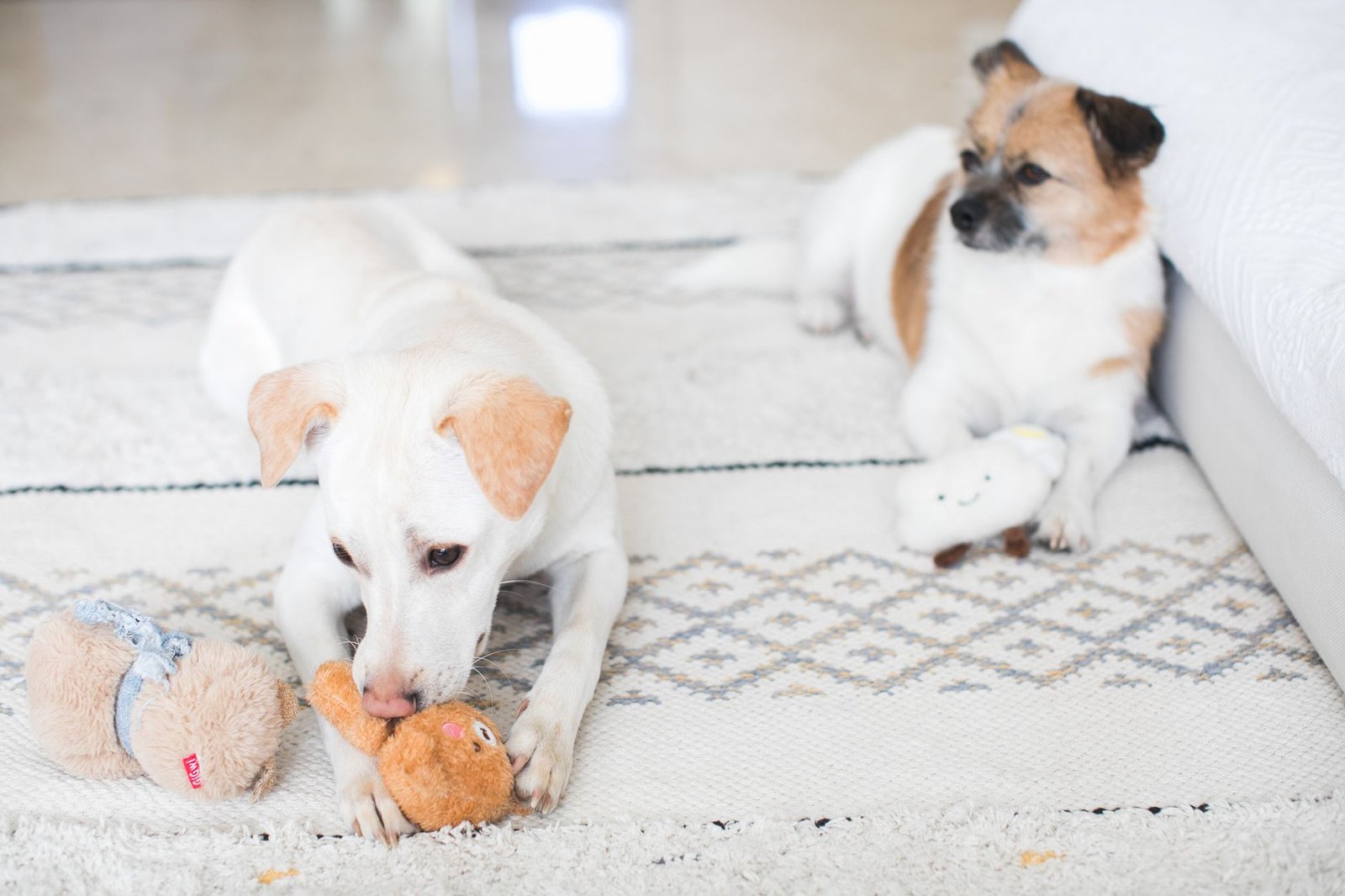
Rainy day. Long workday. Freezing wind.
Whatever the reason, your dog didn’t get a proper walk, and now they’re staring at you like you owe them something. (You kind of do.)
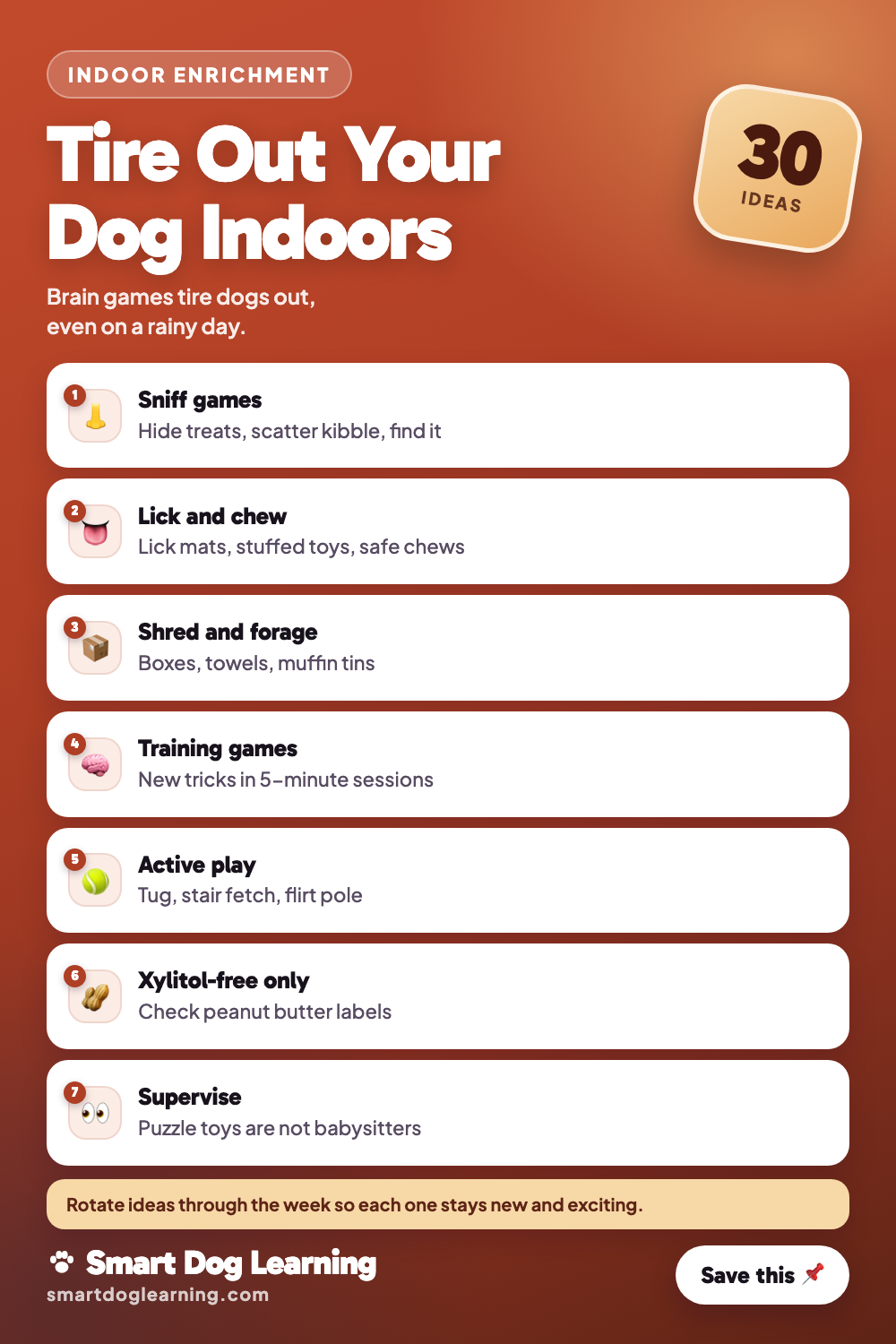
Here’s the secret: mental work is surprisingly tiring for dogs. For many dogs, ten minutes of sniffing and problem-solving takes the edge off almost as well as a stroll. These dog enrichment ideas all work indoors, cost little or nothing, and suit dogs of every size.
A few ground rules first
- Safe food only. If you use peanut butter, check the label for xylitol (sometimes listed as “birch sugar”). It’s toxic to dogs.
- No cooked bones. They splinter. Skip rawhide for gulpers too.
- Supervise puzzle toys, especially at first. Some dogs chew the toy instead of solving it.
- Size-appropriate toys. If a ball or chew fits entirely in your dog’s mouth, it’s too small.
- Count the calories. Use part of your dog’s daily meal so enrichment doesn’t become weight gain.
Sniffing games (ideas 1 to 7)
Sniffing is hard work for a dog’s brain, and it’s calming too.
- Works for puppies, adults, rescues and seniors
- One page per problem, step by step
- Printable PDF, free
- Find it: have your dog wait, toss a treat, say “find it.” Start easy, then hide treats behind furniture.
- Scatter feeding: throw their kibble across a rug instead of using a bowl.
- Snuffle mat: a fleece-strip mat that hides food. Buy one or make one with a rubber sink mat and fleece.
- Cup game: hide a treat under one of three cups and let your dog pick.
- Treat trail: lay a trail of tiny treats through two or three rooms.
- Scent a toy: rub a favorite toy with a treat, hide it, and let them track it.
- Name game: teach the names of two toys, then ask for one by name.
Lick and chew (ideas 8 to 13)
Licking and chewing are naturally soothing and help dogs settle. Great for evenings.
- Lick mat: spread plain yogurt, mashed pumpkin or xylitol-free peanut butter thinly over a textured mat.
- Frozen stuffed toy: fill a hollow rubber toy with wet food and freeze it overnight.
- Frozen treats: try these peanut butter and Greek yogurt frozen bites.
- Carrot chew: a large, whole raw carrot for medium and big dogs, supervised. Take it away once it gets small enough to swallow whole.
- Ice cube bowl: freeze low-sodium broth (no onion or garlic) with a few kibble pieces.
- Safe chews: bully sticks or size-appropriate rubber chews, always supervised.
- Frozen washcloth: soak and freeze a clean washcloth for teething puppies, then supervise.
Shred and forage (ideas 14 to 19)
Some dogs just need to destroy something. Give them something you’re happy to lose.
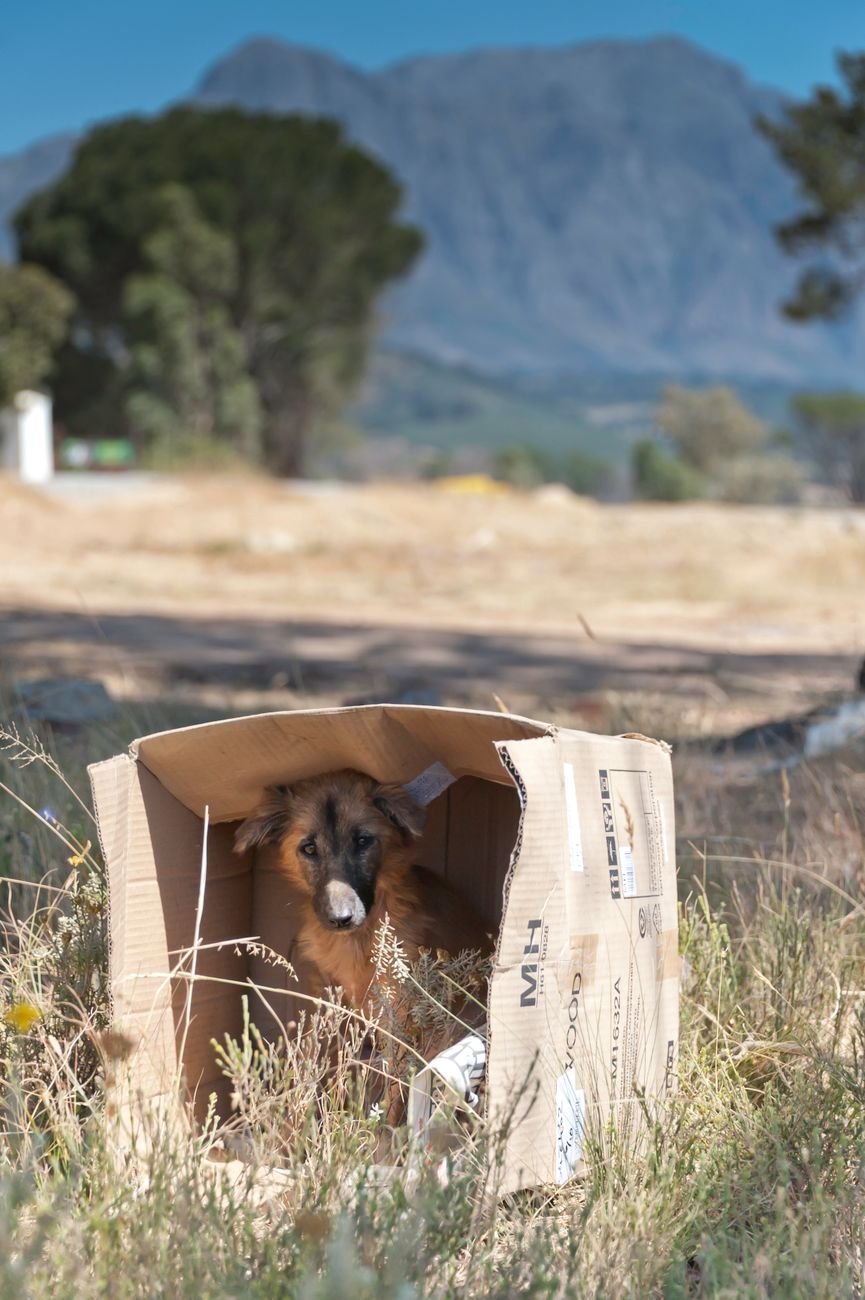
- Box surprise: drop treats into a cardboard box with crumpled paper and let them dig in.
- Towel roll: lay treats on a towel, roll it up, and let your dog unroll it.
- Muffin tin puzzle: treats in a muffin tin, tennis balls on top.
- Paper bag pile: a few treats inside loosely folded paper bags. Remove the handles first.
- Toilet roll treat: fold the ends of a cardboard tube shut with kibble inside.
- Egg carton: treats in each cup, lid closed.
Remove any cardboard or paper your dog starts actually eating rather than ripping up.
Training games (ideas 20 to 25)
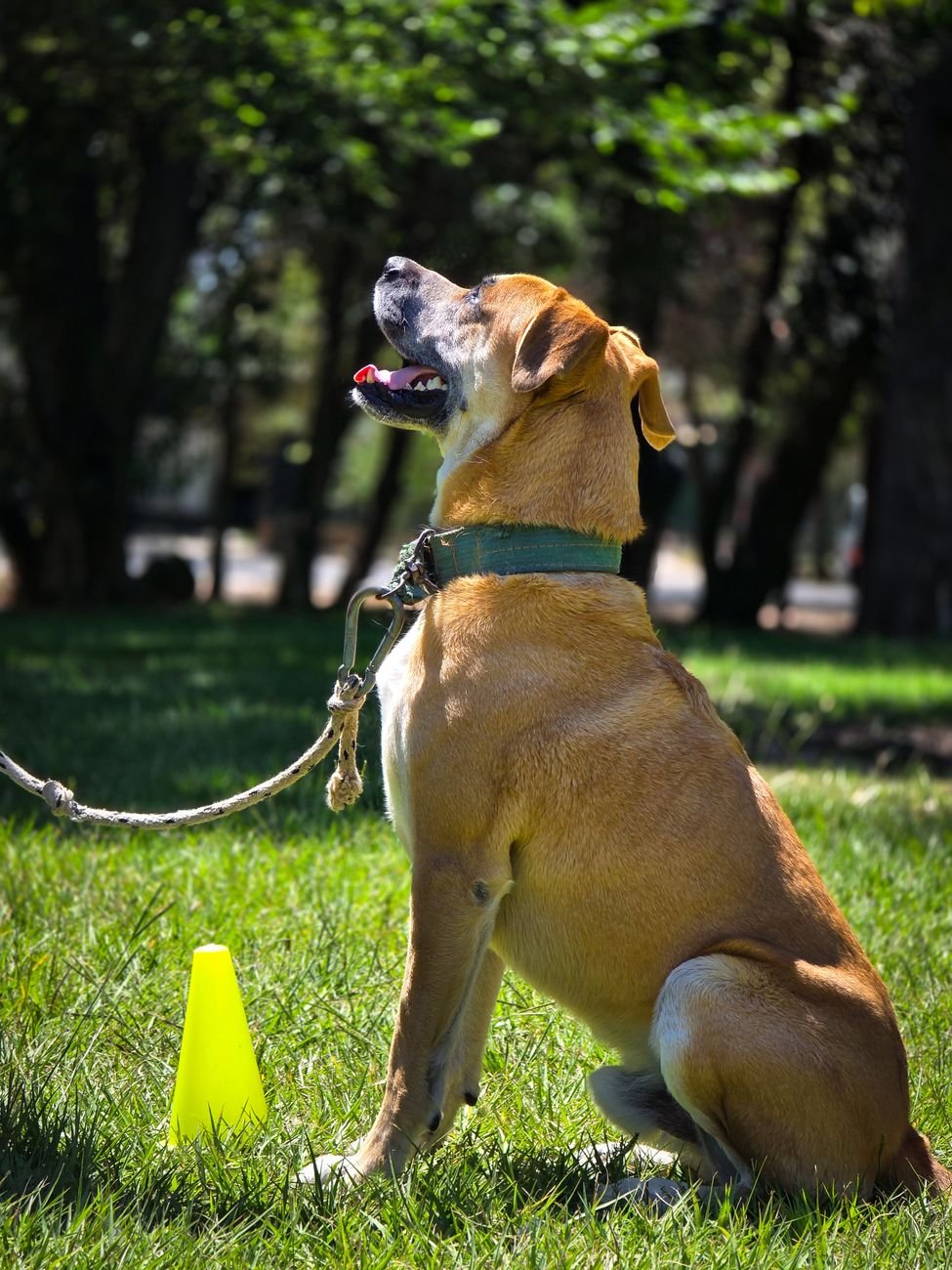
Five minutes of training works the brain hard. Keep sessions short and upbeat.
- Teach a new trick: spin, paw, bow or “go to your bed.”
- Hand targeting: teach your dog to boop your palm with their nose.
- Impulse control: practice “wait” before food bowls and doorways.
- Hide and seek: put your dog in a stay, hide, then call them.
- Tidy up: teach them to drop toys into a basket.
- Indoor obstacle course: step over broomsticks, weave through chairs, go under a table.
Active play inside (ideas 26 to 30)
For dogs who need to move, not just think.
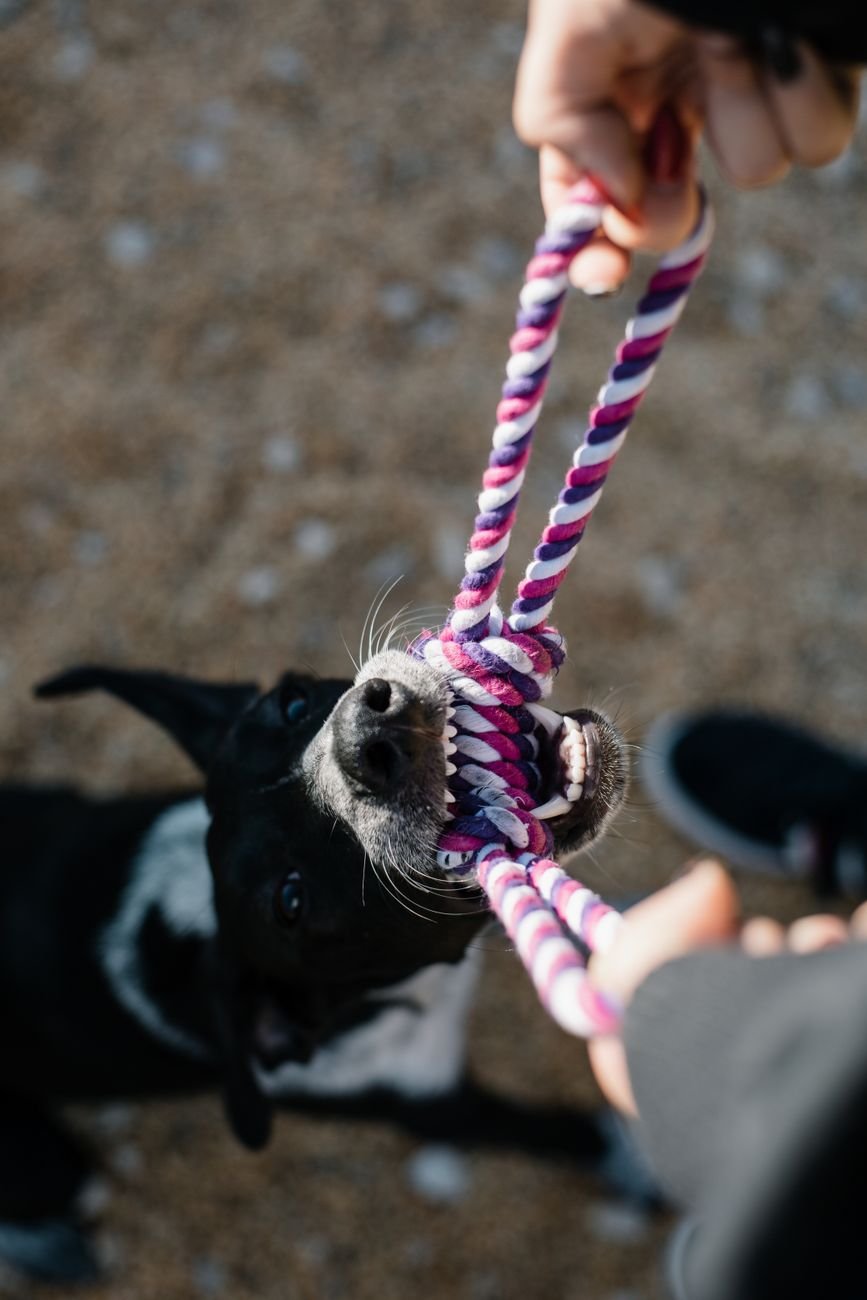
- Tug: great exercise with rules. Your dog lets go on cue, and the game ends if teeth touch skin.
- Hallway fetch: soft toys only, away from anything breakable.
- Stair fetch: only for healthy adult dogs. Skip it for puppies, seniors and long-backed breeds.
- Flirt pole: a toy on a rope at the end of a pole. A few minutes is plenty.
- Bubbles: pet-safe bubbles are surprisingly fun for some dogs.
How to build an enrichment routine
You don’t need all 30 every day. Try this simple pattern:
- Morning: breakfast in a snuffle mat or scattered on a rug.
- Midday: a frozen stuffed toy while you work.
- Evening: five minutes of training plus a short game of tug.
Rotate toys and games through the week. A puzzle that’s been lying on the floor for a month is just furniture.
Match it to your dog
High-energy breeds need more of everything. These daily exercise tips for Border Collies work for any busy dog.
- Puppies: short sessions, soft toys, lots of sleep in between.
- Seniors: sniffing and lick mats, gentle on the joints.
- Flat-faced breeds: keep active games short. They overheat fast.
Signs it’s working
A well-enriched dog is calmer, chews less of your stuff and settles more easily. If your dog still seems restless, anxious or destructive despite plenty of activity, talk to your vet or a qualified trainer.
Common enrichment mistakes
Most of these are easy to fix once you spot them.
- Making it too hard too fast. A frustrated dog gives up. Start so easy your dog wins in seconds, then add difficulty.
- Doing it all at once. Thirty minutes of nonstop games can leave a dog wired, not tired. Short bursts with naps in between work better.
- Forgetting rest. Adult dogs sleep 12 to 14 hours a day. Puppies need even more. Downtime is part of the plan.
- Leaving wrecked toys out. Check toys after every session and throw out anything cracked, torn or small enough to swallow.
Common questions
How much enrichment does a dog need?
Most dogs do well with 20 to 30 minutes of mental activity spread across the day, on top of walks.
Is peanut butter safe for dogs?
Plain, unsalted peanut butter without xylitol is fine in small amounts. Always read the label.
Can I leave my dog alone with a puzzle toy?
Not until you know how they use it. Start supervised, and never leave them with anything they’re chewing apart.
Are cooked bones a good chew?
No. Cooked bones splinter and can cause serious injuries. Choose a size-appropriate chew instead.
Does enrichment replace walks?
No, but it’s a great backup on bad-weather days, and it makes walks calmer too.

Leave a Reply