

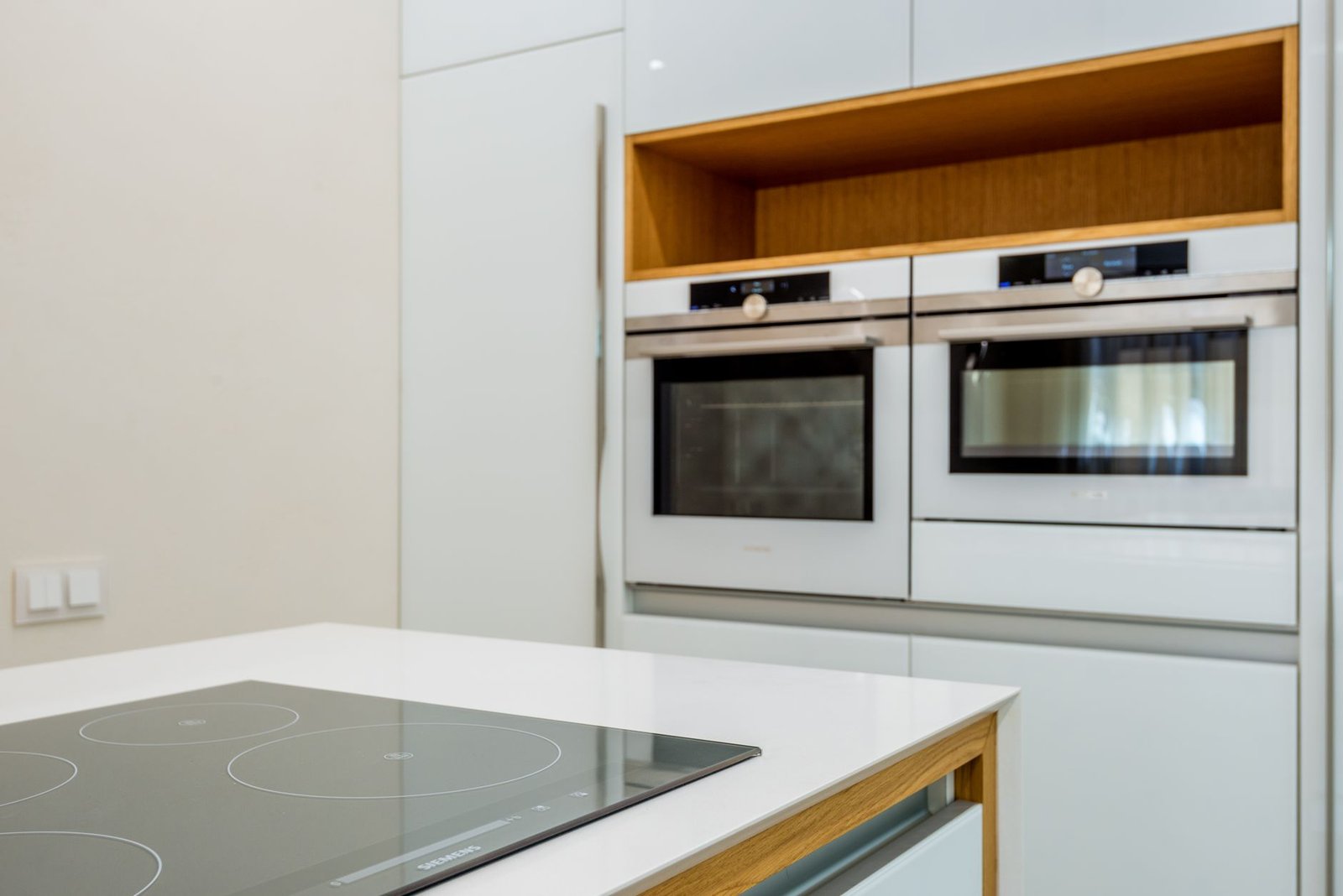
Nobody likes cleaning the oven. And the heavy-duty sprays that promise to do it for you fill the kitchen with fumes that sting your eyes.
These oven cleaning hacks use baking soda, water, dish soap and a bit of patience instead. They take longer to sit, but they’re cheap and much easier on your nose.
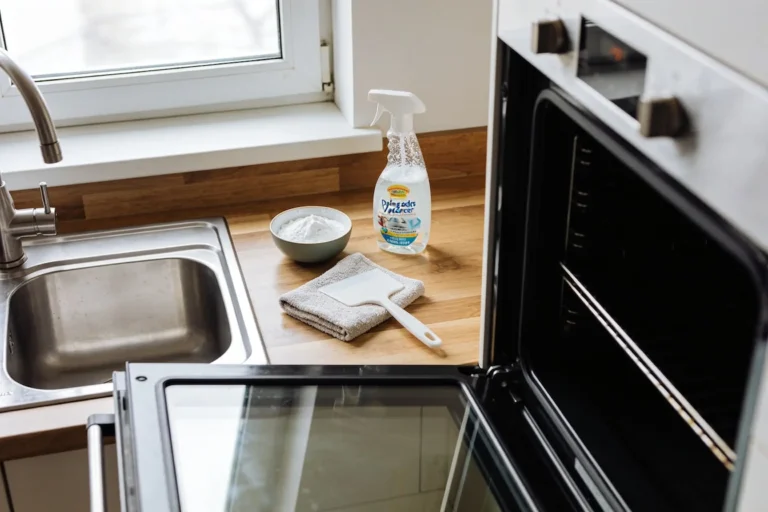
What you’ll need
You probably have all of it already.
- A box of baking soda
- White vinegar in a spray bottle
- Dish soap
- Rubber gloves and a few old cloths
- A plastic scraper or an old gift card
- A non-scratch scrub sponge
Before you start, make sure the oven is off and completely cool. Check your oven’s manual too, since some finishes have their own cleaning rules.
Hack 1: Salt a fresh spill
The easiest oven cleaning happens before the mess bakes on.
When something bubbles over, sprinkle salt on the spill while the oven is still warm. Wear an oven mitt and keep your hand well away from the heating element. Once it cools, the crusty spill lifts off with a spatula instead of turning into a black glaze.
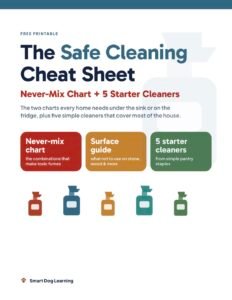
- A never-mix chart: the cleaner combinations that make toxic fumes
- A surface guide: what not to use on stone, wood, cast iron and more
- 5 starter cleaners and a shopping list
Hack 2: Steam it first
Steam softens greasy buildup so everything else works better.
- Fill an oven-safe dish with water. A squeeze of lemon makes it smell nice.
- Set the oven to about 250°F for 20 to 30 minutes.
- Turn it off and let it cool until it’s safe to touch.
- Wipe the loosened grime with a damp cloth.
For light messes, this alone might be enough.
Hack 3: The overnight baking soda paste
This is the main event, and it does the hard work while you sleep.
- Take out the racks and set them aside.
- Mix about 1/2 cup of baking soda with a few spoons of water into a spreadable paste.
- Wearing gloves, spread it over the oven floor and walls. Go thicker on the dark spots.
- Keep it off the heating elements, the gas ports and the door gasket.
- Close the door and leave it for about 12 hours.
The paste will turn brown as it pulls up grease. That’s a good sign.
Hack 4: Wipe with a fizz
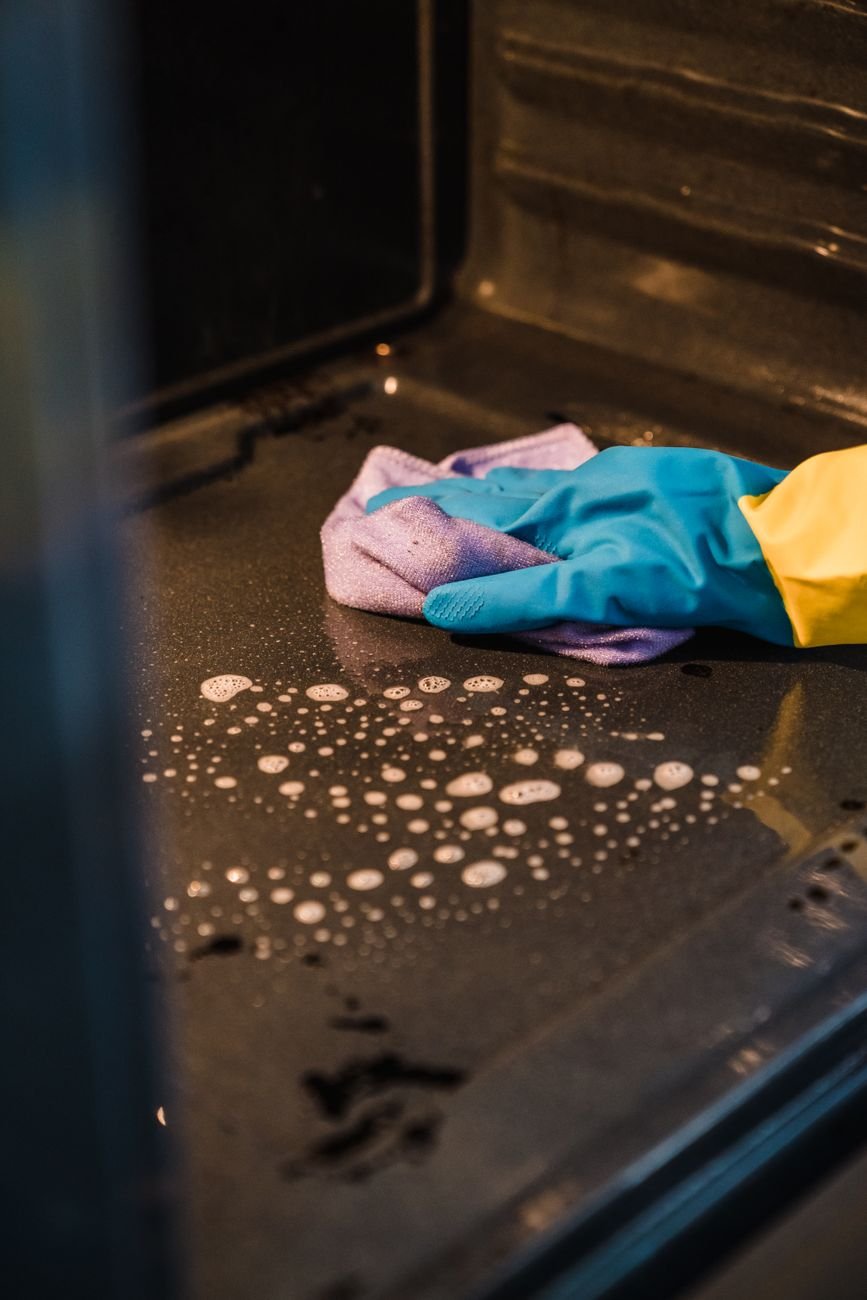
In the morning, scrape the dried paste out with your plastic scraper and a damp cloth.
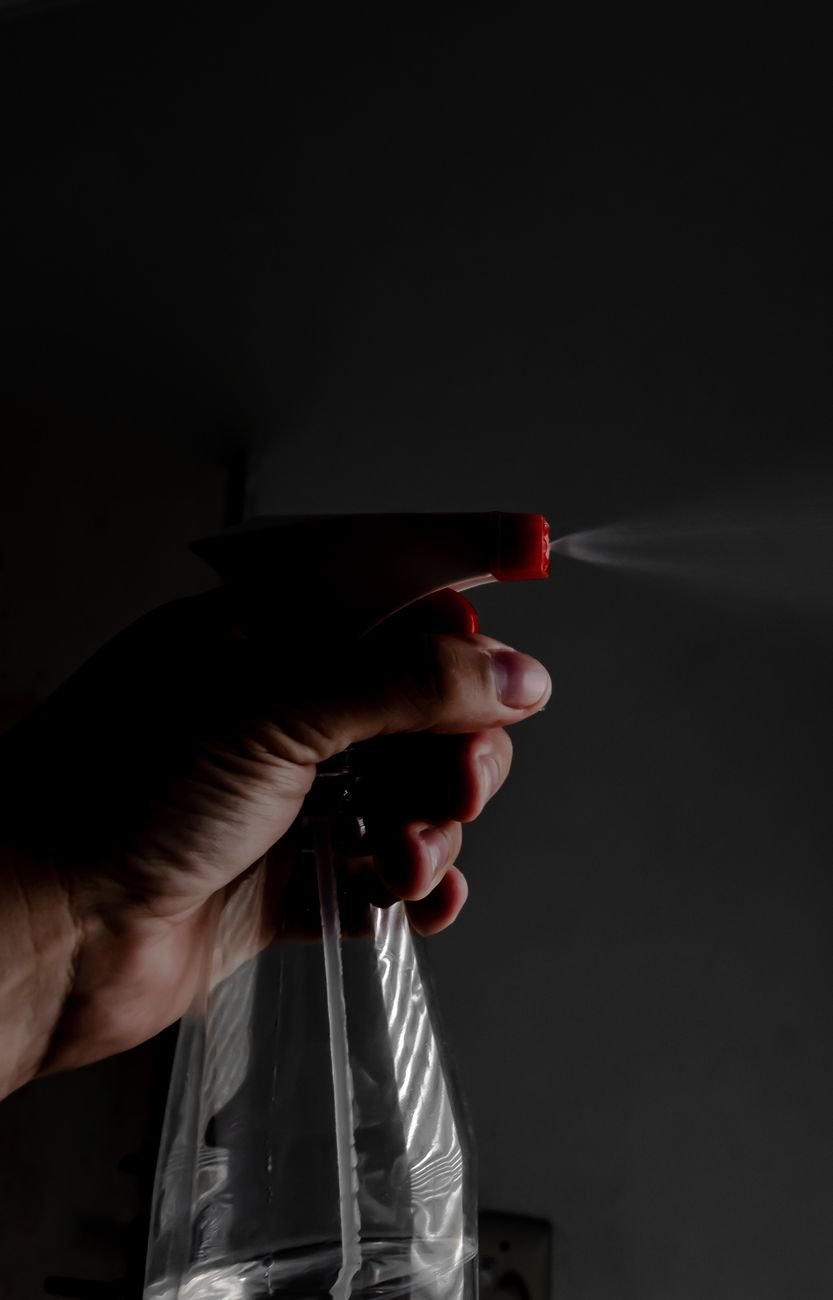
- Mist any leftover white residue with vinegar. It foams up and loosens the last of it.
- Wipe again with clean water.
- Repeat on stubborn spots, or paste them again and wait a few more hours.
Vinegar here is just for rinsing the baking soda. It isn’t a disinfectant, and you don’t need one in an oven.
Hack 5: Soak the racks in the tub
Racks are awkward, so let a long soak do the work.
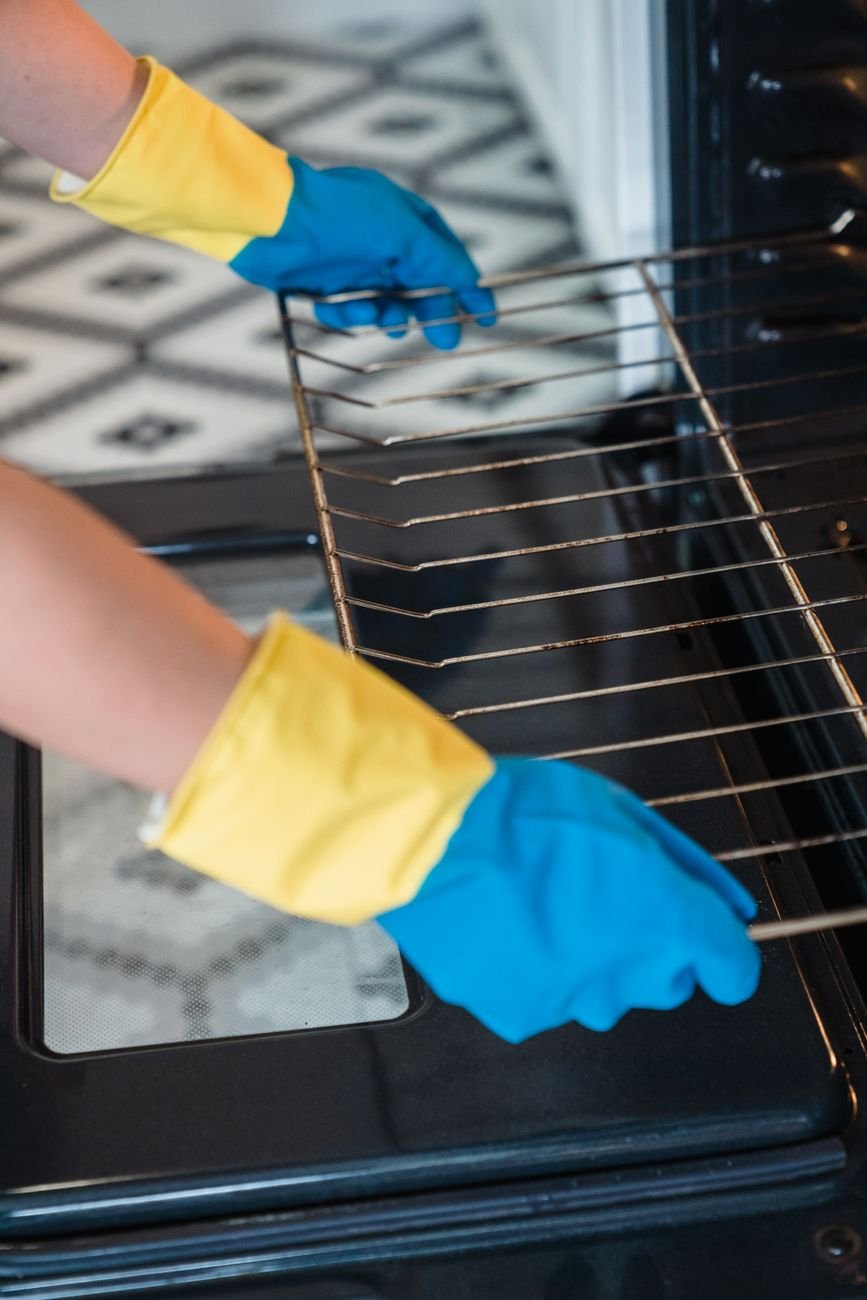
- Lay an old towel in the bathtub so the racks don’t scratch it.
- Fill with hot water, a good squirt of dish soap and a cup of baking soda.
- Soak the racks overnight.
- Scrub with a brush or scrub sponge, rinse and dry well.
Rinse the tub afterward so grease doesn’t sit in the drain.
Hack 6: Clean the glass door
Oven glass gets that brown, cloudy film you can’t see through.
- Make a thicker baking soda paste and spread it over the inside of the glass.
- Leave it 20 to 30 minutes.
- Wipe it off with a damp microfiber cloth, scraping gently with plastic if needed.
Grime between the two panes of glass is a different job. Some doors come apart for cleaning, but check your manual before you unscrew anything.
Hack 7: Catch drips before they happen
The best hack is never letting it get bad again.
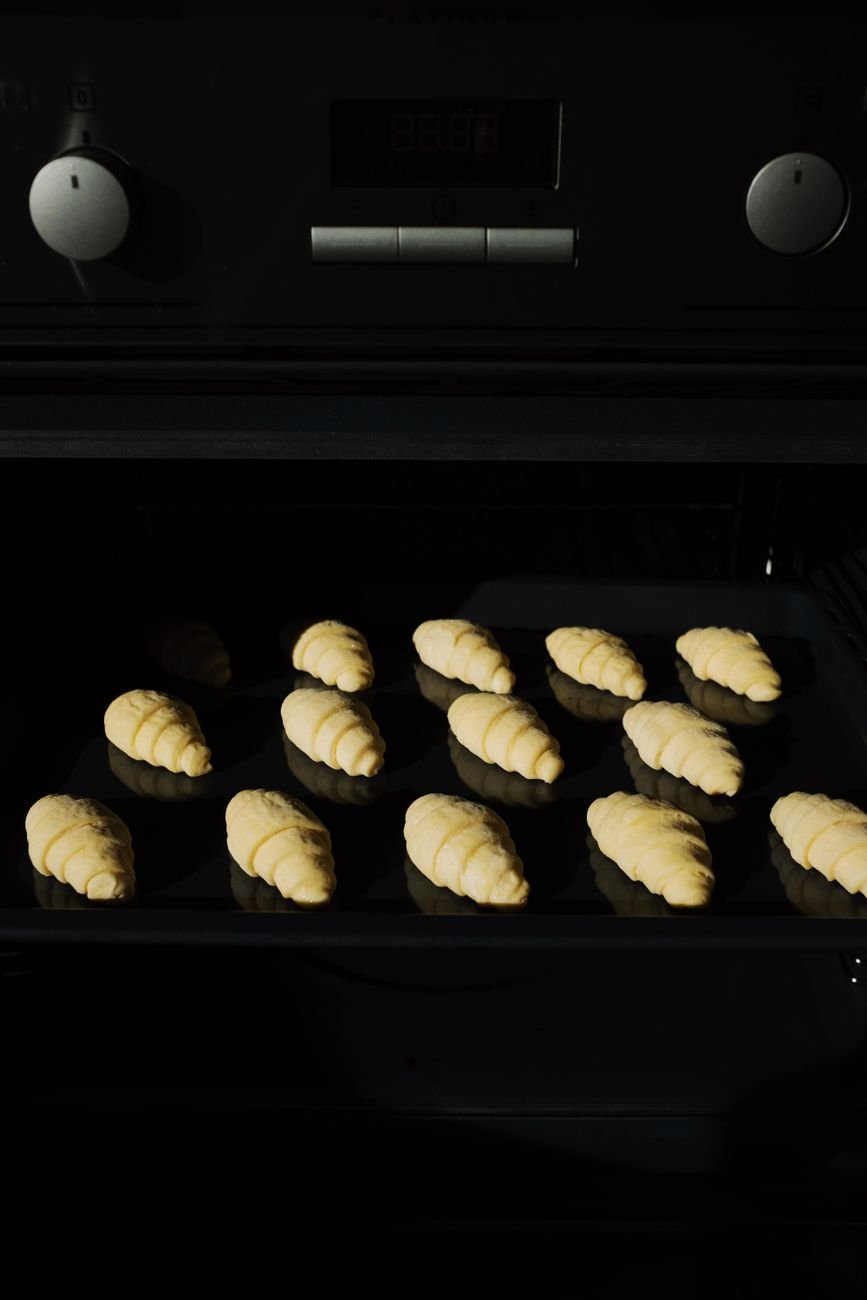
- Sheet pan underneath: slide a pan on the rack below pies, lasagna and anything bubbly.
- Wipe weekly: a quick damp wipe once the oven is cool stops buildup.
- Oven liners: handy, but check your manual first. Some ovens say not to put anything on the oven floor or over the vents.
What about the self-cleaning cycle?
The self-clean setting burns grime to ash at very high heat. It works, but it isn’t fume-free.
- It can smoke and smell, especially if the oven is very dirty.
- Open windows and run the hood fan.
- Pet birds are very sensitive to oven fumes. If you have birds, move them far away from the kitchen to a well-aired room, or skip this cycle.
- Wipe out loose crumbs first, and never leave the house while it runs.
If you’d rather avoid it, the paste method above is the gentle option.
Safety rules to keep in mind
Homemade doesn’t automatically mean harmless. A few rules keep this easy and safe.
- Never mix cleaners. Bleach plus vinegar or ammonia makes toxic gas.
- Wear gloves. Baking soda paste dries out your skin.
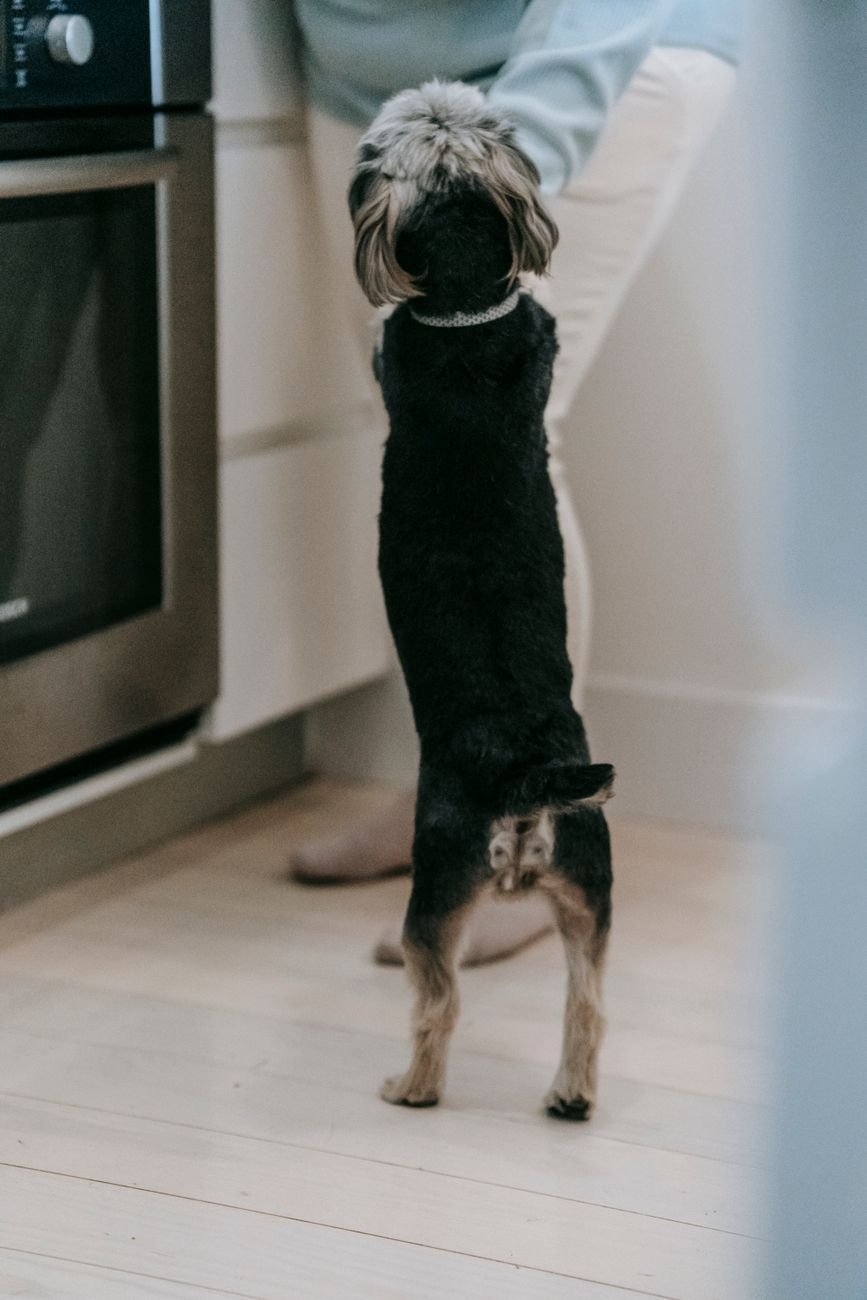
- Keep pets out of the kitchen while paste is in the oven and while you scrape it out. Eating a lot of baking soda can make a dog sick.
- Ventilate if you do use a commercial oven cleaner, and follow the label exactly.
Make it part of your routine
An oven that gets a light clean regularly never needs a scary deep clean.
- After spills: salt and scrape.
- Every month or so: steam and wipe.
- Every few months: the overnight paste and a rack soak.
If you like a ready-mixed spray, this DIY oven cleaner that cuts through grease is worth a look. And to fit it into the rest of the house, here’s a daily, weekly and monthly cleaning schedule.
Common questions
How do I clean my oven without chemicals?
Spread a baking soda and water paste inside, leave it overnight, then wipe it out and rinse with a vinegar mist.
How long should baking soda sit in the oven?
About 12 hours, or overnight. Heavy buildup may need a second round.
Can I use baking soda on a self-cleaning oven?
Usually yes, but check your manual. Some enamel finishes have specific cleaning instructions.
How do I clean between the oven glass?
On some models the door comes apart for cleaning. Follow your manual rather than prying it open.
How often should I clean my oven?
Wipe spills right away, and give it a deep clean every few months, more often if you roast a lot.

Leave a Reply