

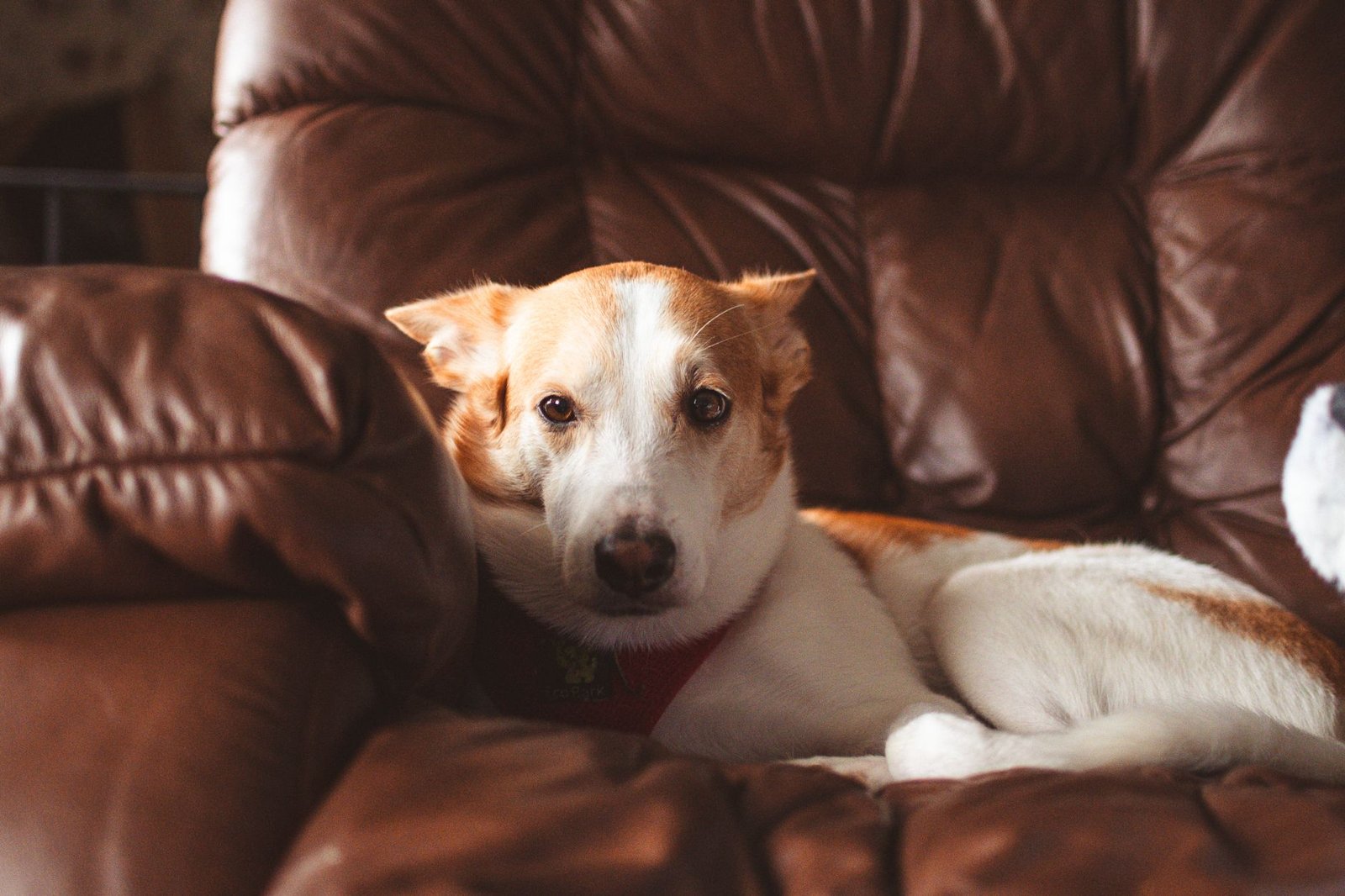
If you share your couch with a dog or a cat, you know the look. A fur-coated cushion, a mystery smell and that one spot nobody wants to sit on.
These couch cleaning hacks are made for pet homes. They’re cheap, they’re safe for your pets and they start with the one thing most people skip: the care tag.
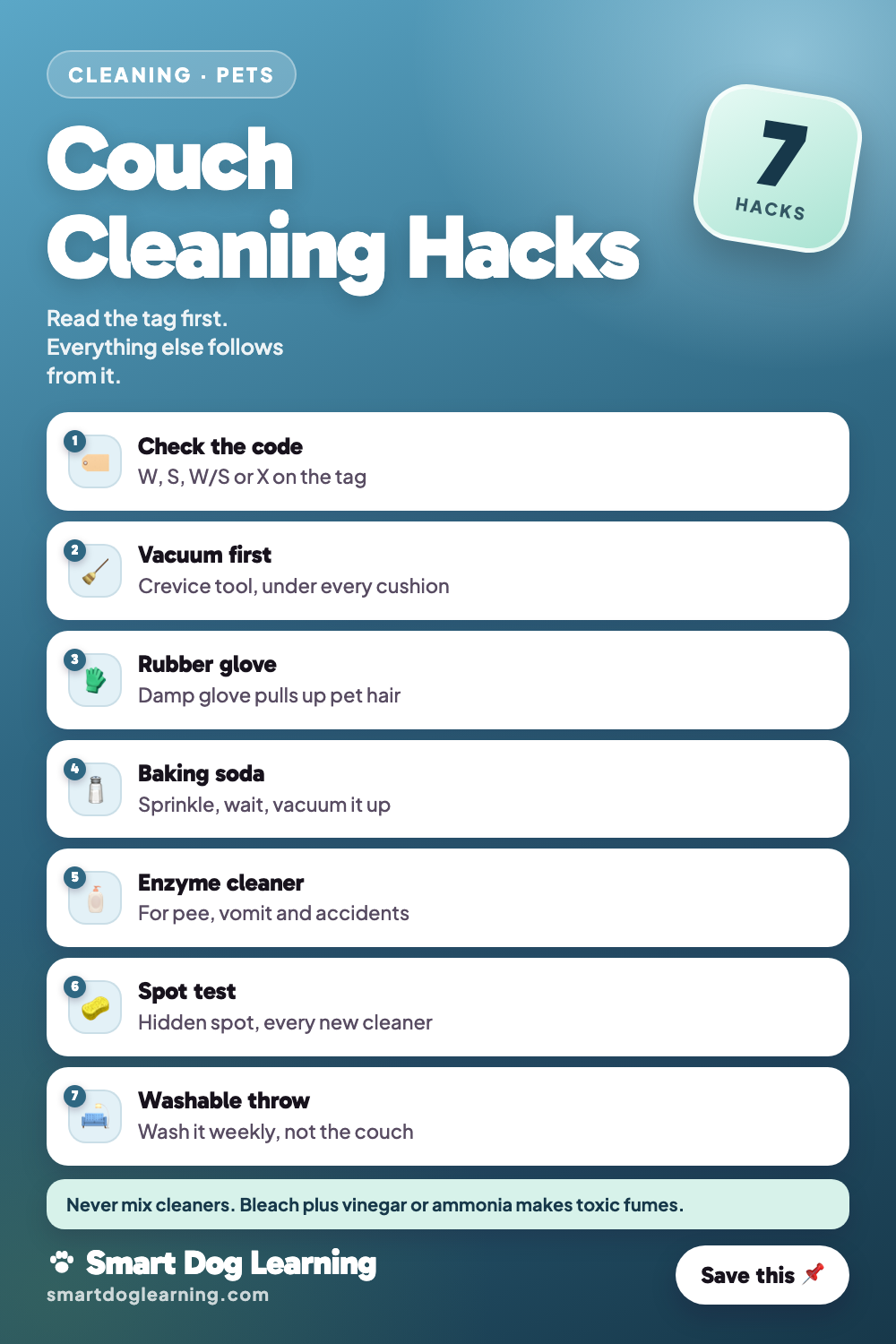
Read the cleaning code first
Look under the cushions or along the bottom of the frame for a tag with a letter on it. That letter tells you what you can safely use.
- W: water-based cleaners are fine.
- S: solvent only. Water can leave rings or shrink the fabric.
- W/S: either works.
- X: vacuum only. Leave deep cleaning to a professional.
No tag? Treat it like an S and test every cleaner on a hidden spot first.
Vacuum like you mean it
Most of what makes a pet couch look and smell bad is fur, dander and grit. Vacuuming removes most of it.
- Take every cushion off and vacuum the base, seams and corners.
- Use the crevice tool along the edges where hair collects.
- Use the upholstery brush on the cushions in one direction.
- Do it weekly, more often in shedding season.
While the cushions are off, fish out the stash. Old chews, stray kibble and half-eaten treats under the cushions are a big source of that stale pet smell.
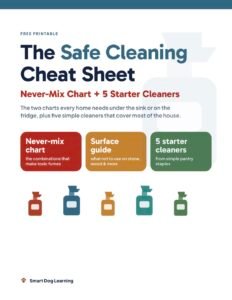
- A never-mix chart: the cleaner combinations that make toxic fumes
- A surface guide: what not to use on stone, wood, cast iron and more
- 5 starter cleaners and a shopping list

Quick hacks for pet hair
The vacuum doesn’t always get the hair woven into the fabric. These do.
- A damp rubber dish glove. Wipe across the cushion and the fur balls up.
- A rubber squeegee works the same way on bigger surfaces.
- A lint roller for a quick touch-up before guests.
The same tricks work in the car. Here are more car cleaning hacks for dog hair.
Freshen the whole couch with baking soda
Baking soda absorbs odors and is cheap. It’s a good monthly refresh for fabric couches.
- Vacuum the couch first.
- Sprinkle plain baking soda over the cushions and the base.
- Keep pets off it and let it sit for at least 30 minutes, or a few hours if it smells strong.
- Vacuum it all up thoroughly.
Skip scented powders and fabric sprays with strong fragrance. Pets have sensitive noses, and cats especially don’t do well with some fragrance oils.
The right way to clean pee and vomit
Pet accidents need a different approach. If you don’t break down the odor completely, your pet may go back to the same spot.
- Blot, don’t rub. Press paper towels into the spot to soak up as much as you can.
- Use an enzyme cleaner made for pet stains. It breaks down the proteins that cause the smell.
- Soak it well and let it sit as long as the label says, often 10 to 15 minutes or more.
- Blot again and let it air dry. Cover it with a laundry basket so your pet can’t get to it.
Check the code first. On S or X fabric, test the enzyme cleaner on a hidden spot or call a pro.
Spot cleaning by fabric code
For everyday spills and dirty paw prints, match the method to the tag.
W and W/S fabrics
- Mix a few drops of mild dish soap into a cup of warm water.
- Dip a white cloth, wring it out well and dab the stain.
- Rinse with a cloth dampened in plain water, then blot dry.
S fabrics, including many microfiber couches
- Use a solvent-based upholstery cleaner, or rubbing alcohol on a white sponge for microfiber.
- Dab lightly, then brush the fibers back up with a soft brush once dry.
- Open a window, keep pets out of the room until it’s dry and keep alcohol away from flames.

Never mix these cleaners
This one is about safety, not stains. Some common combinations make toxic gas.
- Bleach and vinegar release chlorine gas.
- Bleach and ammonia release chloramine fumes.
- Bleach and rubbing alcohol can form dangerous compounds too.
Honestly, bleach has no place on an upholstered couch anyway. Use one product at a time and rinse between them.
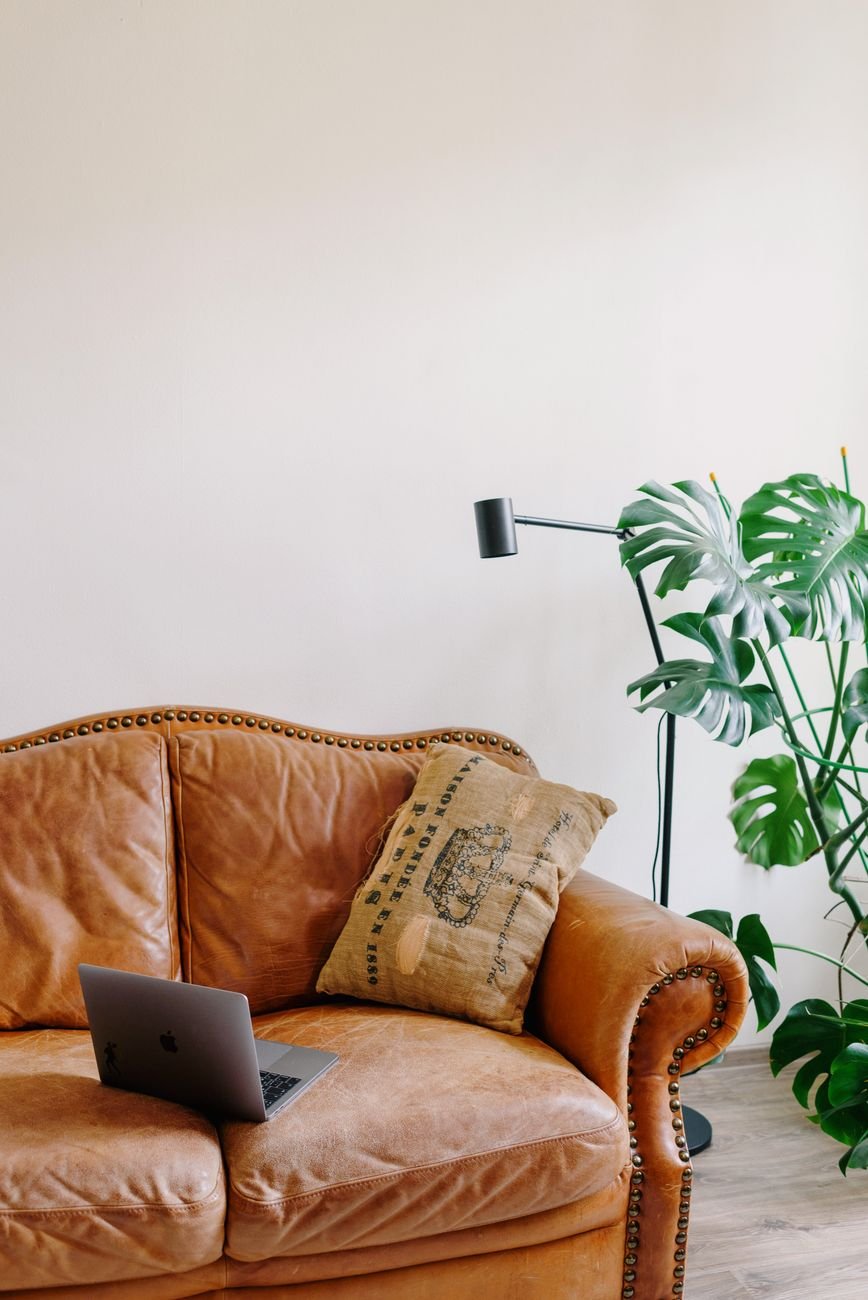
Leather couches and pets
Leather is easier to wipe clean than fabric. Claws are its weak spot.
- Wipe weekly with a soft cloth dampened in water with a drop of mild soap.
- Dry it right away with a clean towel.
- Condition a couple of times a year with a leather conditioner to keep it from cracking.
- Keep pet nails trimmed to cut down on scratches.
Prevention beats scrubbing
The easiest couch to clean is the one that didn’t get dirty. A few habits save hours.
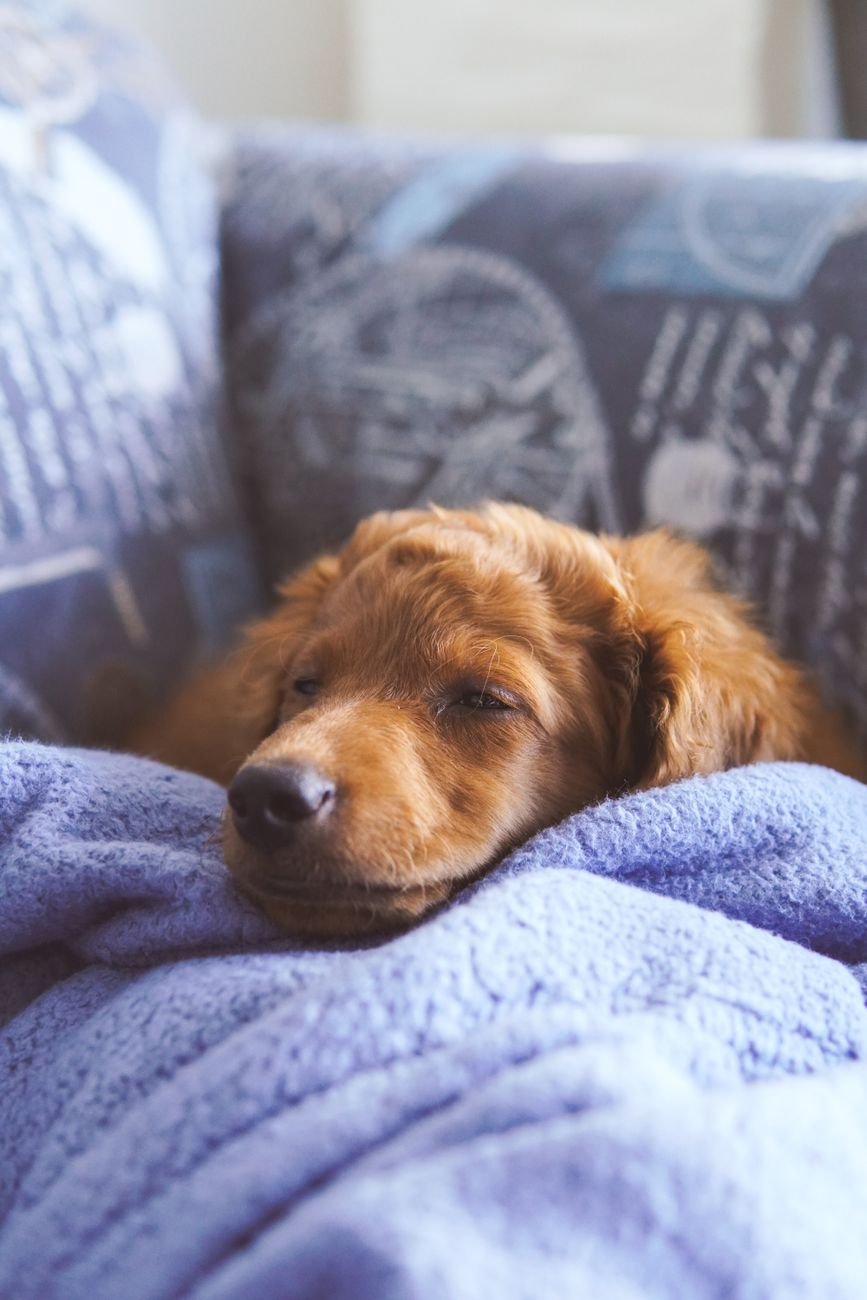
- Put a washable throw on your pet’s favorite spot and wash it weekly.
- Use a waterproof couch cover for puppies, seniors or anyone prone to accidents.
- Wipe paws before your dog jumps up after a walk.
- Brush your pet a few times a week to catch fur before it lands.
- Give them their own bed right next to the couch. Some pets take the hint.
Put the couch on your weekly cleaning schedule so it never gets out of hand.
When to call a professional
Some jobs are worth paying for. A good upholstery cleaner has hot water extraction tools and solvents you can’t buy at the store.
- X-coded fabric that needs more than a vacuum
- Old urine smells that keep coming back
- Silk, velvet or antique upholstery
- Large stains on an expensive couch
Common questions
How do I get the dog smell out of my couch?
Vacuum well, sprinkle baking soda, wait at least 30 minutes and vacuum again. Wash any throws and the cushion covers if the tag allows.
Can I use vinegar to clean my couch?
It can help with light odors on W fabrics, but test first. Vinegar doesn’t disinfect, and never use it with bleach.
What is the best cleaner for pet urine on a couch?
An enzyme cleaner made for pet stains. Blot first, soak the spot and let it air dry.
How often should I clean a couch with pets?
Vacuum weekly, freshen with baking soda monthly and deep clean a couple of times a year.
Can I put couch cushion covers in the washing machine?
Only if the tag says so. Some covers shrink, so wash cold and air dry.



Leave a Reply