


Most cleaning schedules fail for the same reason. They’re written for someone with no job, no kids and endless energy.
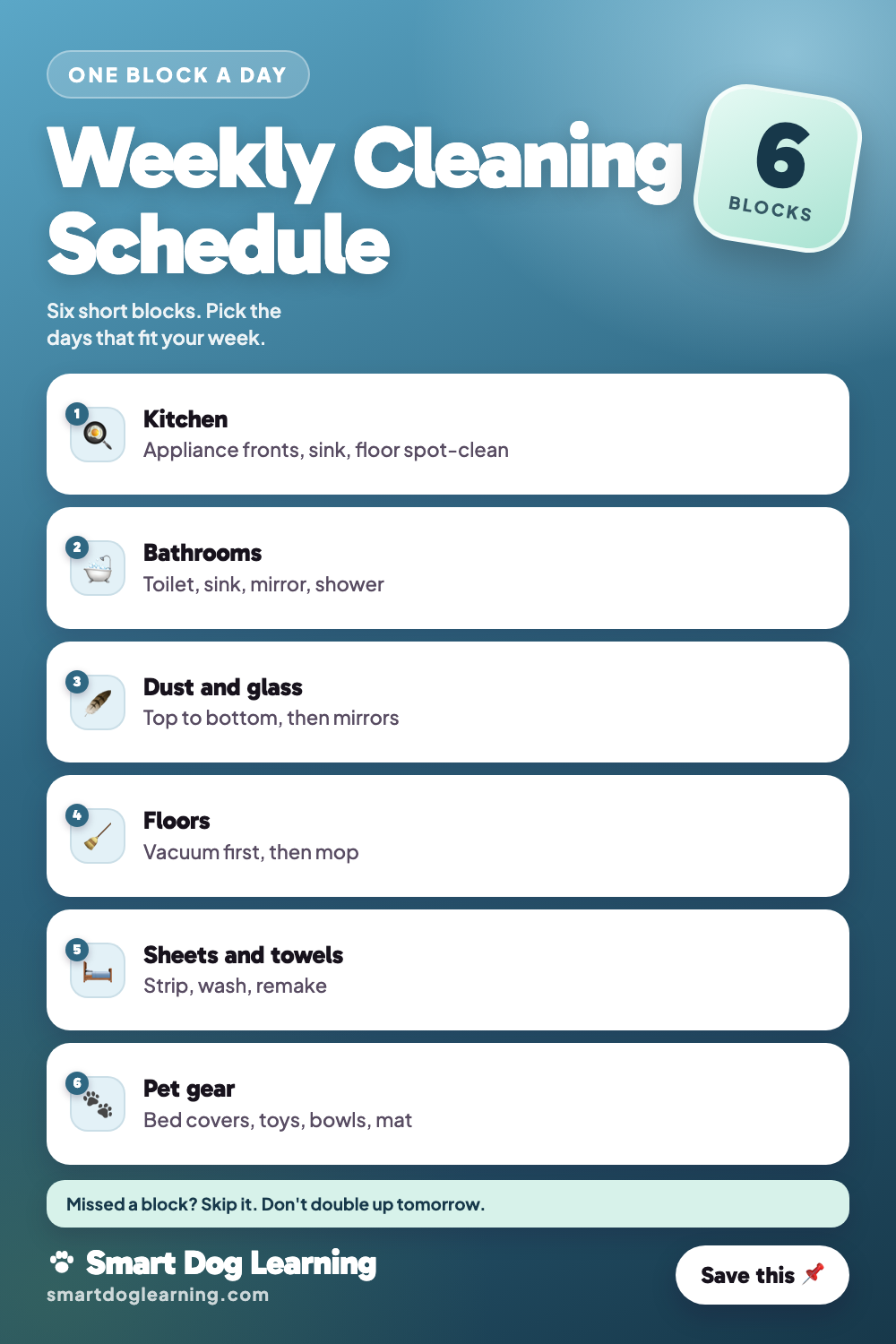
This weekly cleaning schedule is built differently. The weekly jobs are split into six short blocks, and you choose how to fit them into your actual week.
How this schedule works
Forget “clean the house.” That’s not a task, it’s a mood. Instead, the week is broken into blocks.
- Six blocks cover everything that needs doing weekly.
- Each block takes 15 to 30 minutes in an average home.
- You choose the days. One block a night, or several on a Saturday morning.
Daily tidying, like dishes and wiping the counters, sits on top of this. For the monthly and seasonal jobs, see our daily, weekly and monthly cleaning plan.
Block 1: Kitchen
You wipe the counters every day already. The weekly kitchen block goes one step further.
- Wipe appliance fronts, handles and the microwave inside.
- Scrub the sink and faucet.
- Wipe cabinet fronts near the stove and trash.
- Toss old leftovers and wipe any fridge spills.
- Spot-clean the floor under the table and by the dog bowls.

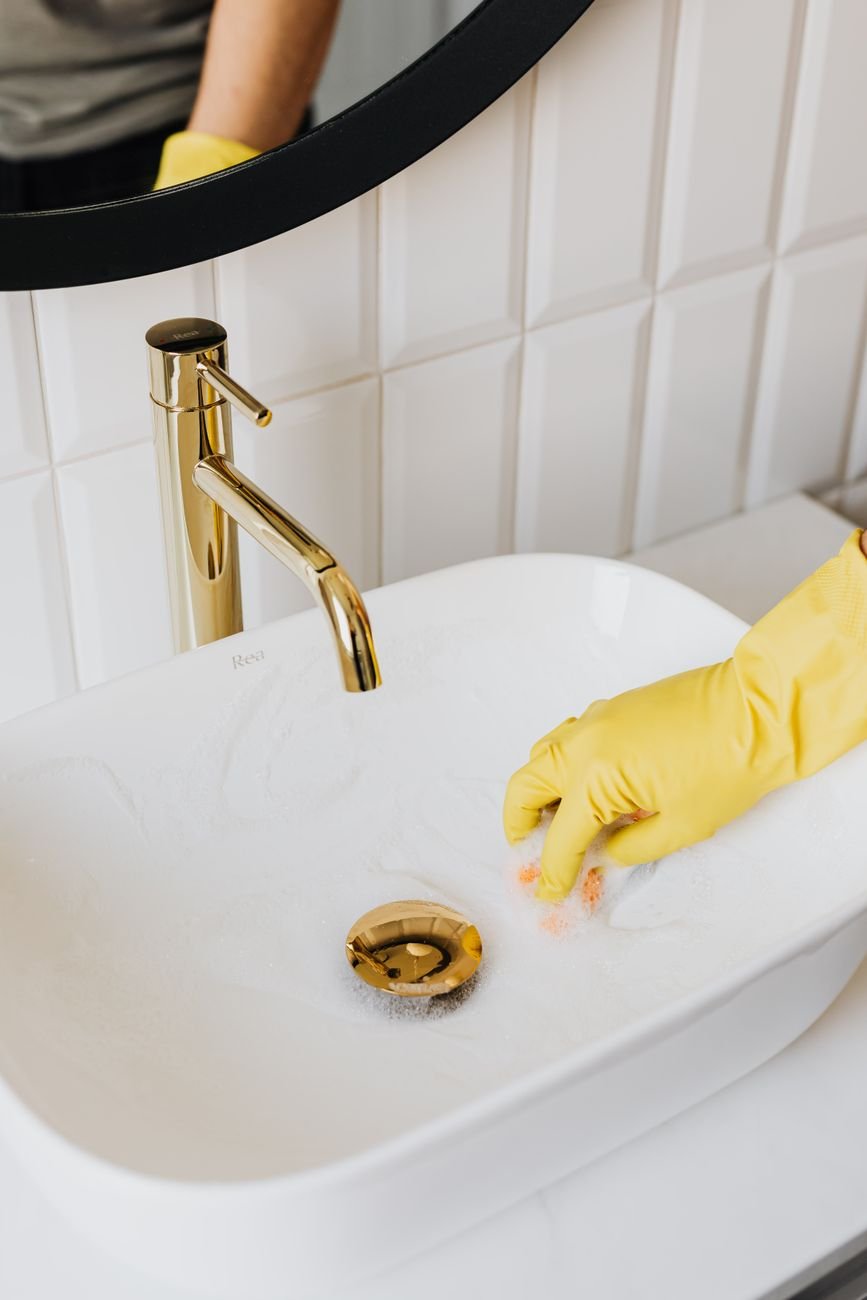
Block 2: Bathrooms
Work from the cleanest spots to the dirtiest, so you don’t spread germs around.

- A never-mix chart: the cleaner combinations that make toxic fumes
- A surface guide: what not to use on stone, wood, cast iron and more
- 5 starter cleaners and a shopping list
- Spray the toilet bowl with cleaner and let it sit.
- Clean the mirror, then the sink and counter.
- Wipe the shower or tub walls and fixtures.
- Scrub the bowl, then wipe the toilet outside, finishing with the base.
- Swap in a clean hand towel and bath mat.
One safety rule: never mix bleach with vinegar, ammonia or other cleaners. The fumes are toxic. Use one product, rinse, then use another if you need to.
Block 3: Dust and glass
Dust always falls down, so start high and finish low.
- Ceiling fan blades and the tops of door frames, every other week is fine.
- Shelves, TV stand and tables with a damp microfiber cloth.
- Lamps and light switches, which get grubby fast.
- Mirrors and glass doors, including nose prints at dog height.
Dusting before you vacuum means you only clean the floor once.
Block 4: Floors
This is the block pet owners feel most. Hair builds up faster than you’d think.
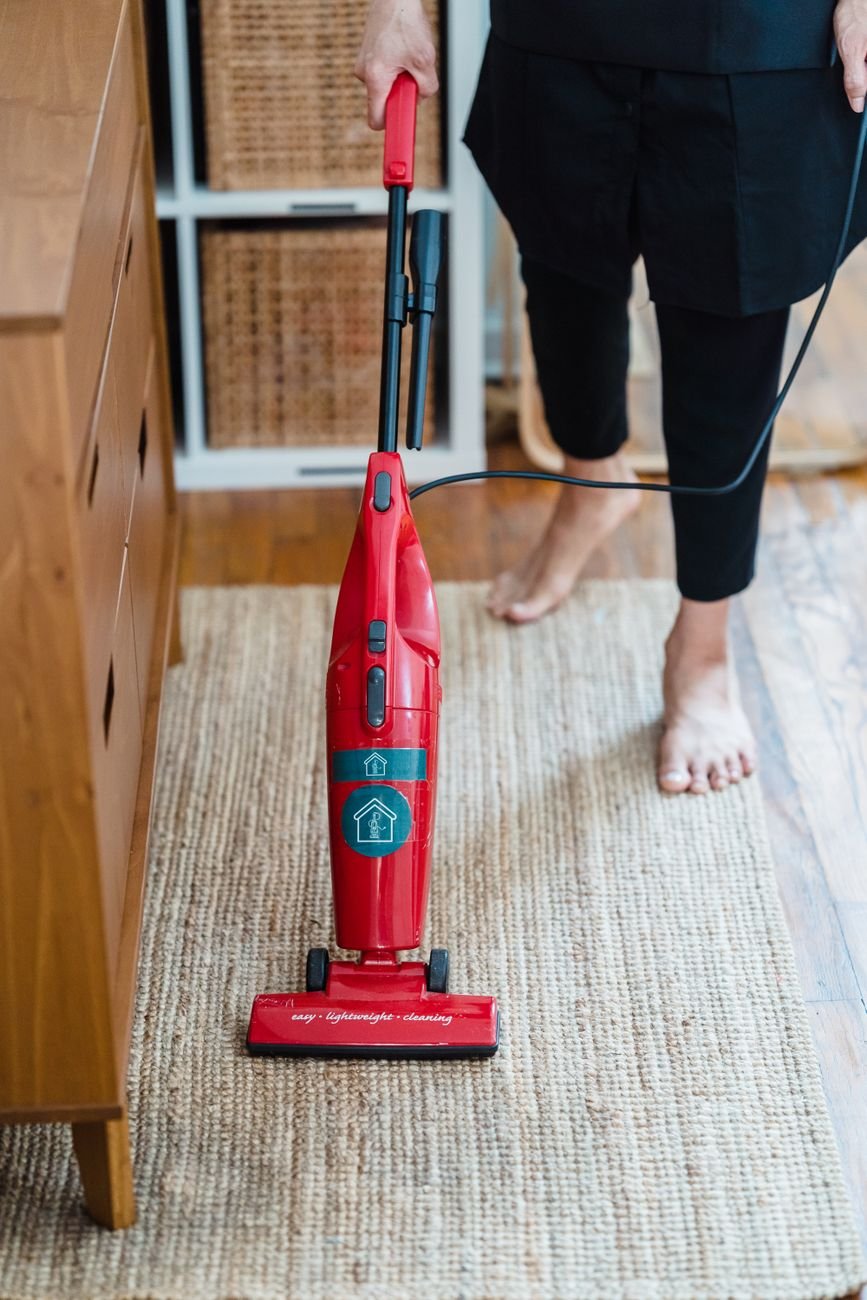
- Vacuum first, including under the sofa cushions and along the baseboards.
- Mop hard floors after vacuuming, kitchen and bathrooms first.
- Shake out doormats outside.
- Use a cleaner that’s right for your floor. Skip vinegar on natural stone like marble or granite, since acid etches it.
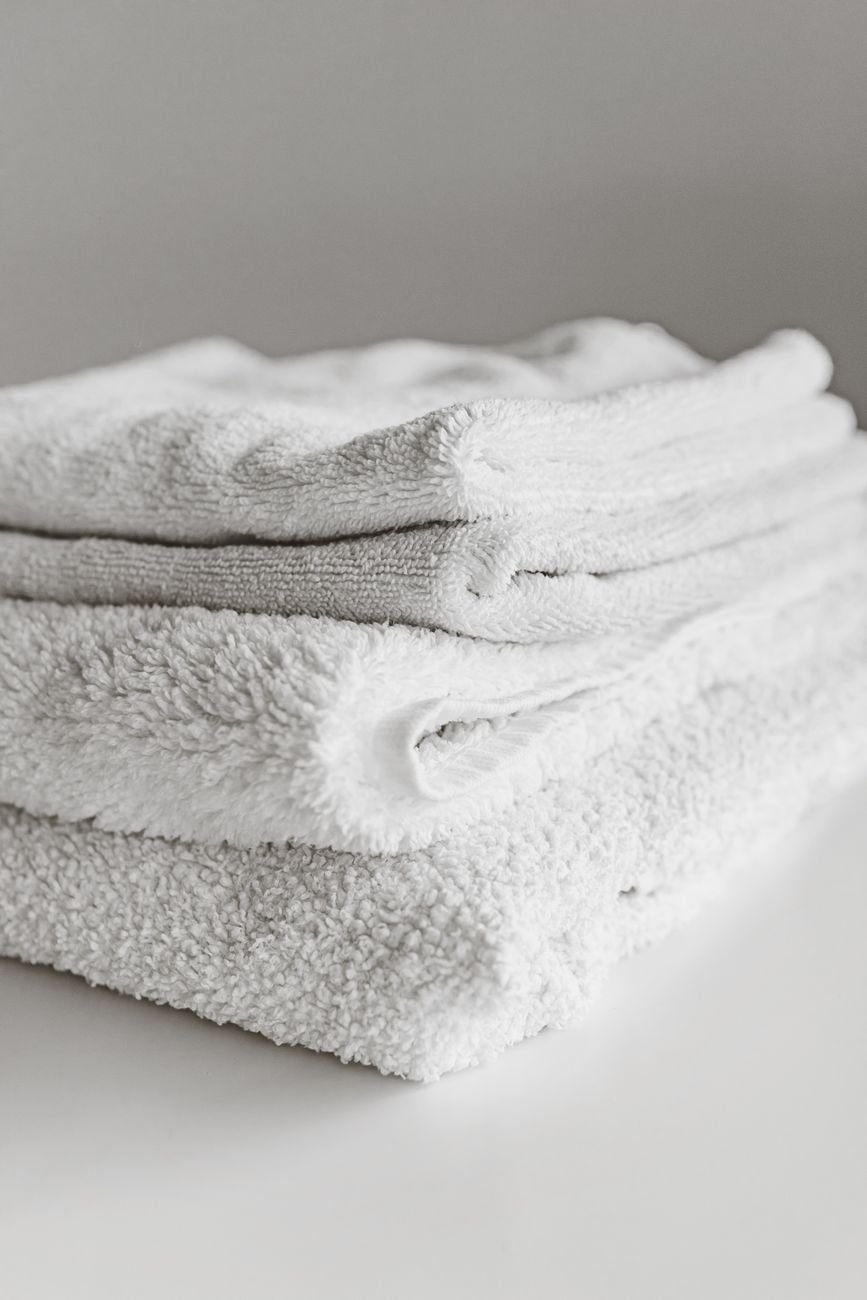
Block 5: Sheets and towels
The easiest block, because the machine does most of the work.
- Strip the beds first thing so the wash runs while you do other things.
- Wash bath towels and kitchen towels in a separate hot load.
- Remake the bed with a second set if the first isn’t dry yet.
Keeping two sets of sheets per bed makes this block painless.
Block 6: Pet gear
Pet stuff is easy to forget, and it’s often where smells come from.
- Wash dog or cat bed covers and any blankets on the sofa.
- Wash soft toys in the machine and scrub hard ones with hot soapy water.
- Scrub bowls well (they should get a wash after meals too) and wipe the feeding mat.
- Empty and wipe the treat jar and leash hook area.
Cat household? Add a full litter box wash with mild unscented soap, and skip essential-oil cleaners around cats.
What goes in your cleaning caddy
A caddy you can carry from room to room saves more time than any fancy product. Keep it simple.
- An all-purpose cleaner for counters and most surfaces.
- A bathroom cleaner or disinfectant for toilets and sinks.
- Glass cleaner for mirrors and windows.
- A stack of microfiber cloths, in two colors: one for bathrooms, one for everything else.
- A scrub brush, a toilet brush and rubber gloves.
Read the labels, and use each product only on the surfaces it’s made for.
Three ways to fit it into your week
Pick the version that fits your life right now. You can switch whenever things change.
The weeknight plan
- Monday: Kitchen
- Tuesday: Bathrooms
- Wednesday: Dust and glass
- Thursday: Floors
- Saturday: Sheets and towels, plus pet gear
- Friday and Sunday: off
The weekend power session
Do all six blocks in one go, about one and a half to two hours. Start the laundry first, then go top to bottom: dust, kitchen, bathrooms, floors last.
The shared plan
Split the blocks with a partner, roommate or older kids. Rotate them each week so nobody is stuck with bathrooms forever.
How to actually stick to it
The schedule is the easy part. Here’s what makes it last past week two.
- Set a timer. When it goes off, you’re done, even if it’s not perfect.
- Keep supplies in a caddy so you never hunt for a cloth.
- Attach a block to something you already do, like a favorite podcast or after-dinner coffee.
- Missed a day? Skip it. Don’t double up tomorrow. That’s how schedules collapse.
- Lower the bar on bad weeks. Kitchen and bathrooms only is still a win.
Looking for more shortcuts? These household chore hacks can shave time off every block.

A few tips for homes with pets
- Brush your dog outside before the floors block. Less hair ends up inside.
- Store cleaners up high or behind a latch.
- Let floors dry before pets walk on them, and keep them out of rooms while products are wet.
Common questions
What should be on a weekly cleaning schedule?
Kitchen, bathrooms, dusting, floors, sheets and towels. Add pet gear if you have animals.
How long should weekly cleaning take?
In an average home, about 15 to 30 minutes per block, or roughly two hours in total.
Is it better to clean all at once or a little each day?
Whichever you’ll actually do. Short daily blocks suit busy weeknights. One session suits people who like a clear weekend.
Does vinegar disinfect?
No. It’s fine for some cleaning jobs, but use a registered disinfectant for germs on toilets and other high-touch spots.
How often should I wash my dog’s bed?
Wash the cover weekly or every other week, and more often if your dog sheds a lot or gets muddy.




Leave a Reply