DIY Carpet Cleaner For Machine Use That Actually Works
You don’t need a $30 bottle of mystery blue liquid to clean your carpets. You need a few pantry staples, a carpet cleaner machine, and a game plan that doesn’t ruin your warranty. I’ve tested these mixes on muddy dog trails, coffee ambushes, and “mystery spots.” Spoiler: they work, they’re cheap, and your home won’t smell like a chemical factory.
Why DIY? Because Clean Floors Shouldn’t Empty Your Wallet
Store solutions add up fast, and some leave residue that attracts more dirt. DIY mixes can clean just as well with fewer additives and less foam. Plus, you control the scent and the strength. Want it extra fresh for guests or mild for pets? You choose.
The Golden Rules (So You Don’t Wreck Your Machine)
Always check your machine’s manual first. Many brands warn against certain chemicals that cause extra suds or corrosion. You’ll follow these basics:
- No dish soap. It foams like a bubble bath and can choke your machine.
- No bleach or hydrogen peroxide in the tank. Risk of damage and color loss.
- Stick to low-sudsing ingredients. Think vinegar, alcohol, and enzyme cleaners designed for carpets.
- Use warm water, not hot. Hot water can set some stains and shrink natural fibers.
The Tried-And-True DIY Mixes
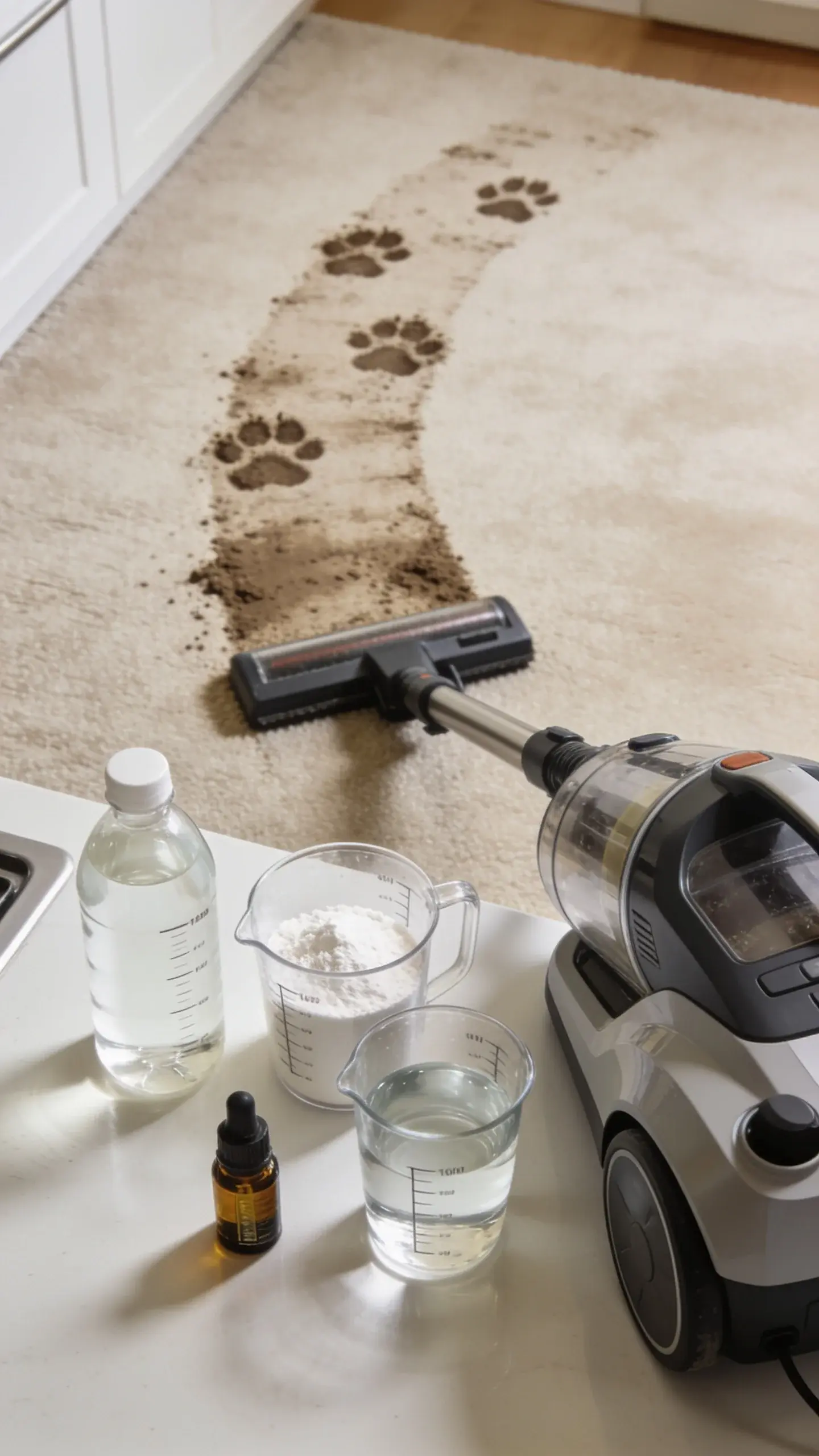
Pick one recipe that fits your situation. Don’t combine them all. Each works best for different messes and machines.
1) Everyday Deep Clean Mix (Residue-Free)
- Warm water: Fill your clean-water tank
- White distilled vinegar: 1/2 cup per gallon of water
- Isopropyl alcohol (70%): 1/4 cup per gallon
- Optional: 10 drops of essential oil (tea tree or lemon) for scent
Why it works: Vinegar cuts mineral residue and neutralizes odors, while alcohol speeds drying and helps dissolve oily grime. Low suds = happy machine.
2) Odor-Nuking Enzyme Boost (Pets, Milk, Mystery Smells)
- Warm water: Fill your tank
- Bio-enzyme cleaner (carpet-safe): 2–4 ounces per gallon, per product directions
- Optional: 1/4 cup white vinegar per gallon for extra deodorizing
Why it works: Enzymes break down organic stink at the source. Perfect for pet accidents that keep “reappearing.” FYI: Don’t mix enzymes with bleach or peroxide—ever.
3) Stain-Fighter Add-On (For Grim Traffic Lanes)
Use this as a pre-spray, not in the tank:
- Warm water: 2 cups
- White distilled vinegar: 1/2 cup
- Oxygen booster powder (sodium percarbonate, color-safe): 1 tablespoon
Spritz on traffic lanes, let sit 10 minutes, then extract with your regular tank mix. Test first on a hidden area, IMO.
How To Use Your Machine Like A Pro
Step-by-step so you don’t grind dirt deeper:
- Vacuum like you mean it. Two slow passes each direction. You want every crumb gone first.
- Spot treat. Hit stains with the Stain-Fighter pre-spray or a dedicated spot remover. Blot, don’t scrub.
- Fill the tank. Add your chosen DIY mix to the clean-water tank. Do not overfill.
- Slow, steady passes. One wet pass forward, one back. Then do two dry passes to suck up moisture.
- Rinse cycle. Run a quick pass with plain warm water to reduce residue. Your carpet will stay cleaner longer.
- Speed-dry. Open windows, turn on fans, and use a dehumidifier. Aim for under 6 hours dry time.
Pro Tips You’ll Thank Me For
- Work in sections. About 3×5 feet each. It keeps the mix active and prevents over-wetting.
- Watch your waste tank. If it looks foamy, you used something too sudsy. Stop and rinse.
- Edge tool matters. Use the hose for baseboards and stairs—grime hides there.
What To Do With Specific Stains
Because that “mystery orange blotch” isn’t going to remove itself.
Coffee, Tea, Soda
Blot with a white cloth first. Pre-spray with the Stain-Fighter mix. Extract with the Everyday Deep Clean mix. Still tinted? Repeat and add a pinch more oxygen booster to the pre-spray.
Pet Accidents
Blot liquids with paper towels. Saturate with the Odor-Nuking Enzyme mix and let it dwell 10–15 minutes. Extract thoroughly. If odor lingers, repeat enzyme treatment and skip vinegar that round—some enzymes work best without acid.
Grease, Makeup, Crayon
Lightly dab with isopropyl alcohol on a cloth, blot until transfer slows, then machine clean. Avoid scrubbing which spreads the oil.
Wine Or Juice
Blot, then pre-spray with oxygen booster mix. Let sit 10 minutes. Extract with your main solution. If pink hue remains, repeat once. Don’t use heat—it sets dye.
Keep Your Carpet Cleaner… Clean
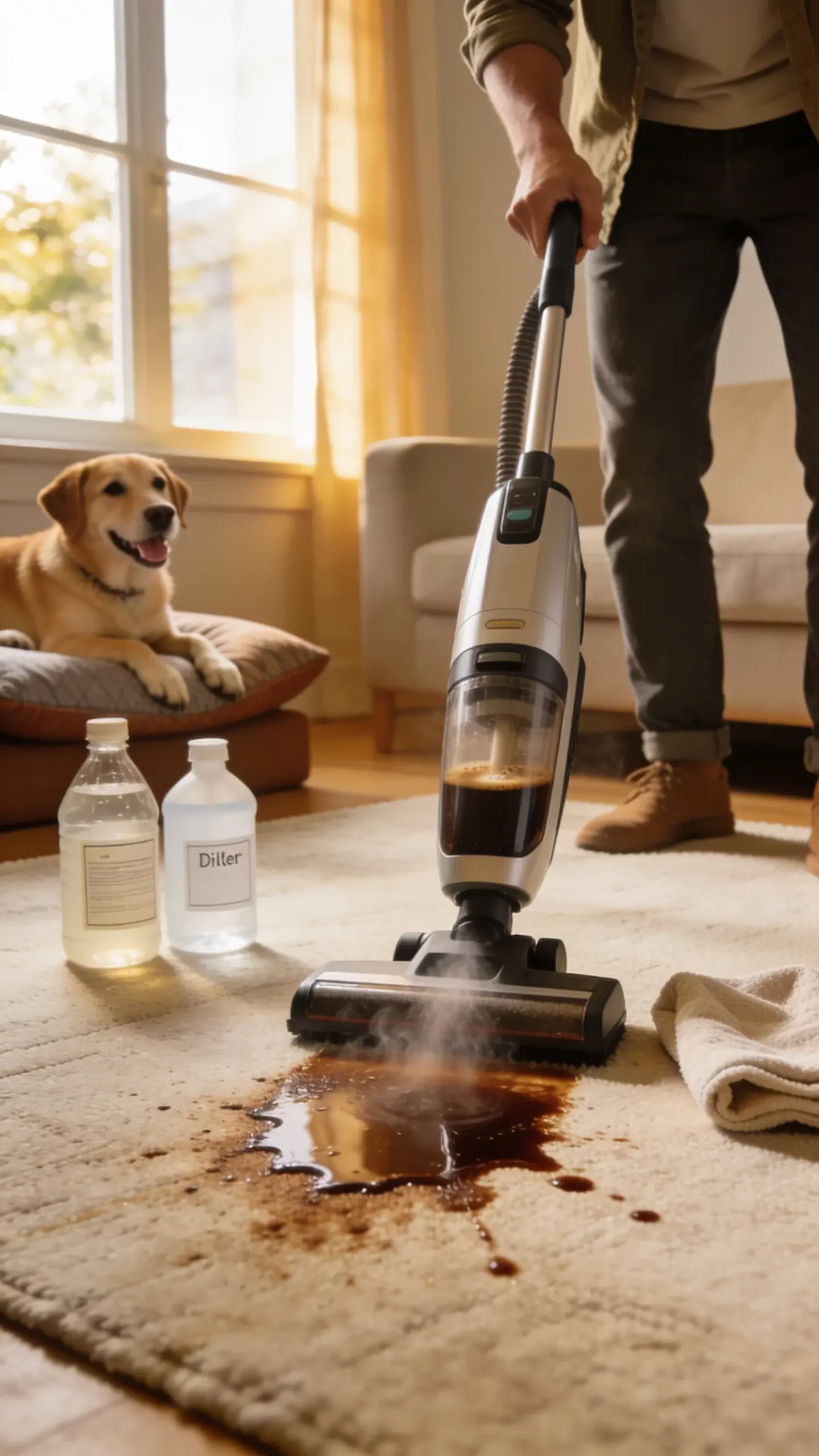
You cleaned the floors—now baby the machine for next time.
- Rinse tanks and lines. Run a quart of plain water through until discharge looks clear.
- De-gunk the brush roll. Hair and threads kill suction and agitation.
- Air-dry everything. Mildew smell in the machine = mildew smell in your carpet.
- Descale monthly with 1 cup vinegar in warm water through the system, then flush with clean water. Skip if your manual forbids it.
Budget And Ingredient Guide
Want numbers? Here’s the quick math, FYI.
- Vinegar: $3–$4 per gallon; you’ll use about $0.25 per full tank.
- Isopropyl alcohol: $2–$4 per pint; each tank costs ~ $0.50.
- Enzyme cleaner: $10–$20 per bottle; per-tank cost ~$1–$2.
- Oxygen booster: $5–$10; pennies per pre-spray.
Net result? You’ll pay under $2 per full-house cleaning instead of $8–$15 in branded juice. Not bad, IMO.
Common Mistakes (And How To Dodge Them)
- Over-wetting. Soaked pads can wrinkle carpet and feed mold. Do extra dry passes.
- Skipping a rinse. Residue grabs dirt. Quick rinse = longer between cleanings.
- Mixing random chemicals. Don’t go Breaking Bad in your tank. Keep it simple.
- Ignoring wool or natural fibers. Test first and avoid oxygen boosters or high heat on wool and sisal.
DIY Carpet Cleaner FAQs
Can I use dish soap in my carpet cleaner?
Short answer: No. Dish soap foams like crazy and can clog or damage your machine. It also leaves residue that attracts dirt. You’ll clean today and feel grimy again next week.
Is vinegar safe for all carpets?
Vinegar works for most synthetics like nylon and polyester. For wool or natural fibers, keep vinegar very diluted and test in a hidden spot. If color transfers or texture changes, stop and use a wool-safe detergent instead.
Do enzymes really remove pet odors?
Yes, when you give them time. Enzymes need contact time to break down odor-causing compounds. Keep the area damp with the solution for 10–15 minutes, then extract thoroughly for best results.
How often should I deep clean?
Every 3–6 months for busy homes, and after big spills right away. If you have pets, kids, or both (chaos mode), aim for every 2–3 months in high-traffic areas.
What if my carpet feels crunchy afterward?
That’s residue. Run a rinse cycle with plain warm water and do extra dry passes. If needed, a very light vinegar-water pass followed by a rinse can finish the job.
Can I add essential oils?
Yes, a few drops only. Too much oil can attract dirt or gum up hoses. Stick to 5–10 drops per gallon and avoid anything colored that might stain.
Conclusion: A Cleaner Carpet Without The Drama
You don’t need a fancy potion to get pro-level results. With a solid pre-spray, a low-sudsing DIY mix, and a couple of slow, patient passes, your carpets will look fresh and smell legit clean. Save the cash, skip the residue, and flex those freshly revived fibers. Your socks will notice—promise.

I’ve spent 10+ years in dog training, digging into what makes dogs (and their humans) tick. At Smart Dog Learning, I share my no-nonsense, fun approach to training so you can enjoy life with a well-behaved, happy pup—no boring lectures, just practical results 😉