DIY Oven Cleaner That Cuts Through Grease Naturally
Your oven called. It wants its sparkle back without the toxic fumes, rubber gloves up to your elbows, or a three-day kitchen quarantine. Good news: you can make a powerhouse cleaner from pantry staples that actually works. We’re talking stuck-on, baked-on, “how is that even food?” kind of grime. Ready to banish the crud and keep your lungs happy?
Why Go Natural (And Still Get Beast-Mode Cleaning)
You don’t need harsh chemicals to crush grease. Baking soda lifts grime, vinegar breaks it down, and a little dish soap emulsifies those clingy oils. You get the clean without the coughing fit. Plus, your house won’t smell like a science lab exploded.
Bottom line: Natural doesn’t mean weak. It means smarter—and way cheaper.
The Magic Mix: Your DIY Grease-Crushing Paste
Let’s build the star of the show. This paste sticks to surfaces, clings to grime, and wipes off like a dream.
Ingredients
- 1/2 cup baking soda (grease-lifting hero)
- 2–3 tablespoons dish soap (cuts oil; go unscented if you’re sensitive)
- 2–4 tablespoons white vinegar (start slow to control fizz)
- 1–2 tablespoons water (only if you need to loosen the paste)
- Optional: 10 drops lemon or orange essential oil for scent and extra degrease mojo
Directions
- In a bowl, stir baking soda + dish soap until thick.
- Slowly drizzle in vinegar. It’ll fizz—be patient and mix until creamy.
- Add a splash of water only if it feels too stiff. You want a spreadable frosting, not soup.
- Drop in essential oil if you like. Not mandatory, but smells like victory.
Pro tip: Make only what you’ll use today. The fizz fades, and fresh paste works best.
Step-By-Step: From Crusty To Clean
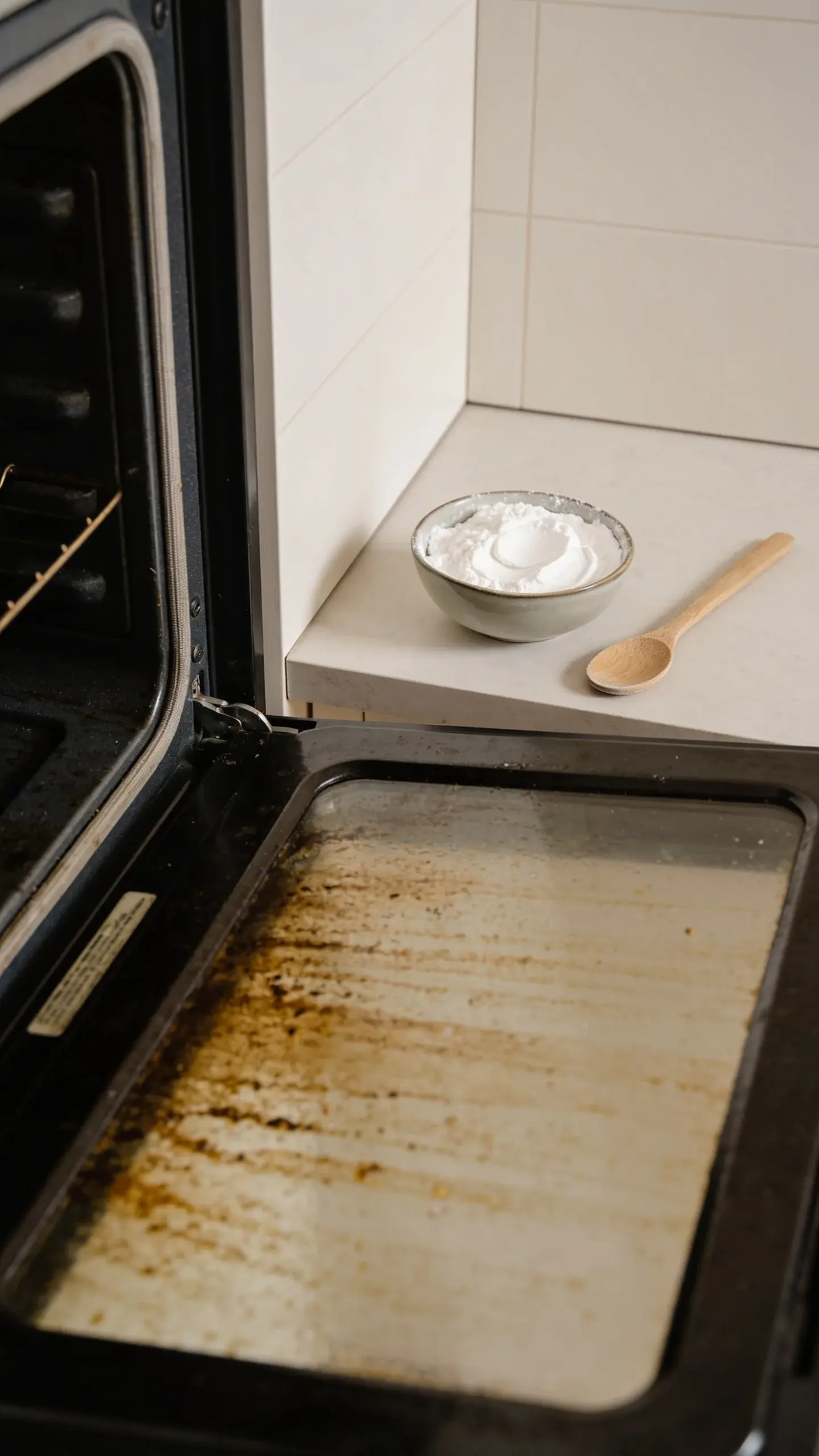
You don’t need a hazmat suit—just a plan.
1) Prep The Battlefield
- Remove the racks. We’ll handle those separately.
- Wipe out loose crumbs with a dry cloth or handheld vacuum.
- Crack a window, because fresh air is free and nice.
2) Frost The Oven (Generously)
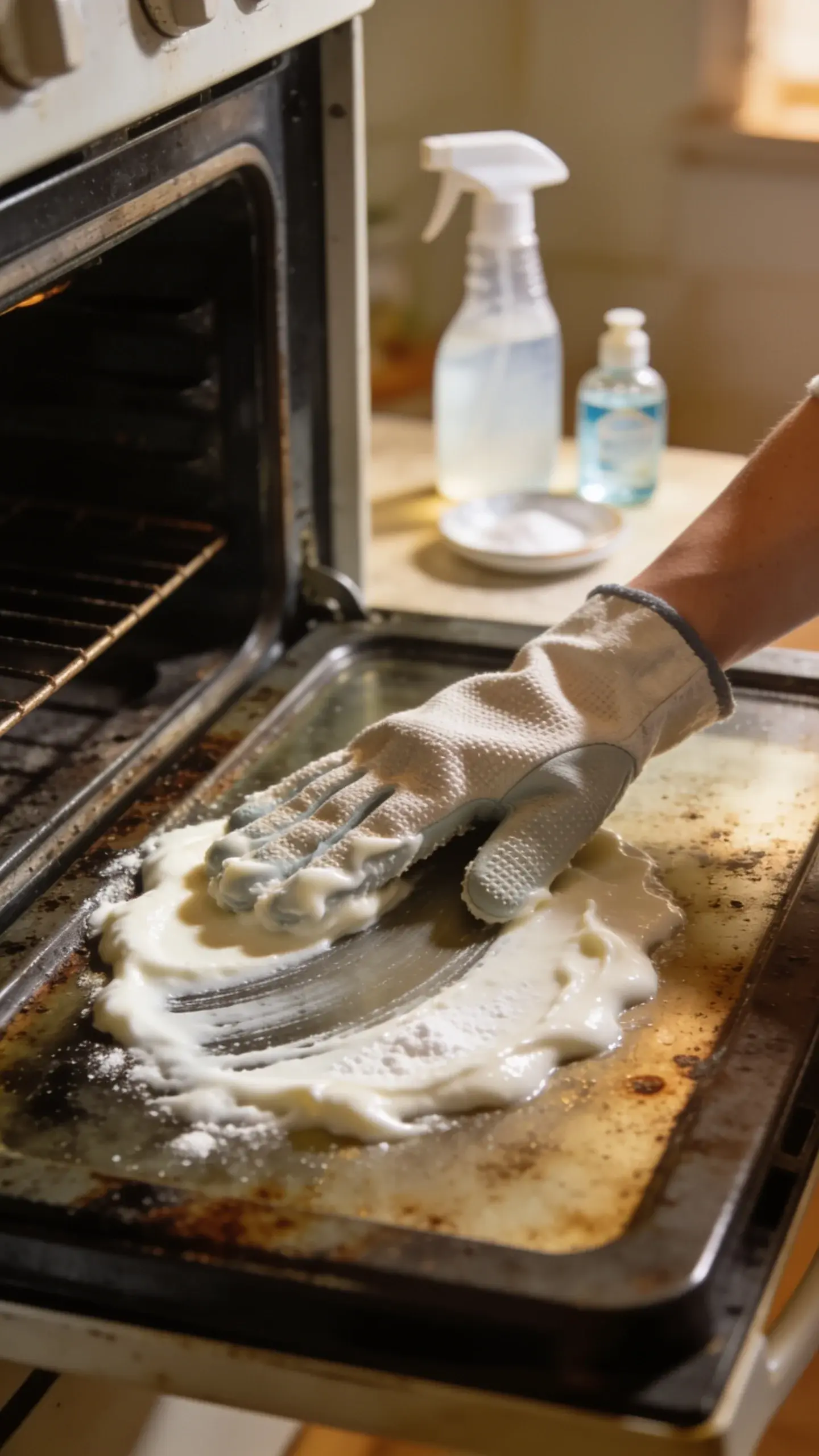
- Use a silicone spatula or gloved hand to spread the paste across the interior: floor, walls, and door.
- Avoid heating elements and vent holes. We like clean, not broken.
- For the glass, go thinner—paste can hide in the seal if you glob it on.
3) Let It Work While You Don’t
- Set a timer for 30–60 minutes. For “oh no” levels of grime, leave it overnight.
- Light mist of vinegar halfway through if it dries out. Hear that fizz? That’s the sound of progress.
4) Wipe, Rinse, Revel
- Use a damp microfiber cloth to scoop up the paste. Rinse the cloth often.
- Stubborn patches? Hit them with a non-scratch scrub pad or a plastic scraper.
- Finish with a vinegar + water spritz (50/50) and a final wipe for streak-free shine.
IMO: That last vinegar spritz is the difference between “clean-ish” and “dang, that gleams.”
What About The Racks? (Because They’re Gross Too)
Racks collect gunk like it’s their hobby. Let’s fix that without hunching over your sink forever.
Soak Method
- Plug your tub or big sink. Lay down an old towel to protect surfaces.
- Fill with hot water and add 1/2 cup baking soda + a generous squirt of dish soap.
- Submerge racks for 2–4 hours (overnight for stubborn mess).
- Scrub with a non-scratch brush or sponge. Rinse and dry.
No-Tub Option
- Slip racks into a large contractor bag.
- Add 1/4 cup baking soda and a small bowl of hot water for humidity.
- Seal, lay flat, let steam and soda do their thing for 2 hours.
- Open outdoors, scrub, rinse. Done.
Troubleshooting: When Gunk Fights Back
Even natural cleaners need a game plan for nightmare zones.
- Caramelized sugar or cheese fossils: Lay a vinegar-soaked cloth on the spot for 10 minutes, then scrape gently with a plastic scraper.
- Burnt corners and edges: Use an old toothbrush dipped in paste. Tiny bristles, mighty results.
- Grease shadow won’t quit: Repeat a thin coat of paste, wait 20 minutes, wipe again. Layers out, layers off.
- Lingering smell: Bake a shallow pan of water + lemon slices at 250°F (120°C) for 20 minutes. Smells clean, not fake.
Keep It Clean Longer (So You Don’t Do This Again Soon)
Maintenance beats marathon scrubs. Every time.
Quick Wins
- Wipe after warm-up: When the oven’s slightly warm (off, obviously), a damp cloth erases fresh splatters fast.
- Roasting on a sheet? Use parchment or a silicone mat to catch drips.
- Big bakes: Put a spill tray on the lower rack. Saved me countless cleanups, FYI.
- Monthly mini-clean: 10-minute vinegar spritz + wipe. Future you says thanks.
Safety Notes You’ll Actually Read
Because common sense keeps your warranty and your eyebrows intact.
- Avoid the self-clean cycle right before or after deep cleaning. It can bake residue onto surfaces and stress components.
- No steel wool or razor blades on glass. Scratches = permanent sadness.
- Don’t soak the door seals. Those gaskets need to stay springy to hold heat.
- Patch test your paste on a small area if you have specialty coatings.
FAQs
Can I use this on a self-cleaning oven?
Yes, just keep the paste off the heating elements and vents. The interior coating can handle the baking soda mix, but go gentle on the glass and avoid razor scrapers. If the manual forbids any cleaners, use the paste sparingly and wipe thoroughly.
Will vinegar damage my oven?
Not when used lightly and wiped quickly. Vinegar helps dissolve grease films and neutralizes baking soda. Don’t let pools sit in crevices or on aluminum parts for long periods—wipe dry after cleaning.
What if my oven smells like chemicals from past cleaners?
Do a full natural clean with the paste, then bake a pan of water with lemon slices at 250°F (120°C) for 20 minutes. If the smell persists, repeat once and ventilate. The odors usually cling to leftover residue, which your paste removes.
Can I swap baking soda for washing soda?
You can, but washing soda is more alkaline and harsher on skin and some finishes. IMO, baking soda hits the sweet spot: strong enough for grease, gentle enough for regular use.
How do I clean between the oven door glass panels?
Some doors unscrew at the top—check your manual. If accessible, use a long bottle brush with a microfiber cloth lightly dampened with vinegar-water. If it’s sealed, don’t pry; you’ll risk damage. Live with it or call a pro. Annoying? Yes. Necessary? Also yes.
Is this safe for convection fans?
Don’t glob paste on or around the fan cover. Wipe that area with a damp cloth and a tiny bit of dish soap instead. Keep liquids minimal near any vents.
Conclusion: Clean Oven, Happy Brain
You just built a natural cleaner that punches way above its weight. It clings, lifts, and wipes out grease without burning your lungs or your weekend. Keep a small jar of the paste on standby, do quick monthly touch-ups, and you’ll never fear opening that oven door again. IMO, that’s domestic bliss—minus the drama.
Printable Recipe Card
Want just the essential recipe details without scrolling through the article? Get our printable recipe card with just the ingredients and instructions.

I’ve spent 10+ years in dog training, digging into what makes dogs (and their humans) tick. At Smart Dog Learning, I share my no-nonsense, fun approach to training so you can enjoy life with a well-behaved, happy pup—no boring lectures, just practical results 😉