

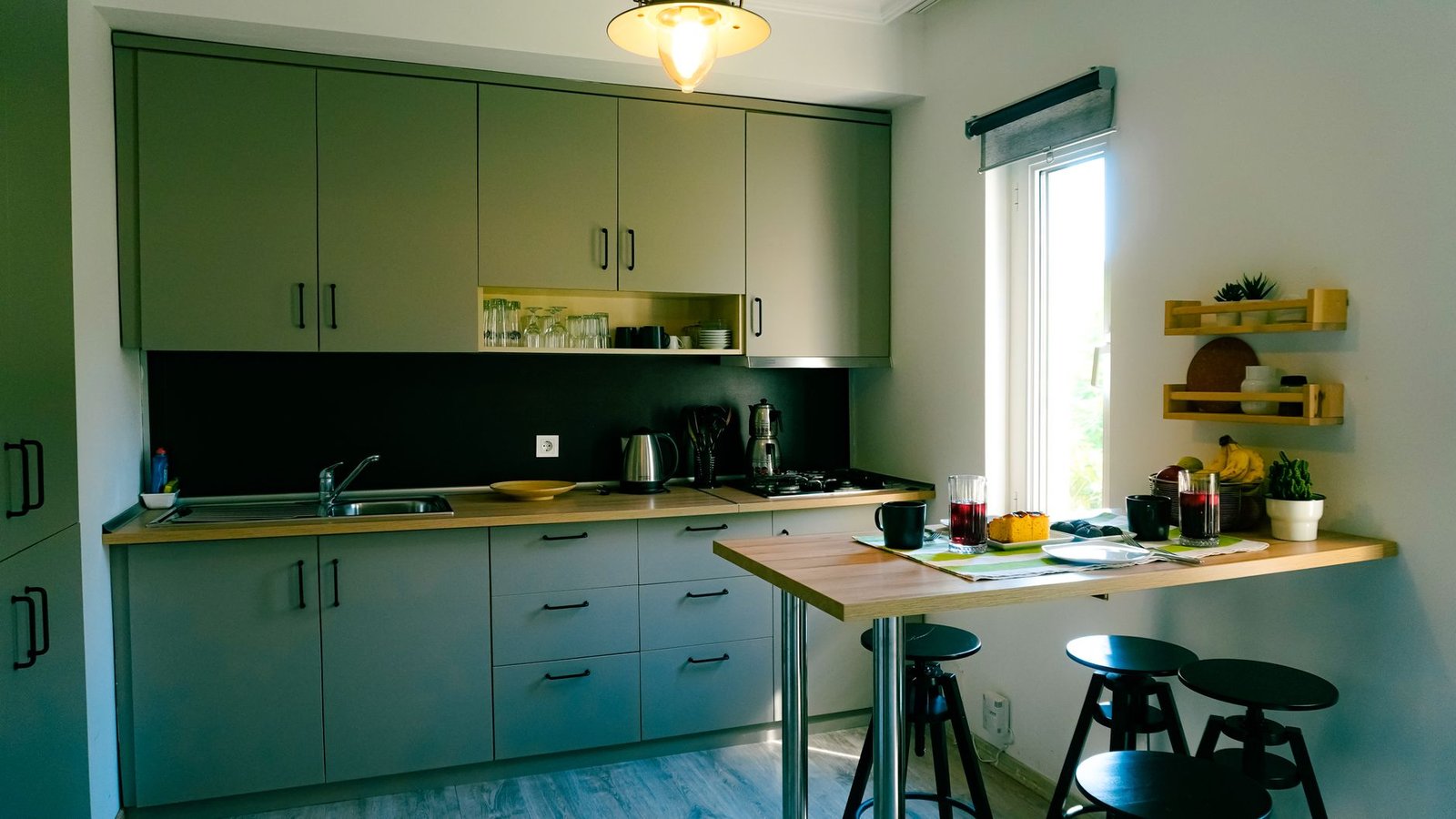
Most kitchens aren’t too small. They’re just packed with things in the wrong places. The colander lives three steps from the sink, and the mugs are nowhere near the coffee maker.
These kitchen organization ideas go spot by spot through the eight places that get messy: upper and lower cabinets, under the sink, the corner, two kinds of drawers, the counters and the pet station.
Start with a quick edit
Organizing clutter just gives you neater clutter. Before you buy a single bin, cut down what you own.
- Pull out duplicates. Most of us own four spatulas and use one.
- Match every container to a lid. Recycle the orphans.
- Box up the once-a-year stuff, like the turkey roaster and cookie cutters, for the garage or a high shelf.
- Donate gadgets you haven’t touched in a year.
Do one cabinet at a time if a whole kitchen feels like too much. Twenty minutes a night works fine.
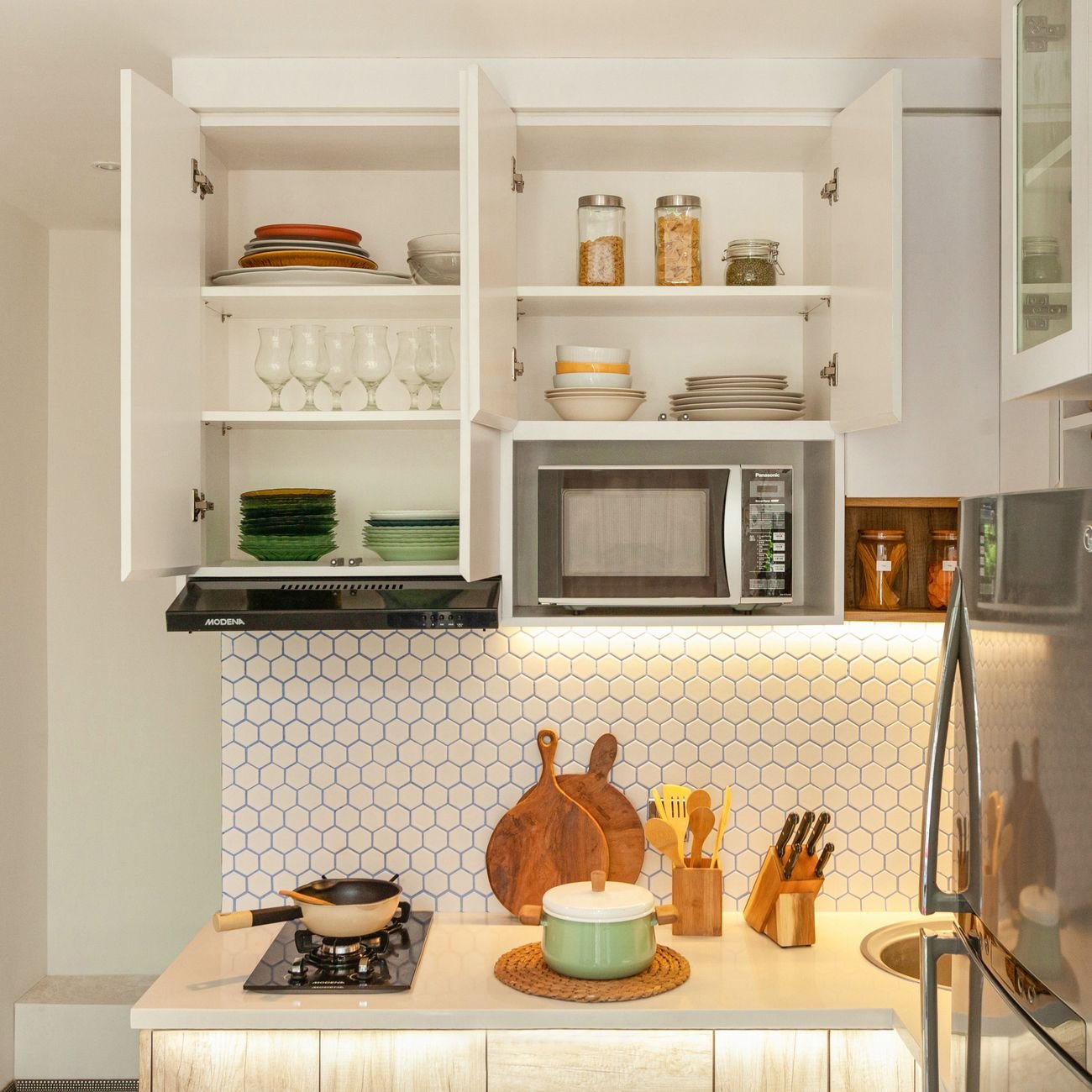
Set up zones that match how you cook
Every item should live near where you use it. Think of your kitchen in five zones.
- Prep: knives, cutting boards, mixing bowls, measuring cups. Near your biggest stretch of counter.
- Cooking: pots, pans, oils, spatulas and spices. Next to the stove.
- Cleaning: dish soap, towels, trash and recycling. By the sink.
- Serving: plates, bowls, glasses and cutlery. Close to the dishwasher so unloading is quick.
- Storage: food containers, wraps and foil. Near the fridge.
Upper cabinets
Uppers are prime real estate, so give them to the things you grab every day.
- A never-mix chart: the cleaner combinations that make toxic fumes
- A surface guide: what not to use on stone, wood, cast iron and more
- 5 starter cleaners and a shopping list
- Put everyday plates, bowls and glasses on the lowest shelf you can reach easily.
- Add a wire shelf riser to stack mugs over plates and double the space.
- Keep heavy items low and light, rarely used things up top.
- Use a step stool you can actually reach, not a chair you climb on.
Food storage is a job of its own. Our pantry organization system covers the rest of your food storage.
Lower cabinets
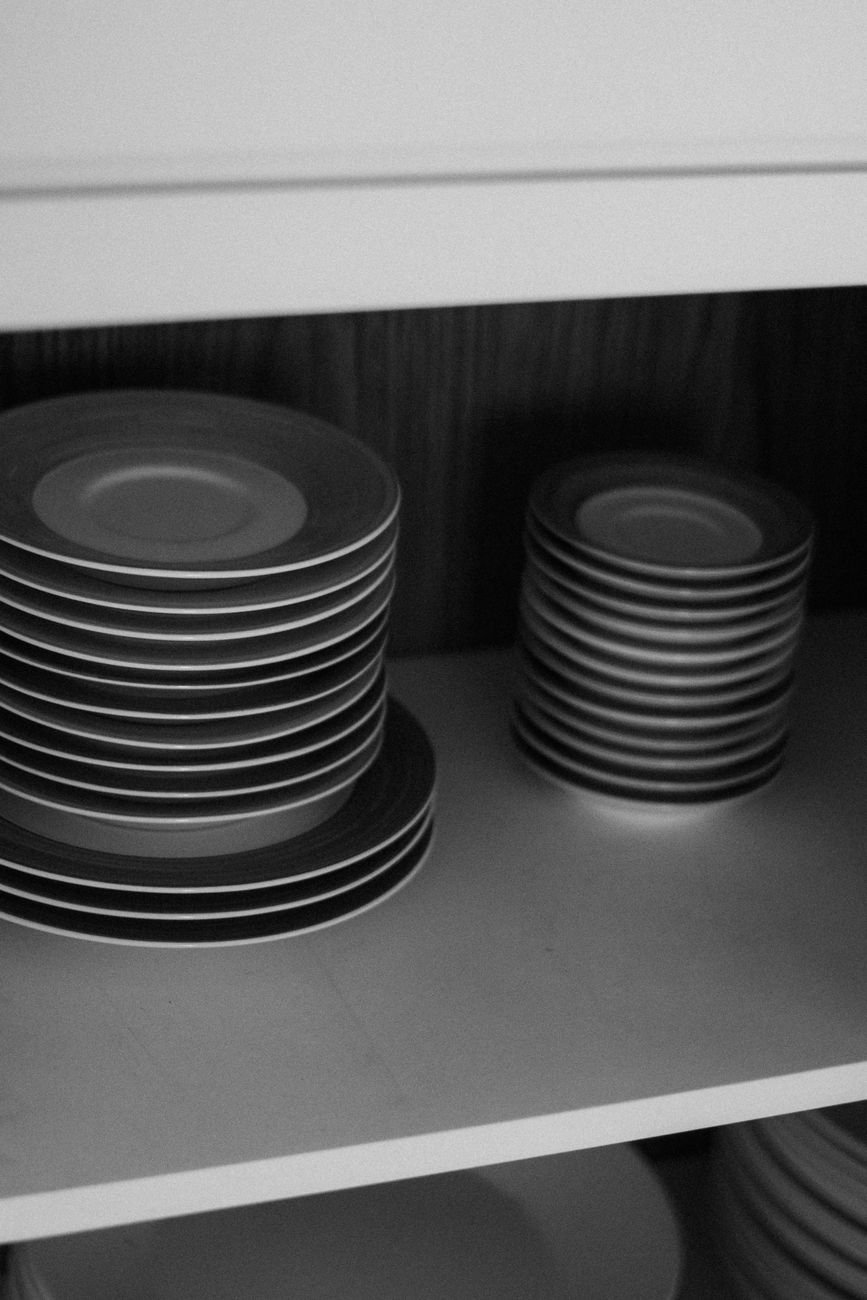
Deep base cabinets swallow things. The fix is to make the back of the cabinet come to you.
- Pull-out bins or sliding baskets turn a dark cave into a drawer.
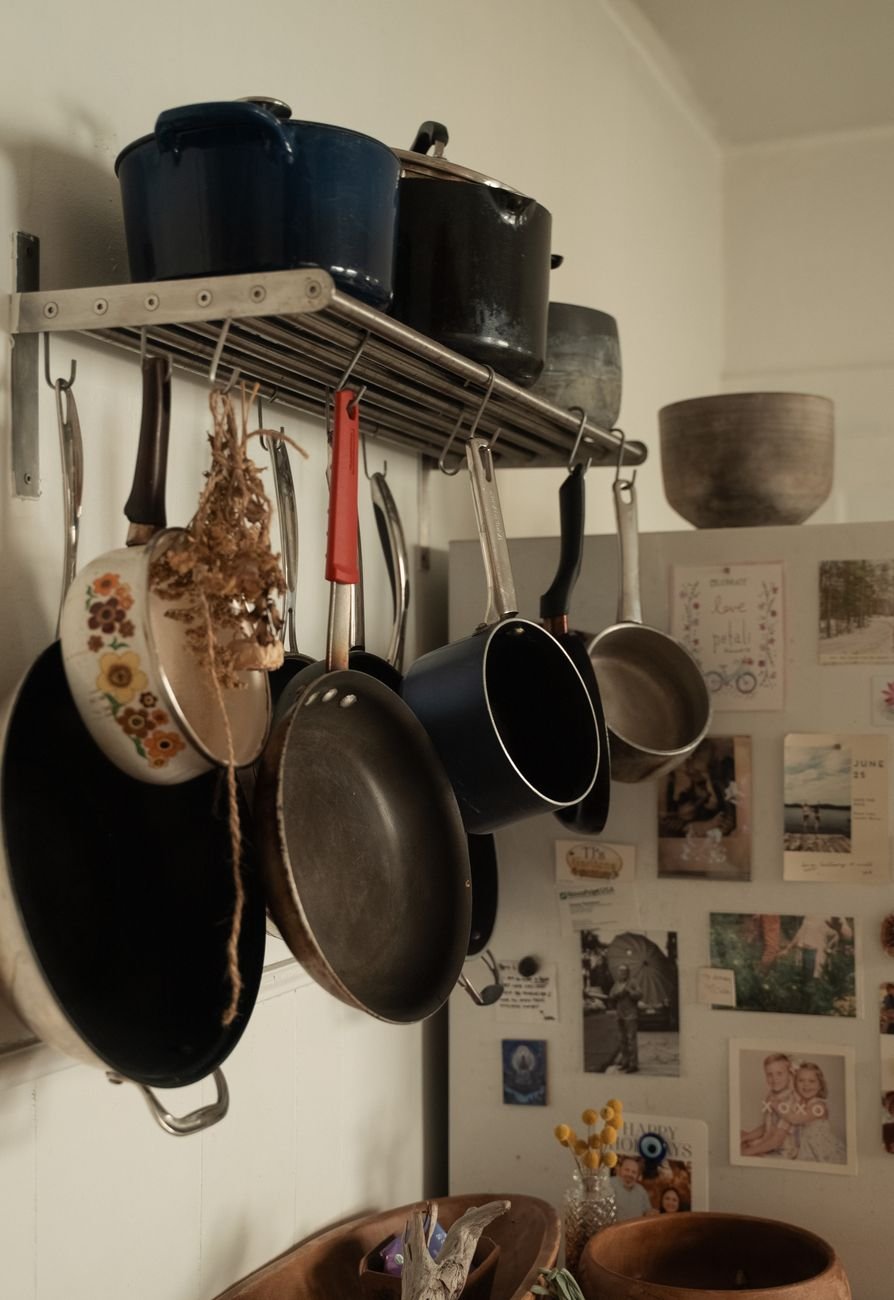
- Store pans on their sides in a vertical rack, like files in a folder. No more lifting five to get one.
- Baking sheets and cutting boards also stand up best, in a tension-rod divider.
- Small appliances you use weekly go in front. The rest go in the back or out of the kitchen.
Under the sink
This cabinet gets wet, has pipes in the way and holds the stuff you least want a toddler or a puppy to find.
- Use a two-tier sliding organizer built to fit around the pipes.
- Hang spray bottles on a tension rod by their triggers.
- Keep cleaners in their original, labeled containers. Never store a homemade mix in an unlabeled bottle.
- Keep bleach away from ammonia, vinegar and other acid cleaners. Mixing them makes toxic fumes.
- Add a childproof latch if you have kids or a curious dog. Plenty of dogs learn to open cabinet doors.
A small tray on the floor of the cabinet catches drips and makes leaks easy to spot.
The corner cabinet
Blind corners are where good intentions go to die. You have a few options, depending on budget.
- A lazy Susan (turntable) is the cheapest fix and works well for oils, sauces and canned goods.
- A pull-out blind corner shelf costs more but brings the whole back corner into view.
- Or give up on it gracefully. Store the roasting pan and holiday platters there and stop fighting it.
The utensil drawer
One drawer, one job. The utensil drawer gets messy when it becomes the overflow for everything else.
- Use an expandable divider so it fits wall to wall with no sliding.
- Keep one of each tool you use weekly. Backups go elsewhere.
- Store cooking utensils in a crock by the stove if your drawer is small.
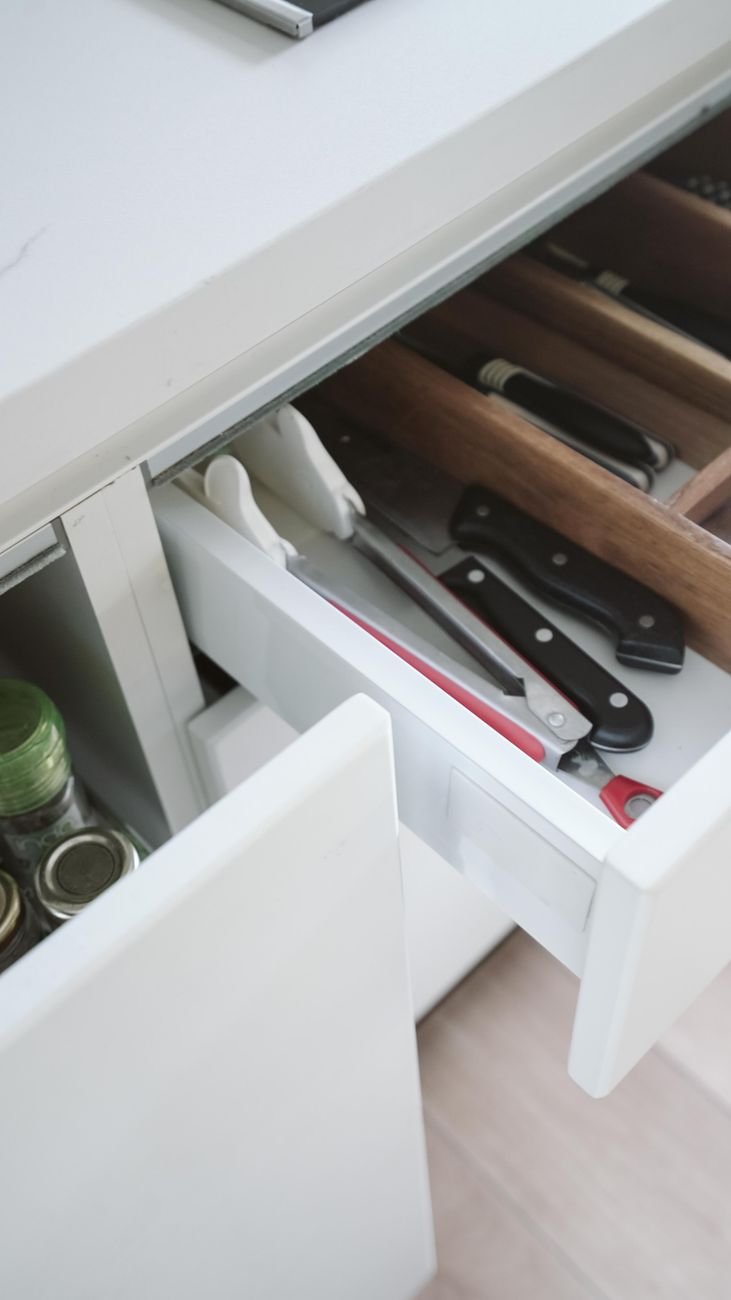
- Put sharp knives in a knife block, a magnetic strip or a guarded drawer insert, never loose.
The junk drawer is its own project. Give it a small divider tray and one rule: if it doesn’t fit, it doesn’t stay.
Deep drawers
Deep drawers are often better than cabinets for heavy things, because you look down into them.
- A pegboard insert holds plates and bowls in place. Kids can reach their own dishes this way.
- Pots nest by size, with lids standing upright in a lid rack along one side.
- Food storage containers nest too, with lids filed vertically in a bin.
- Dish towels roll up neatly in a shallow drawer by the sink.
Countertops
Clear counters make a kitchen feel twice as big, and they’re faster to wipe down.
- Keep only what you use daily: coffee maker, knife block, a utensil crock, maybe a fruit bowl.
- Group small items on a tray so you can lift them all at once to clean.
- Make a drop zone for mail and keys somewhere that isn’t your prep counter.
If your cabinet fronts are sticky, now’s the time to deal with that too. Here’s how to clean kitchen cabinets covered in grease.
Give your pet a station
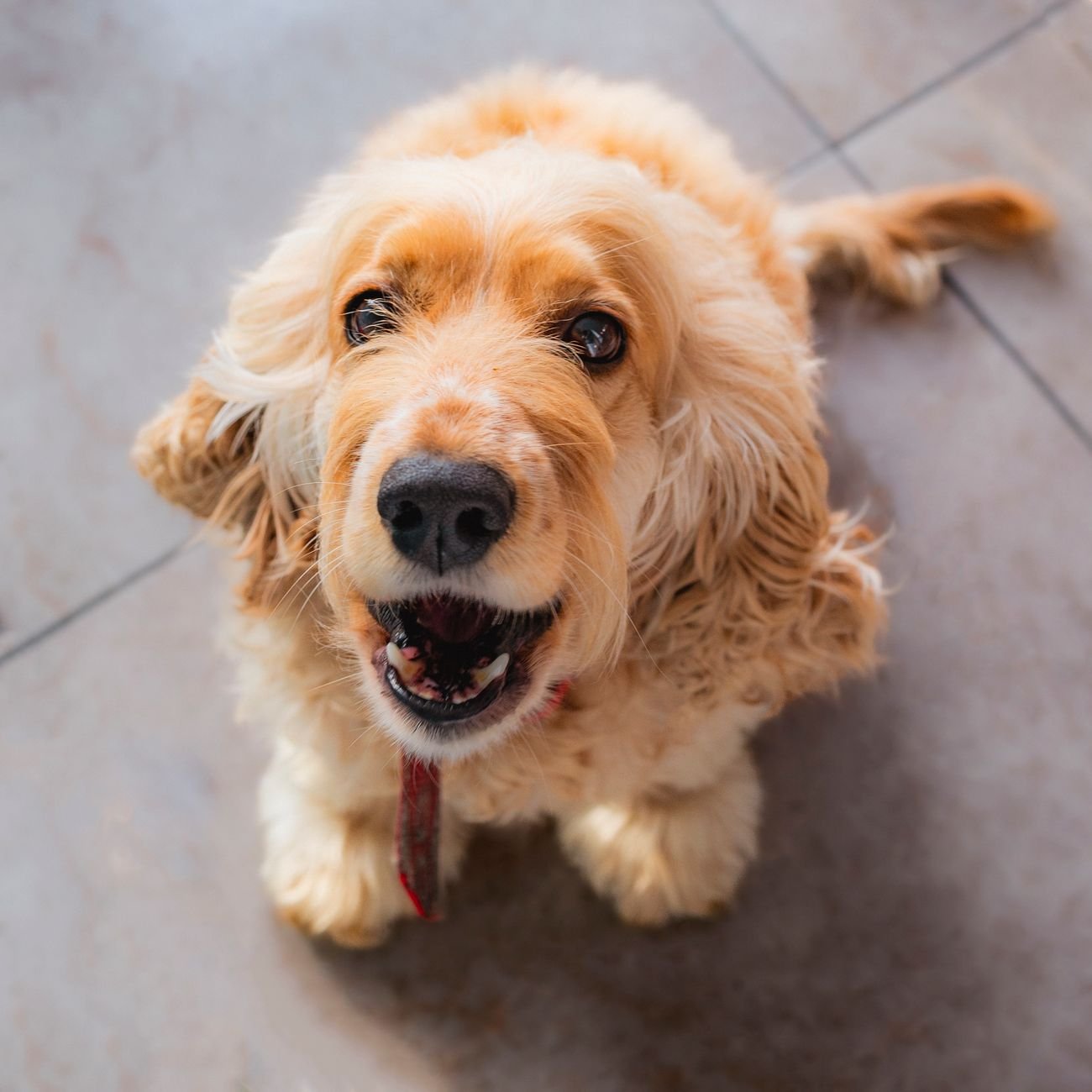
Dog and cat supplies tend to scatter across the kitchen. One small station keeps it all together.
- Bowls on a washable mat, out of the main walkway.
- Food in an airtight bin with the original bag inside, plus the scoop.
- Treats, meds and supplements on a high shelf. Dogs can be very determined.
- Keep people food your pet shouldn’t eat, like chocolate, grapes, raisins, onions and anything with xylitol, well out of reach.
Wash food and water bowls often, ideally after every meal for food bowls.
Keep it organized
The first setup is the hard part. Keeping it is mostly a few small habits.
- Put things back in the same spot every time. Labels on shelf edges help the whole family.
- Do a five-minute reset after dinner: counters clear, dishwasher loaded.
- One in, one out for gadgets and mugs.
- Re-edit twice a year. Your cooking changes, and your kitchen should too.
Common questions
Where should I start organizing my kitchen?
Start with the cabinet that annoys you most. A quick win keeps you going.
Should I buy organizers first?
No. Edit and measure first, then buy only what solves a real problem.
How do I organize a kitchen with no pantry?
Use one tall cabinet or a rolling cart for food, and keep it zoned like a mini pantry.
What’s the best way to store pots and pans?
In deep drawers or on vertical racks, with lids stored separately and upright.
How do I keep my dog out of the kitchen cabinets?
Fit childproof latches on low doors, especially under the sink and wherever you keep food or trash.



Leave a Reply