
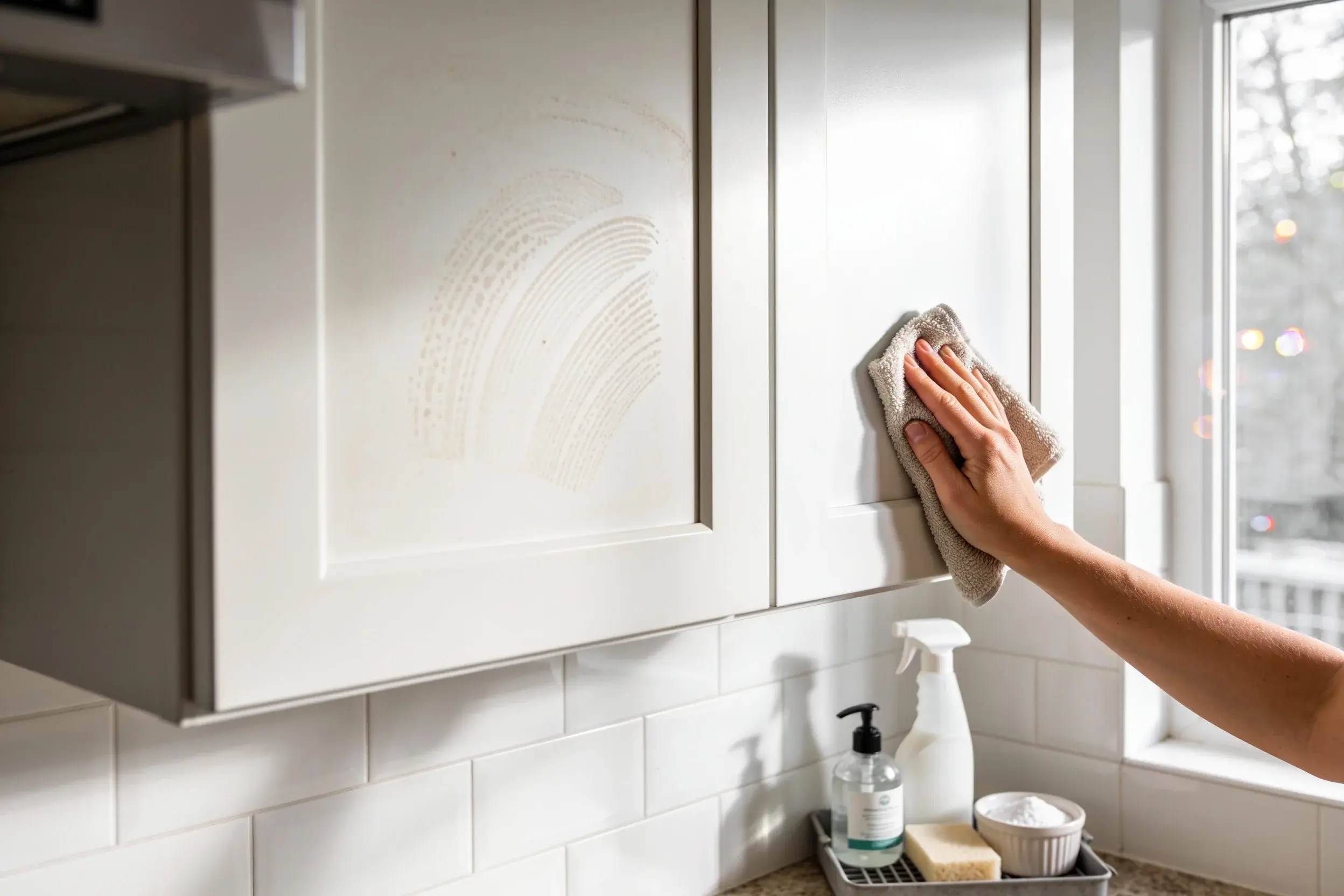
How To Clean Kitchen Cabinets Covered In Grease
Grease happens. One day your cabinets look fine, and the next they’re wearing a shiny, sticky jacket that laughs at your dish soap. The good news? You can fix it fast with the right cleaners and a few pro moves. Let’s get those cabinets back to clean and classy without turning your kitchen into a chemistry lab.
Take Stock: What Are Your Cabinets Made Of?
You can’t treat all cabinets the same. Wood, painted MDF, laminate, and lacquered finishes all behave differently when you attack them with cleaners. Quick check first saves you from a dull, cloudy disaster later.
Common Cabinet Types And What They Tolerate
- Sealed/painted wood: Handles mild degreasers and gentle scrubbing. Avoid soaking.
- Unfinished or lightly sealed wood: Go gentle—think diluted soap and quick drying.
- Laminate: Tougher surface, but still avoid harsh abrasives and pure ammonia.
- Lacquer/high-gloss: Use the mildest cleaners and soft cloths to avoid hazing.
Gather Your Grease-Busting Toolkit
You don’t need a cart of fancy products. A few supermarket staples work wonders.
- Microfiber cloths (several) and soft sponges
- Dish soap (the grease-fighting kind)
- White vinegar and/or rubbing alcohol (70%)
- Baking soda (for gentle scrubbing)
- Mineral oil or olive oil (tiny amount) for stubborn tar-like grease
- Old toothbrush or detailing brush for corners and hardware
- Spray bottle, bowl, and warm water
- Optional: Commercial citrus-based degreaser (diluted), wood polish/conditioner
FYI: Wear gloves. Grease is clingy and so are strong dish detergents.
The 3-Level Attack Plan (Start Mild, Escalate Slowly)
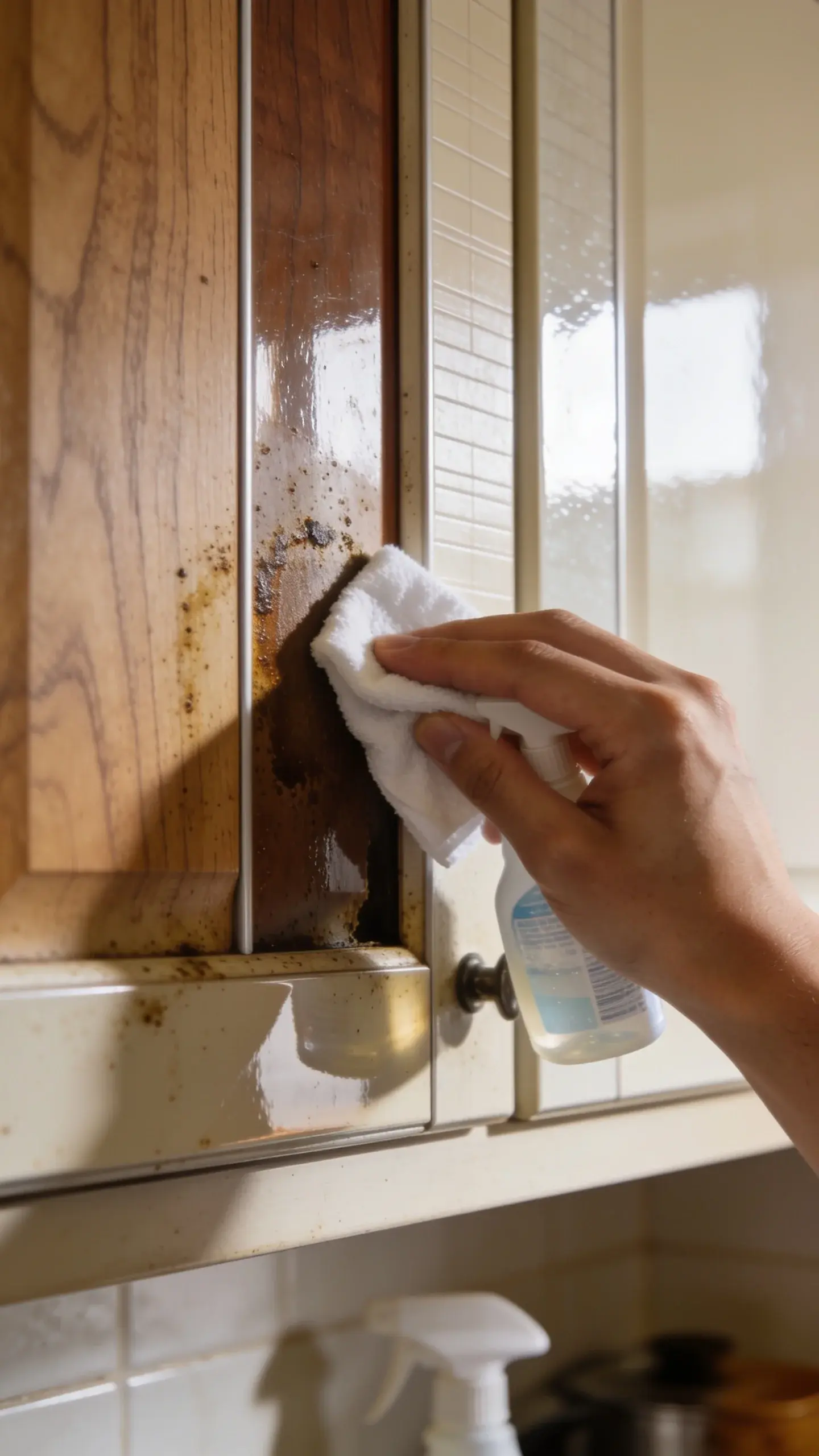
Grease wants drama. Don’t give it any. Start light and upgrade only if needed.
Level 1: Soap And Warm Water
- Mix 1 teaspoon dish soap in 2 cups warm water. Fill a spray bottle or bowl.
- Wipe loose dust first with a dry microfiber cloth.
- Lightly mist or dip a cloth, then work in small sections. Wipe with the grain on wood.
- Rinse cloth often. Grease just smears if your cloth is saturated.
- Follow with a damp cloth of plain water, then immediately dry with a fresh towel.
If it looks better but still tacky, move to Level 2.
Level 2: Vinegar Boost Or Alcohol Assist
- Vinegar mix: 1:1 white vinegar and warm water, plus 1 small drop dish soap.
- Alcohol mix: 1 part rubbing alcohol to 2 parts water for glossy/painted finishes.
Spray, wait 1–2 minutes (no marinating), then wipe. Vinegar dissolves fatty buildup; alcohol flashes off fast and prevents streaks. Dry thoroughly. If grease still says “nah,” go Level 3.
Level 3: Gentle Abrasion Or Oil-Lift Trick
- Baking soda paste: 3 parts baking soda to 1 part water. Dab on greasy spots, wait 2–3 minutes, then rub gently with a soft sponge. Rinse and dry.
- Oil-lift trick: Rub a teeny drop of mineral or olive oil onto tar-like blobs. The oil loosens the sticky layer. Follow with soapy water to remove the oily residue. IMO, this works magic on handles.
- Citrus degreaser: Dilute per label, test in a hidden spot, apply briefly, then rinse well. Never let it sit long on natural wood.
Tackle Hardware, Edges, And Sneaky Spots
Grease hides where your hands land. Let’s evict it.
- Handles/knobs: Remove them if possible. Soak in hot, soapy water for 10–15 minutes, scrub with a toothbrush, rinse, and dry before reinstalling.
- Edge lips and grooves: Use a toothbrush dipped in your Level 1 or Level 2 mix. Wipe residue immediately.
- Hinges: Wipe only. Avoid saturating. If gunky, a cotton swab with diluted alcohol helps.
Wood-Specific Care (So You Don’t Dull The Finish)
Wood loves attention but hates soaking. Treat it like a fancy coffee table that lives in your kitchen.
- Always wipe dry: Water sitting on wood = raised grain and cloudy finish.
- Avoid harsh alkalines: Skip oven cleaner, ammonia, and strong TSP mixes on wood doors.
- Refresh the sheen: After cleaning, add a thin coat of a wood polish or conditioner. Buff with a dry microfiber for a subtle glow.
Dealing With Painted Cabinets
- Use Level 1 or Level 2 only. Baking soda can dull matte paint if you scrub aggressively.
- For scuffs, try a magic eraser very lightly. Test first—those sponges are micro-abrasive.
Set Up A Grease-Smart Routine
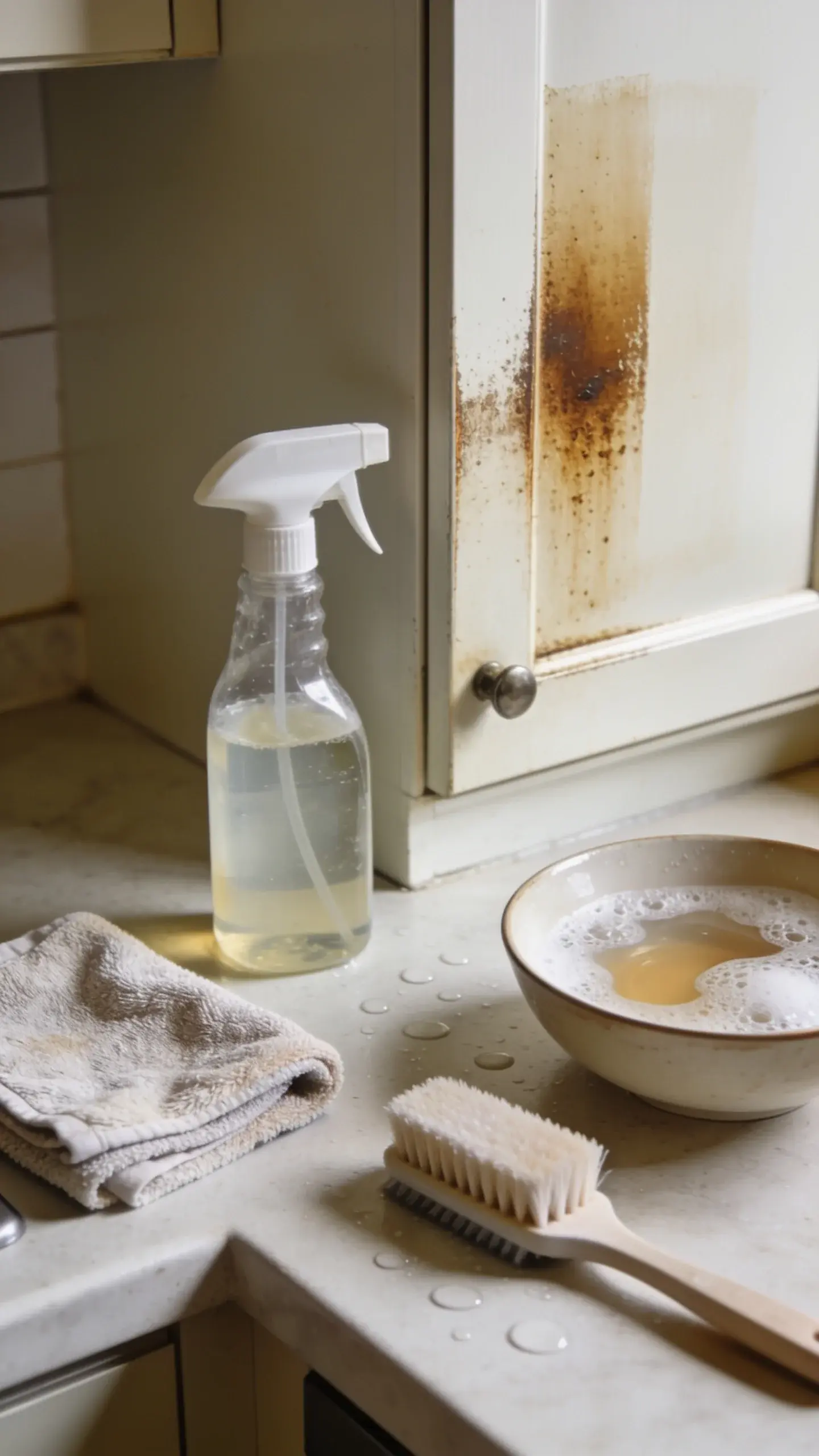
Want to never face a week-long scrub-a-thon again? Make it bite-sized.
- Weekly: Quick wipe of high-traffic doors (near stove, trash pull-out, and top cabinet lips) with soapy water.
- After heavy cooking: Wipe splash zones around the range with vinegar mix.
- Monthly: Deep-clean handles and edges. Consider swapping to easy-clean hardware.
- Vent hood check: Run the fan every time you cook. Clean the hood filters monthly. Pre-emptive strike FTW.
Products That Actually Help (And What To Skip)
Worth trying:
- Citrus-based degreaser (diluted)
- Blue Dawn (or similar) for Level 1/2 combos
- Microfiber cloths (seriously, game-changer)
Skip or be very cautious with:
- Oven cleaner and strong ammonia
- Undiluted vinegar on natural stone counters near your cabinets (it etches)
- Steel wool or rough scouring pads
FYI: The best cleaner is the one you’ll actually use every week. Fancy doesn’t beat consistent.
FAQs
Can I use straight vinegar on wood cabinets?
You can, but I wouldn’t. Straight vinegar can dull some finishes over time. Mix it 1:1 with water and add a drop of dish soap. Always test in a hidden spot and dry immediately.
What if the grease feels waxy and just smears?
Use the oil-lift trick: massage a tiny amount of mineral or olive oil into the smear, then wash with warm soapy water. It breaks up that gummy, oxidized layer. Rinse and dry. Yes, using oil to clean oil sounds wild, but it works.
Will baking soda scratch my cabinets?
Used gently, baking soda acts like a soft scrub. On glossy or matte painted finishes, test first and go easy. If you see dulling, switch to the vinegar or alcohol mix instead.
How do I clean the top of cabinets with years of gunk?
Lay down paper towels soaked in warm soapy water for 5–10 minutes to soften the grime, then scrape gently with a plastic scraper. Follow with vinegar mix. Pro tip: after cleaning, line the top with wax paper or shelf liner. Future-you will cheer.
Are commercial degreasers safe for all finishes?
Not all of them. Choose a citrus-based or kitchen-specific degreaser, dilute as directed, and never let it dwell too long. Test first, wipe thoroughly, and dry. When in doubt, dish soap first.
How often should I deep-clean?
If you cook often, aim for a light weekly wipe and a deeper clean monthly. If you sauté daily, double the weekly wipe. I know, it’s not thrilling—set a timer and blast a playlist.
Conclusion
Grease doesn’t stand a chance against a smart, step-by-step plan. Start mild, escalate only when needed, and baby those finishes with quick drying and gentle touch. Keep a weekly wipe habit and your cabinets will stay clean, smug, and camera-ready—no rage-cleaning required. IMO, a microfiber cloth and a little dish soap might be the most underrated kitchen power couple ever.

I’ve spent 10+ years in dog training, digging into what makes dogs (and their humans) tick. At Smart Dog Learning, I share my no-nonsense, fun approach to training so you can enjoy life with a well-behaved, happy pup—no boring lectures, just practical results 😉