

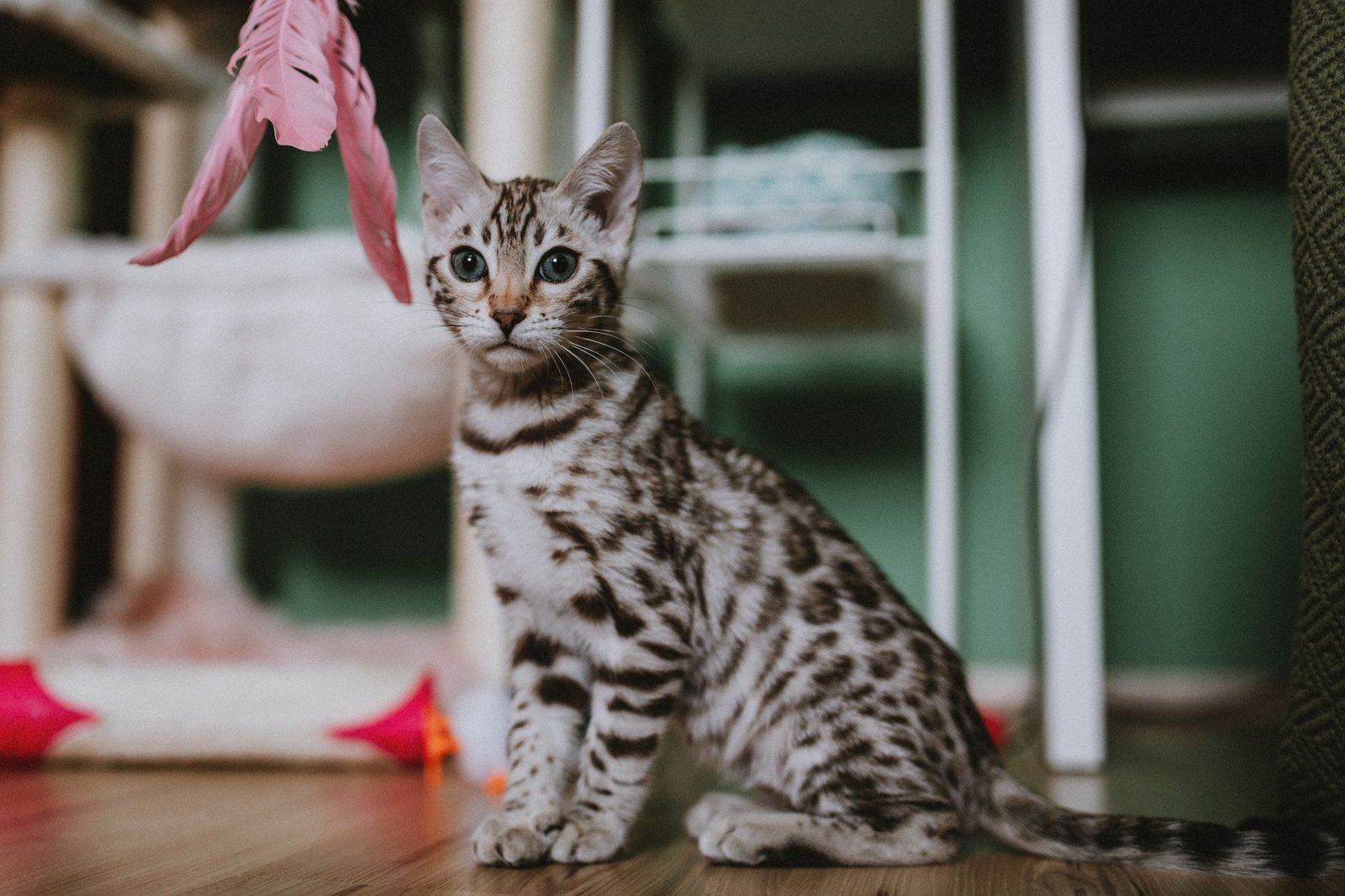
You can spend a fortune on cat toys, and your cat will still pick the box it came in. Every time.
So let’s lean into that. These DIY cat toys come from things already in your home: boxes, socks, paper, tubes. They’re quick, free and, most importantly, safe, as long as you follow a few rules that matter a lot with cats.
Safety first: what never to use
Cats are curious chewers, and some common “toys” can cause serious harm. Read this part twice.
- No string, yarn, ribbon, thread, tinsel or hair ties left out. If a cat swallows a long piece, it can cause a linear foreign body, a dangerous gut injury that often needs surgery.
- Put wand toys away after play. Store them in a closed drawer or cupboard, not on the couch.
- No rubber bands. Cats love to chew them, and they’re easy to swallow.
- No plastic bags. Suffocation and chewing risk. Paper bags only, with handles cut off.
- No small swallowable parts: bells, googly eyes, buttons, beads.
- No essential oils on toys or bedding. Many are toxic to cats.
Catnip and silvervine, on the other hand, are perfectly fine. Not every cat reacts, but the ones who do have a great time.
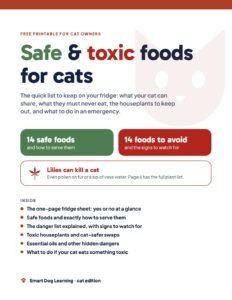
- 14 safe foods and 14 to avoid, at a glance
- Toxic houseplants (lilies are deadly to cats, even the pollen)
- What to do if your cat eats something toxic
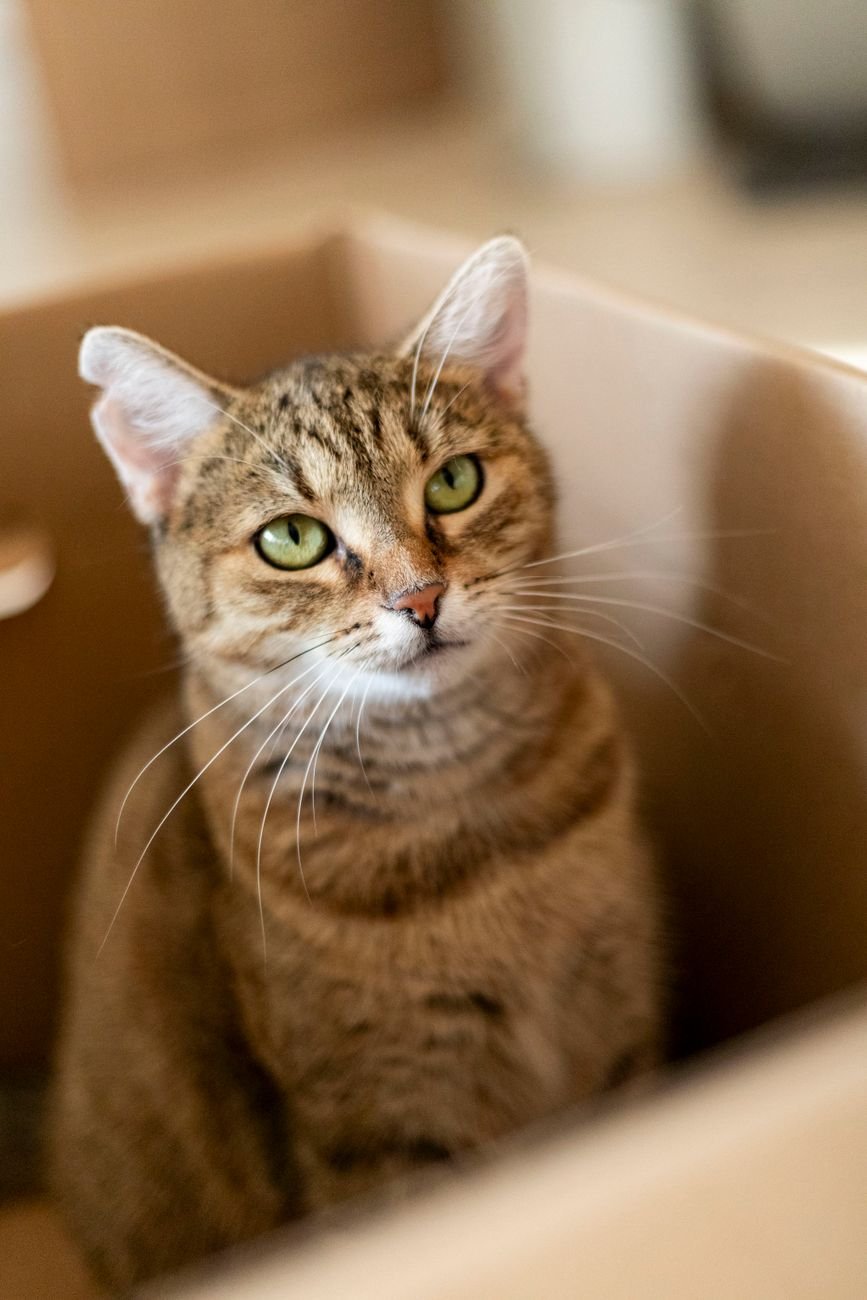
Box and paper toys (1 to 5)
- Box fort: tape two boxes together, cut cat-sized holes, and remove any loose tape and staples.
- Peekaboo box: cut small holes in a closed box lid and drop a ping pong ball inside. Paws go in, chaos follows.
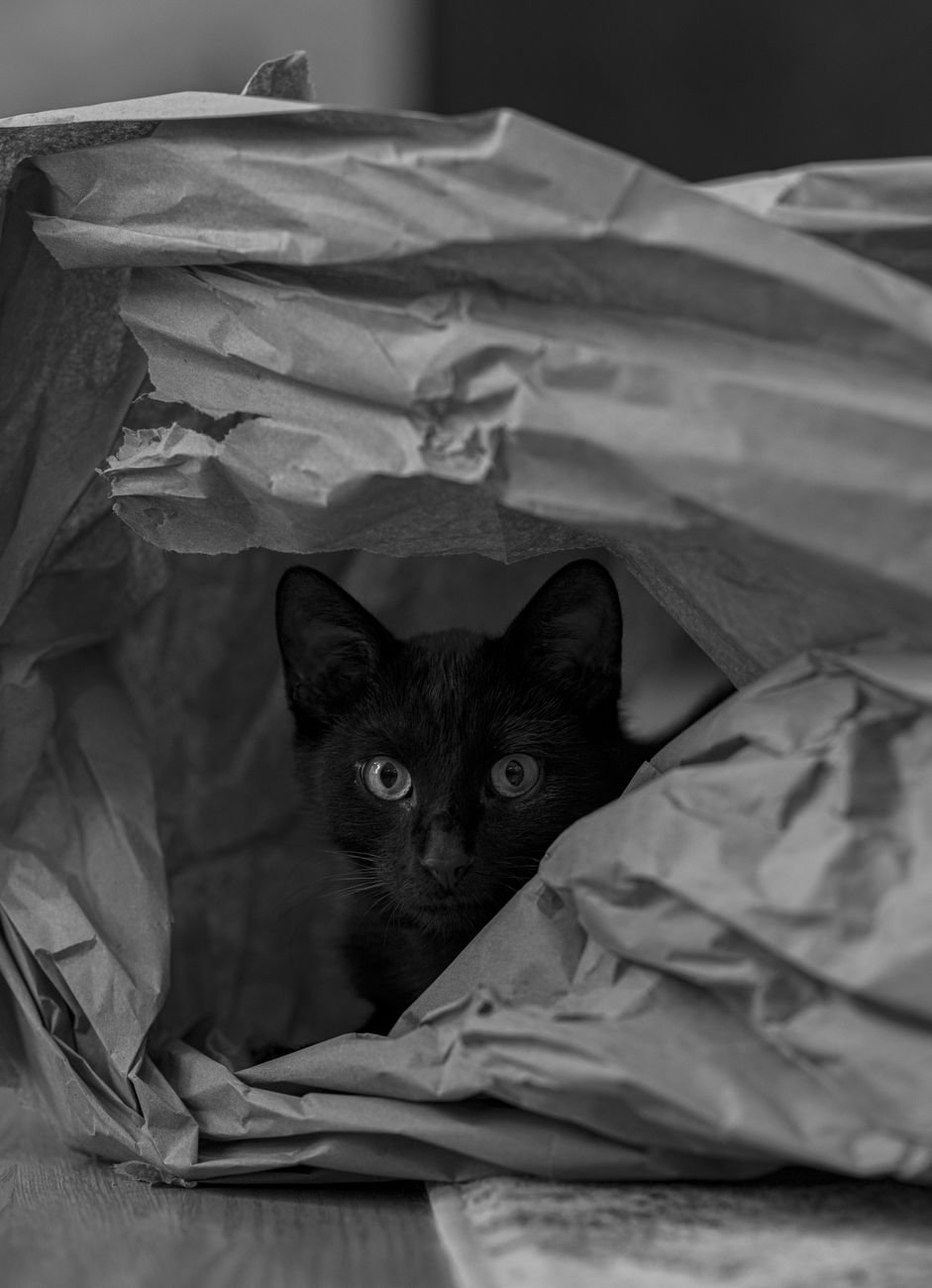
- Paper bag cave: a plain paper bag on its side, handles cut off. Simple, endlessly popular.
- Crumpled paper ball: one sheet of paper, scrunched tight. Bats beautifully across hard floors.
- Cardboard scratcher: cut corrugated cardboard into strips, roll them tightly and tape the outside.
Sock and fabric toys (6 to 9)
- Catnip sock: a clean old sock with a spoonful of dried catnip, knotted tightly. Replace it when it’s worn.
- Kicker pillow: stuff a long sock with another rolled sock and a pinch of catnip, then sew the end shut. Cats grab it and bunny-kick.
- Fleece knot: a single strip of fleece tied into a tight, chunky knot. Too big to swallow.
- Silvervine pouch: sew a small fabric square around a pinch of silvervine powder.
Check fabric toys weekly. Throw them out once they start fraying or the stitching opens.
Food and puzzle toys (10 to 13)
Cats are hunters, and working for food is great for indoor cats. Use part of their daily food ration, not extra.
- Treat roll: a toilet paper tube with the ends folded shut and a few kibble pieces inside.
- Egg carton feeder: drop kibble into the cups and let your cat fish it out.
- Muffin tin puzzle: treats in the cups, ping pong balls on top.
- Bottle spinner: a clean plastic bottle with holes cut slightly bigger than the kibble, cap glued on. Sand any sharp edges.
For healthy reward ideas, see these natural cat treats.
Chase and pounce toys (14 to 17)
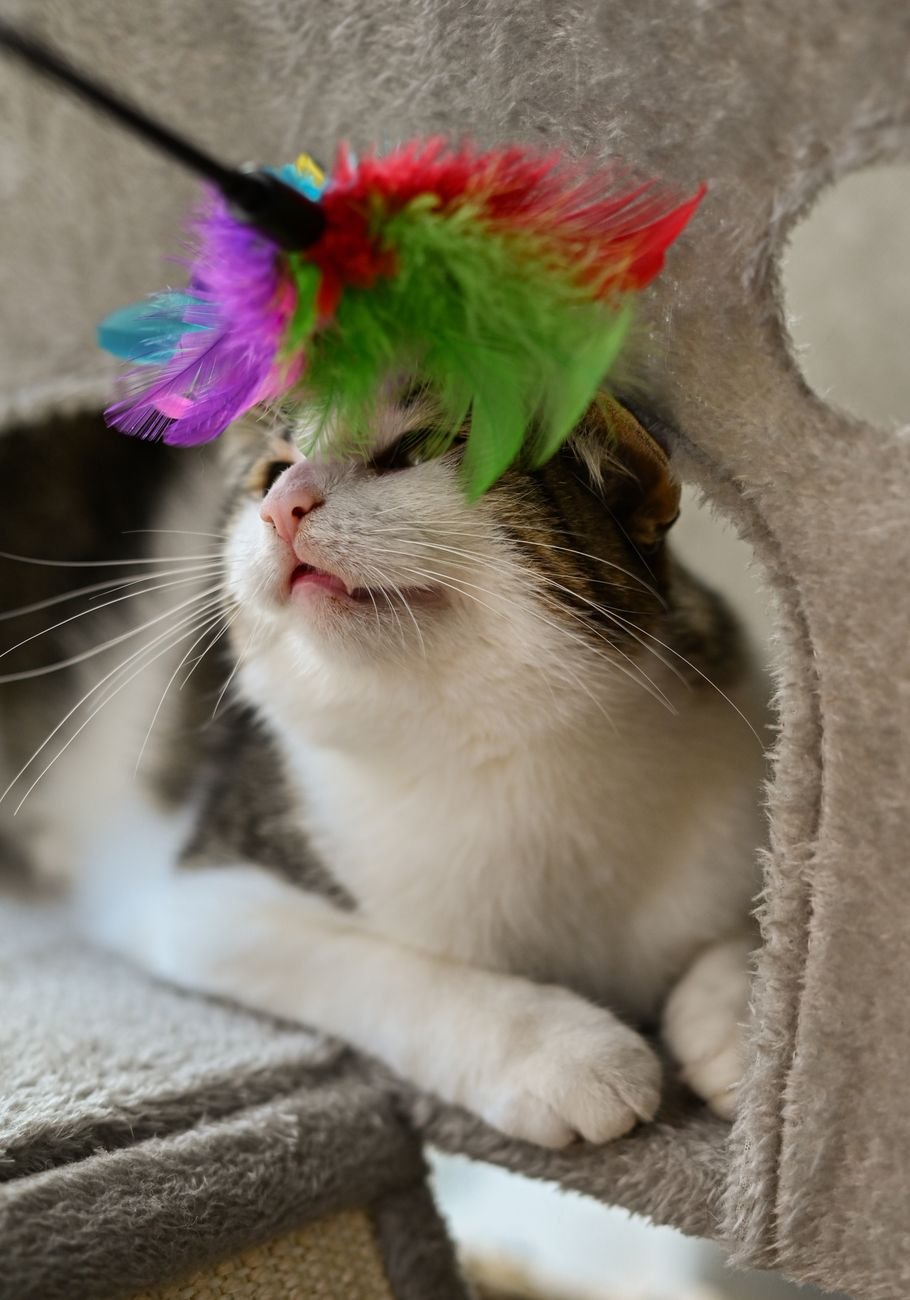
- Wand toy: a wooden spoon or chopstick with a strip of fleece securely tied to the end. Play together, then put it away.
- Ping pong in the bathtub: an empty, dry tub becomes a racetrack. Remove it when you’re done.
- Bottle cap hockey: large plastic lids, only for cats that bat but don’t chew.
- Flashlight game: a dim flashlight beam on the floor, ending on a toy they can catch. Skip laser pointers that end in nothing.
Climb and hide toys (18 to 20)
- Blanket tunnel: drape a blanket over two chairs.
- Window perch box: a sturdy box on a stable surface by a sunny window.
- Bag-free crinkle mat: a sheet of paper under a towel crinkles nicely without the plastic risk.
How to play so it actually helps
The best toy is the one you play with together. Cats get the most from short, hunt-like sessions.
- Play two or three times a day for 10 to 15 minutes.
- Move the toy like prey: hide it, twitch it, let it “escape.”
- Let your cat catch it often. Frustration isn’t fun.
- End with a small treat or a meal. That completes the “hunt, catch, eat” cycle and helps your cat settle.
Rotate to keep toys exciting
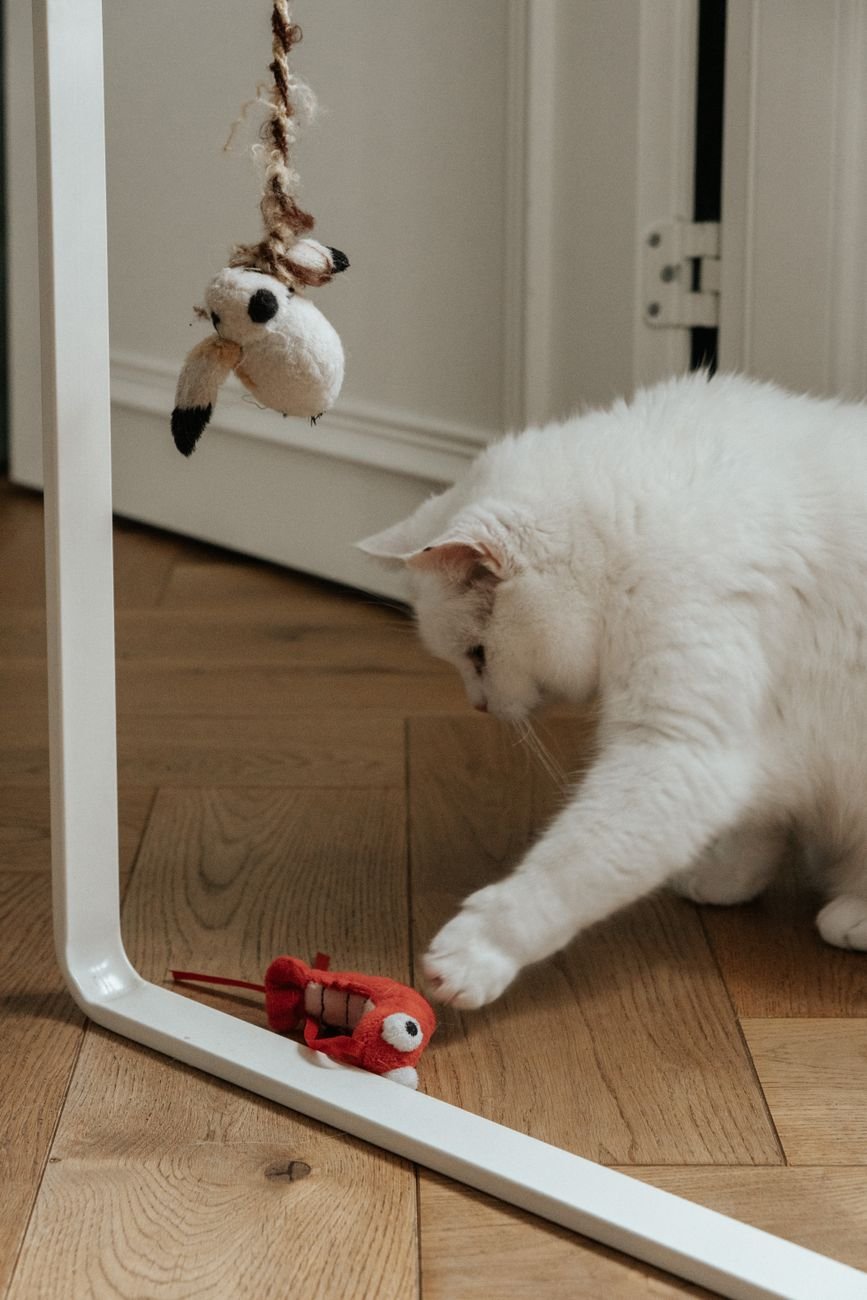
Cats get bored of the same toys fast. Keep only three or four out at once and store the rest in a closed container. Swap them every few days and the old toys feel brand new again.
A small container of dried catnip in the storage box refreshes them too.
Adjust for kittens and older cats
Not every cat plays the same way, and age matters a lot.
- Kittens chew everything. Stick to bigger toys like paper balls, box forts and fleece knots, and supervise anything made of fabric.
- Senior cats still like to hunt, just slower. Drag a wand toy along the floor instead of up high, and keep sessions to five minutes.
- Shy cats often prefer to play from cover. Let the toy peek out from behind a box or under a blanket.
Signs your cat needs more play
- Night-time zoomies or waking you at 4am.
- Pouncing on ankles or biting hands.
- Overeating, weight gain or sleeping even more than usual.
- Scratching furniture more than normal.
If behavior changes suddenly, though, see your vet first. Starting out with a new cat? Our must-haves for first-time cat owners list is a good next read.
Common questions
Is it safe for cats to play with string?
Only with you holding the other end, and then it gets put away. Swallowed string can seriously injure a cat’s intestines.
Is catnip safe for cats?
Yes. Catnip and silvervine are safe. Some cats don’t react at all, and kittens usually don’t until they’re a few months old.
Are hair ties dangerous for cats?
Yes. Cats love them and often swallow them. Keep them in a closed drawer.
How often should I replace DIY cat toys?
As soon as they fray, tear or lose pieces. Cardboard and paper toys are disposable anyway.
What if my cat swallowed something it shouldn’t?
Call your vet right away. Don’t pull on string you can see. That can make the injury worse.



Leave a Reply