

Nobody puts “litter box” on their dream home mood board. But if you live with a cat, it has to go somewhere, and the bathroom floor isn’t always the answer.
The good news: you can hide it. The catch: a hidden box only works if your cat is still happy to use it. Cats are picky, and a pretty cabinet they refuse to step into is just a very expensive mistake.
So we’ll start with the cat’s rules, then get to the ideas.
Cat welfare first: the rules a hidden box must follow
Whatever you build or buy, check it against this list.
- Size: the box should be about 1.5 times your cat’s length, nose to base of the tail. Most enclosures are smaller than that, so measure.
- Number of boxes: one per cat, plus one extra. Two cats means three boxes, ideally in different spots.
- Easy access: two entrances are best, so a cat never feels cornered. At minimum, one wide, low opening.
- Ventilation: a closed cabinet traps ammonia. Your nose may not notice it, but your cat’s will.
- Location: not next to food or water bowls, and not beside noisy appliances like the washer, dryer or furnace.
- Scoop daily. Out of sight is out of mind for people. It isn’t for cats.
1. The converted cabinet or sideboard
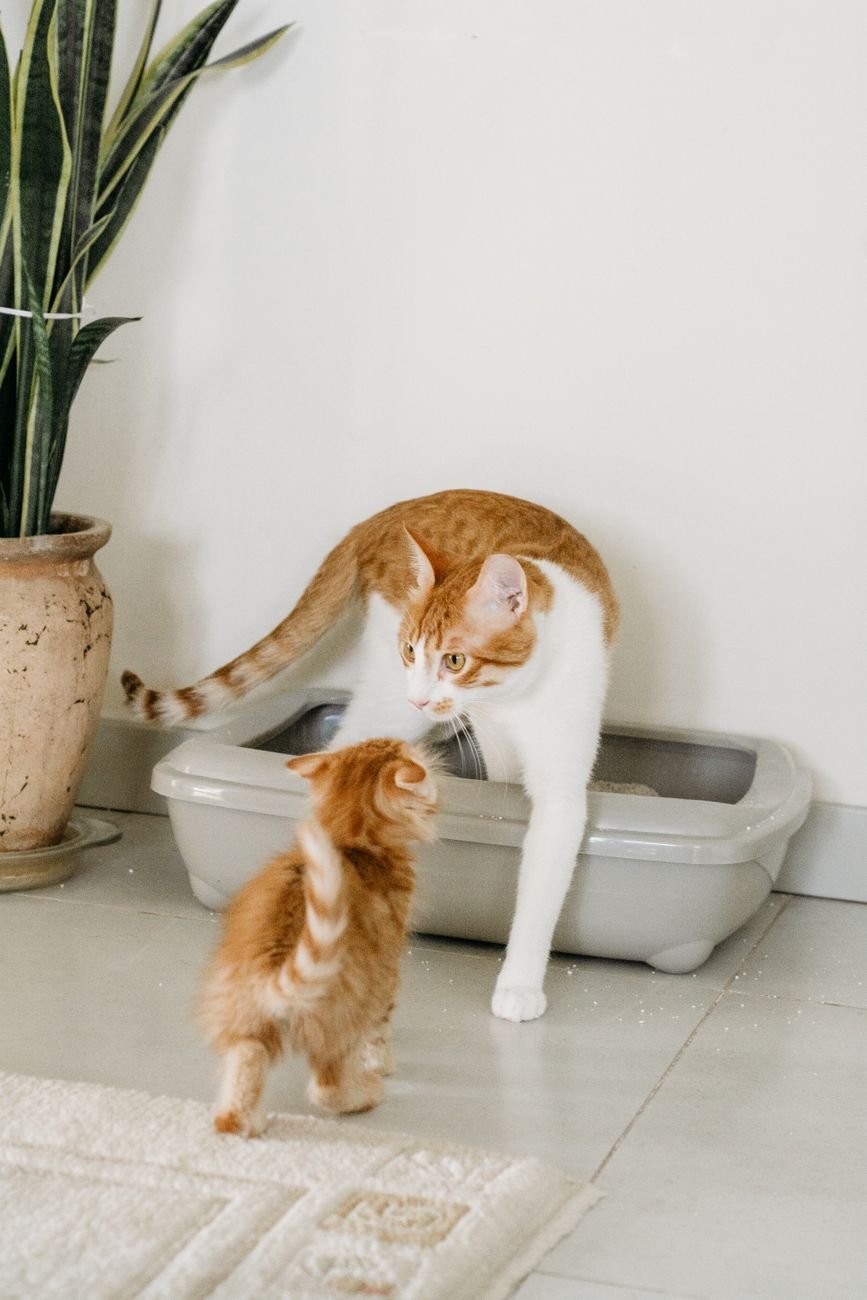
This is the most popular hidden litter box idea for a reason. A low sideboard or TV cabinet looks like furniture, and the box sits inside.
- Remove the shelf so the box fits with room to spare.
- Cut an entrance hole about 7 to 8 inches wide in one side.
- Cut a second exit on the other side, or leave one door off.
- Drill a few ventilation holes in the back panel, or swap a door for a slatted one.
Line the bottom with a washable mat. Litter tracks, and plywood absorbs smells.

- 14 safe foods and 14 to avoid, at a glance
- Toxic houseplants (lilies are deadly to cats, even the pollen)
- What to do if your cat eats something toxic

2. A bathroom vanity with the doors swapped
If you have a wide vanity, one side can become a litter nook. Replace a solid cabinet door with a louvered one for airflow, and cut a cat-sized opening in the side panel.
Honest aside: this only works if the space is big enough. Most under-sink cabinets are too cramped once you account for the pipes, and a cramped box gets ignored.
3. The plant screen
No tools needed. Put the box in a corner and set a row of tall potted plants or a slatted planter in front of it, leaving a clear path in.
Choose cat-safe plants only. Spider plants, Boston ferns, areca palms and calathea are good picks. Never use lilies, which are extremely toxic to cats, and skip pothos, snake plants and peace lilies too.
4. A folding room divider
The fastest fix of all. A three-panel divider blocks the view from the living room while leaving the box open on two sides. Airflow is perfect and your cat has two ways out.
It also takes 30 seconds to move when it’s time to scoop or clean the floor.

5. The laundry room nook, done right
Laundry rooms are a classic hiding spot, but the washer and dryer can scare a cat mid-business. If this is your only option, put the box as far from the machines as possible, and don’t run them right after your cat’s usual bathroom times.
Leave the door propped open or fit a cat flap. A cat that gets shut out of its box will find a new one, probably your rug.
6. The closet corner
A coat closet or the end of a walk-in closet can hold a box nicely. Take the door off, or swap it for a curtain your cat can push through.
- Clear the floor so the box isn’t wedged between shoes.
- Add a small washable rug in front to catch litter.
- Keep the light on a timer or a plug-in night light so it isn’t pitch black.
7. The top-entry box, with caution
Top-entry boxes hide the litter and cut down on tracking. They work well for young, agile cats.
They are a bad idea for kittens, seniors, overweight cats or any cat with stiff joints. If your cat is older, give them a low-sided box they can walk straight into.
8. The entryway bench
A storage bench by the back door or in a hallway can double as a litter spot. Look for one with an open cubby at one end, or remove a basket and cut an opening in the side.
- Check the inside height. Your cat needs room to stand and turn without ducking.
- Keep the lid hinged so scooping doesn’t mean lifting the whole bench.
- Avoid busy entryways where the door opens constantly and people walk past all day.
Keeping a hidden box fresh
Hidden boxes smell more, simply because air doesn’t move around them. A few habits help:
- Scoop at least once a day, twice with multiple cats.
- Fully empty and wash the box with mild, unscented soap every two to four weeks.
- Use unscented litter. Many cats dislike perfumed litter and air fresheners.
- Wipe the inside of the cabinet when you wash the box.
For the rest of the house, these tips to remove pet odors from your home are worth a read.
How to move the box without upsetting your cat
Cats like routine. Don’t move the box and redecorate on the same day.
- Put the new setup in place and keep the old box where it was for a week.
- Move a scoop of used litter into the new box so it smells familiar.
- Once your cat uses the new spot reliably, remove the old one.
New to cats? Our list of must-haves for first-time cat owners covers the basics.
Common questions
Do cats mind covered or hidden litter boxes?
Some do, some don’t. Many cats prefer an open box. Offer a hidden one alongside an open one and let your cat choose.
How big should the entrance be?
About 7 to 8 inches wide for an average cat, bigger for large breeds. Your cat should walk in without squeezing.
Can I put the litter box in the kitchen?
It’s best not to. Cats prefer to eat and toilet in separate places, and it’s better for hygiene too.
My cat stopped using the box after I hid it. What now?
Go back to the old setup. If the problem continues, see your vet, since litter box changes can signal a health issue.
How many litter boxes do I need for two cats?
Three. The rule is one per cat, plus one extra, spread around the home.





Leave a Reply