

Dog beds are weirdly expensive for what they are: fabric and fluff. And then your dog ignores the fancy one and sleeps on your laundry pile anyway.
So make one. These DIY dog bed ideas range from 10-minute no-sew projects to a simple wooden frame, and every one is chosen with your actual dog in mind: chewer, senior, tiny or huge.
Pick the bed for your dog first
Before you buy a single yard of fabric, think about how your dog sleeps and what they do to their stuff.
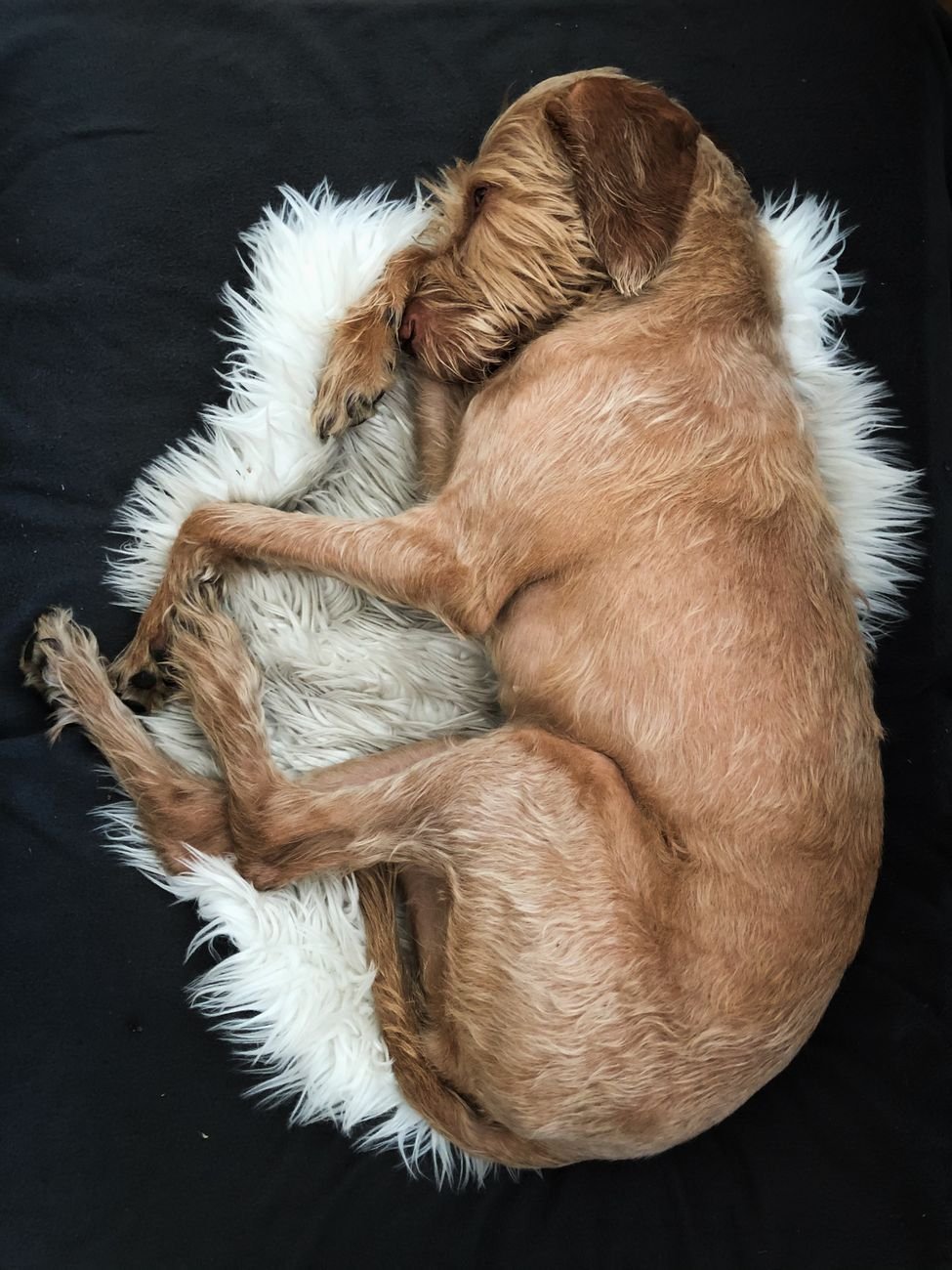
- Curlers like a round bed with raised sides to lean against.
- Sprawlers want a flat, wide mattress with room to stretch.
- Chewers need tough fabric, no zippers and no loose stuffing.
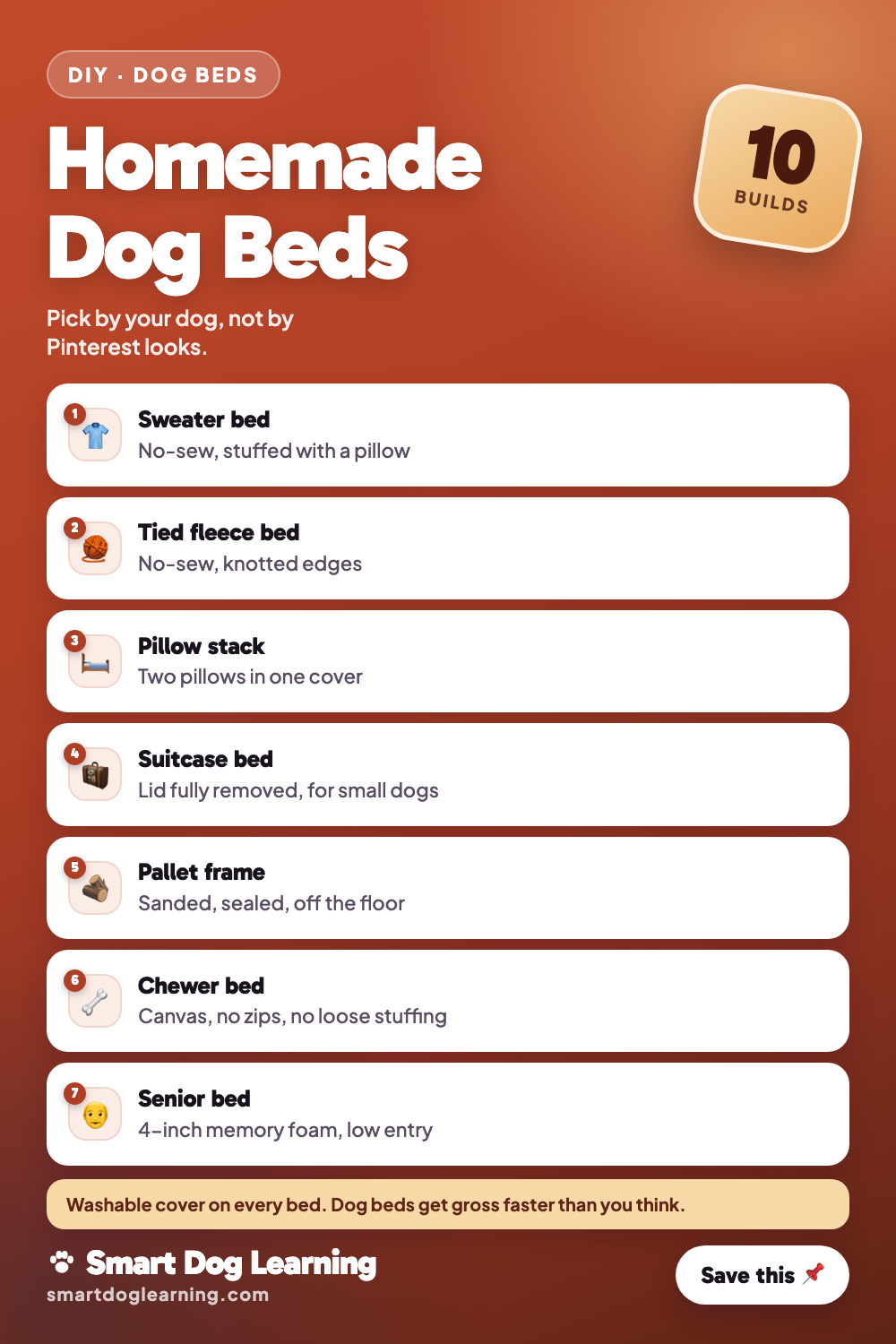
- Seniors and big dogs need thick, firm support and a low edge to step over.
Measure your dog lying stretched out, nose to tail, and add 6 to 12 inches.
The no-sew options
No sewing machine? No problem. These four take an afternoon at most.
1. The old sweater bed
Stuff a pillow inside the body of a big sweater. Then stuff the sleeves with fiberfill or rolled towels, wrap them around the pillow to form a bolster, and tie the cuffs together with a strip of fabric.
Small dogs and cats love these. They smell like you, which is half the appeal.
2. The tied fleece bed
Lay two pieces of fleece on top of each other, cut 4-inch fringes around all four sides, and knot the top and bottom strips together. Leave one side open, slide in a foam pad or pillow, then knot that side closed.
- Works for puppies, adults, rescues and seniors
- One page per problem, step by step
- Printable PDF, free
Skip this one for chewers. Those fringes are irresistible to a puppy.
3. The pillow stack
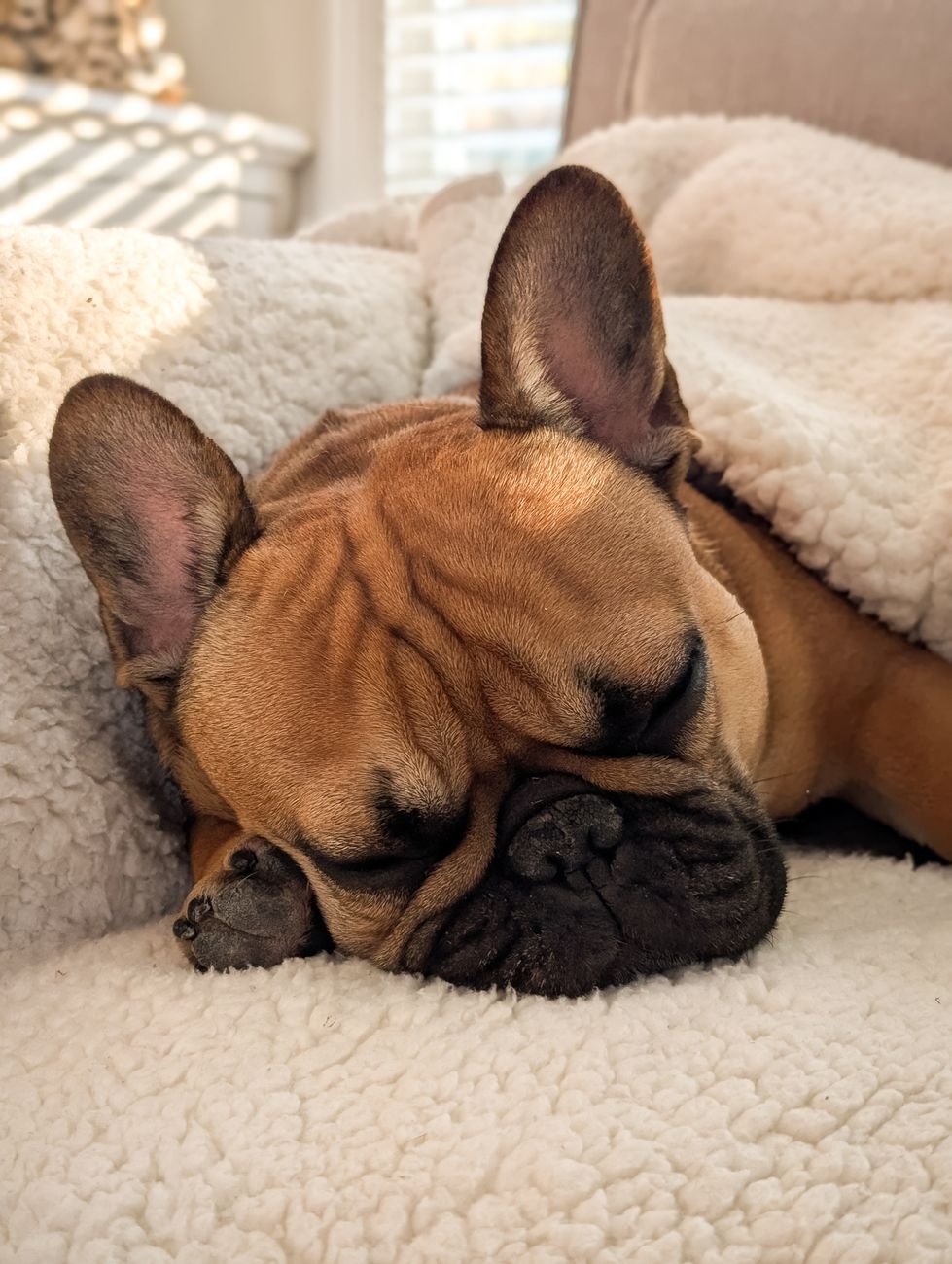
Put two old bed pillows side by side inside a duvet cover or a big pillowcase sham, and fold the extra fabric under. It’s flat, washable and costs nothing if you have spare pillows.
4. The blanket nest
Roll a thick blanket into a long sausage and shape it into a ring inside a shallow laundry basket or box. Lay a folded blanket in the middle. Instant den for dogs who like to burrow.
Easy sewn beds
If you can sew a straight line, you can make these.
5. The envelope cover mattress
Cut one front panel and two overlapping back panels from canvas or upholstery fabric. Sew around the edges, turn it right side out, and slide a foam mattress in through the overlap. No zipper needed, and it comes off in seconds for washing.
6. The round bolster bed
Sew a long tube, stuff it firmly and stitch the ends together into a ring. Then sew a round base to the bottom. It takes a few hours, but it’s the bed curled-up sleepers adore.
Upcycled frames
7. The vintage suitcase bed
Remove the lid of an old hard suitcase (unscrew the hinges completely so it can’t snap shut) and fit a cushion inside. It’s charming for small dogs and looks great in photos.
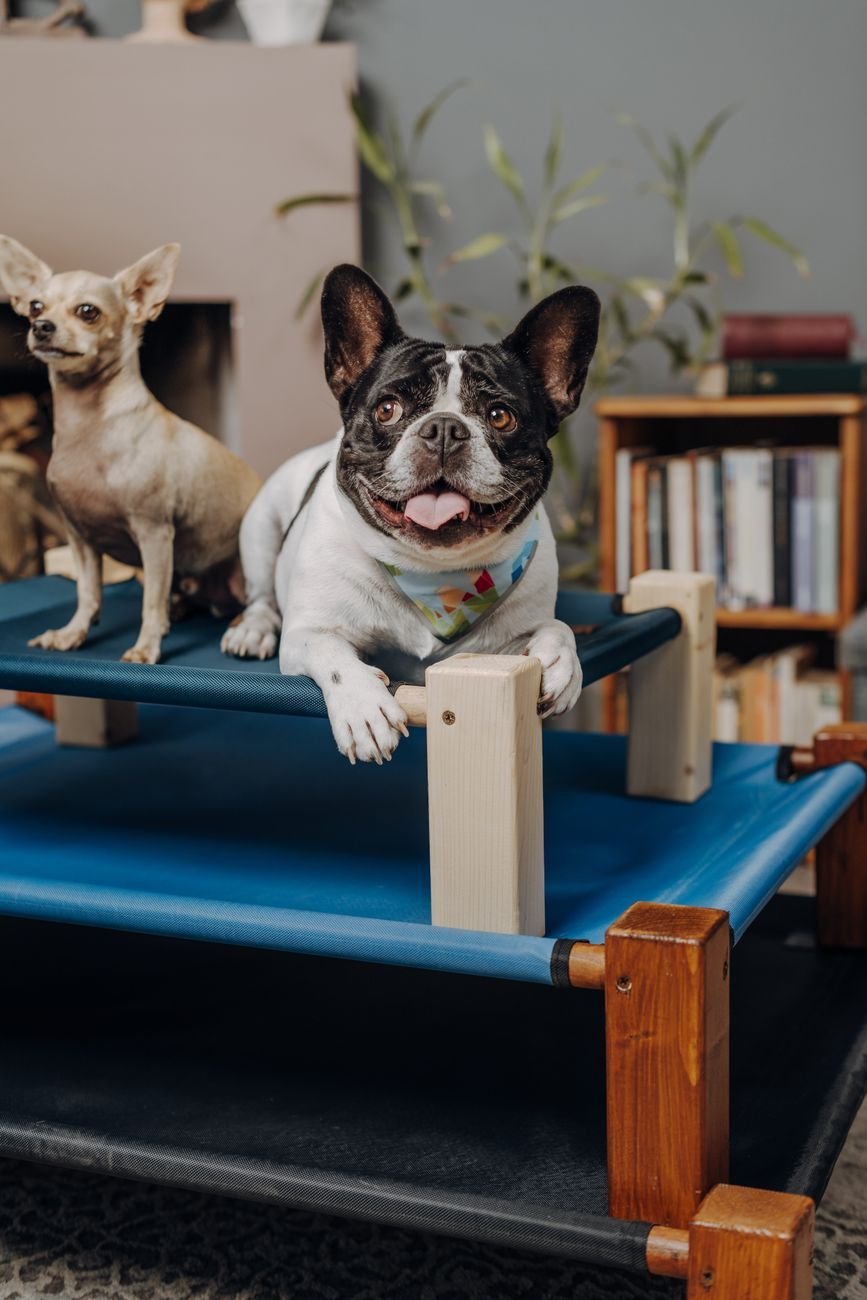
8. The pallet frame
One pallet, cut down to size, sanded smooth and sealed with a pet-safe, water-based finish. Add a mattress on top. Raising a bed off cold tile or concrete makes a real difference in winter.
Use heat-treated pallets stamped “HT” only (never “MB”, which means chemically treated), and sand every edge. Splinters and dogs don’t mix.
9. The side table bed
Take the drawers out of an old nightstand, remove the drawer runners, and fit a cushion in the bottom. It becomes a little den, and the top still works as a table.
Safety: what to avoid for chewers
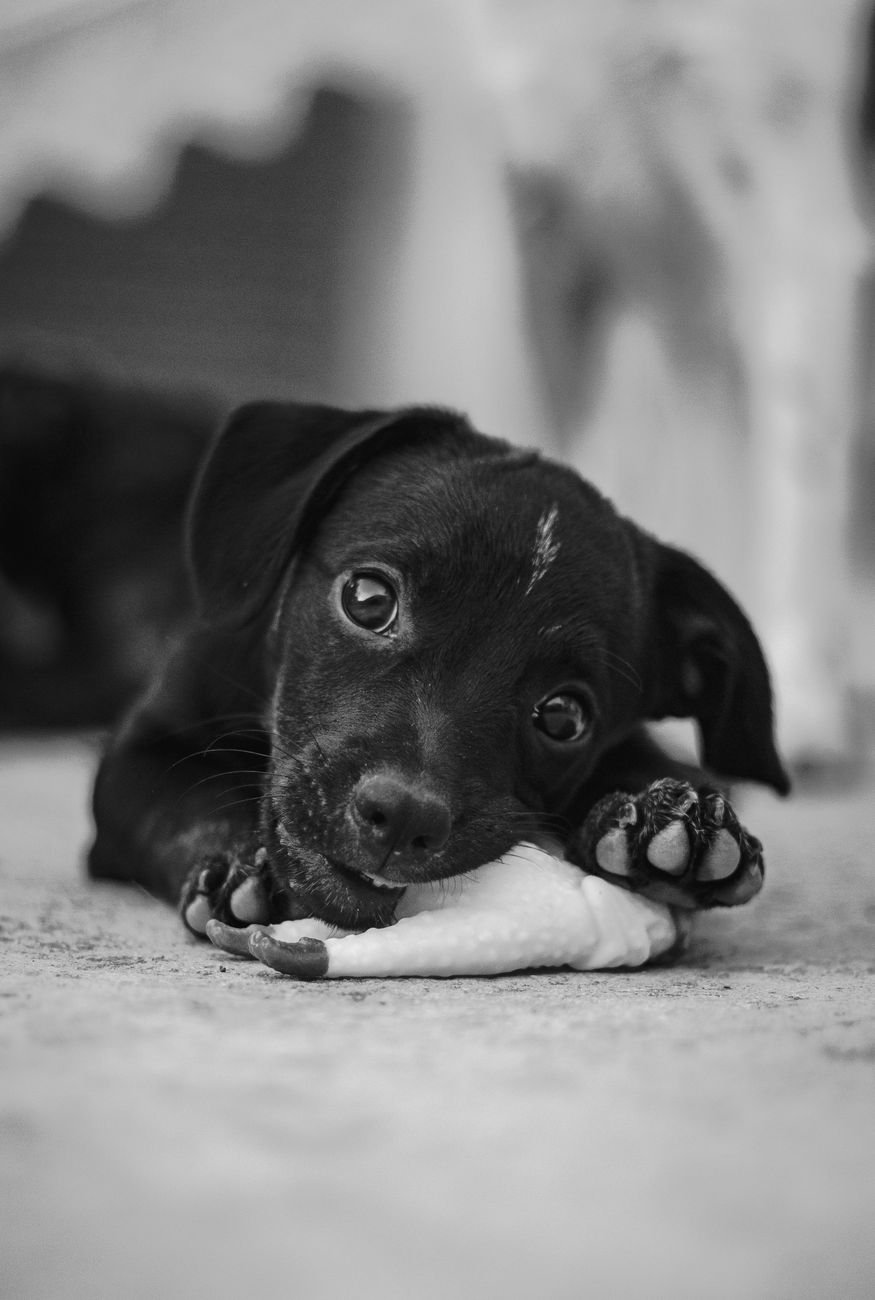
A bed shouldn’t be a trip to the emergency vet. If your dog chews, follow these rules.
- No zippers, buttons or snaps on the outside. Dogs chew them off and swallow them.
- No loose stuffing. Fiberfill and foam chunks can cause a blockage. Use a single solid foam pad inside a sturdy cover.
- Tough fabric only: heavy canvas or denim, double-stitched seams.
- Supervise new beds for the first few days and remove one that’s being shredded.
Puppies especially. Our puppy-proofing tips for new dog owners cover the rest of the house too.
10. The chewer bed
Two layers of heavy canvas sewn into a tight envelope around a firm foam pad, with the opening stitched shut.
When it needs washing, you open one seam and resew it. Annoying? A bit. Safer? Yes.
Orthopedic support for seniors and big dogs
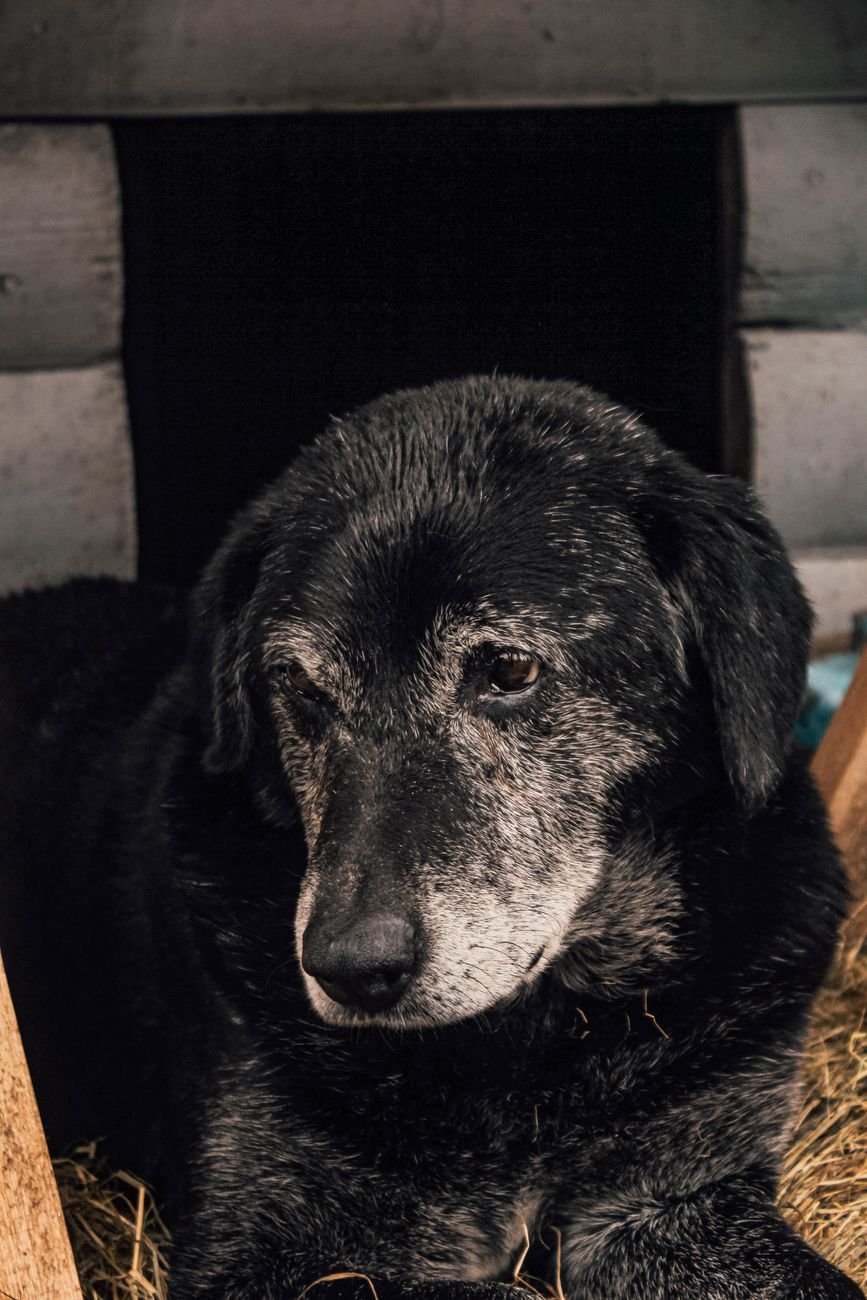
Older dogs and large breeds put a lot of pressure on their hips, elbows and shoulders. A thin cushion that flattens to nothing won’t help.
- Use at least 4 inches of memory foam or high-density foam, more for giant breeds.
- Keep the edge low so stiff legs can step on easily.
- Put it somewhere warm, away from drafts.
- Add a non-slip backing so it doesn’t skid on hard floors.
If your older dog seems stiff or sore getting up, check in with your vet. And if you share your home with a big dog, these tips for owners of large dogs are a good read.
Make it washable
Every bed on this list should have a removable, machine-washable cover. Wash it every week or two in hot water with an unscented detergent, and keep a spare cover so the bed is never out of action.
Shake or vacuum the bed between washes. Hair, sand and crumbs build up fast, and a quick daily shake outside keeps it from turning into a smelly, flat pancake.
Where to put the finished bed
Location matters as much as the build. Dogs are social sleepers, so a bed shut away in a spare room often goes unused.
- Near the family, in a corner of the living room or your bedroom.
- Out of the traffic lane, so nobody trips over a sleeping dog.
- Away from radiators and drafty doors. Too hot or too cold and your dog will move.
Many dogs like two beds: one where you hang out during the day, one where you sleep at night. A cheap no-sew bed is perfect for the second spot.
Common questions
What’s the best filling for a DIY dog bed?
A solid foam pad is best for support and safety. Fiberfill is soft but clumps, and it’s risky for chewers.
What fabric should I use?
Canvas, denim or upholstery fabric for durability. Fleece is cozy but best for gentle dogs.
How big should my dog’s bed be?
Measure your dog stretched out and add 6 to 12 inches. When in doubt, go bigger.
Can I use an old crib mattress?
Yes, if it’s clean and in good shape. Put it in a tough, washable cover with no zipper exposed.
My dog won’t use the new bed. Why?
It smells new. Put a worn T-shirt or their old blanket on it, and reward them with a treat for lying on it.

Leave a Reply