

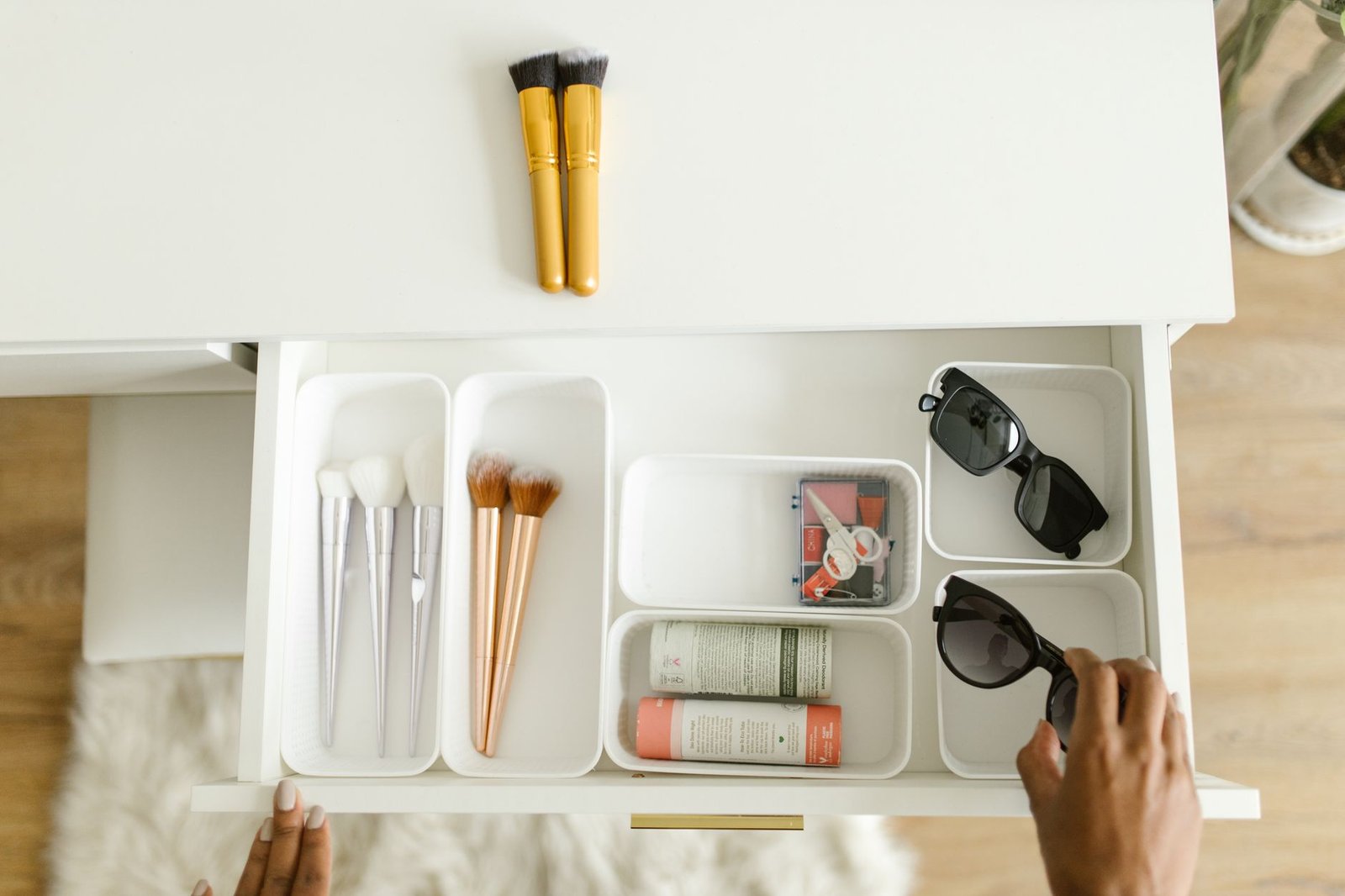
Every home has one. The drawer that sticks halfway because a whisk is jammed against a takeout menu, three dead batteries and a mystery key.
Good drawer organization is one of the fastest wins in the whole house. Each drawer takes about 15 minutes, costs very little, and you’ll feel the difference every single day.
The 15-minute method for any drawer
Use the same five steps on every drawer in your home.
- Empty it onto a towel on the counter.
- Wipe it out. Crumbs and dust collect in the corners.
- Sort into keep, move somewhere else, donate and trash.
- Group what’s left by category.
- Contain each group in its own section before it goes back.
Work on one drawer at a time. Dumping five drawers at once is how a Saturday disappears.
Measure before you buy organizers
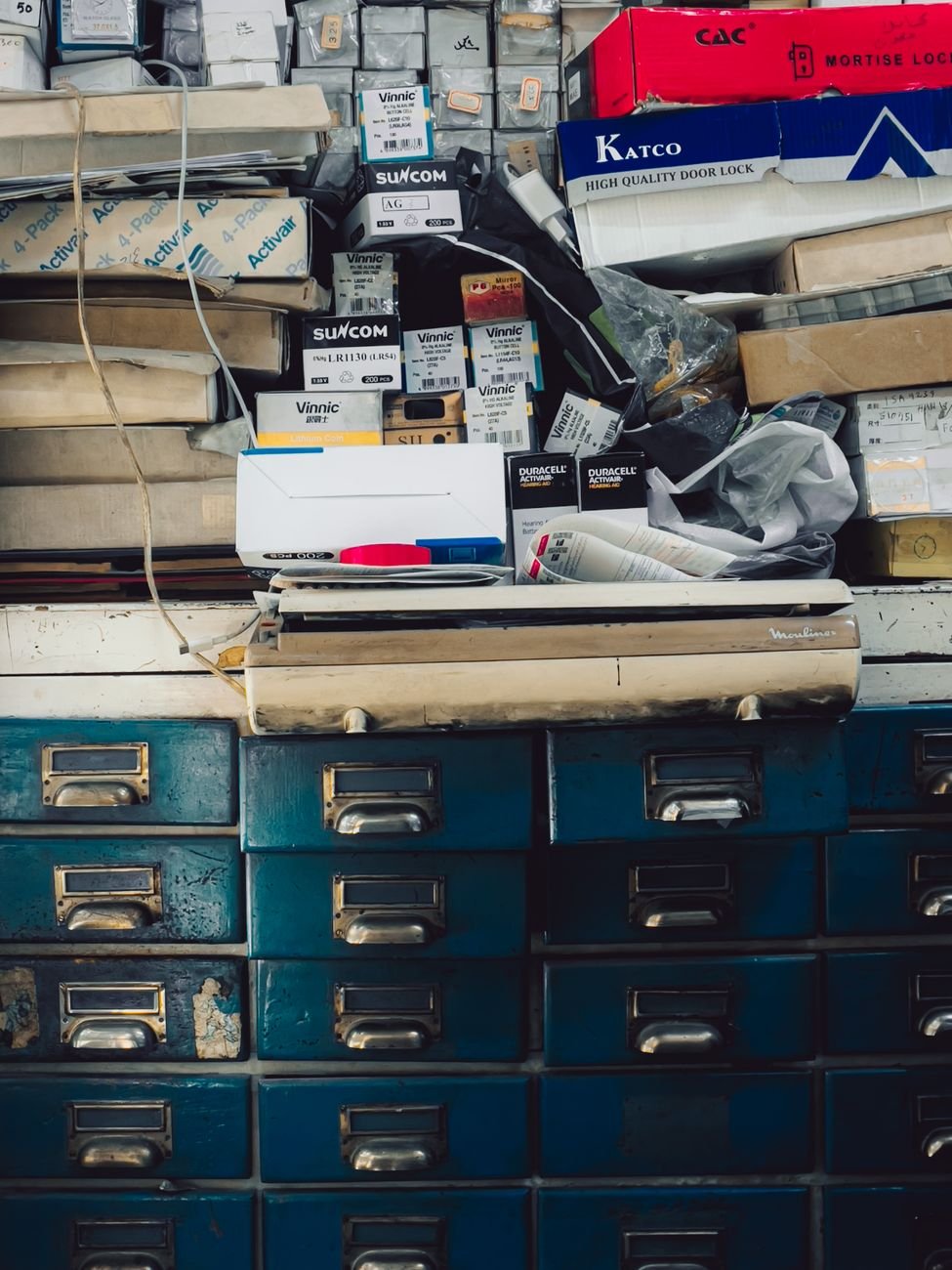
This is the mistake almost everyone makes. You buy a pretty set of bins, and the drawer won’t close.
- Measure the inside width, depth and height.
- Allow a little wiggle room so bins slide in easily.
- Adjustable dividers and modular trays in a few sizes work in almost any drawer.
- Free options work great: small boxes, jar lids, egg cartons and old mugs.
Shallow trays are your friend. If things stack on top of each other, you’ll stop seeing the bottom layer.
- A never-mix chart: the cleaner combinations that make toxic fumes
- A surface guide: what not to use on stone, wood, cast iron and more
- 5 starter cleaners and a shopping list
The junk drawer
You don’t need to get rid of the junk drawer. You just need to give it rules.
- Keep only true daily grab items: scissors, tape, a pen, a flashlight, a tape measure, rubber bands.
- Give each category its own small bin. No bin, no spot.
- Move the rest: batteries to a labeled box, takeout menus to recycling, mystery keys to a single labeled pouch.
- Twist ties and cords get a small zip bag so they don’t tangle.
Have pets or small kids? Coin-sized button batteries can do serious harm if swallowed, so keep them sealed in a container somewhere up high.

The kitchen utensil drawer
Most utensil drawers hold twice what you actually use. Be honest about which tools you reach for.
- Keep everyday tools by the stove: spatula, tongs, wooden spoon, ladle.
- Move rarely used gadgets to a bin in a cabinet or pantry.
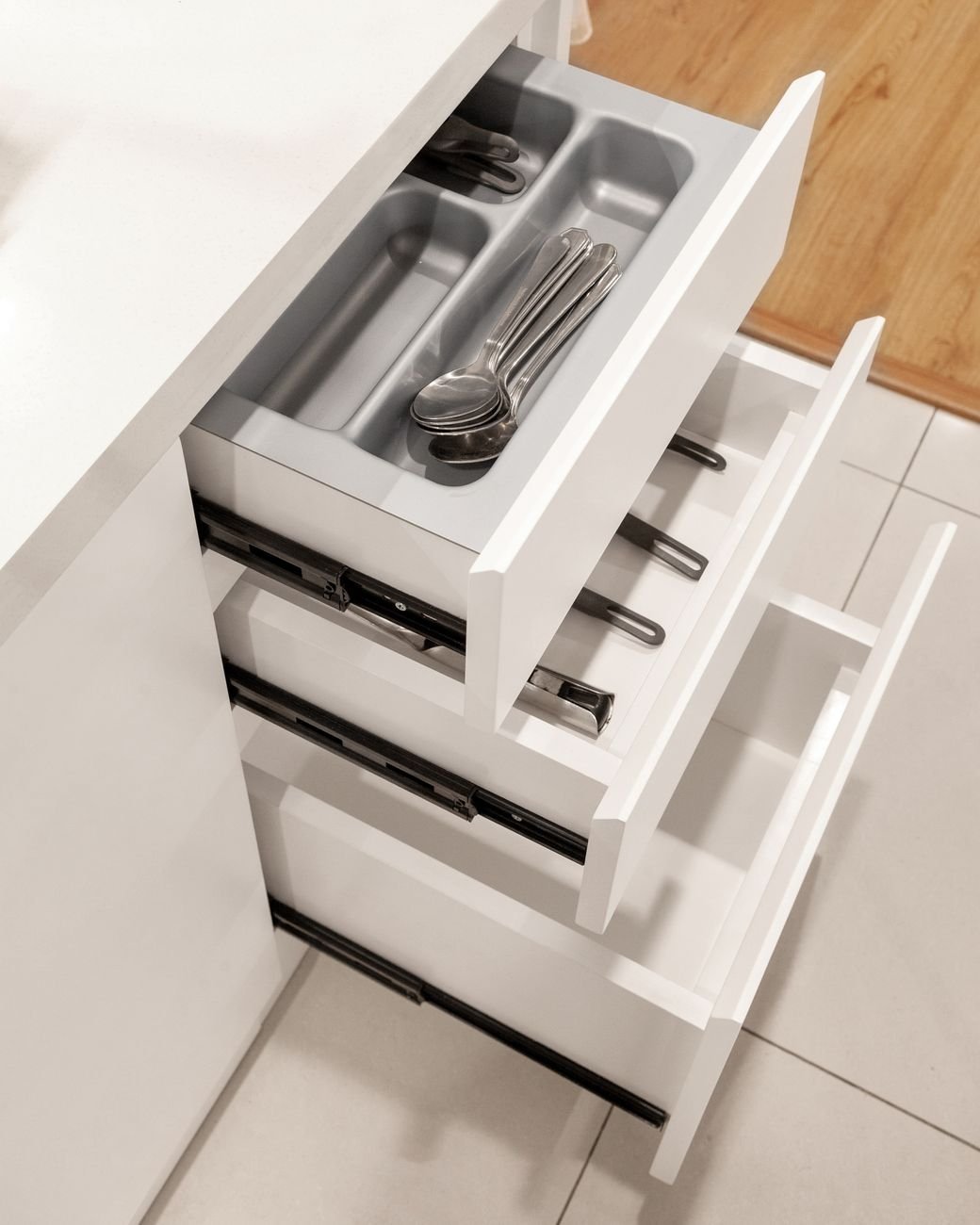
- Use a cutlery tray that fills the drawer edge to edge so nothing slides around.
- Store knives in a knife block or in-drawer knife holder, never loose.
Deep kitchen drawers
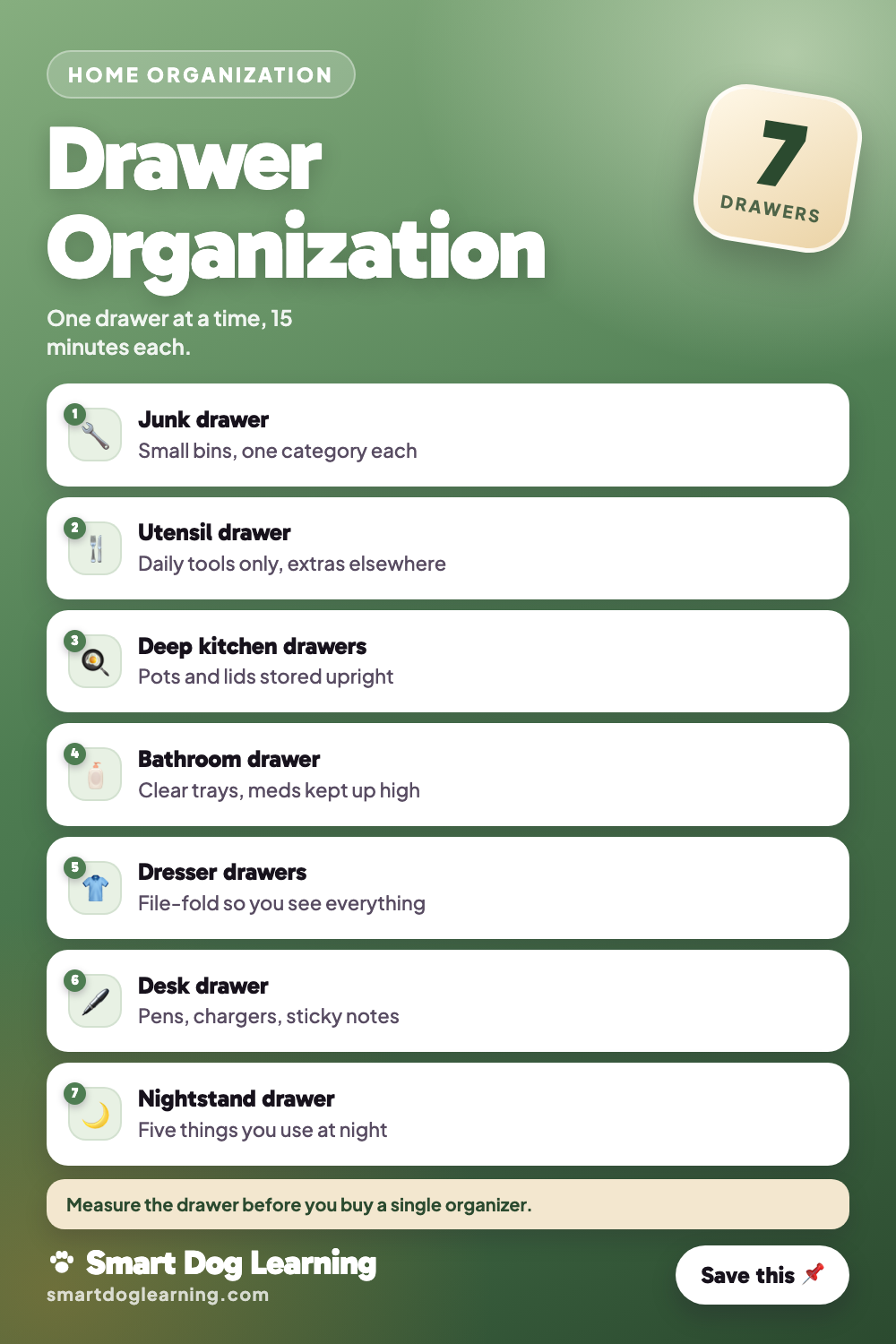
Deep drawers are great for pots, pans, plates and food storage, but only if things stand up.
- Store lids upright in a lid rack or a simple file sorter.
- Nest pots by size and keep the ones you use most on top.
- Add a pegboard drawer insert to hold plates and bowls in place.
- Keep food containers with their lids already matched. Toss any orphans.
The same zone thinking works in the rest of the kitchen. Our pantry organization system sets up a whole pantry in a weekend.
The bathroom drawer
Bathroom drawers fill up with half-used products and freebies from hotels. Clear trays make it easy to see what’s there.
- One tray per person in shared bathrooms.
- Group by task: hair, teeth, skin, makeup.
- Toss old makeup, dried-out nail polish and expired sunscreen.
- Keep medications in a high cabinet, not a low drawer. Kids and curious pets can open drawers.
Dresser drawers
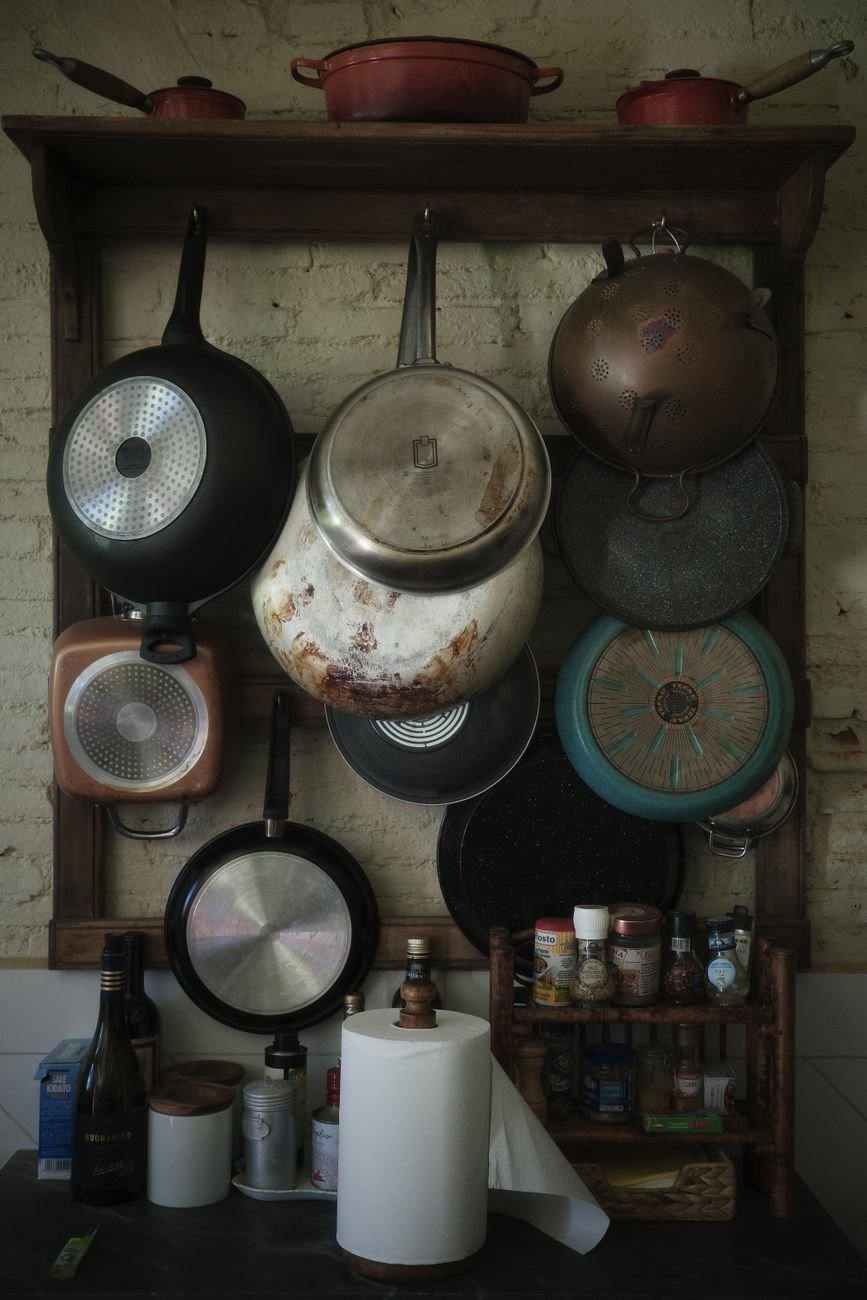
The trick that changes everything: file folding. Fold clothes into small rectangles and stand them up in rows, like files in a cabinet.
- You see every shirt at a glance.
- Pulling one out doesn’t topple the rest.
- You’ll fit more in the same drawer.
Use small boxes or fabric bins for socks, underwear and accessories. And please, anchor every dresser to the wall. Tip-overs are a real danger for kids and pets.
The desk drawer
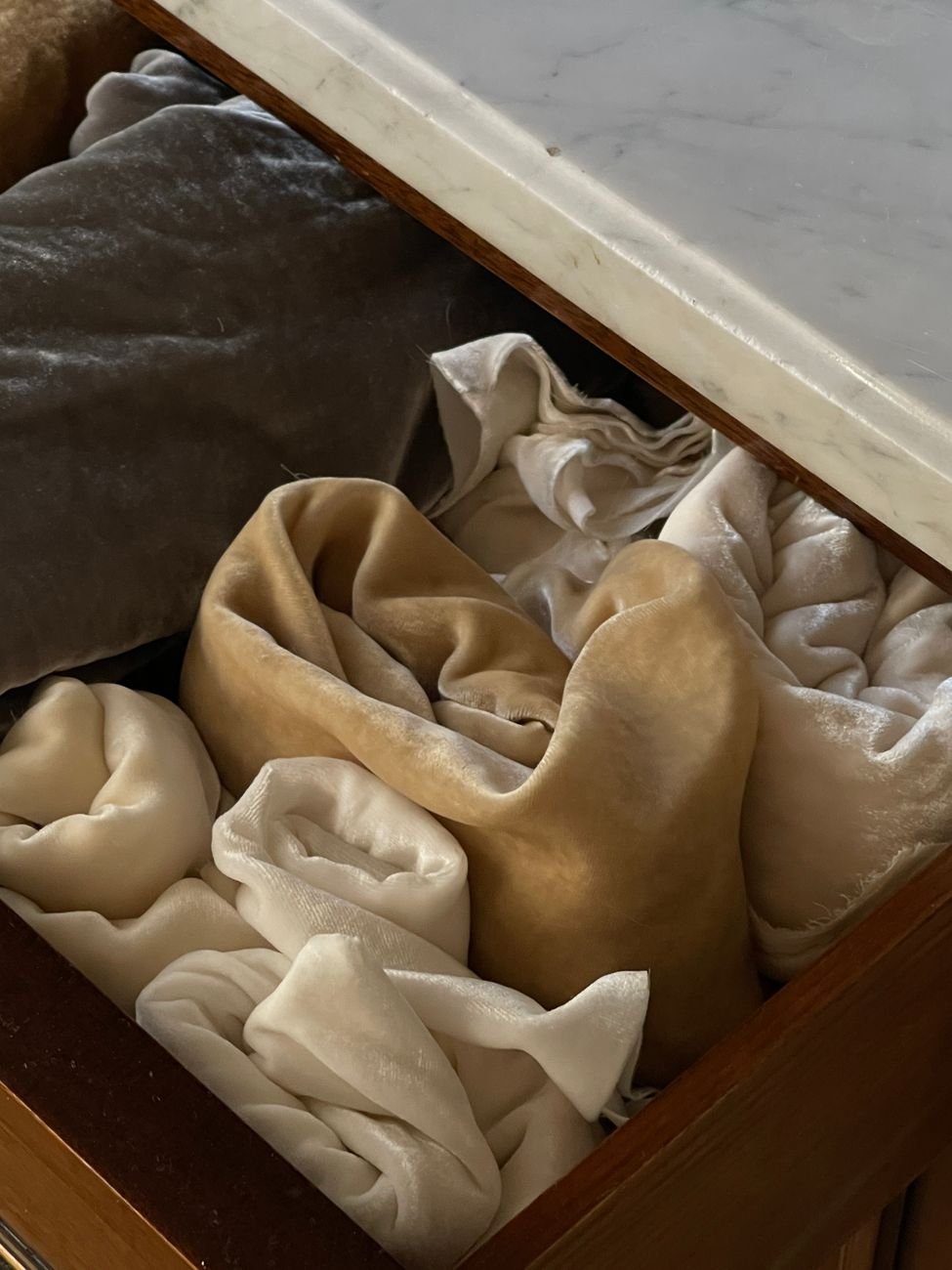
Whether it’s a home office or a kitchen corner, the desk drawer collects paperwork and cords.
- Pens and pencils in one slim tray. Test them and toss the dead ones.
- Chargers and cables coiled and labeled with a bit of tape.
- Sticky notes, clips and stamps in small sections.
- Papers don’t live in drawers. Give them a single inbox tray on top.
The nightstand drawer
Keep it calm. This is the last thing you see before bed.
- Pick five things you actually use at night: lip balm, a book, glasses, a phone charger, hand cream.
- Everything else goes back where it belongs.
- A small tray keeps them from rolling around.
Make drawers safe for kids and pets
An organized drawer is also a safer drawer, because you know exactly what’s in it. A few extra steps help if you share your home with little ones or a nosy dog.
- Childproof latches on any low drawer with knives, cleaners or medications.
- Hair ties, rubber bands and twist ties in a closed container. Dogs and cats love to swallow them.
- Pet medications and supplements up high, in their original labeled packaging.
- Gum and mints out of reach too. Some sugar-free brands contain xylitol, which is toxic to dogs.
Keep your drawers organized
Organizing is the easy part. Keeping it that way takes a couple of small habits.
- One in, one out. A new spatula means the old one goes.
- Label the bins so everyone in the house puts things back in the same spot.
- A two-minute reset once a week, during your normal tidy.
- A full redo every six months or so.
Ready for more? Try decluttering your home one room at a time.
Common questions
How do I organize a junk drawer?
Empty it, keep only daily grab items, and give each category its own small bin. Move everything else out.
What can I use instead of drawer organizers?
Small boxes, jar lids, mugs, egg cartons and shoebox lids all work. Measure first so they fit.
How do I keep drawer dividers from sliding?
Use a non-slip drawer liner underneath, or fill the drawer edge to edge so nothing can move.
What’s the best way to fold clothes for drawers?
File folding. Fold clothes into rectangles and stand them on edge so you can see everything at once.
How often should I reorganize my drawers?
A quick reset weekly and a full empty-and-sort about twice a year keeps them under control.



Leave a Reply