

Most spice cabinets look the same: a wall of jars, three of them are paprika, and the one you need is hiding at the back.
Good spice organization fixes that. Below are 10 ways to do it, from a cheap turntable to a full drawer insert, so you can pick what fits your kitchen and your budget.
Start with a spice purge
Before you buy anything, pull every spice out of every cupboard. Put them all on the counter in one place.
- Smell and look. If a ground spice has lost its color or barely smells, it won’t add much flavor. Toss it.
- Combine duplicates into one jar if they’re the same spice and both still smell fresh.
- Check for clumps or bugs, especially in paprika, chili powder and flour-based mixes.
- Count what’s left. That number tells you how much storage you really need.
As a rough guide, ground spices are at their best for a year or two, and whole spices last longer. Your nose is the real test.
Decide on jars (or don’t)
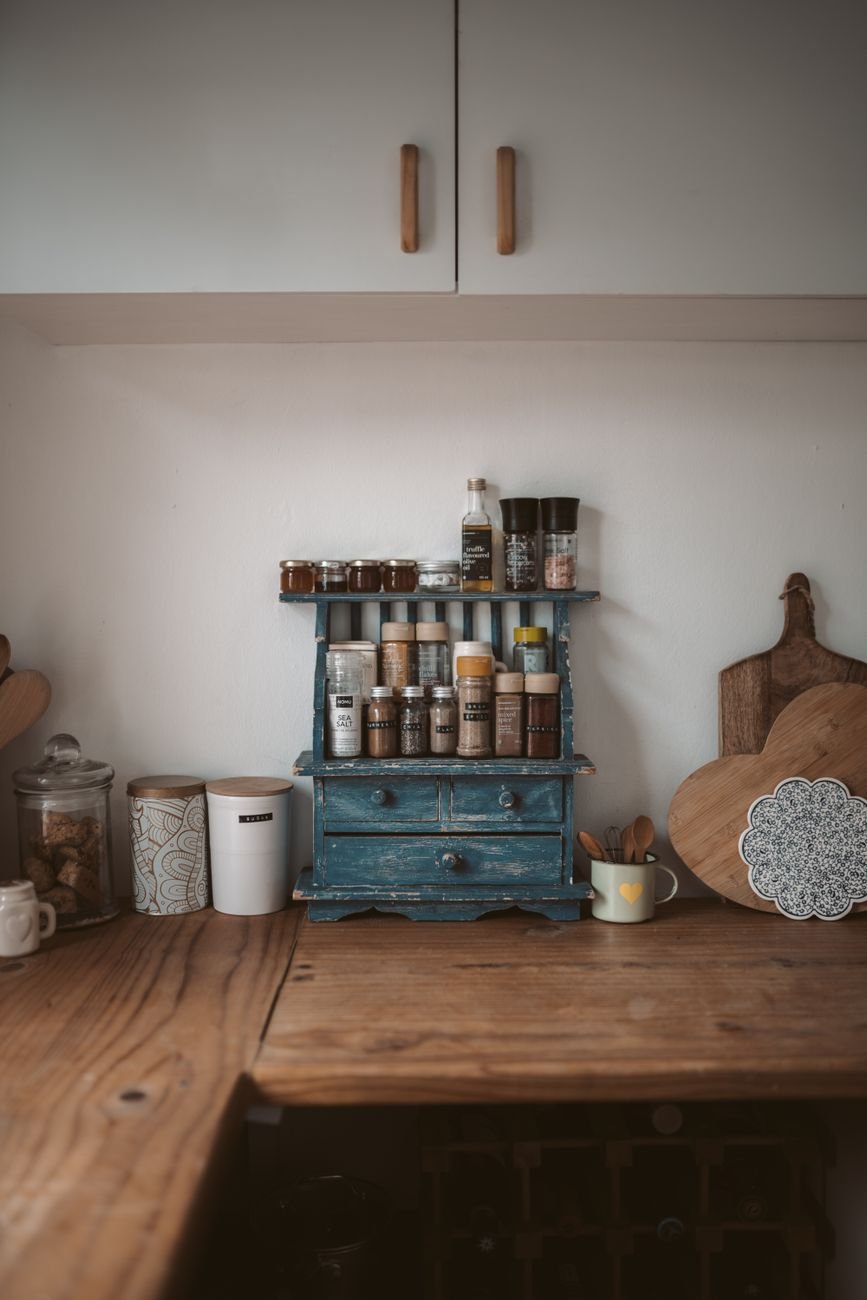
Matching jars look lovely, but they’re optional. Mixed store jars work fine in most of the setups below.
- Matching jars stack and line up neatly, which helps in drawers and narrow racks.
- Original jars save money and keep the best-by date in view.
- Refill bags are cheaper per ounce. Pour them into jars and toss the bag.
If you do switch jars, write the date on the bottom with a marker so you know how old the spice is.
1. Drawer inserts
A spice drawer is the easiest setup to keep tidy. Jars lie flat on an angled insert, labels face up, and you see everything in one glance.
- A never-mix chart: the cleaner combinations that make toxic fumes
- A surface guide: what not to use on stone, wood, cast iron and more
- 5 starter cleaners and a shopping list
- Measure the drawer’s inside width and depth before you shop.
- Pick a drawer near the stove, but not directly above it.
- Put the lids’ labels on top if your jars lie upright instead.
2. Turntables
A lazy Susan in a corner cabinet turns a dead zone into the most useful shelf in the kitchen. Give it a spin and the back jars come to you.
Two-tier turntables double the space if your shelf is tall enough.
3. Tiered shelf risers
Deep cabinets swallow small jars. A three-step riser lifts the back rows so you can read every label.
- Expandable risers fit odd cabinet widths.
- Put the spices you use most on the front step.
4. Door-mounted racks
The inside of a cabinet or pantry door is free real estate. Slim racks screw or hook on and hold a row of jars each.
Check that the door still closes and doesn’t hit the shelf behind it. Measure the gap first.
5. Wall racks and floating shelves
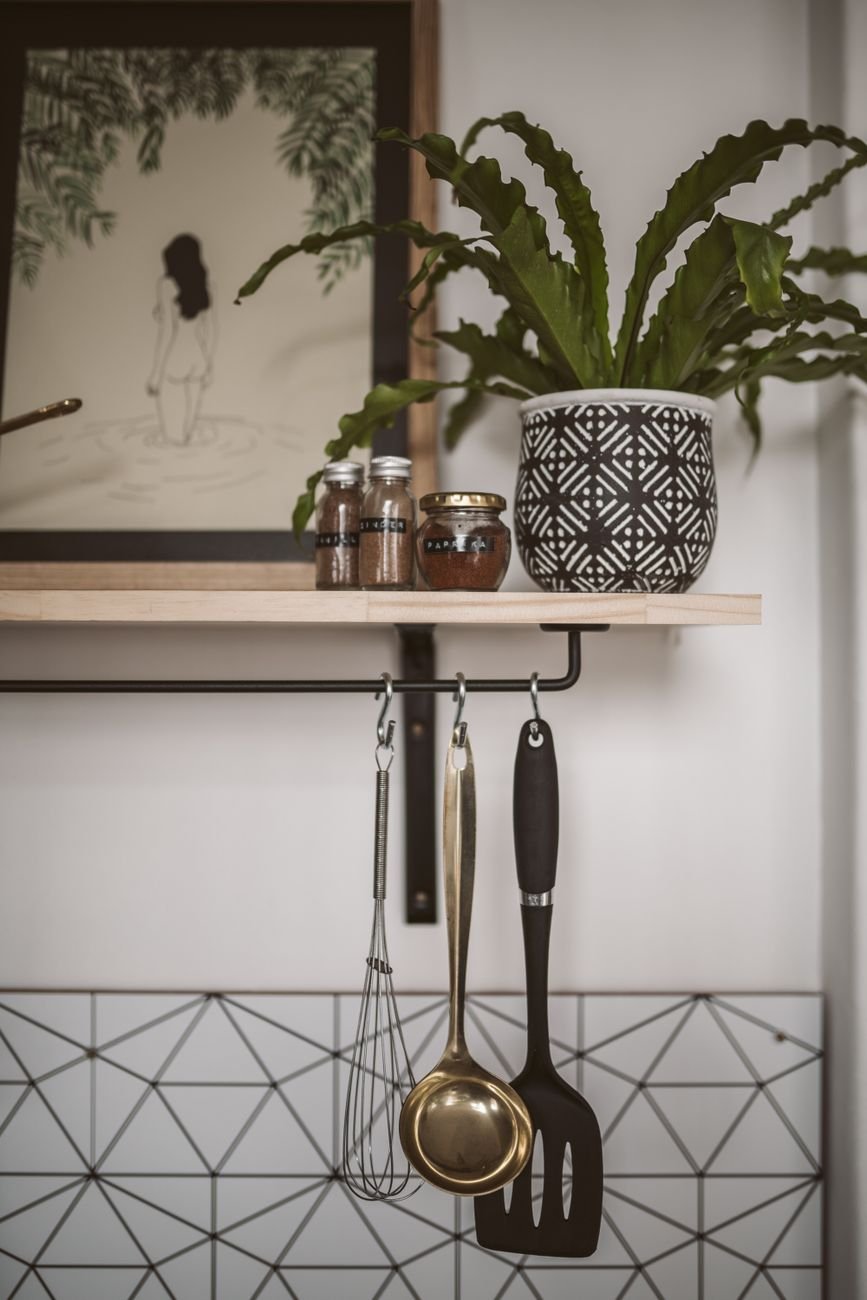
No cabinet space at all? Go up the wall. A narrow ledge or wall rack keeps spices in reach while you cook.
- Keep it away from the stove and out of direct sun. Heat and light fade spices quickly.
- A small lip on the shelf keeps jars from sliding off.
6. Magnetic tins
Magnetic spice tins stick to the side of the fridge or a steel board on the wall. They’re great in tiny kitchens and rentals.
Pick tins with a clear window on the lid so you can see what’s inside.
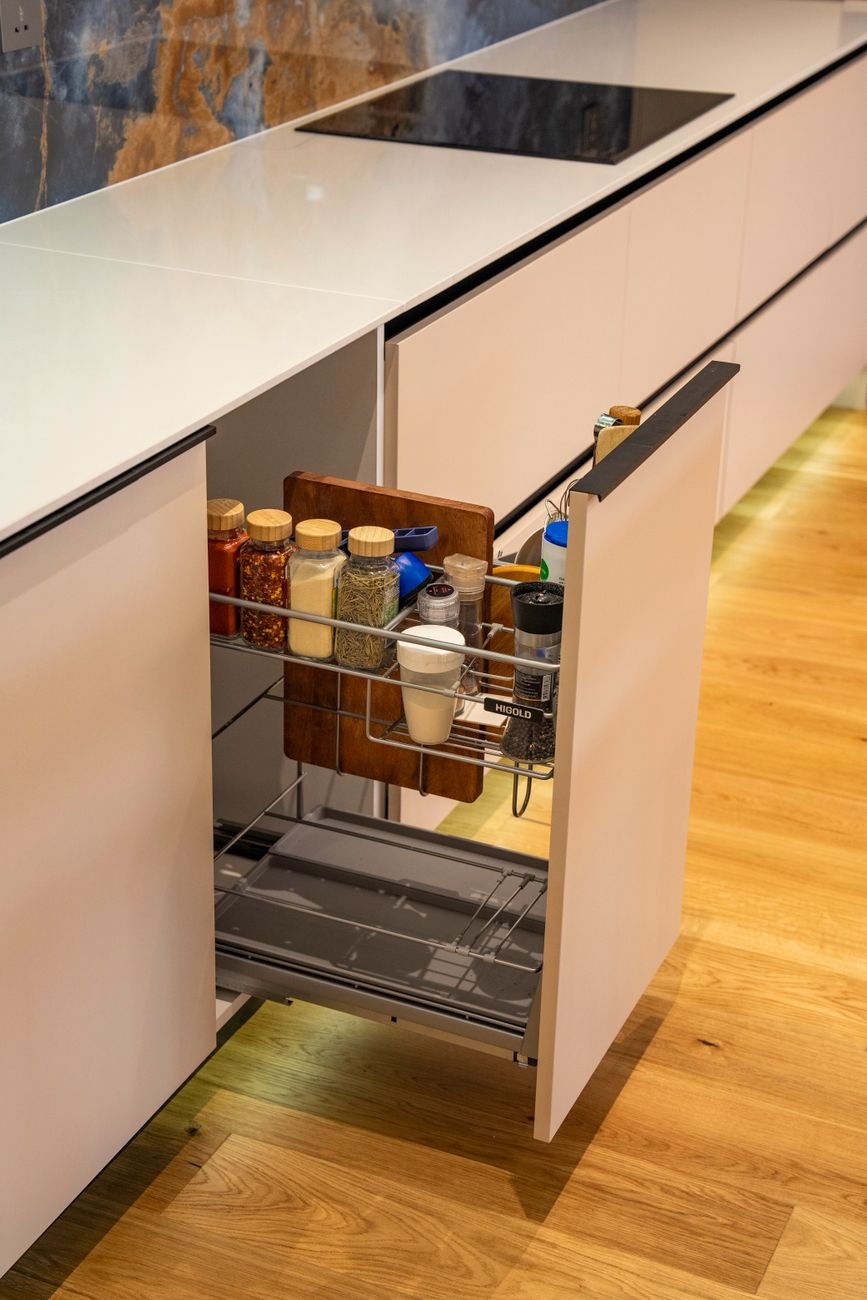
7. A pull-out rack beside the stove
That skinny 6-inch gap between the stove and the cabinet? A slim pull-out rack on wheels slides right in.
It’s one of the best ideas for small kitchens, as long as the gap isn’t right against a hot oven wall.
8. Bins by cuisine or use
Group spices the way you cook, then put each group in a small bin you can pull out like a drawer.
- Baking: cinnamon, nutmeg, ginger, vanilla, cloves
- Mexican: cumin, chili powder, oregano, smoked paprika
- Italian: basil, oregano, thyme, red pepper flakes
- Indian: turmeric, garam masala, coriander, cardamom
Making tacos? Grab one bin and everything is there.
9. Alphabetical order
If you have a big collection and cook a bit of everything, the alphabet is hard to beat. Anyone in the house can find the dill.
It works best in a drawer or on a long rack where every jar has its own spot.
10. Labels you can read
The best system fails if you can’t tell cumin from coriander. Label wherever your eyes land first.
- Lids for drawers and bins viewed from above.
- Fronts for racks and shelves.
- Shelf edges so jars always go back to the same spot.
A label maker is nice. Masking tape and a marker work too.
Where not to keep spices
The cabinet right above the stove is the most popular spot and the worst one. Heat and steam rise into it every time you cook.
- Avoid sunny windowsills and the top of the fridge, which gets warm.
- Keep lids tight so moisture doesn’t cause clumps.
- Never shake a jar over a steaming pot. Spoon it out instead.
A quick word if you have a dog
Some common spices aren’t safe for dogs. Nutmeg is the big one, and onion powder and garlic powder are a problem too.
- Keep nutmeg, onion powder and garlic powder up high or behind a closed door, not in a low drawer or rack a curious nose can reach.
- Wipe up spills from the floor right away.
- Never season your dog’s food or treats with your kitchen spices.
Setting up the rest of the cupboards next? This weekend pantry organization system uses the same zones, and it covers pet food storage too.
Common questions
What’s the best way to organize spices in a small kitchen?
Go vertical: a door rack, magnetic tins on the fridge or a slim pull-out beside the stove.
Should spices be alphabetical?
It works well for big collections. For smaller ones, grouping by cuisine or by use is often faster.
How long do spices last?
Ground spices are best within a year or two, and whole spices last longer. If it barely smells, replace it.
Is it OK to store spices above the stove?
It’s convenient but not ideal. Heat and steam fade flavor and cause clumping.
Do I need matching spice jars?
No. They look tidy, but original jars work fine in most setups and save money.


Leave a Reply