

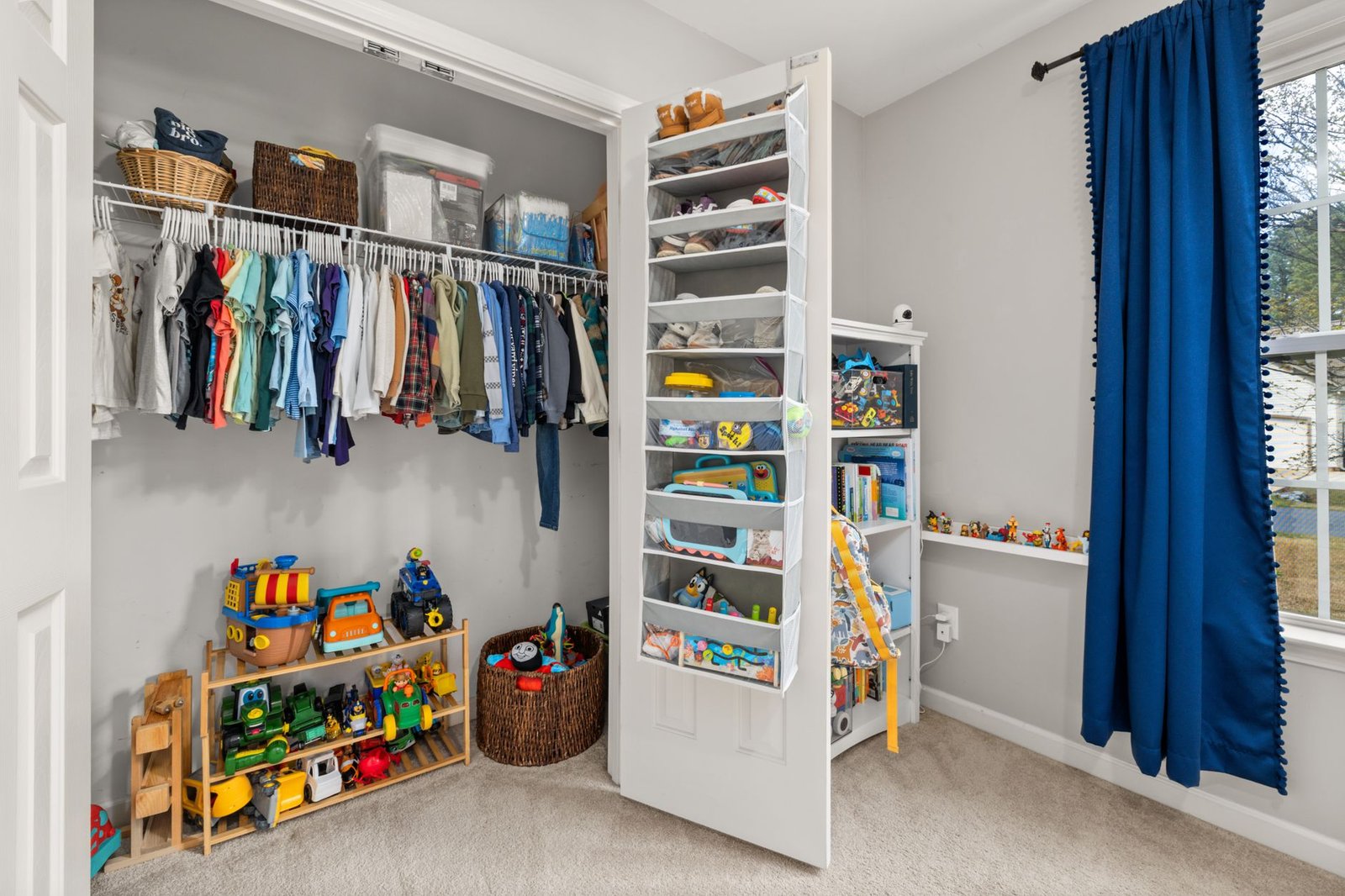
You spend a whole Saturday organizing the kids’ room. It looks amazing. By Tuesday you can’t see the floor.
The problem usually isn’t the kids. It’s a system built for grown-ups. These kids organization hacks are designed around small hands, short attention spans and kids who can’t read yet.
The rule behind every hack
Kids keep up with a system when putting something away is as easy as dropping it. So every idea below follows three rules.
- They can reach it without asking for help.
- They can tell where it goes without reading.
- It takes one step, not three.
If a system breaks one of these, expect it to fail. That’s not laziness, it’s just how kids work.
Hack 1: move everything down to kid height
Get down on your knees in their room. What can you actually reach from there?
- Hang hooks at their shoulder height for jackets, pajamas and bags.
- Add a lower closet rod, or a tension rod, for everyday clothes.
- Keep daily toys on the bottom two shelves. Save higher shelves for things that need a grown-up.
Anchor tall shelves and dressers to the wall. Kids climb, especially when the good stuff is up high.
- A never-mix chart: the cleaner combinations that make toxic fumes
- A surface guide: what not to use on stone, wood, cast iron and more
- 5 starter cleaners and a shopping list
Hack 2: picture labels
Word labels mean nothing to a four-year-old. Pictures do.
- Snap a photo of what goes in each bin, print it and tape it on the front.
- Or draw simple icons: a car, a block, a doll.
- Add the word underneath, so early readers start to learn it.
Hack 3: one-step bins with no lids
Lids are where good intentions go to die. Open bins win every time.
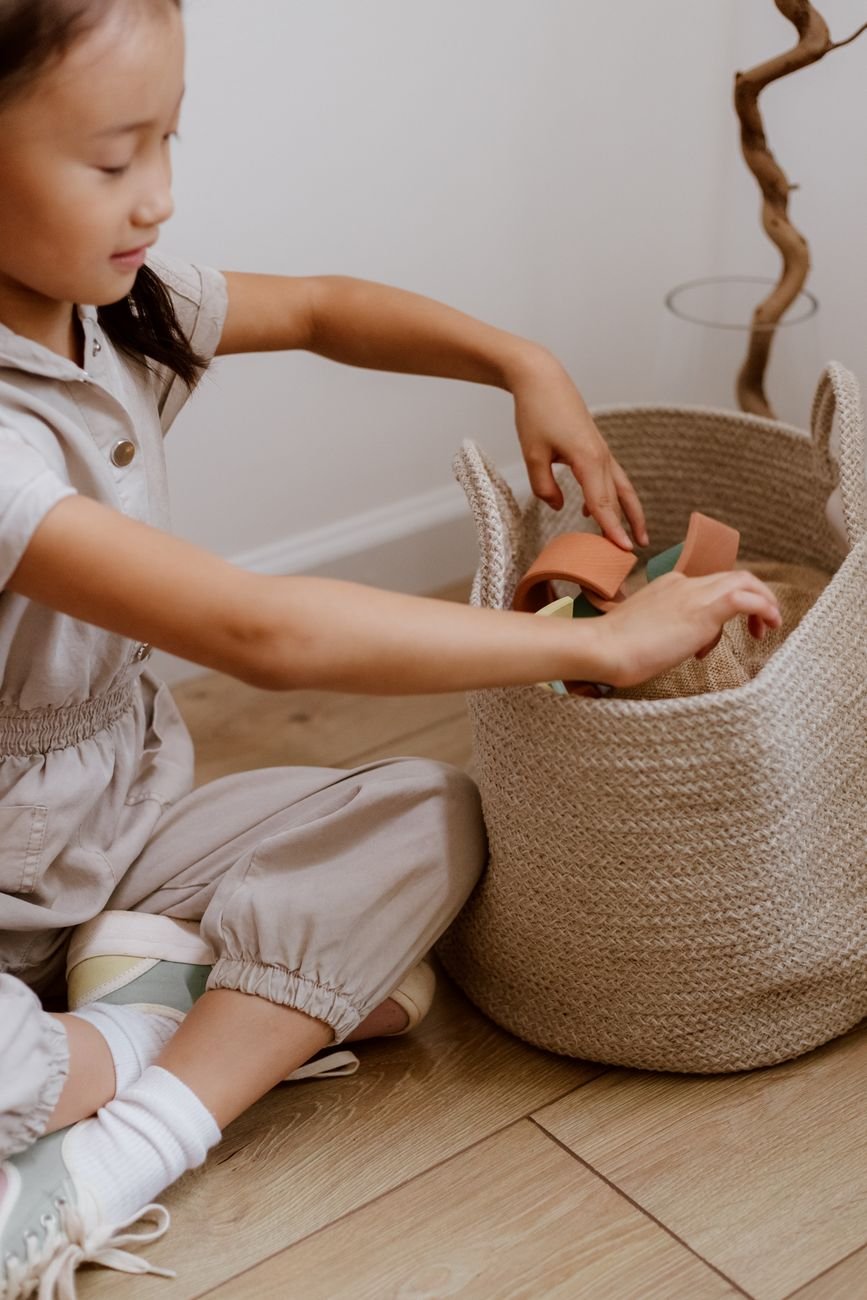
- Use open baskets or bins that slide out easily.
- Go for broad categories: cars, blocks, dolls, art, books. Not “small red cars.”
- Pick bins sturdy enough that a toddler can carry them back to the shelf.
Hack 4: rotate toys instead of buying more storage
Fewer toys out means less to clean up, and kids often play longer with less in front of them.
- Split toys into three or four groups.
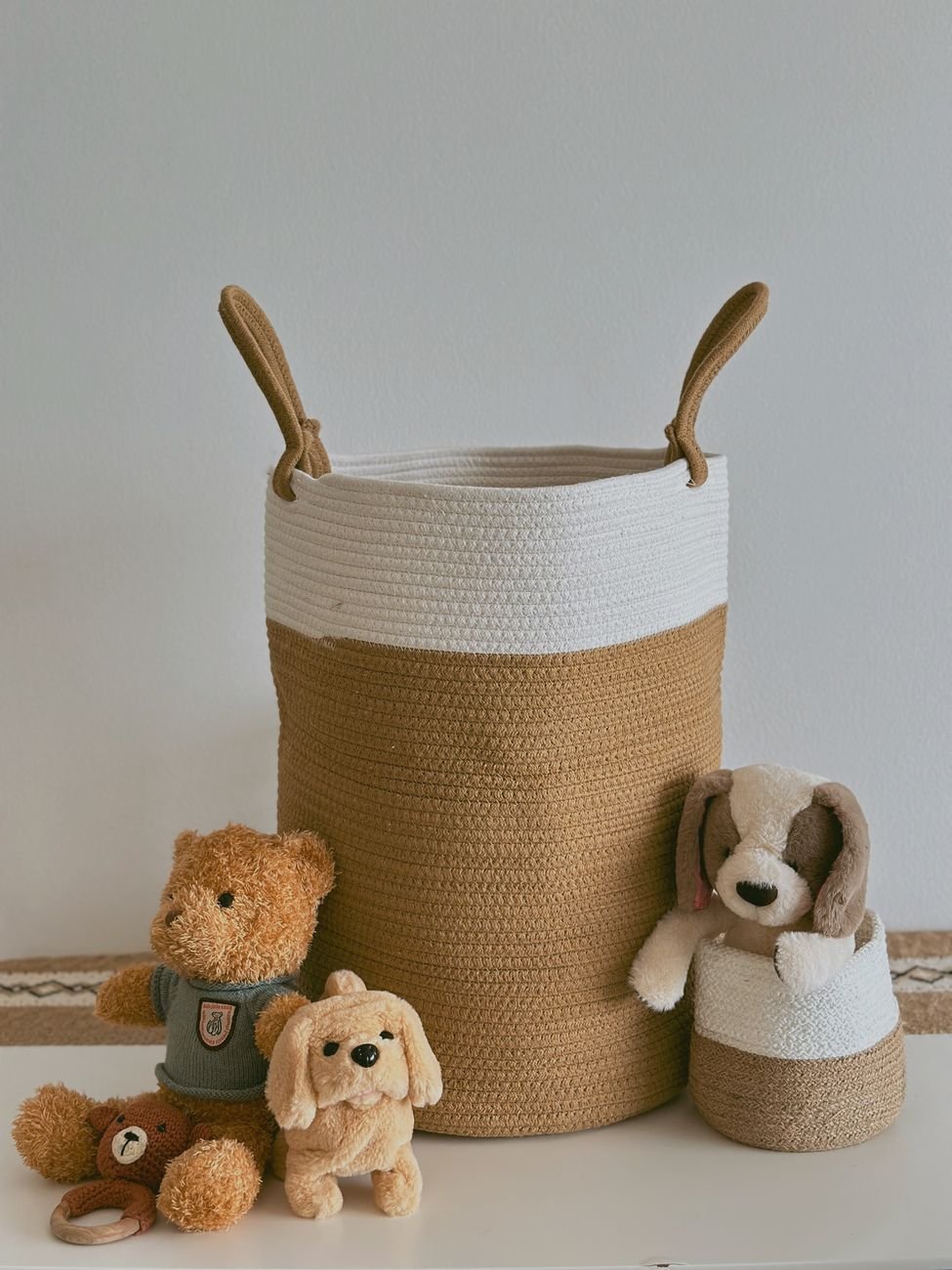
- Keep one group out. Store the rest in labeled bins in a closet or garage.
- Swap every few weeks. Old toys feel brand new again.
Hack 5: a launch pad by the door
Mornings go smoother when everything for school lives in one spot.
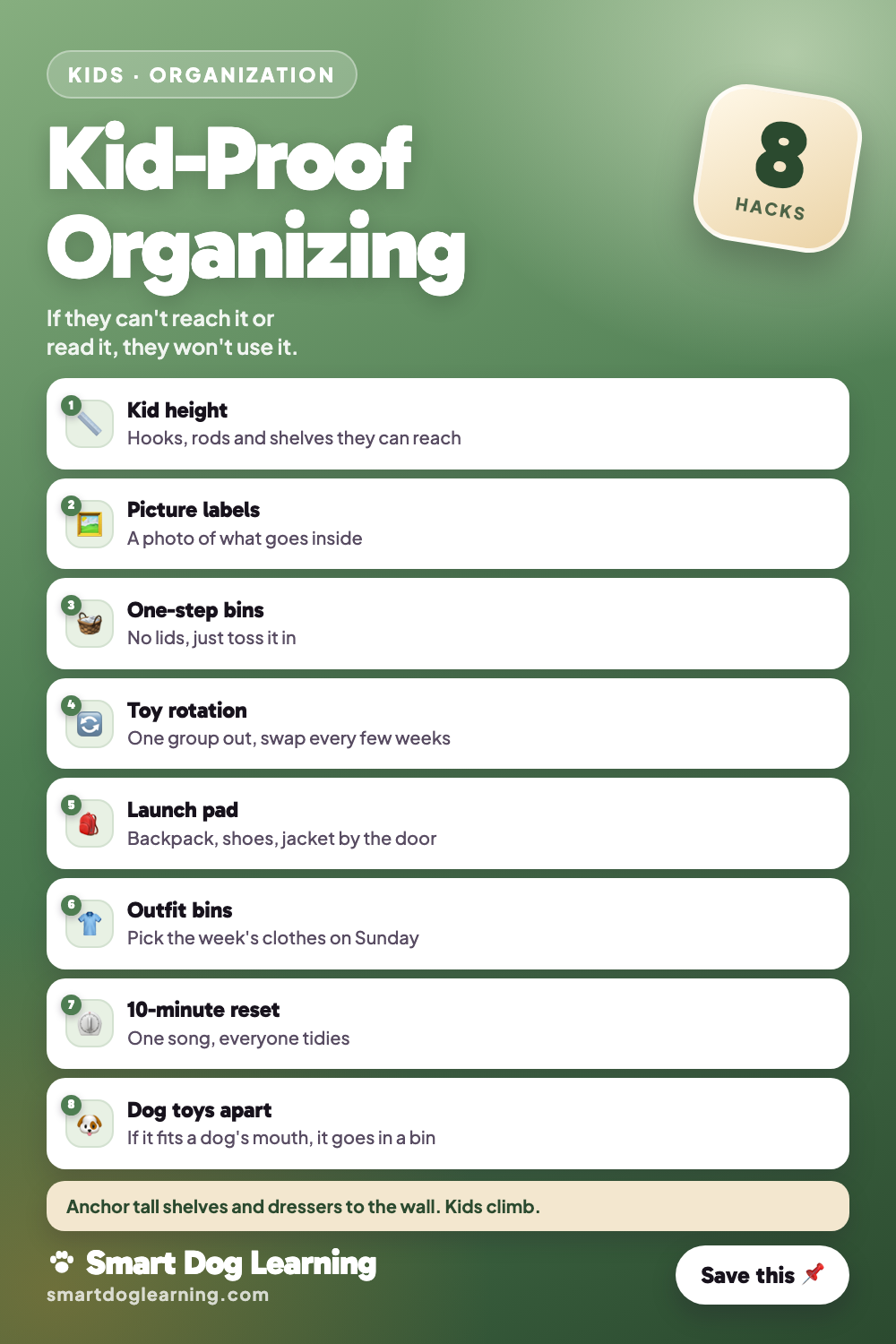
- One hook per kid for the backpack, one for the jacket.
- A basket or shoe tray underneath for shoes.
- A small bin above for hats, gloves and library books.
Teach one rule: everything for tomorrow goes on the launch pad tonight.
Hack 6: outfit bins for the week
Picking clothes every morning is a daily battle in a lot of houses. Do it once a week instead.
- Use a hanging closet organizer with five shelves, one per school day.
- On Sunday, let your child choose five outfits, socks included.
- Each morning, they grab the next shelf. No debate.
Hack 7: simple drawers, simple folding
Kids won’t fold like a retail store. Don’t expect them to.
- One drawer per category: tops, bottoms, pajamas, socks and underwear.
- Teach a simple fold, or let them roll clothes. Rolling is easier for small hands.
- Add drawer dividers so things don’t turn into one big pile.
Their closet needs the same thinking. These small closet organization ideas work well in kids’ rooms too.
Hack 8: an art station with a keep box
Kids make a lot of art. You don’t have to keep all of it.
- Store crayons, markers and paper in a caddy they can carry to the table.
- Hang a string with clips for a rotating “gallery” of new work.
- When something comes down, your child picks: keep box or recycle.
- One keep box per school year. When it’s full, it’s full.
Sharing a room? Split it clearly
Siblings in one room fight less when everyone knows what’s theirs.
- Give each child a color: their own bins, hooks and towel.
- Split shelves so each kid owns one side, top to bottom.
- Keep shared toys in clearly marked “everyone” bins.
It also makes cleanup fairer. Each kid handles their own color first, then they tackle the shared bins together.
Hack 9: a book bin, not a bookshelf
Bookshelves with spines facing out are hard for kids to browse and harder to put back.
- Use a bin or crate where books face forward.
- Or a front-facing rack, so covers are visible.
- Rotate the books along with the toys.
Hack 10: a 10-minute reset with a song
Tidying works better as a routine than as a punishment.
- Pick one song, or a short playlist. When it plays, everyone tidies.
- Make it the same time every day, like before dinner or bath.
- Join in. Kids copy what you do far more than what you say.
Hack 11: a donate bag that’s always open
Kids outgrow clothes and toys fast. Keep a bag in the closet for anything too small or forgotten.
- When it’s full, drop it off.
- Let kids help choose. They’re often more generous than you’d think.
For bigger purges, go one room at a time so it doesn’t take over a whole weekend.
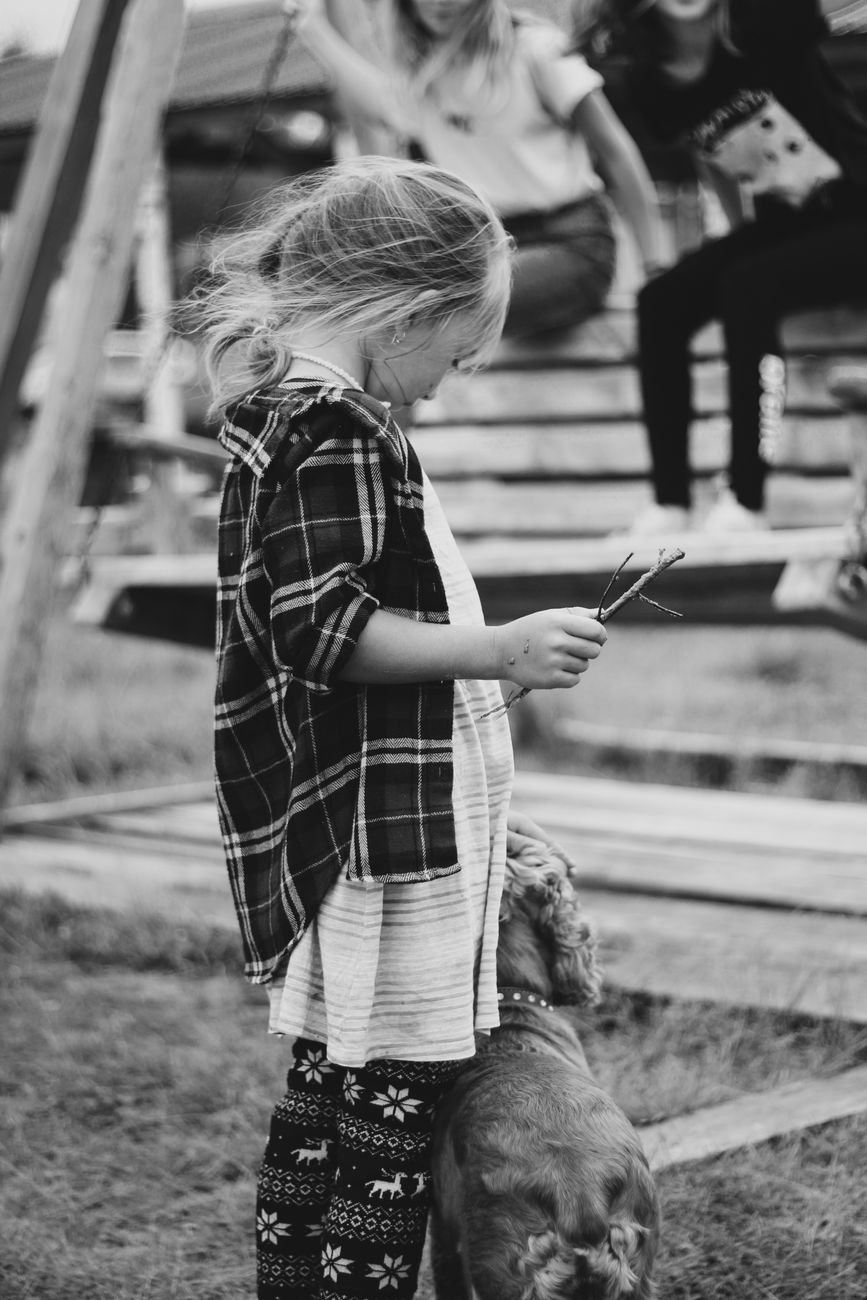
Hack 12: kids’ stuff and dog stuff live apart
If you have a dog, this one matters for safety as much as tidiness.
- Give the dog’s toys their own bin, in a different spot from the kids’ toys.
- Keep small toys, building bricks, hair ties and slime up off the floor. Dogs can swallow them, and that can mean an emergency vet visit.
- Teach kids the rule: if it fits in a dog’s mouth, it goes in a bin.
Common questions
At what age can kids start organizing their own things?
Toddlers can drop toys into a bin. By four or five, most kids can follow picture labels and a simple routine.
How many toys should be out at once?
There’s no magic number. If cleanup takes more than ten minutes, there are probably too many out.
How do I get kids to clean up without a fight?
Keep it short, do it at the same time every day and make it a team job with music.
What’s the best storage for a small kids’ room?
Low cube shelves with open bins, under-bed drawers and hooks on the back of the door.
Should toys have lids?
Not for everyday toys. Lids add a step. Save lidded bins for stored toys and pieces that get lost.

Leave a Reply