

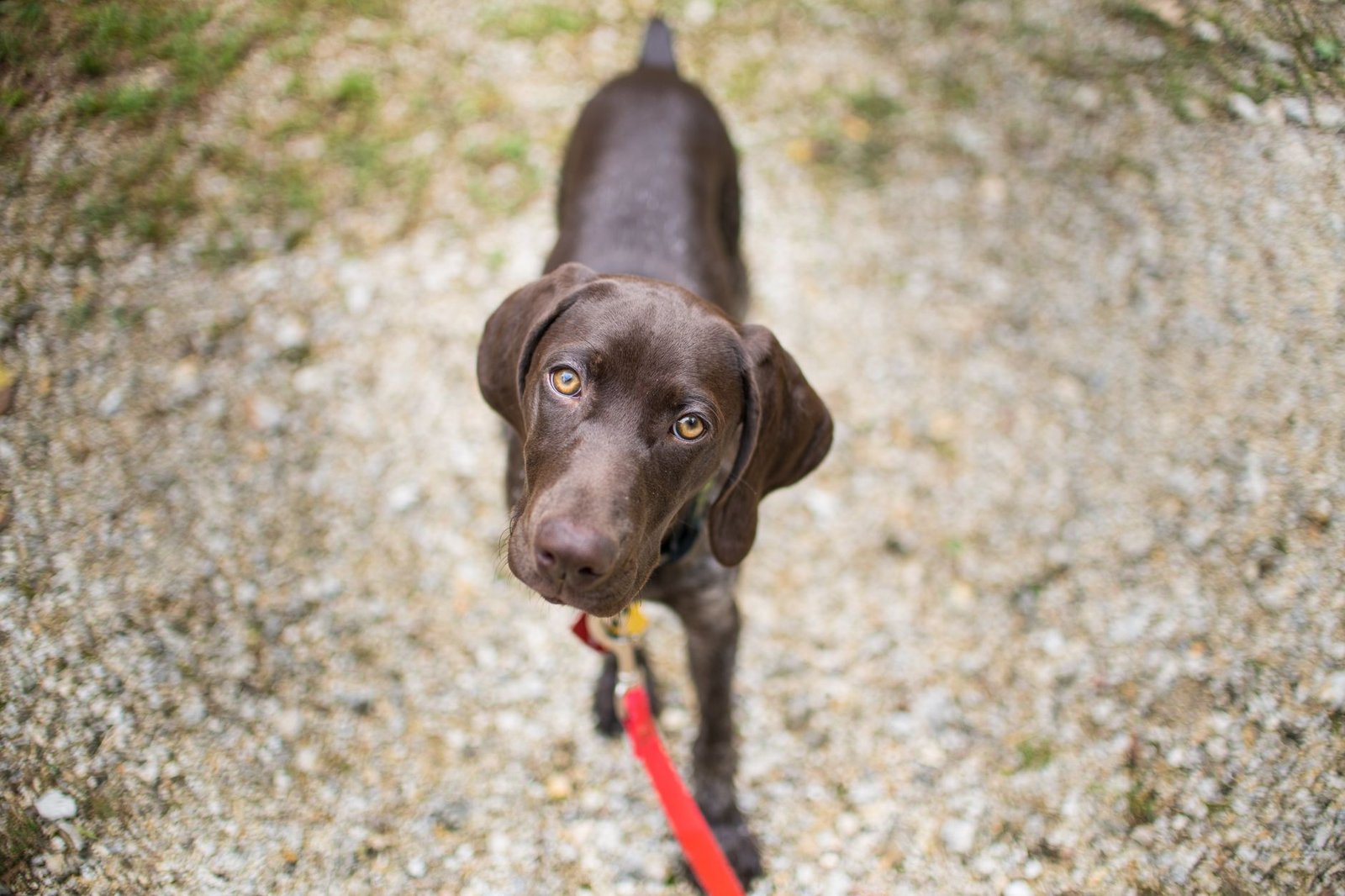
Your first walk with a new puppy looks easy in your head. Then the puppy sits down on the sidewalk, chews the leash and refuses to move.
Totally normal. Leash training a puppy is a skill you build in tiny steps, mostly at home, before you ever hit the street. Here’s the plan that makes first walks fun instead of a tug of war.
When to start leash training
Start the week your puppy comes home. Most puppies are 8 to 10 weeks old, and that’s the perfect age to get used to a collar and leash.
- Indoors and in your own yard: right away.
- Public sidewalks and parks: ask your vet. Until vaccinations are done, many vets suggest avoiding places where lots of unknown dogs go.
- Session length: 3 to 5 minutes, a few times a day.
Puppies learn fast but tire fast. Stop while they’re still having fun.
Gear that makes it easier
You don’t need anything fancy. You need gear that fits and is safe.
- A flat collar or a padded harness. You should fit two fingers under the strap. Many people like a harness for small breeds and puppies who pull.
- A light 4 to 6 foot leash. Nylon or biothane is easy to hold and clean.
- Tiny soft treats. Pea-sized bits of plain cooked chicken or soft puppy treats work well.
- A treat pouch so your hands stay free.
Skip retractable leashes for now. They teach puppies that pulling gets them more line, and the thin cord can burn fingers and paws.
Step 1: Make the collar and leash boring
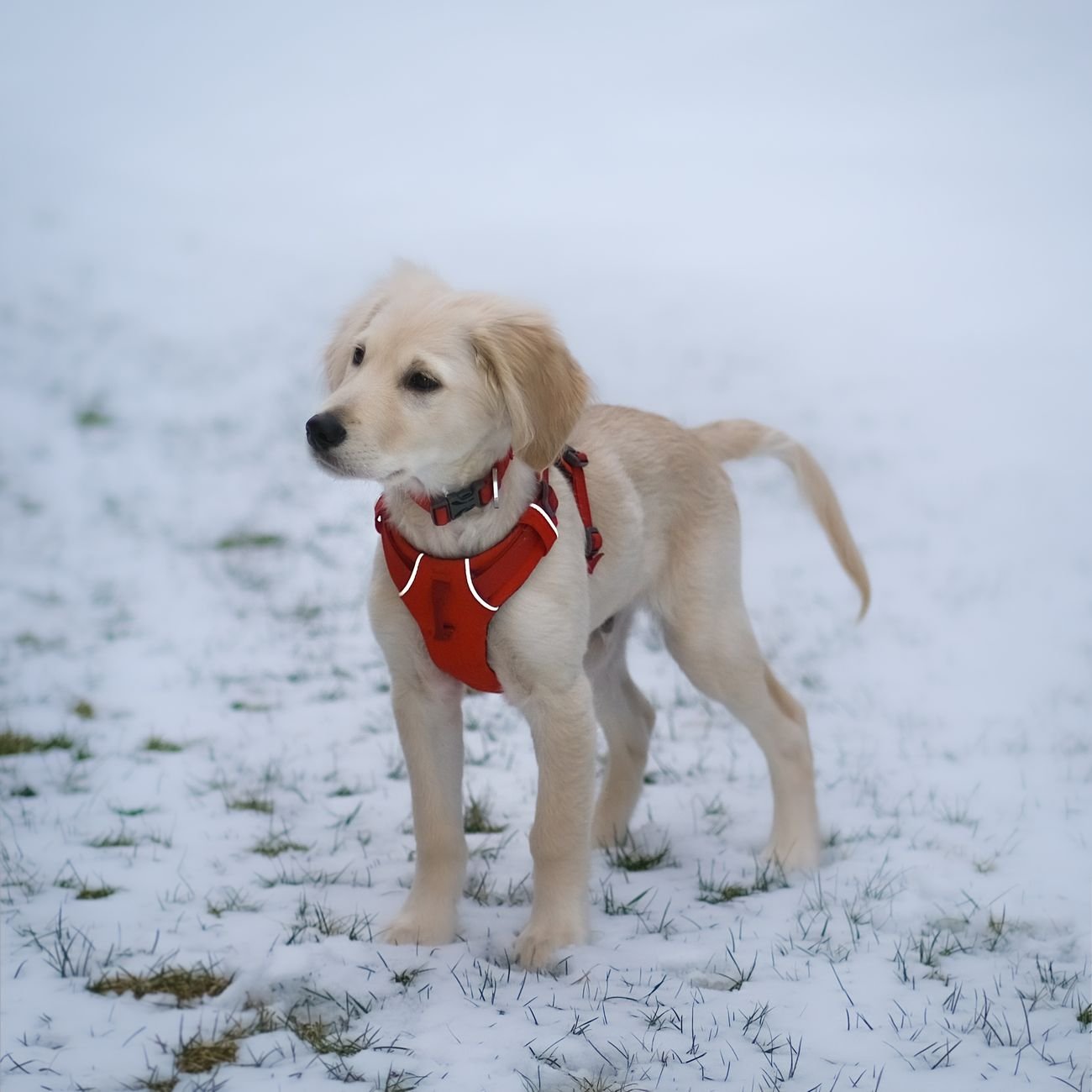
Put the collar or harness on during a happy moment, like right before a meal. Give a treat. Take it off after a few minutes.
- Works for puppies, adults, rescues and seniors
- One page per problem, step by step
- Printable PDF, free
- Expect scratching at first. Distract with a toy or a treat.
- Once the collar is no big deal, clip on the leash and let your puppy drag it around the house while you watch.
- Never leave a puppy alone with a leash attached. It can snag on furniture.
Within a day or two, most puppies forget it’s there. That’s exactly what you want.
Step 2: Teach a “look at me” cue
Before walking anywhere, teach your puppy that paying attention to you pays off.
- Say your puppy’s name in a happy voice.
- The second they look at you, say “yes” and give a treat.
- Repeat 5 to 10 times, then stop.
This little cue is your secret weapon on real walks. A squirrel appears, you say the name, and your puppy checks in with you.
Step 3: Walk together indoors
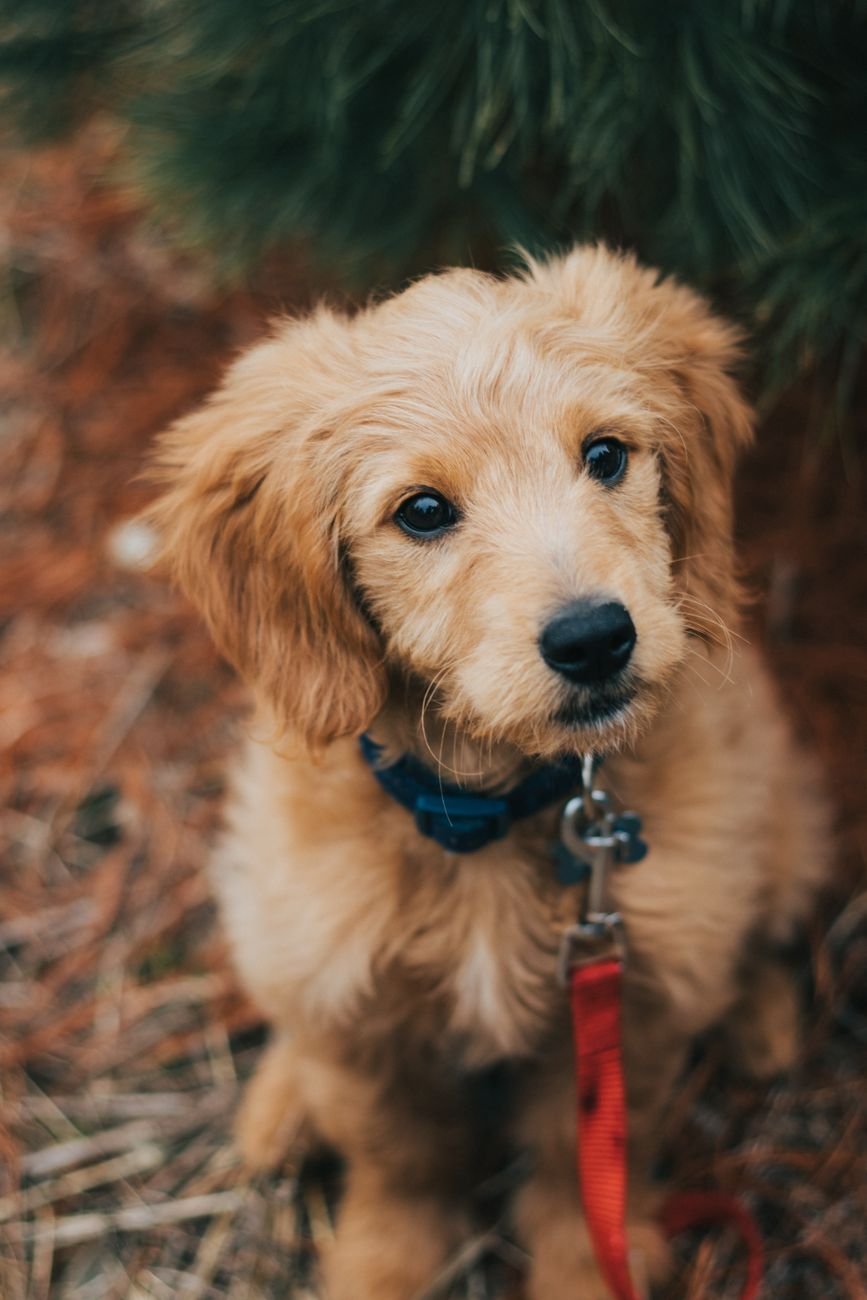
Now pick up the leash, but keep it loose. Your living room is the perfect training ground. It’s quiet, and it smells familiar.
- Hold treats at your side, where you want your puppy to walk.
- Say “let’s go” and take a few steps.
- Every time your puppy is next to you, treat right by your leg.
- Change direction often so it feels like a game.
Pick one side, left or right, and stick with it. It stops your puppy from weaving in front of your feet.
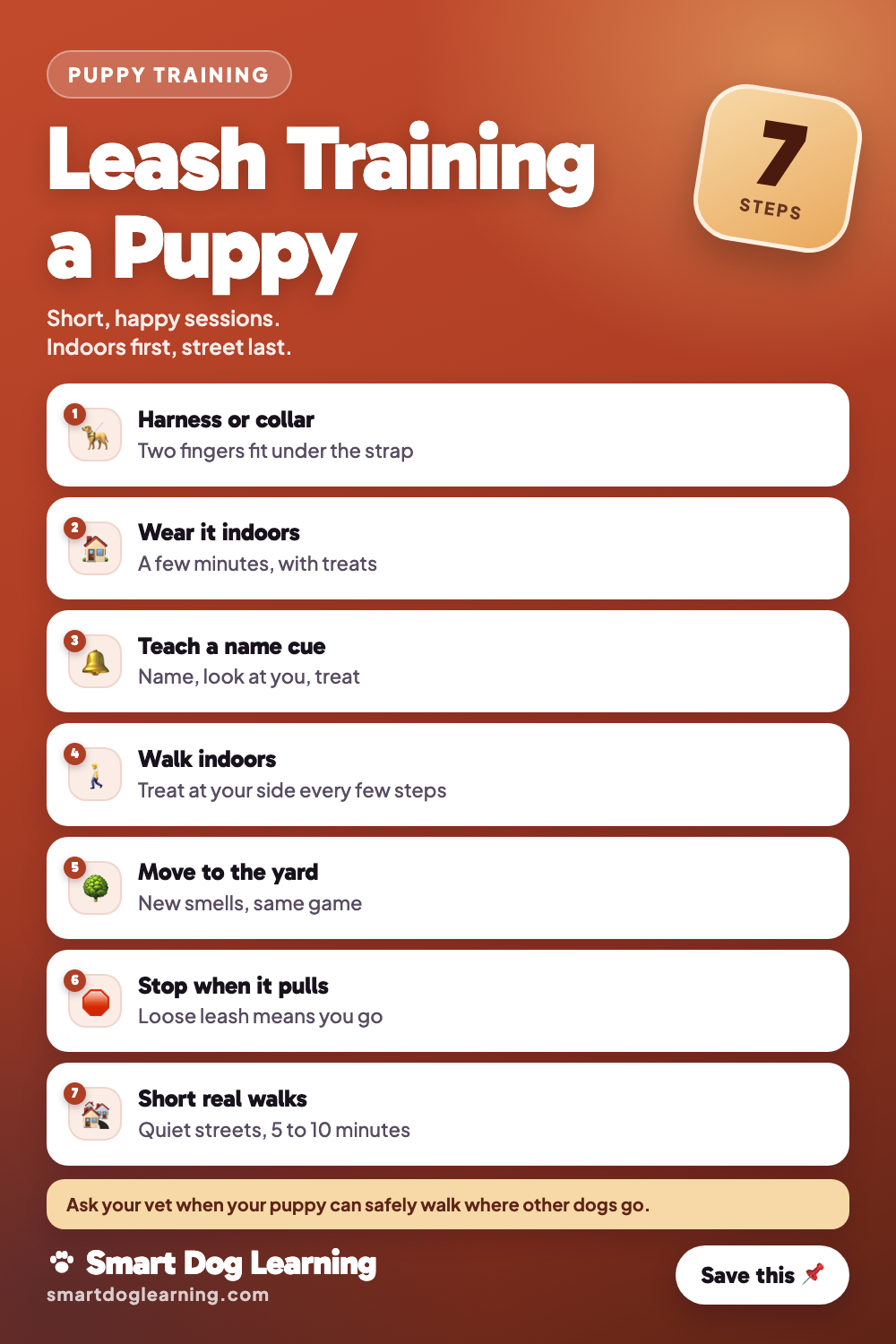
Step 4: Take it to the yard
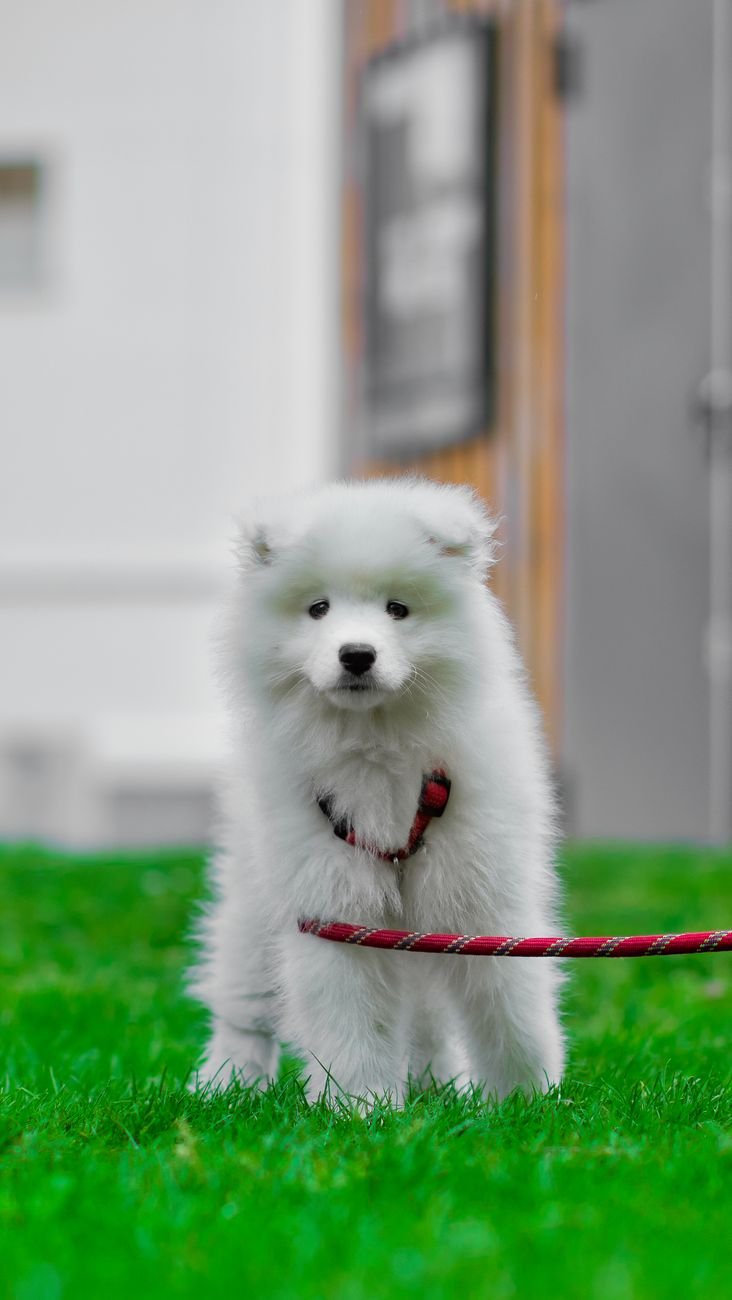
Outside is a lot more exciting. Grass, bugs, leaves, smells everywhere. Your puppy will probably forget everything for a minute, and that’s okay.
- Go back to easy mode: a few steps, treat, a few steps, treat.
- Let your puppy sniff. Sniffing is how dogs read the world, and it tires them out.
- Use your “look at me” cue and reward big when it works.
Step 5: Handle pulling the calm way
Every puppy pulls. The trick is making sure pulling never works.
- Be a tree. When the leash goes tight, stop and stand still. The moment it goes slack, walk on.
- Turn around. If your puppy keeps charging ahead, calmly turn and walk the other way. Treat when they catch up.
- Reward the loose leash. Treat often while the leash hangs in a “J” shape.
Never yank the leash or jerk the collar. It hurts small necks and makes walks scary.
When your puppy sits down and won’t move
This one surprises everyone. Your puppy plants their bottom on the sidewalk and simply stops.
Usually they’re unsure, tired or overwhelmed. Don’t drag them. Try this instead:
- Crouch down a few feet ahead and call them happily.
- Toss a treat a step or two in front of them.
- Let them watch the world for a minute before trying again.
- If they’re tired, carry them home. Training is over for today.
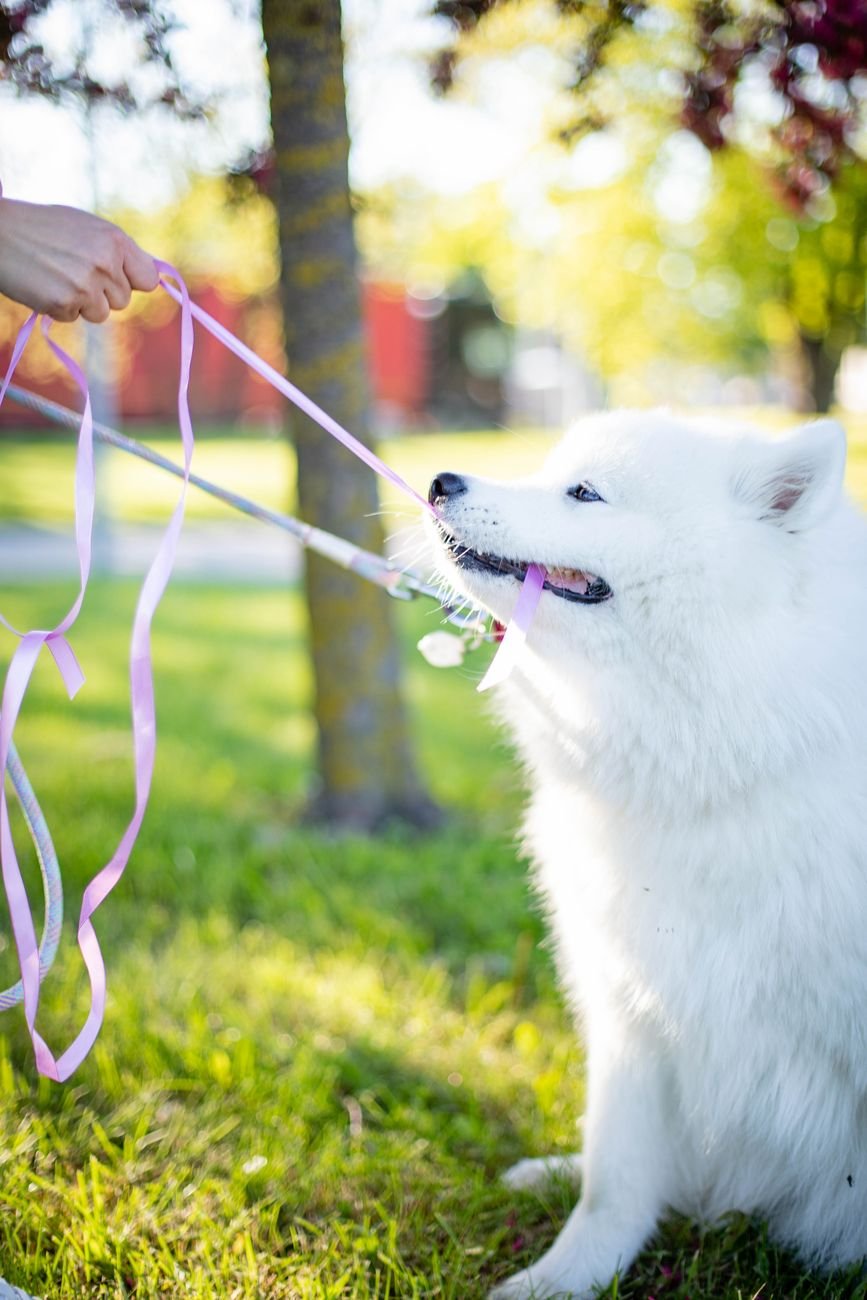
When your puppy bites the leash
Leash biting is a puppy thing. The leash moves, so it looks like a toy.
- Bring a tug toy and offer it instead.
- Stop moving so the leash goes still and boring.
- Praise and treat the moment they let go. Patience beats any trick here.
Some people keep a spare cheap leash for puppyhood, since a few chewed ones are pretty much guaranteed.
Your first real walks
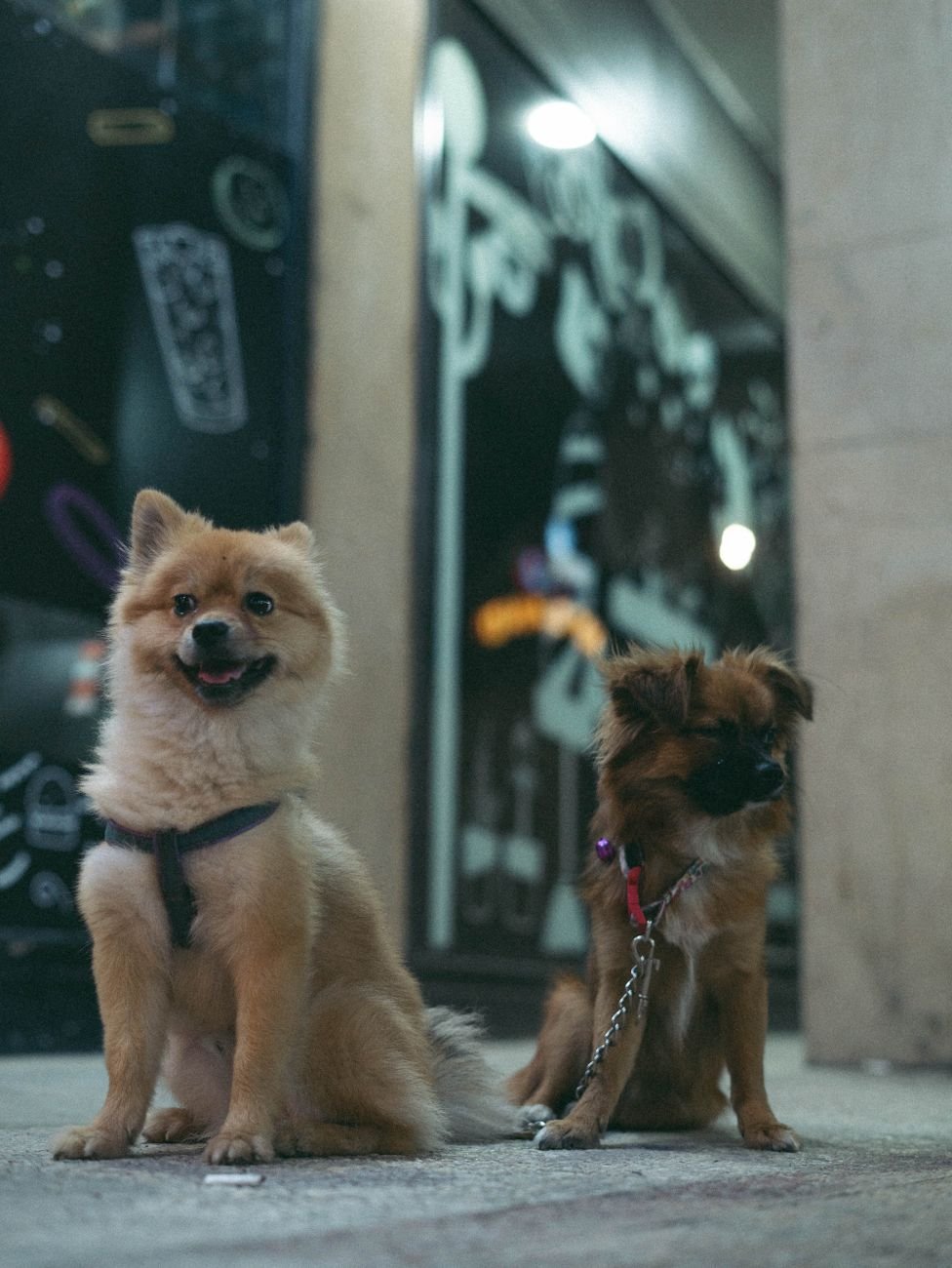
Once your vet gives the green light, start small. A quiet street at a quiet time beats a busy park on a Saturday.
- Keep walks short: 5 to 10 minutes is plenty for a young puppy.
- Let them sniff and watch cars, bikes and people from a distance.
- Carry treats and reward calm behavior around new things.
- Bring poop bags and water if it’s warm.
Every calm meeting with a new sight or sound is a socialization win. More on that in our guide on how to socialize your dog.
Mistakes that slow things down
Nobody gets it perfect. These are the common ones to watch for.
- Sessions that are too long for a puppy’s attention span.
- Letting pulling work “just this once” when you’re in a hurry.
- Using the leash only for vet trips, so it predicts bad things.
- Skipping treats too soon. Fade them slowly over weeks.
- Comparing your puppy to someone else’s. Every dog learns at its own pace.
If you’re new to all this, our dog training tips for new owners cover the basics beyond the leash.
Common questions
How long does it take to leash train a puppy?
Most puppies get the basics in a few weeks of short daily practice. A really polished loose-leash walk can take months.
Is a harness or a collar better for a puppy?
Both work. A well-fitted harness takes pressure off the neck, which many owners prefer for small breeds and pullers.
Can I walk my puppy before all its shots?
Ask your vet. Your own yard is usually fine, but avoid areas where lots of unknown dogs go until your vet says it’s safe.
How far should a puppy walk?
Keep early walks short and let your puppy set the pace. Stop if they lag, sit down a lot or seem tired.
What if my puppy is scared of the leash?
Go slower. Let them sniff it near their food bowl, pair it with treats, and keep sessions very short and happy.


Leave a Reply