

Trick training isn’t just for show. It builds focus, burns mental energy and gives you and your dog something fun to do together on a rainy afternoon.
Here are 25 tricks to teach your dog, sorted from easy to harder. Most need nothing but treats and five minutes a day.
Before you start
A little setup makes every trick faster to learn.
- Tiny, tasty treats. Pea-size pieces your dog loves. Cut them small so they don’t fill up.
- A marker. A clicker or a short word like “yes” that tells your dog the exact moment they got it right.
- Short sessions. Five minutes, a few times a day. Stop while your dog still wants more.
- A quiet room. Add distractions only once the trick is solid.
If your dog doesn’t have sit, down and come yet, start with these dog training tips for new owners.
How to teach any trick
Almost every trick on this list uses the same simple recipe.
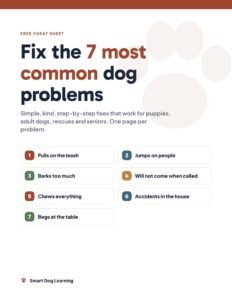
- Works for puppies, adults, rescues and seniors
- One page per problem, step by step
- Printable PDF, free
- Lure your dog into the position with a treat in your hand.
- Mark the moment they do it, then reward.
- Fade the lure after a few good reps. Use the same hand motion with no treat in it, then reward from your other hand.
- Add the word once your dog does it reliably. Say it just before the hand signal.
No pushing or pulling your dog into position. Let them figure it out. That’s the part that makes their brain tired.
Starter tricks (1 to 5)
Quick wins that build confidence for both of you.
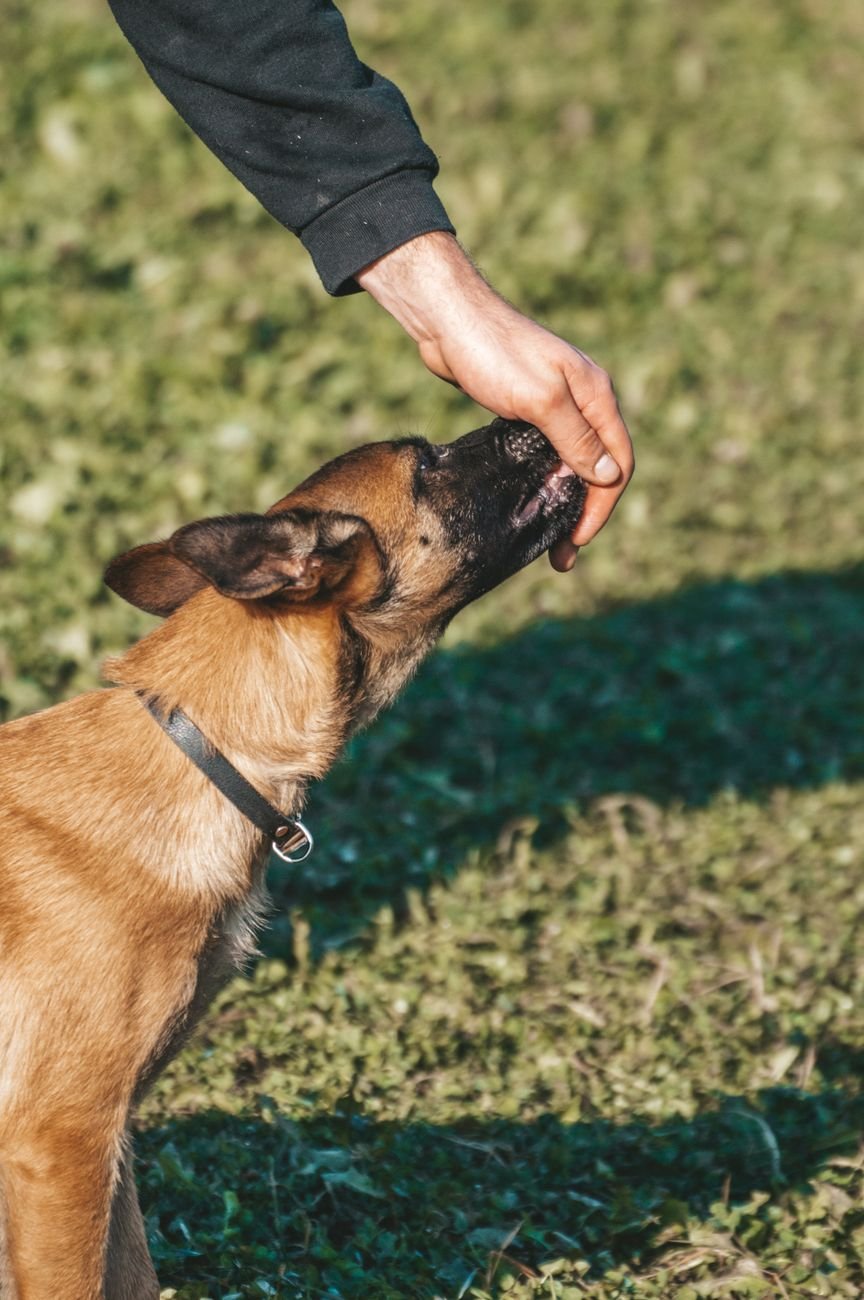
- Touch. Hold your flat palm near your dog’s nose. Mark and reward when they bump it. This one is the base for loads of other tricks.
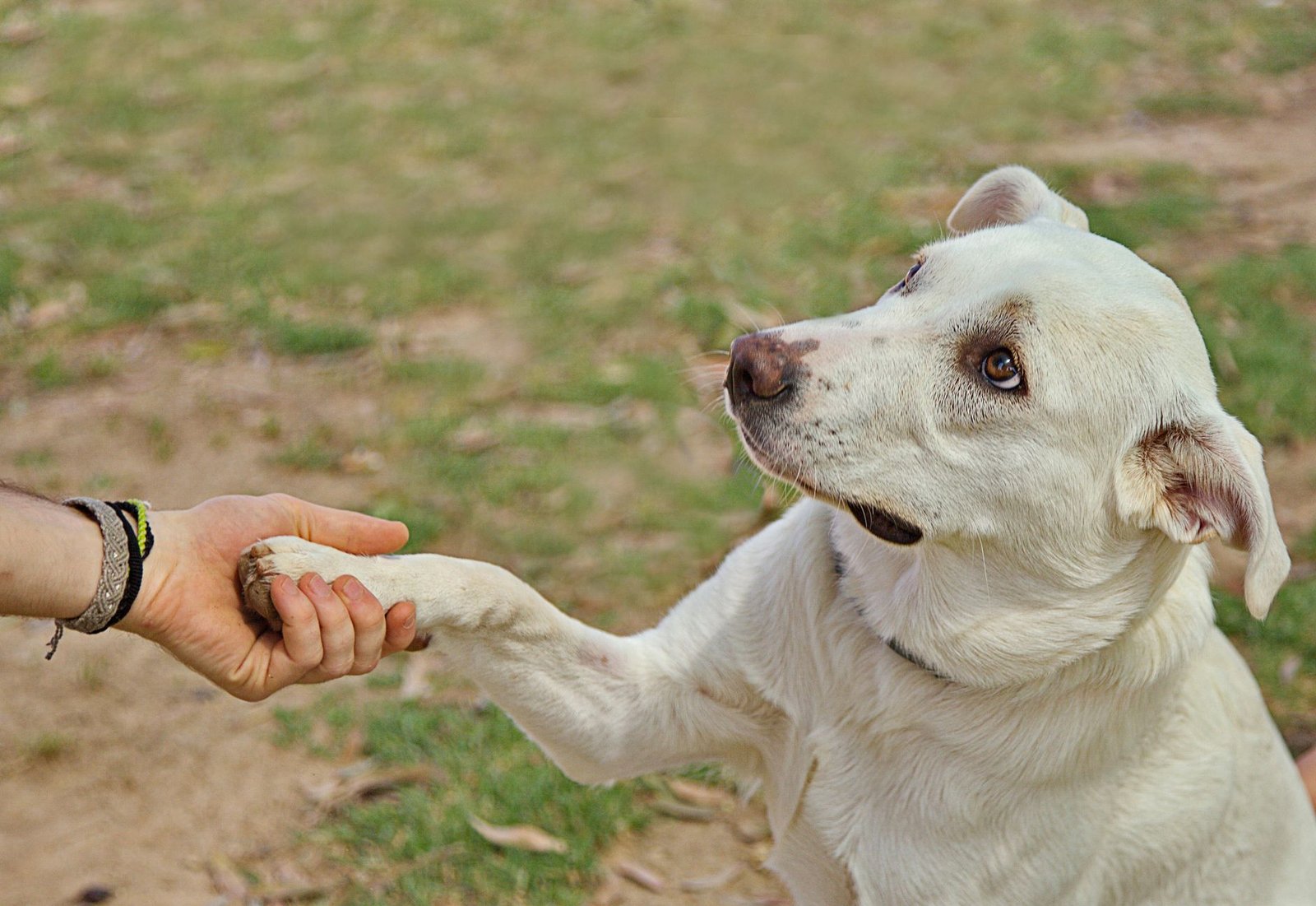
- Shake. Hold a treat in a closed fist low to the ground. When your dog paws at it, mark and reward.
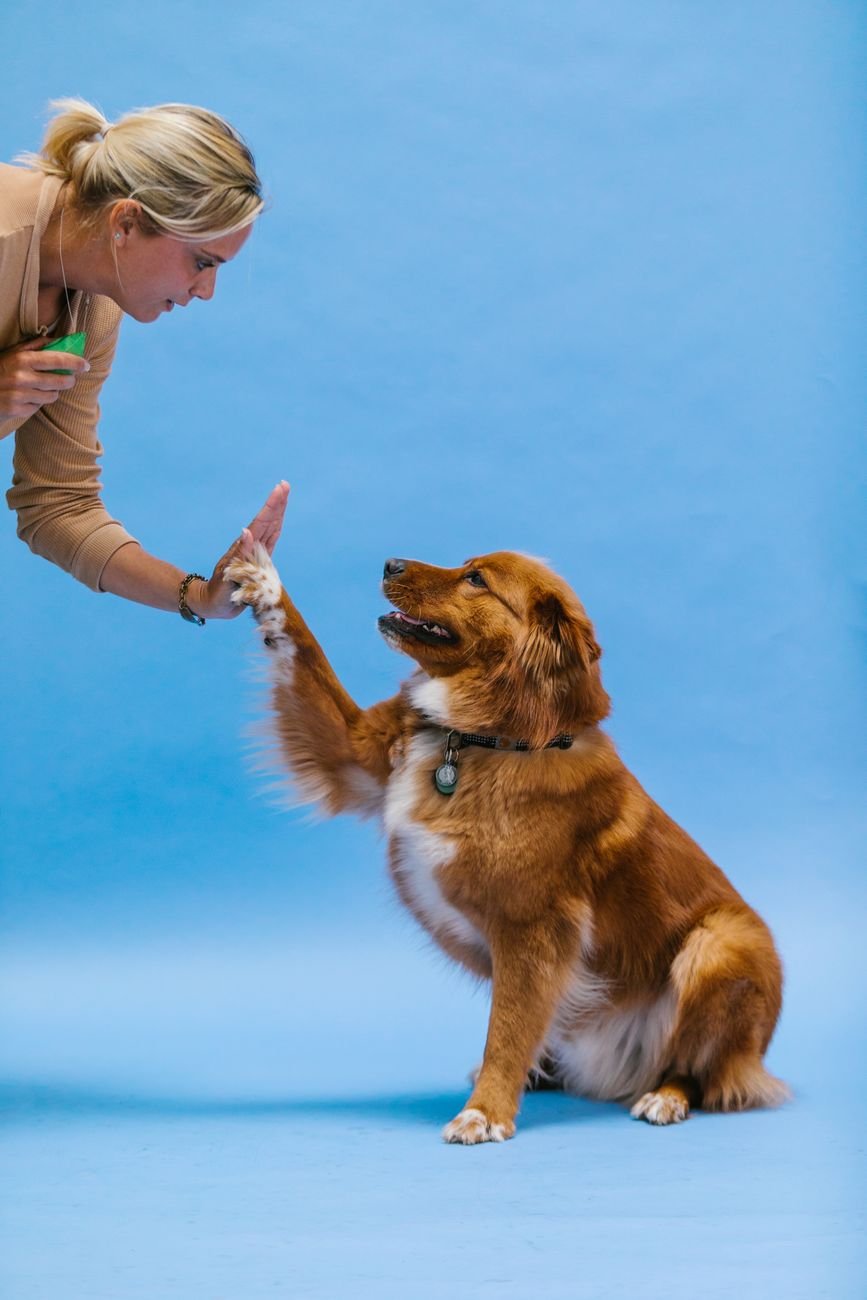
- High five. Once shake is solid, hold your palm up and facing your dog a little higher.
- Wave. Raise your hand just out of reach as your dog goes to shake. Reward the paw in the air.
- Bow. From standing, lure a treat down between the front paws. Mark the second the elbows dip while the rear stays up.
Fun moves (6 to 10)
These get your dog moving and look great in a video.
- Spin. Lure your dog in a full circle by their nose. Reward at the end.
- Twirl. The same move in the other direction, with its own cue.
- Back up. Stand in a narrow hallway and step into your dog. Mark any step backward.
- Leg weave. Stand with your feet wide and lure your dog through your legs in a figure eight.
- Hoop jump. Start with a hula hoop touching the floor. Raise it a few inches only once your dog walks through happily.
Keep jumps low for puppies. Jumping is for adult dogs with healthy joints, so check with your vet if you’re not sure.
Floor tricks (11 to 15)
All of these start from a down. A rug or soft grass is kinder on elbows.
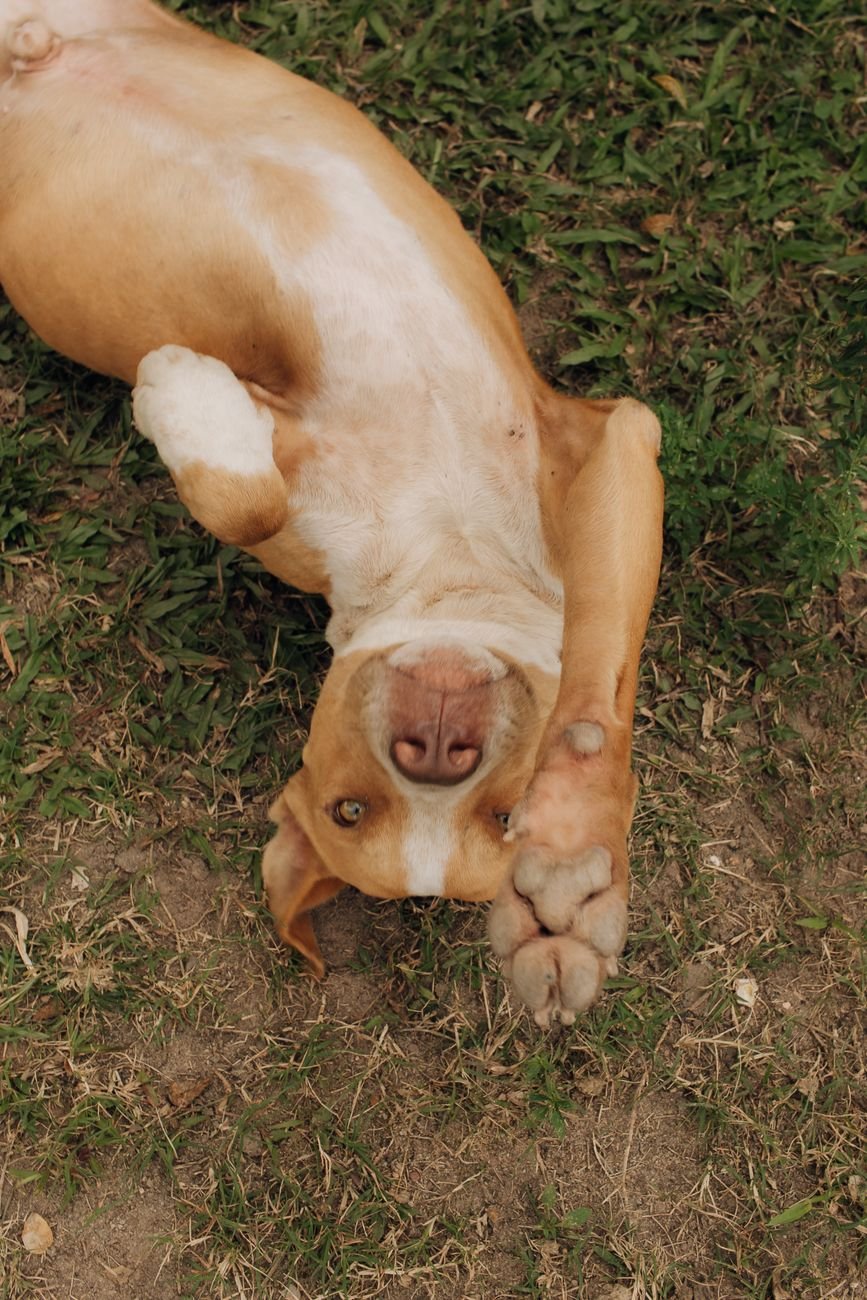
- Roll over. From a down, lure the nose toward the shoulder so your dog tips onto their side, then over.
- Play dead. Teach the first half of roll over and reward when your dog is lying flat on their side. Add “bang”.
- Crawl. From a down, drag a treat slowly along the floor. Reward a shuffle forward before the bottom pops up.
- Head down. From a down, lure the chin to the floor between the paws. A great calm-down cue.
- Go to your mat. Toss a treat onto a mat, mark when all four feet are on it, then build up to a down there.
Brain games (16 to 20)
These tire your dog out fast, which is perfect on days when walks are short.
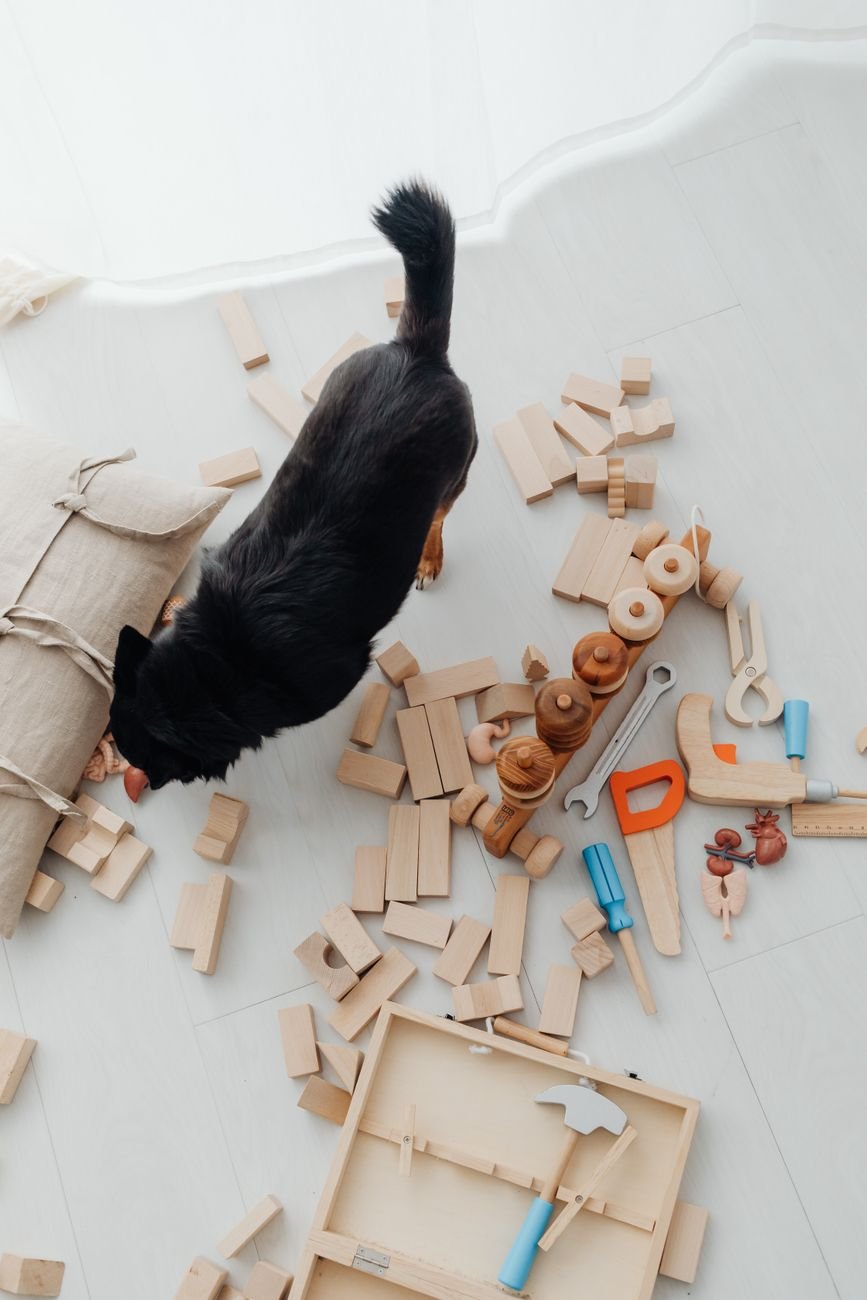
- Find it. Toss a treat on the floor and say “find it”. Then hide treats around the room.
- Which hand? Hide a treat in one fist. Reward when your dog sniffs or paws the right one.
- Shell game. Hide a treat under one of three plastic cups and let your dog nose it out.
- Name your toys. Say a toy’s name each time you play with it. Then ask for it from a pile of two.
- Tidy up. Teach your dog to drop a toy into a low basket for a reward.
Want more ideas like these? Here are some indoor dog enrichment ideas.
Useful tricks (21 to 25)
Fun to teach, and they actually help around the house.
- Ring a bell. Hang a bell by the door. Reward a nose touch, then ring it every time you go out to potty.
- Close the door. Put a sticky note on a cabinet door and ask for a touch. The push closes it.
- Chin rest. Reward your dog for resting their chin in your palm. It makes vet checks and nail trims calmer.
- Speak. Mark and reward a bark you already get, like at the doorbell. Teach “quiet” right after.
- Bring it. Reward your dog for picking up a toy, then for carrying it to your hand.
Keep it safe and fun
Tricks should never feel like a chore or put your dog at risk.
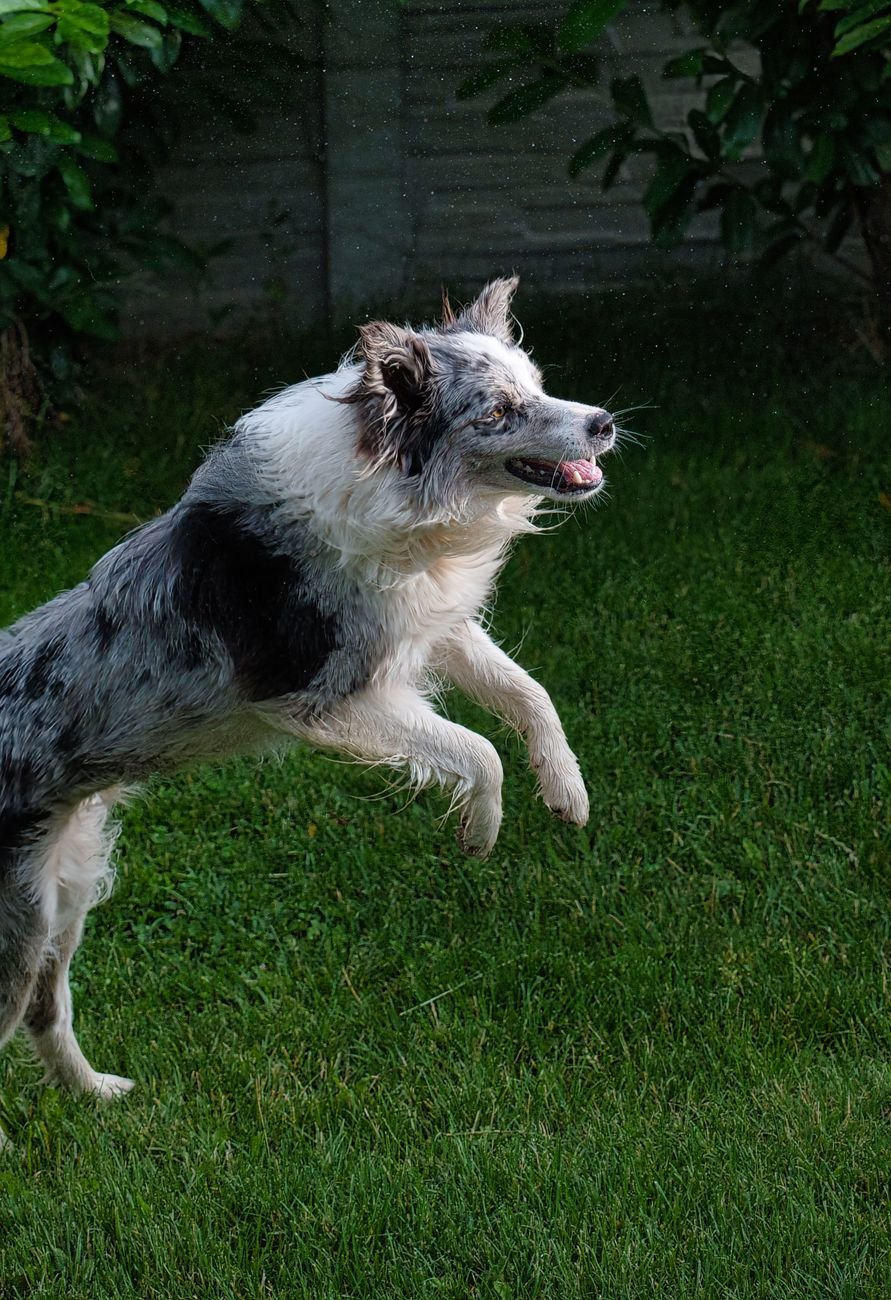
- Watch the body. Puppies, seniors and long-backed breeds can skip jumps and sit-pretty style moves.
- Mind the treats. Lots of rewards add up. Cut a little from dinner on big training days.
- End on a win. If your dog is stuck, ask for an easy trick, reward and stop.
- Stay patient. Some dogs learn a trick in a day, others take a few weeks. Both are normal.
If your dog seems sore or suddenly won’t do a trick they know, it’s worth a vet check.
Common questions
What is the easiest trick to teach a dog?
Touch (nose to hand) and shake are usually the fastest. Many dogs get the idea in one or two sessions.
How long does it take to teach a dog a trick?
Simple tricks can take a few days. Harder ones like roll over or ring a bell can take a few weeks of short sessions.
Can you teach an old dog new tricks?
Yes. Older dogs love the attention and the mental work. Just pick gentle tricks like touch, find it and chin rest.
How often should I train tricks?
Two or three short sessions of about five minutes a day work better than one long session.
Should I use a clicker?
A clicker helps with timing, but a short word like “yes” works just as well. Be consistent with whichever you choose.


Leave a Reply