

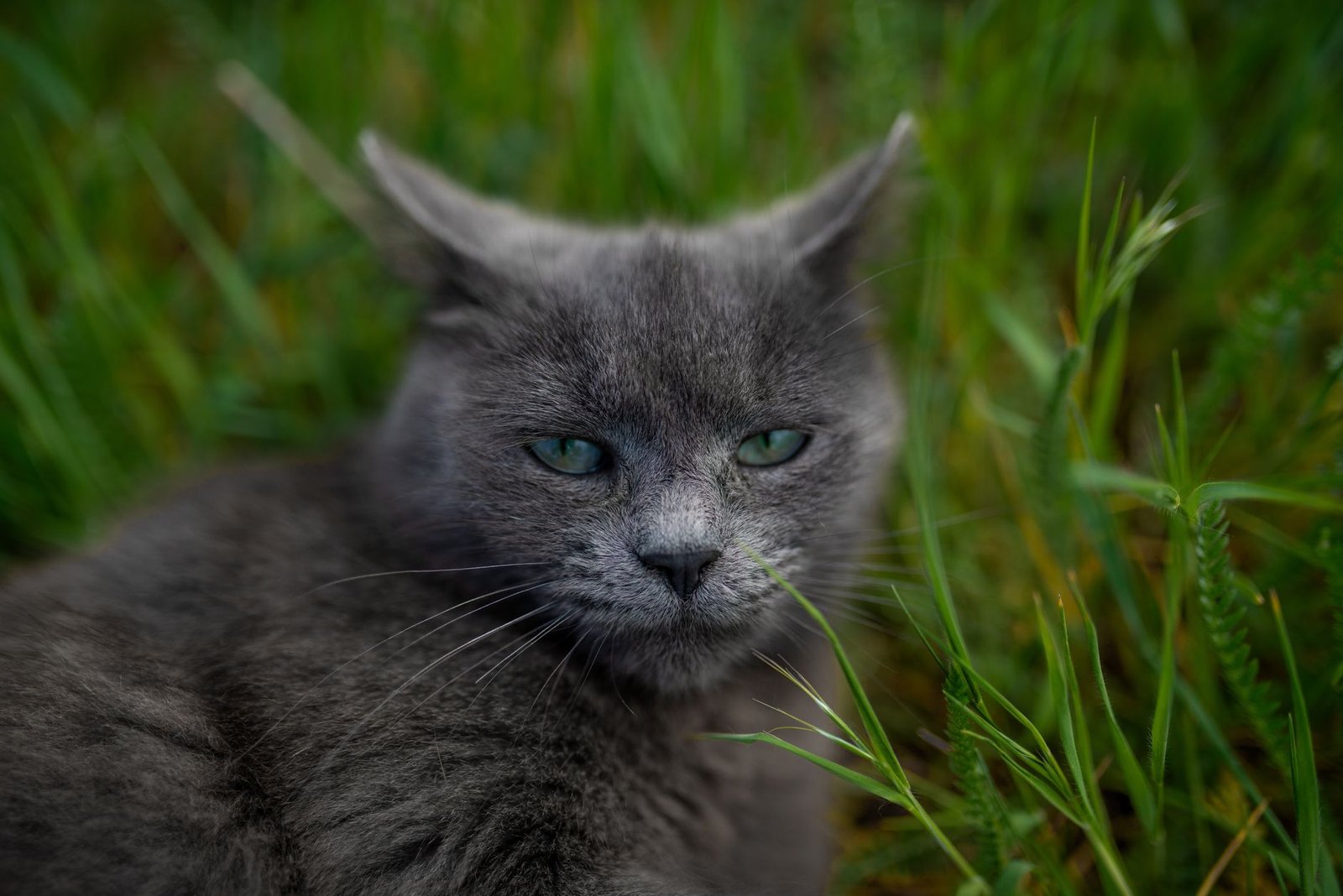
Cats chew plants. It’s not a phase, and no amount of “no!” will fully stop it.
So instead of fighting it, give your cat a little green corner of their own. An indoor cat garden is a few pots of cat grass and cat-safe plants that your cat is allowed to sniff, nibble and nap beside.
Here’s what to plant, what to keep far away, and how to set it up so it actually lasts.
Why cats nibble greens
Nobody knows for sure why cats eat grass. Some may like the texture, some may do it out of boredom, and some seem to just enjoy it.
- Indoor cats don’t get to chew outdoor grass, so they turn to your houseplants.
- A pot of their own gives them a yes instead of a no.
- It’s also a nice bit of enrichment for a cat who spends all day inside.
The occasional grass-and-hairball vomit is common. If your cat throws up often or seems unwell, call your vet.
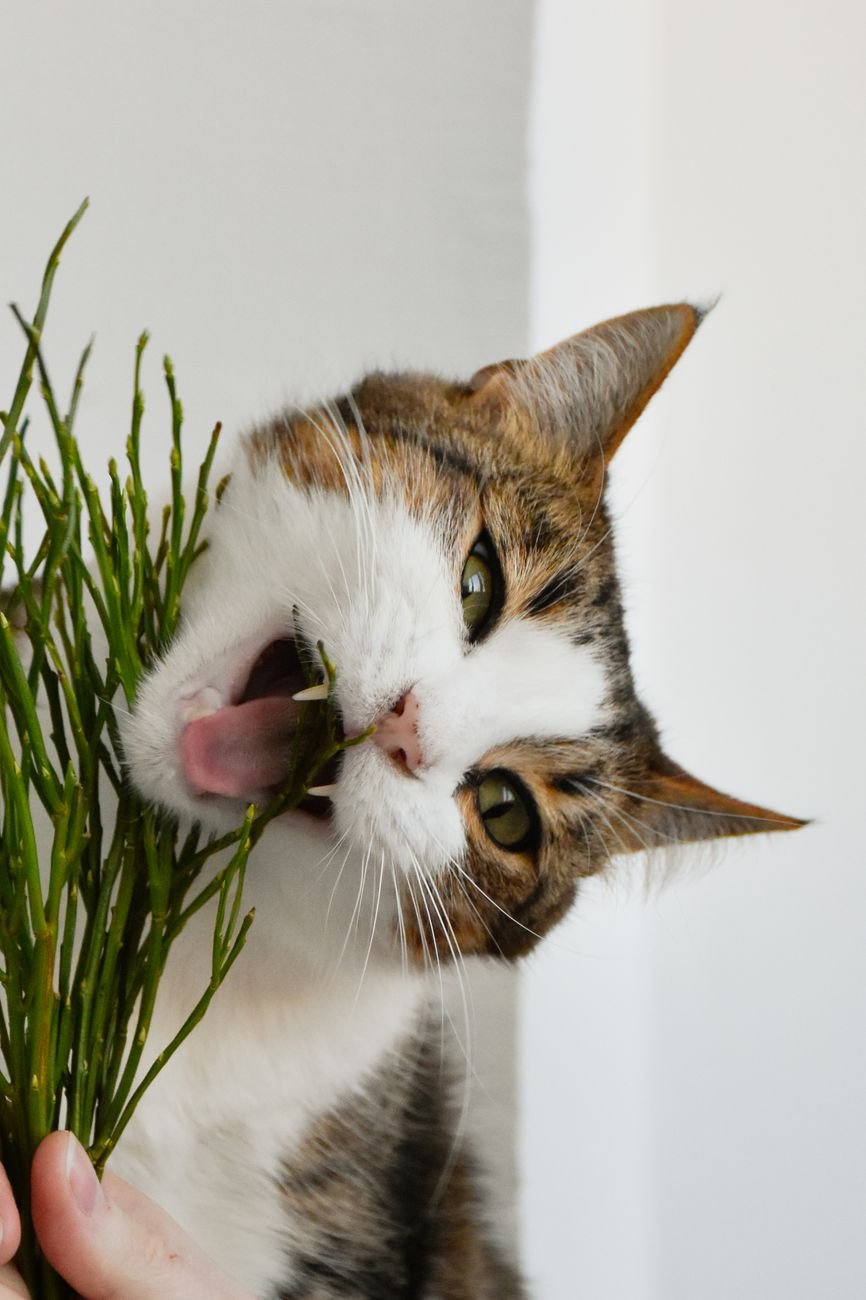
Start with cat grass
Cat grass isn’t one plant. It’s usually wheatgrass, oat grass or barley grass grown from seed, and it’s the heart of any cat garden.
- 14 safe foods and 14 to avoid, at a glance
- Toxic houseplants (lilies are deadly to cats, even the pollen)
- What to do if your cat eats something toxic
- Soak the seeds in water for a few hours.
- Spread them thickly over plain potting mix or a seed-starting mix without added fertilizer.
- Cover with a thin layer of soil and mist well.
- Keep it damp and somewhere bright but not baking hot.
- Sprouts appear in a few days. Offer it once it’s about 4 inches tall.
Use a heavy, wide pot so your cat can’t knock it over.
Keep a rotation going
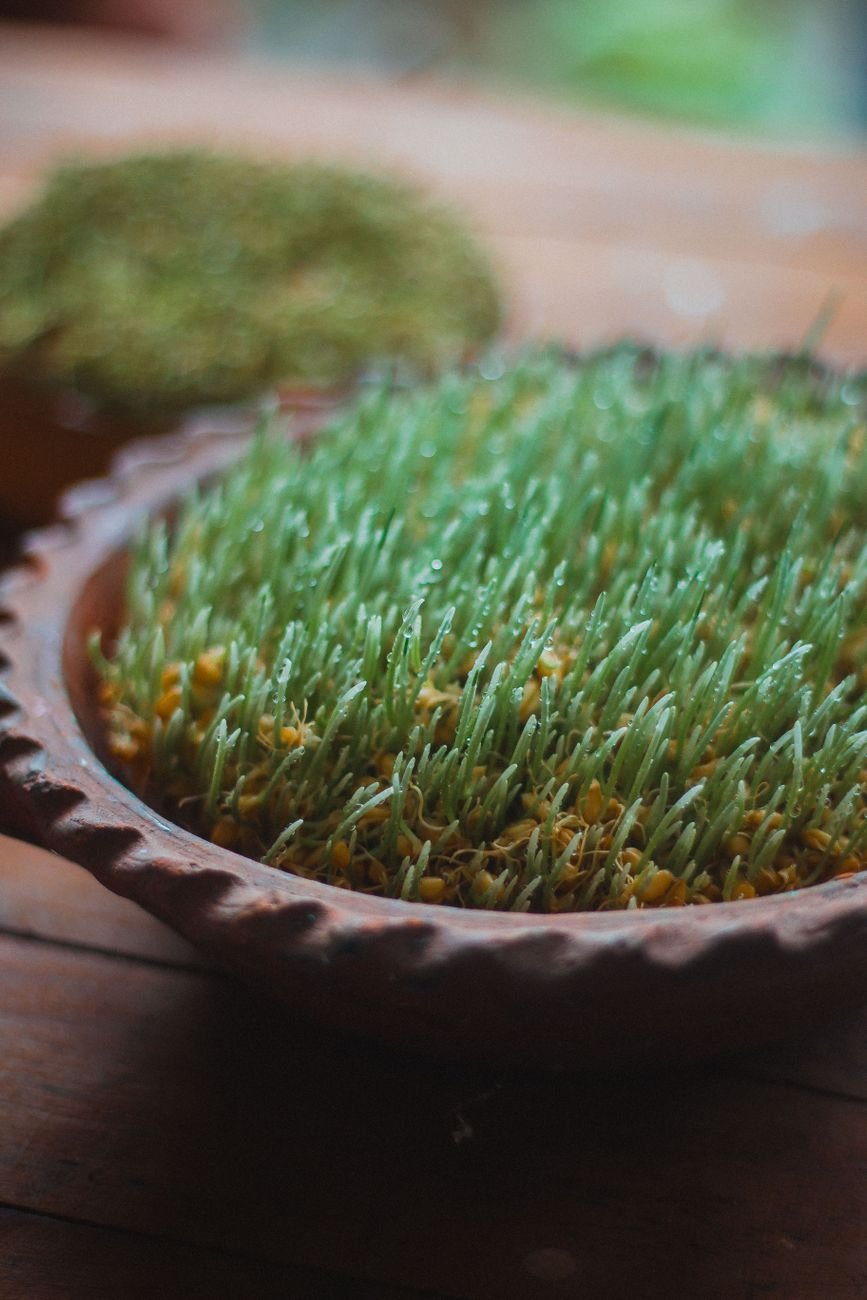
Cat grass doesn’t last forever. After a couple of weeks it starts to yellow, flop or get chewed down to stubs.
- Plant two or three pots a week apart.
- When one is past its best, compost it and start a new one.
- Trim brown tips with scissors to keep it looking fresh.
- Water at the soil, not over the leaves, so it doesn’t get moldy.
Seed kits are cheap, but a bag of wheat or oat seed from a garden store works just as well.
Cat-safe plants to add
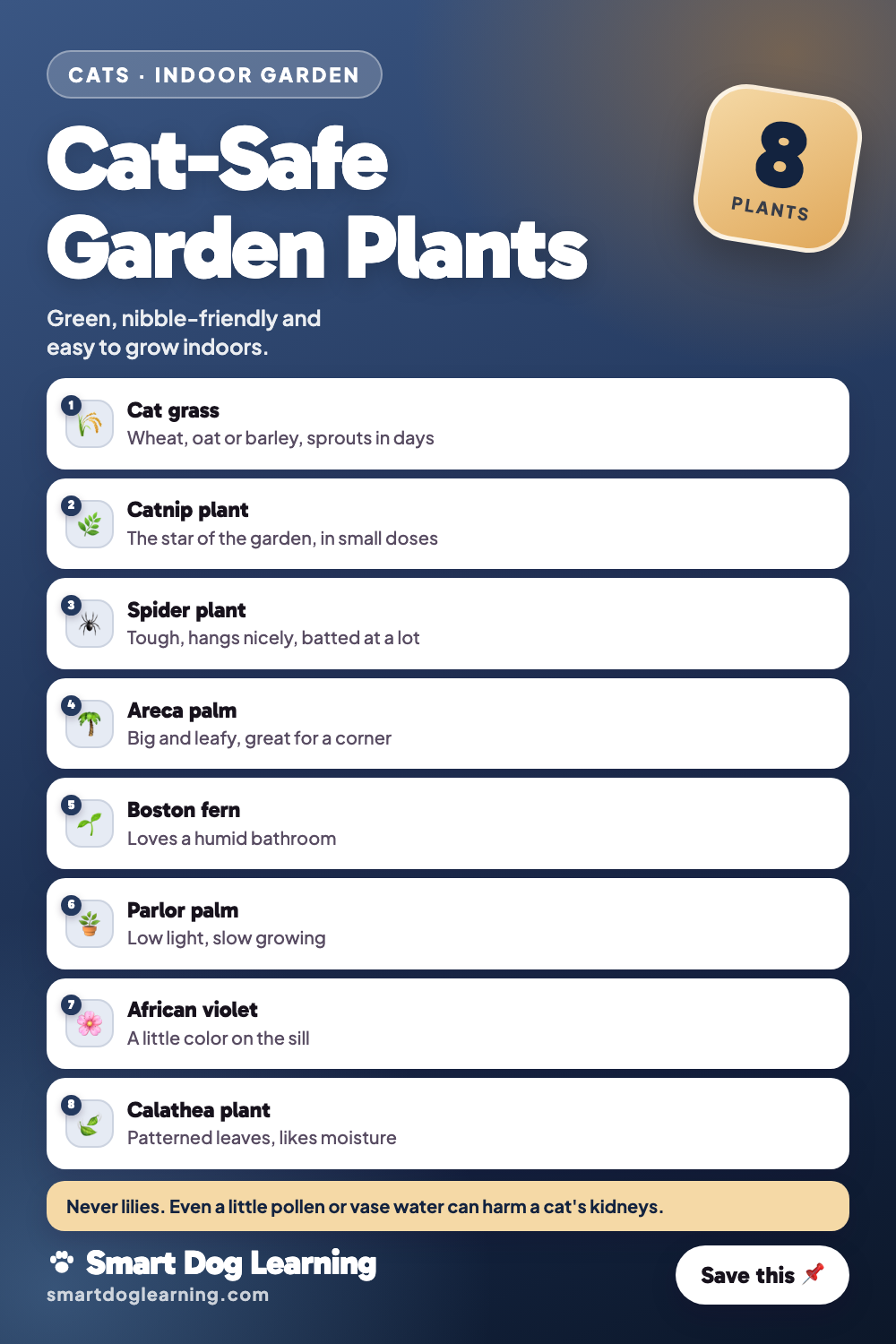
Once the grass is going, add a few plants that are generally considered safe for cats. Most are on the ASPCA’s non-toxic list, and all are easy to find:
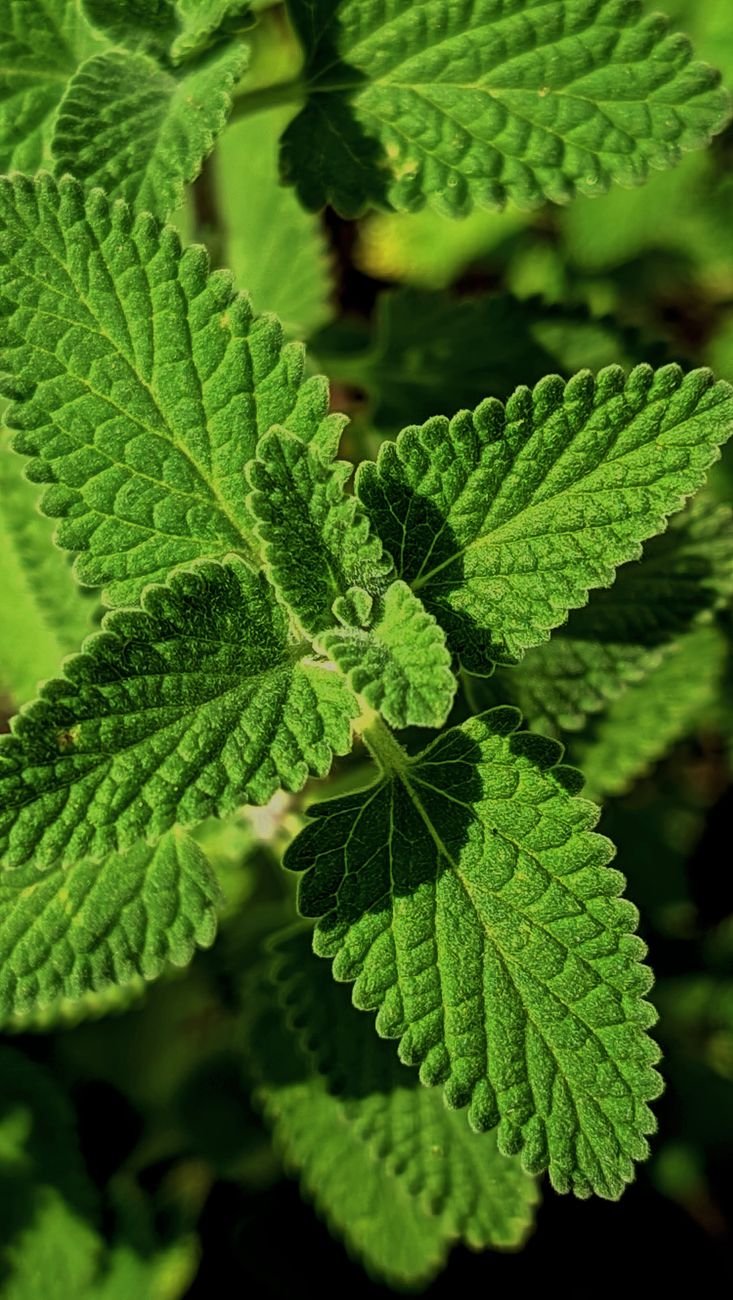
- Catnip: the one most cats go silly for. The ASPCA notes that a big feast can cause vomiting or diarrhea, so a nibble is fine but keep the plant small.
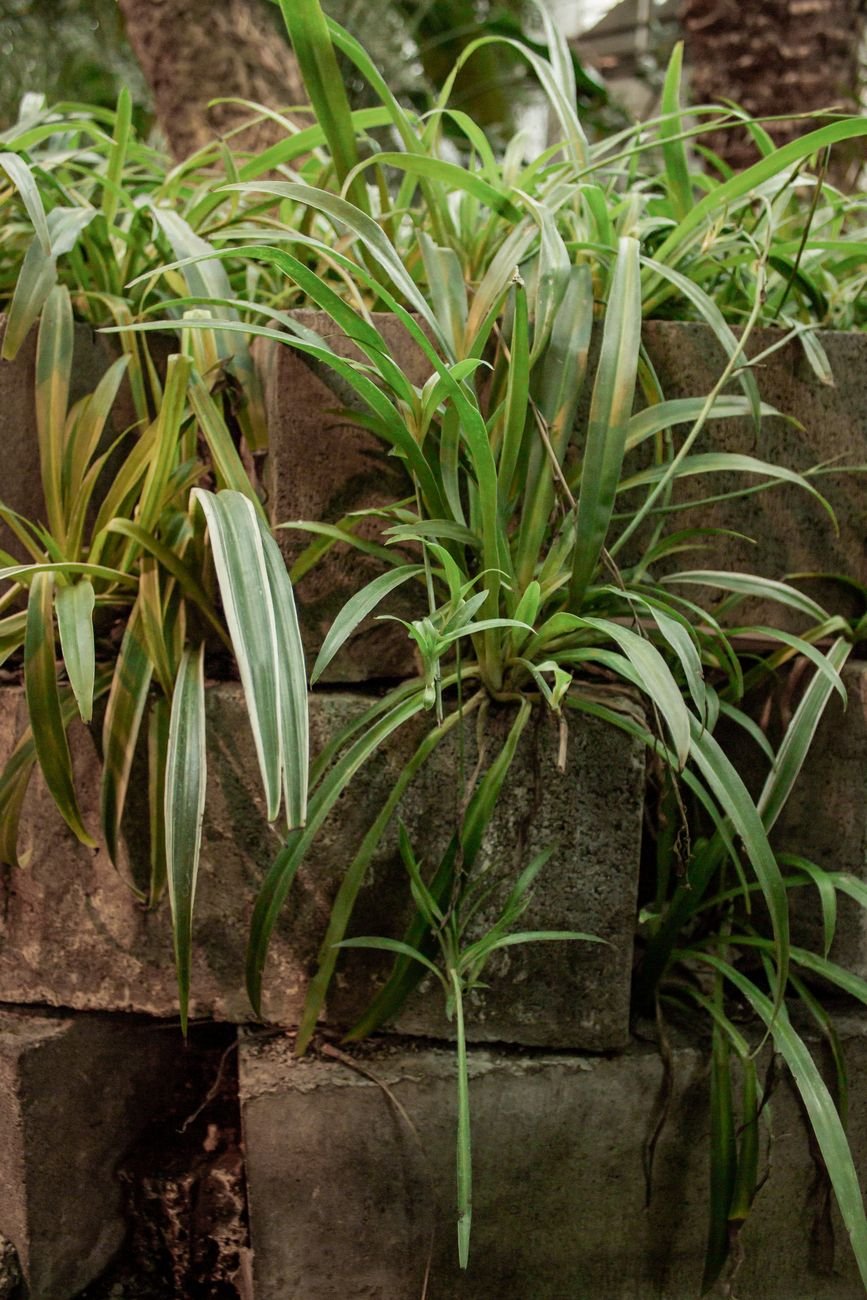
- Spider plant: nearly impossible to kill and fun for cats to bat.
- Areca palm and parlor palm: leafy, tropical and safe.
- Boston fern: loves humidity, so it’s great near a bathroom window.
- African violet: small, flowering and happy on a sill.
- Calathea: beautiful patterned leaves, a bit fussy about water.
“Non-toxic” doesn’t mean “a great snack.” A cat that eats a whole plant can still get an upset stomach. The goal is that a nibble won’t hurt.
Want more ideas? We’ve also covered cat-friendly houseplants in more detail.
Plants to keep out of the house
This part matters more than anything else on the list. Some very common houseplants are dangerous for cats.
- True lilies and daylilies: the worst. Even pollen licked off fur or water from the vase can cause kidney failure. Don’t bring them home at all.
- Pothos and philodendron
- Peace lily, monstera and dieffenbachia
- Snake plant, aloe and jade plant
- Sago palm: very toxic, including the seeds.
- English ivy
Got one already? Move it to a room your cat never enters, or rehome it. If you think your cat ate something toxic, call your vet or the ASPCA Animal Poison Control Center at (888) 426-4435 right away.
Pick the right spot
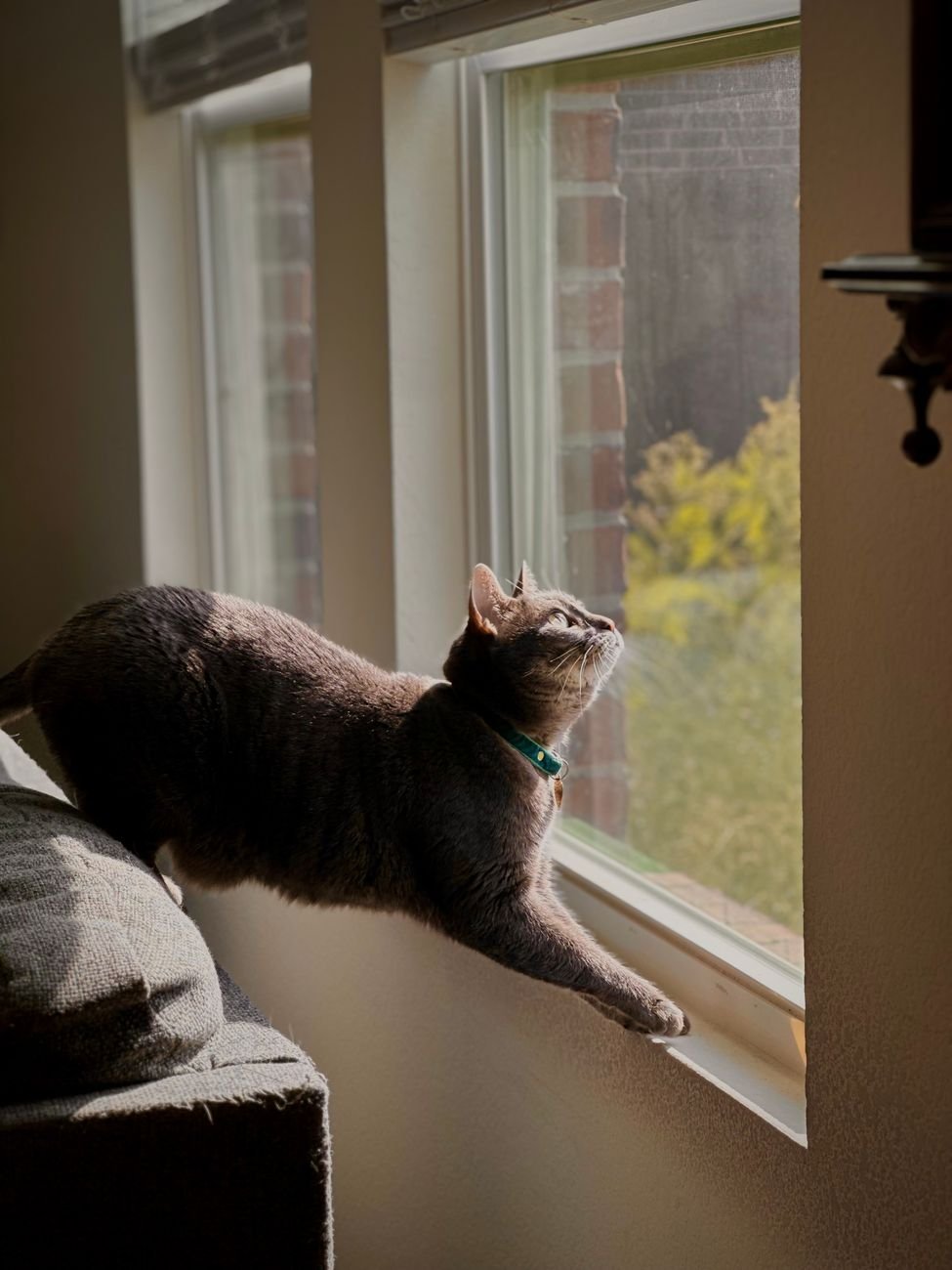
Cats love a garden with a view. A windowsill or a low shelf near a window is ideal for both the cat and the plants.
- Bright, indirect light suits most of these plants and the grass.
- Somewhere your cat already hangs out, so they find it on their own.
- Away from the litter box and food bowls. Cats like those things kept apart.
- On a tray to catch water and dirt when the pots get pushed around.
Make it cat-proof (mostly)
Your cat will dig. Your cat will knock something off a ledge. Plan for it.
- Use heavy ceramic pots with wide bases.
- Top the soil in houseplant pots with large, smooth stones to stop digging.
- Hang delicate plants out of reach and keep cat grass at nibbling height.
- Group the cat’s plants together so it’s clear what’s theirs.
A cat that has its own grass is often less interested in the rest of your plants. Not always, but often.
Skip the garden chemicals
What goes into the pot matters as much as the plant.
- No pesticides or bug sprays on anything your cat can reach.
- No slow-release fertilizer pellets in cat grass pots. Cats eat the grass right down to the soil.
- No cocoa bean mulch, which isn’t safe for pets.
- No essential oil sprays or diffusers nearby. Cats are very sensitive to them.
- Wash new plants from the store and repot them if you’re unsure what they were treated with.
Small space? Try these setups
You don’t need a sunroom. A cat garden can be tiny.
- One windowsill tray with two cat grass pots and a catnip plant.
- A low bookshelf with plants on the bottom shelf and a cat bed on top.
- A wall shelf by a window, linked to a cat tree so your cat can climb up to it.
- A rolling cart you can move into the sun.
Pair the garden with other things to do. Our enrichment ideas for indoor cats fit nicely around a green corner.
Keep it healthy
A little care each week keeps the garden green and your cat interested.
- Water when the top inch of soil feels dry, and don’t leave pots sitting in water.
- Wipe dust off big leaves with a damp cloth.
- Toss any plant with mold on the soil.
- Watch your cat for the first few days with each new plant.
Common questions
Is cat grass safe for cats to eat every day?
For most cats, yes, in small amounts. If your cat eats a lot and vomits often, cut back and talk to your vet.
How long does cat grass last?
Usually about two to three weeks. Plant a new pot every week or so to keep a fresh one ready.
Is catnip safe for kittens?
It isn’t harmful, but many kittens don’t react to it until they’re several months old.
What’s the most dangerous plant for cats?
Lilies. True lilies and daylilies can cause kidney failure, so keep them out of any home with a cat.
My cat keeps digging in the pots. What can I do?
Cover the soil with large, smooth stones and make sure the litter box is clean and easy to reach.

Leave a Reply