


A new kitten is pure joy. Tiny paws, big eyes, and the energy of a wind-up toy that never runs down.
It’s also a lot of responsibility in a very small package. This kitten care guide walks you through the first 30 days, week by week, so your kitten settles in, stays healthy and grows into a confident cat.
Before your kitten comes home
Get the basics ready so day one is calm, not a rush to the pet store.
- Kitten food, ideally the same brand they’re eating now.
- Food and water bowls, shallow and easy to clean.
- A litter box with low sides, plus litter and a scoop.
- A carrier for the trip home and vet visits.
- A soft bed and a hiding spot, like a box on its side.
- A scratching post and a few safe toys.
Days 1 to 3: start in one safe room
A whole house is overwhelming for a tiny cat. Start with one quiet room, like a bedroom or office.
- Put the litter box on one side and food and water on the other.
- Add a bed and a covered hiding spot.
- Let your kitten come out on their own. Sit on the floor and let them sniff you.
- Keep other pets out for now, and keep visits short and quiet.
Hiding at first is normal. Most kittens start exploring within a day or two.
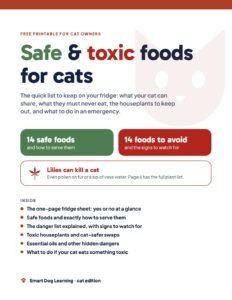
- 14 safe foods and 14 to avoid, at a glance
- Toxic houseplants (lilies are deadly to cats, even the pollen)
- What to do if your cat eats something toxic

Feeding your kitten
Kittens grow fast and need food made for growth.
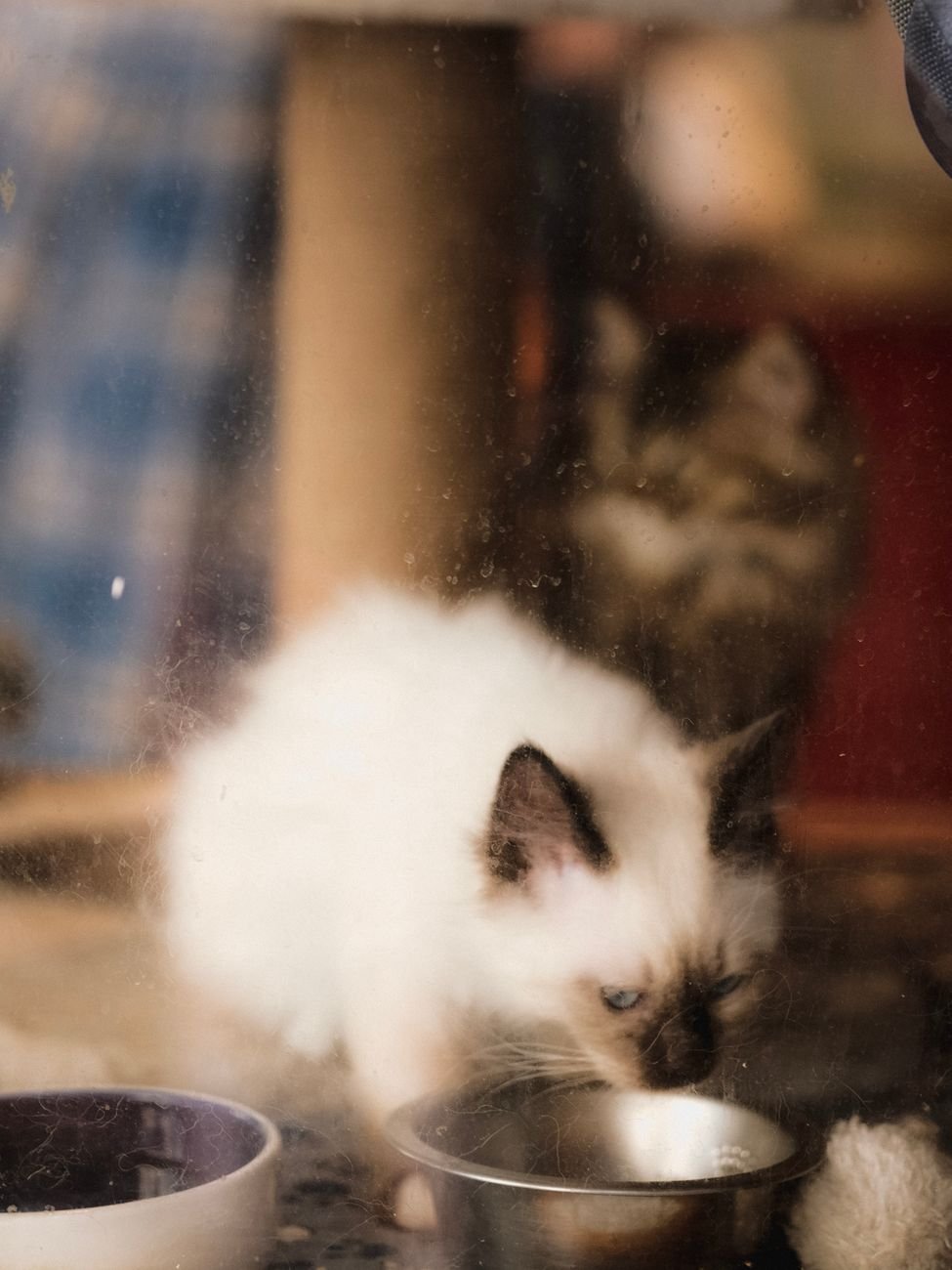
- Feed a complete kitten food, wet, dry or a mix. Look for “for growth” or “all life stages” on the label.
- Small meals, often. Young kittens usually do best with three or four meals a day. Follow the label and your vet’s advice for amounts.
- Fresh water at all times.
- Switch foods slowly over about a week to avoid an upset tummy.
- Skip cow’s milk. Many cats can’t digest it well, and it can cause diarrhea.
Homemade treats? Only plain, fully cooked meat with no seasoning, in tiny amounts. Never raw meat, onion, garlic or anything with bones.
Week 1: the first vet visit
Book a vet checkup within the first week, even if your kitten seems perfectly healthy.
- A full exam and weight check.
- Vaccines: kittens get a series of shots a few weeks apart. Your vet will set the schedule.
- Parasites: a deworming plan and a fecal check.
- Fleas: ask for a product safe for your kitten’s age and weight. Never use a dog flea product on a cat. Some contain permethrin, which is very dangerous for cats.
- Microchip and spay or neuter: your vet will tell you the right time.
Bring any records from the shelter or breeder. Write your questions down so you don’t forget them in the moment.
Litter box basics
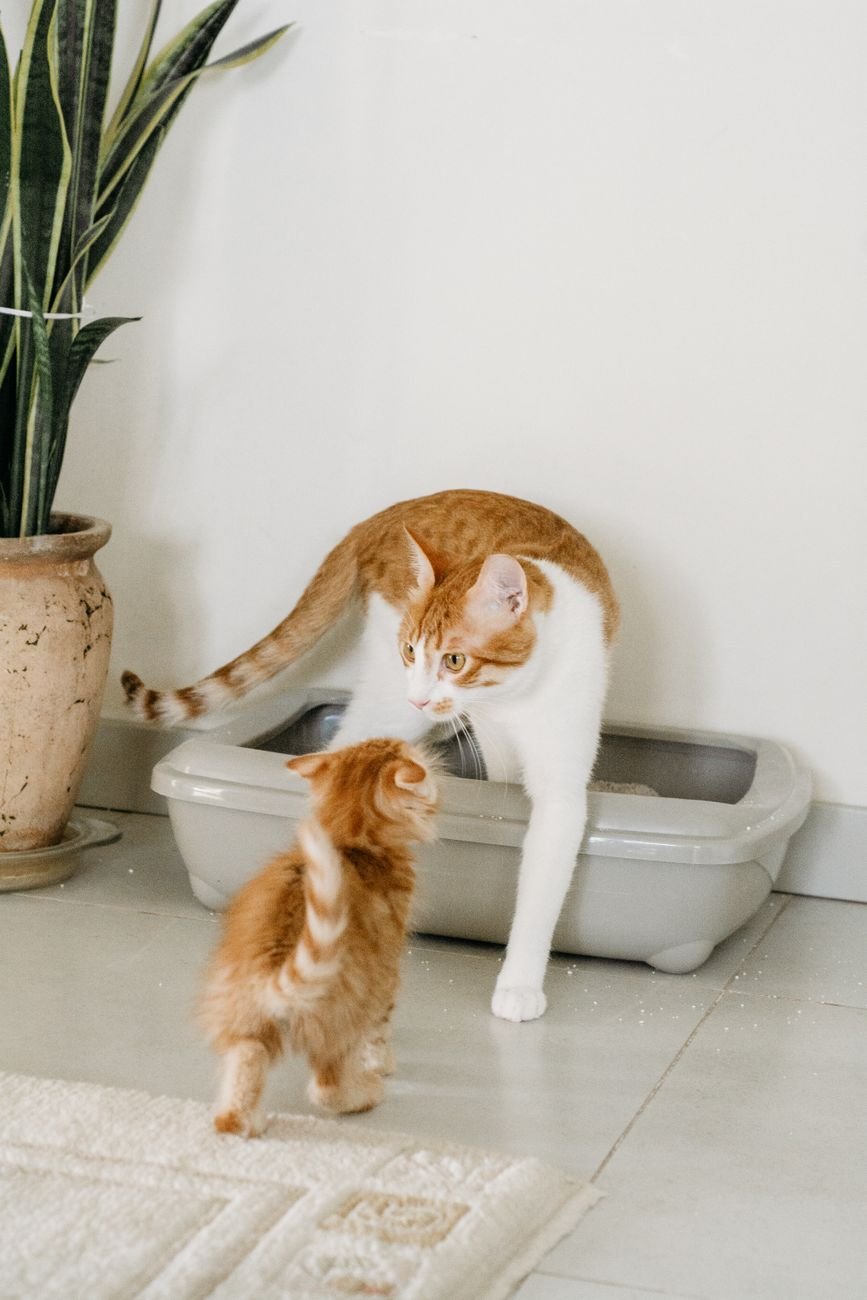
Most kittens learn the litter box quickly, often from their mom. You just need to make it easy.
- Use a box with low sides so tiny legs can climb in.
- Place it somewhere quiet, away from food and water.
- Pop your kitten in after meals and naps.
- Scoop daily. Kittens avoid a dirty box.
- Use unscented litter. Some vets suggest non-clumping litter for very young kittens who try to eat it, so ask yours.
Planning where the box lives long term? These hidden cat litter box ideas keep it out of sight.
Week 2: kitten-proof the rest of the house
Once your kitten is confident in their room, open up more of the house. Check it first, at kitten height.
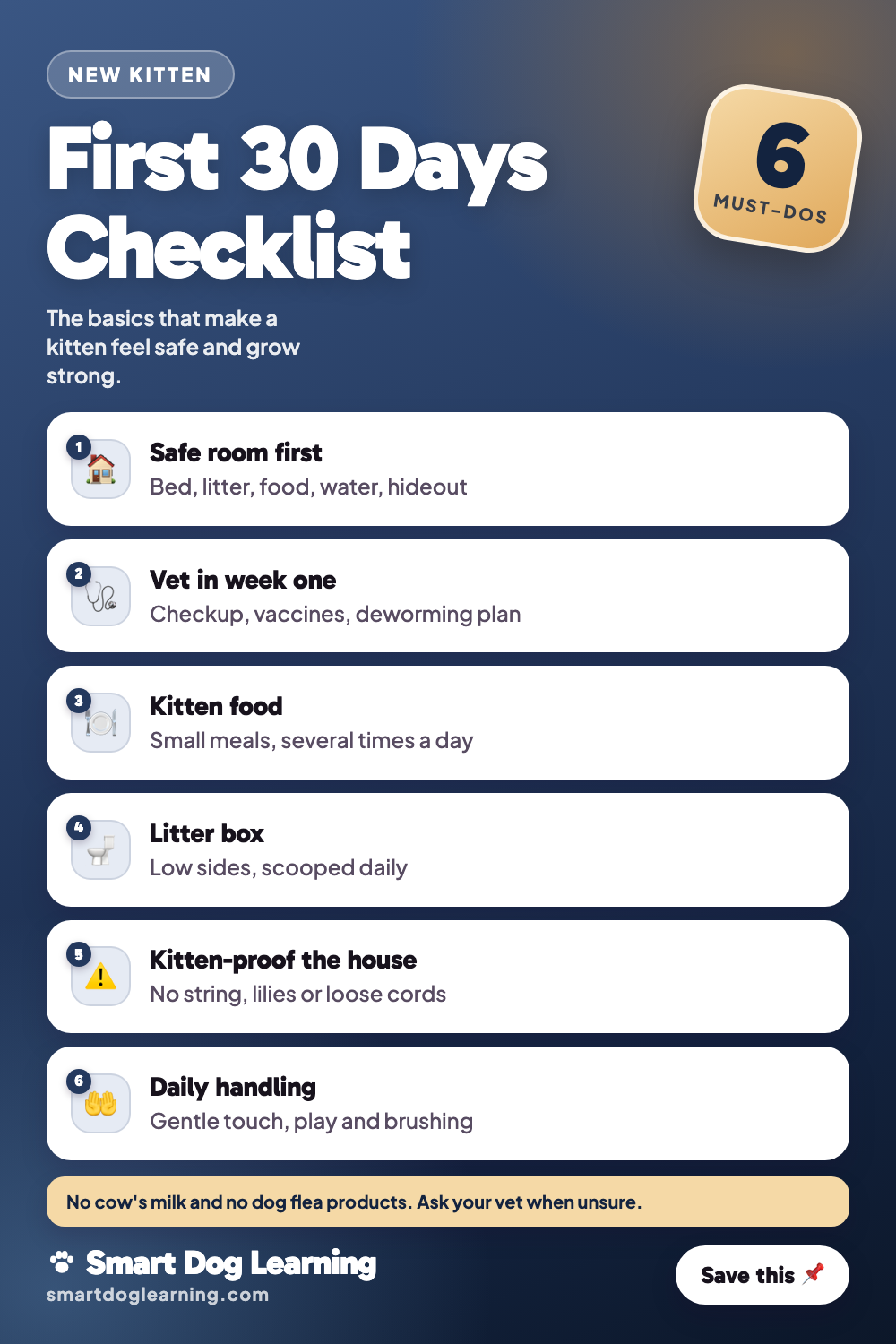
- Lilies are extremely toxic to cats. Even pollen or vase water can cause kidney failure. Keep them out of the house entirely.
- String, yarn, ribbon and hair ties can be swallowed and cause serious blockages.
- Essential oils and diffusers can be harmful to cats. Skip them.
- Cords get chewed. Tuck them away or use cord covers.
- Always check the washer, dryer and recliners before using them.
- Medications and cleaning products go in closed cabinets.
Week 3: play, scratching and handling
Kittens learn their manners now. A little daily practice pays off for years.
- Play twice a day with wand toys. Never let them play with your hands, or biting becomes a habit.
- Praise scratching on the post. Put it near where they sleep, since cats love to stretch and scratch after a nap.
- Handle gently every day: paws, ears and mouth. It makes nail trims and vet visits easier later.
- Brush them for a minute or two to get them used to it.
Need cheap toy ideas? Try these DIY cat toys, and put away any with strings after playtime.

Week 4: meeting other pets and settling in
If you have other pets, go slow. Rushing introductions is the most common mistake.
- Swap bedding so they learn each other’s scent first.
- Let them see each other through a baby gate or cracked door.
- Keep early meetings short and supervised, with treats for calm behavior.
- Give your kitten high escape spots, like a cat tree.
By now, your kitten should be eating well, using the box and showing their personality.
Signs to call the vet
Kittens can get sick quickly. Call your vet right away if you notice:
- Not eating, or not drinking
- Vomiting or diarrhea that lasts more than a day
- Lethargy or hiding much more than usual
- Sneezing with runny eyes or nose
- Straining in the litter box
Trust your gut. A quick call costs far less than waiting too long.
Common questions
How often should I feed my kitten?
Young kittens usually eat three or four small meals a day. Check the food label and ask your vet.
When should my kitten see the vet?
Within the first week home, then again for vaccine boosters on the schedule your vet sets.
Can kittens drink milk?
Not cow’s milk. It often upsets their stomach. Fresh water is all they need with their food.
How do I stop my kitten from biting?
Use wand toys instead of hands, stop play when they bite, and give them lots of play every day.
How long does it take a kitten to settle in?
Some settle in a day or two, others take a couple of weeks. A quiet safe room helps a lot.





Leave a Reply