
6 Mistakes Borzoi Owners Make (And How to Avoid Them)
Borzoi owners rarely fail through neglect. They fail through optimism.
Optimism that this particular dog will come back when called. Optimism that the fence is probably tall enough. Optimism that the vet knows about sighthounds. Every one of those assumptions has cost someone a dog.
Here are the six mistakes that matter most with this breed. If you are new to Borzoi, start with our full <a href=”https://smartdoglearning.com/borzoi-care-guide/”>Borzoi care guide</a>.
Mistake 1: Believing Recall Will Hold
The number one killer of Borzoi is traffic, and the sequence is always the same.
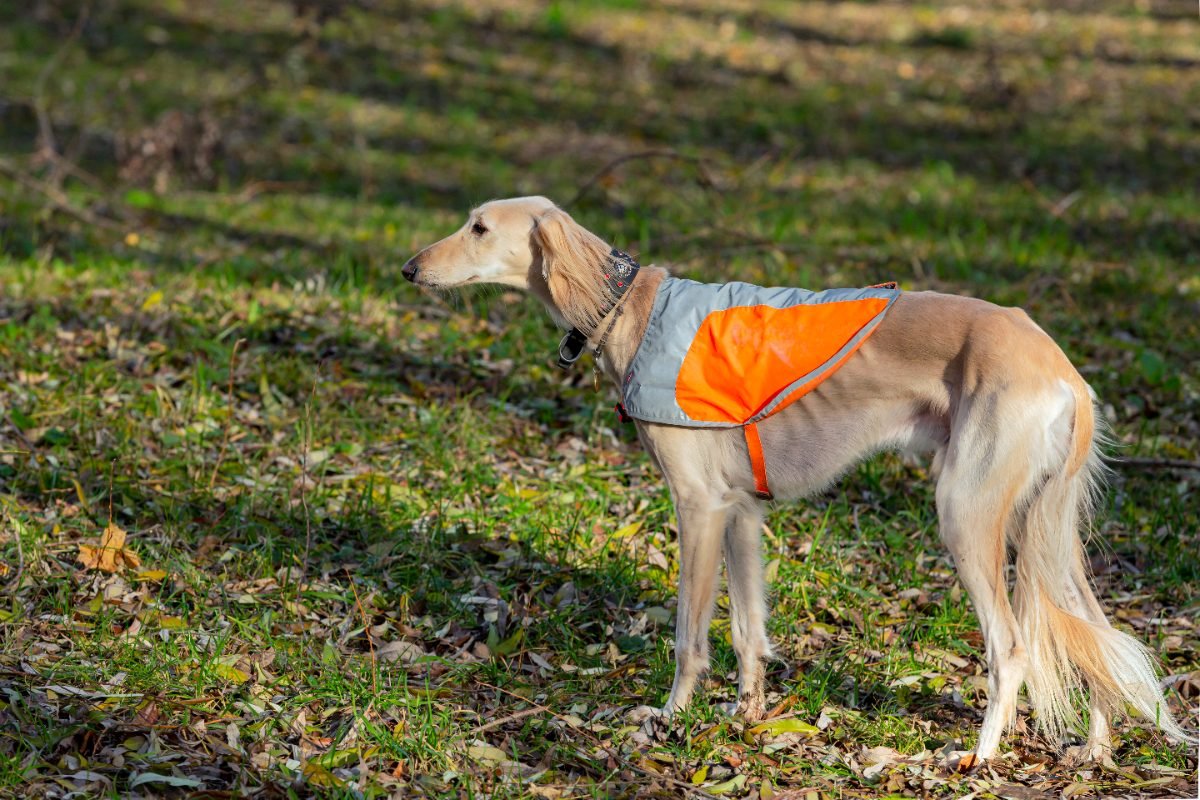
The dog has excellent recall in the garden. He comes every time in the training class. So one day the owner unclips him in a park, a squirrel crosses forty yards away, and a 100 pound sighthound is doing 38 miles per hour toward a road before the word “no” is fully out.
A Borzoi in prey drive is not disobeying you. He genuinely cannot hear you. The chase sequence overrides auditory processing. That is not folklore, it is how coursing hounds were selected to work a mile from their handler.
- On lead in any unfenced area, permanently, no exceptions
- Fences minimum 6 feet, solid, and checked for gaps
- Train recall enthusiastically but never rely on it for safety
- Long lines give freedom without the gamble
- Find a securely enclosed field for real sprinting
The owners who lose dogs are never the careless ones. They are the ones whose dog had been perfect for three years.
Mistake 2: Letting Him Live on Hard Floors
This looks trivial and it genuinely is not.
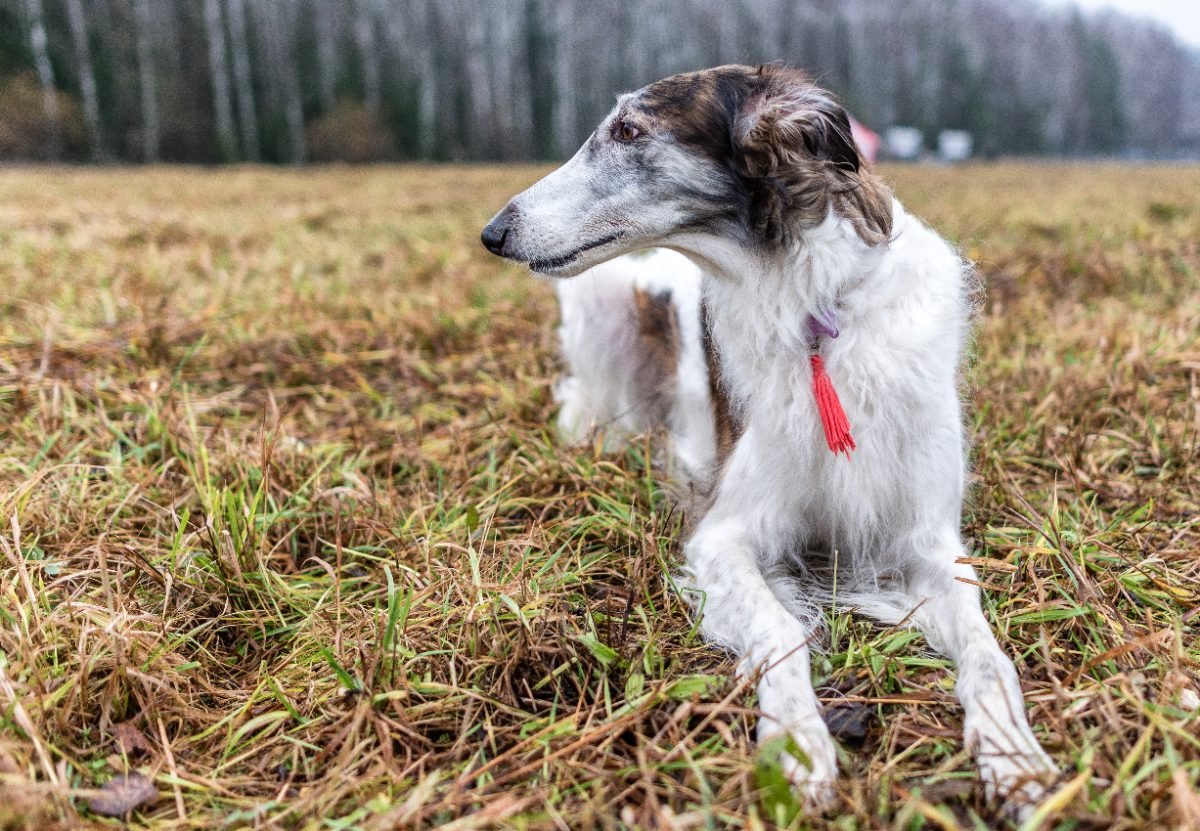
Borzoi have almost no body fat and very little muscle padding over their bones. Hips, elbows, hocks and sternum press directly into whatever they lie on. On tile, laminate or thin carpet, they develop pressure sores, calluses and hygromas.
- Thick padded beds in every room he uses
- Memory foam or orthopaedic, not a thin fleece pad
- Rugs and runners across hard floors
- Check elbows and hocks monthly for thickening or bald patches
- Older Borzoi need even more padding, not less
While you are at it, non slip flooring matters too. A sighthound skidding on laminate can do serious soft tissue damage.
Mistake 3: Using the Wrong Collar
A Borzoi’s neck is frequently wider than his head. Think about what that means with an ordinary buckle collar.
He backs up, panics slightly, and the collar slides straight off over those narrow cheekbones. It takes about one second and it usually happens at the worst possible moment, near a road.
- Martingale collar, correctly fitted, always
- Or a well fitted Y front harness for walks
- Double ended lead clipped to collar and harness in busy areas
- Never a choke or prong, this breed shuts down under pressure
- Check the fit regularly, coat volume changes the tension
Mistake 4: Not Finding a Sighthound Literate Vet
This one has genuinely killed dogs, and it is entirely preventable.
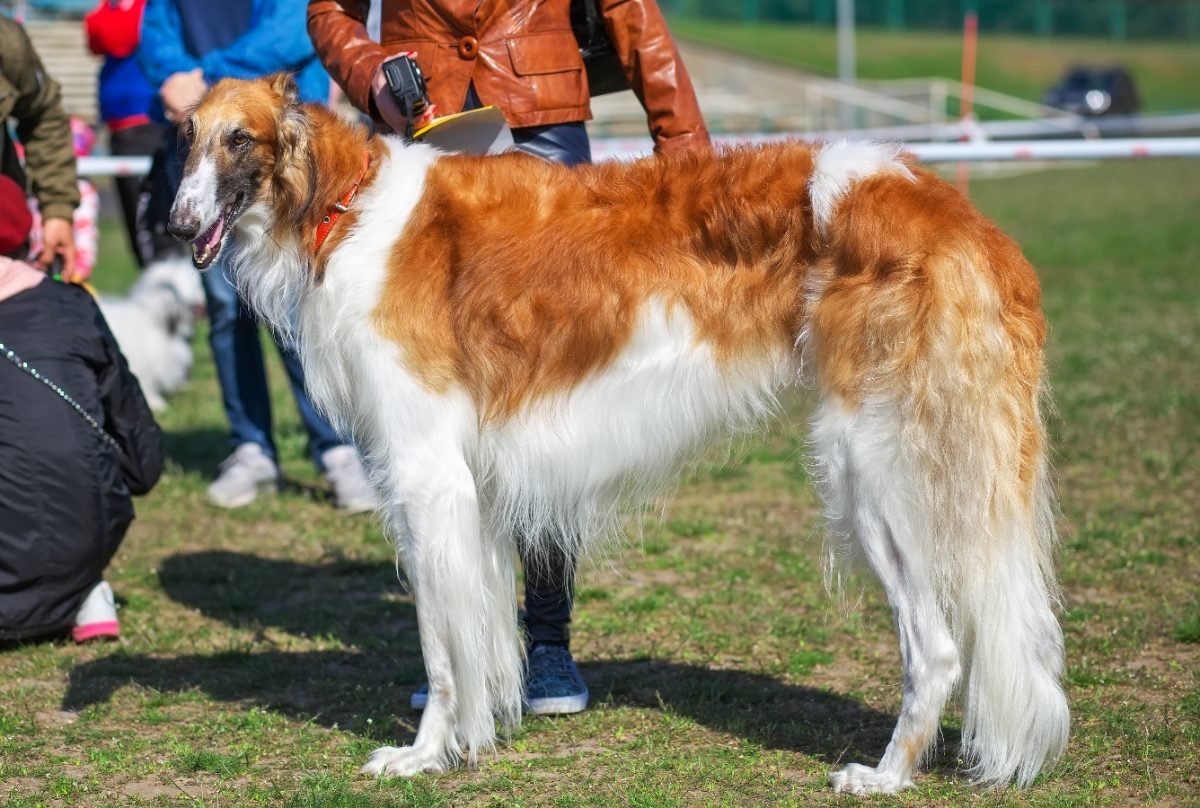
Sighthounds process anaesthesia differently. Low body fat means fat soluble drugs stay in circulation, and Borzoi have breed specific sensitivities. Standard dosing protocols designed for a Labrador of the same weight can be dangerous.
Bloodwork is the other trap. Normal Borzoi results look abnormal on a standard chart. Haematocrit runs naturally high, thyroid values naturally low. A vet unfamiliar with sighthounds may diagnose and treat a problem that does not exist.
- Ask about sighthound experience before you need surgery
- Bring published sighthound anaesthesia protocols if needed
- Flag the breed for every blood panel interpretation
- Check flea, tick and worming products, some cause reactions
- Discuss bloat risk and whether preventive gastropexy suits you
FYI this is worth doing in the first month of ownership, not the week of the emergency.
Mistake 5: Ignoring Bloat Risk
That deep, narrow chest is beautiful and it is a bloat risk factor.
Gastric dilatation volvulus kills fast, sometimes within hours, and large deep chested breeds sit at the top of the risk table. Owners who do not know the signs lose the window.
Learn these now:
- Unproductive retching, trying to vomit with nothing coming up
- A hard, distended, drum tight abdomen
- Restlessness, pacing, inability to settle
- Excessive drooling, pale gums, obvious distress
Prevention:
- Two or three smaller meals daily, never one large one
- No hard exercise for an hour either side of eating
- Slow feeder bowls if he eats fast
- Discuss preventive gastropexy, often done during neutering
- Know your nearest 24 hour emergency vet before you need it
Mistake 6: Expecting a Biddable Dog
People read “elegant, gentle, quiet” and picture a compliant one.
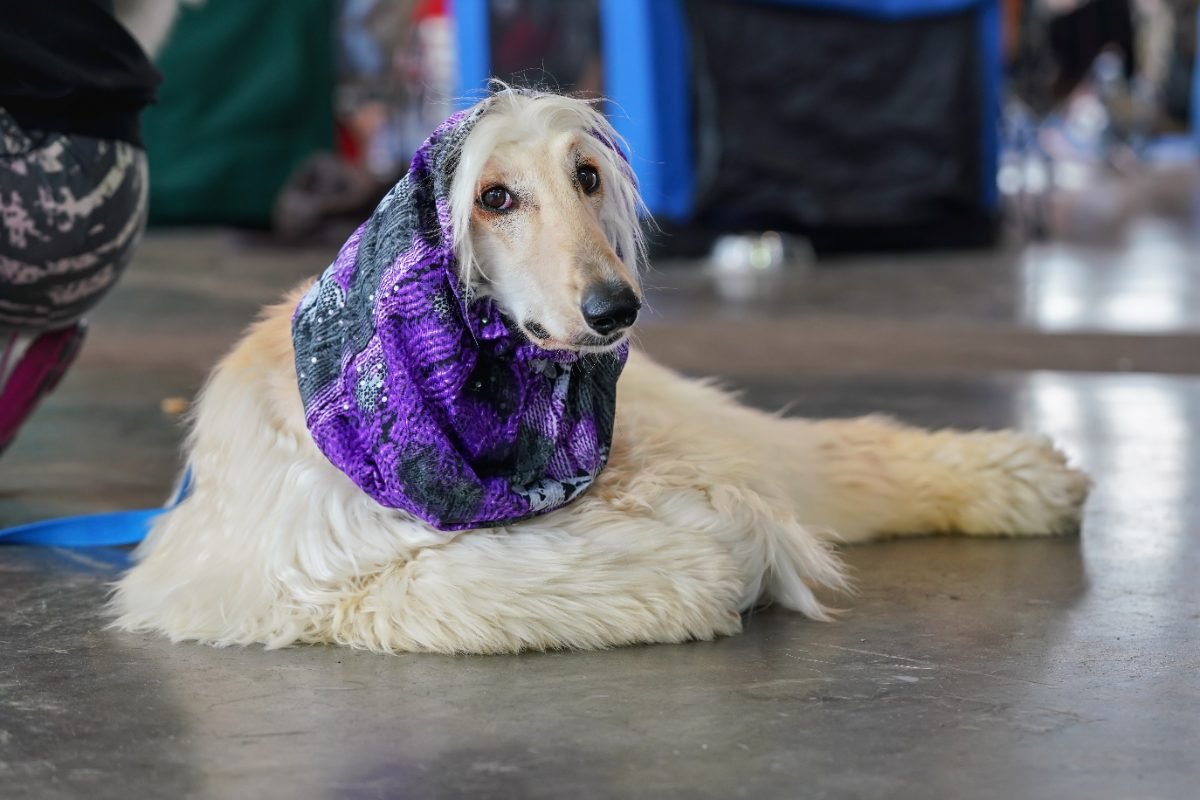
Borzoi are gentle and sensitive, but they are also independent thinkers who evaluate whether your request is worth the effort. Ask for a sit five times and you get an expression suggesting you have both already covered this topic. :/
Owners who take that personally end up escalating pressure, and pressure is the one thing this breed handles worst. A Borzoi under harsh correction does not comply. He shuts down, avoids you, and the relationship takes months to repair.
- Short sessions, five minutes, high value food
- Ask once and wait
- Reward heavily for the behaviours that actually matter, settle and lead manners
- Aim for good manners rather than competitive obedience
- Never harsh corrections, they cost far more than they gain
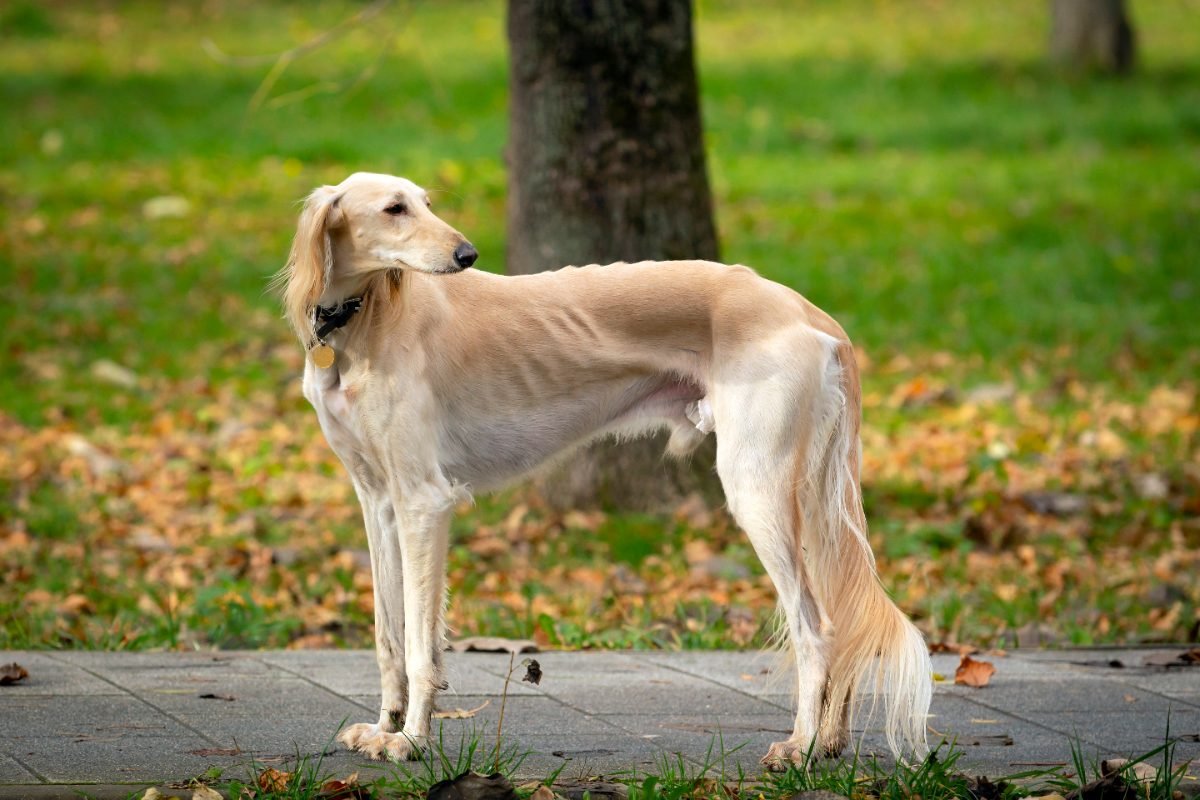
What Getting It Right Looks Like
Manage the six things above and the Borzoi is one of the easiest dogs to actually live with.
He is close to silent. He does not chew, dig or destroy. He sleeps most of the day on whatever is softest, greets you with quiet affection, and takes up an absurd amount of sofa doing absolutely nothing. Visitors are consistently amazed that a dog this size is this calm indoors.
The whole job is:
- On lead outside a 6 foot fence, forever
- Soft bedding and non slip floors
- Martingale collar, correctly fitted
- A vet who understands sighthounds
- Split meals and bloat awareness
- Gentle, brief, well paid training
Final Thoughts
None of these mistakes come from laziness. They come from applying normal dog logic to a breed that is not a normal dog.
He is a coursing predator with the household habits of a cat. Respect the prey drive, pad the floors, fit the right collar, brief your vet, split the meals, and stay gentle.
Do that and you get a decade of the most graceful, undemanding, quietly devoted company imaginable.
For raising one from eight weeks, see our <a href=”https://smartdoglearning.com/borzoi-puppy-guide/”>Borzoi puppy guide</a>. 🙂

I’ve spent 10+ years in dog training, digging into what makes dogs (and their humans) tick. At Smart Dog Learning, I share my no-nonsense, fun approach to training so you can enjoy life with a well-behaved, happy pup—no boring lectures, just practical results 😉