

6 Mistakes Scottish Terrier Owners Make (And How to Avoid Them)
Most Scottish Terrier problems come from one root cause. Someone bought a small dog and expected a small dog personality.
What arrived was an earthdog with the self assurance of a much larger animal, a coat with strong opinions about maintenance, and a bladder that needs watching in old age. None of that is difficult once you know. All of it is annoying if you do not.
Here are the six that actually matter. For the full picture, start with our <a href=”https://smartdoglearning.com/scottish-terrier-care-guide/”>Scottish Terrier care guide</a>.
Mistake 1: Clipping the Coat Instead of Stripping It
This is the most common Scottie mistake and it is close to irreversible.
A Scottie has a harsh wiry outer coat over a soft undercoat. Dead outer hairs are meant to be hand stripped, pulled out at the root so new harsh hair grows in. Clippers cut the hair instead, leaving the dead root in place.
Clip a Scottie repeatedly and the harsh coat is replaced by soft undercoat permanently. The texture goes woolly, the black fades to a dusty grey brown, and skin problems often increase because the coat no longer sheds water the way it should.
- Hand stripping every 4 to 6 months by someone who genuinely does it
- Ask groomers directly, many advertise it and actually clip
- Brush two to three times a week between appointments
- Expect $70 to $120 a session, more for a full strip
- If you choose to clip, do it knowingly, not by accident
Plenty of pet Scotties are clipped and perfectly happy. Just make it a decision rather than something you discover has happened.
Mistake 2: Fighting the Digging Instead of Redirecting It
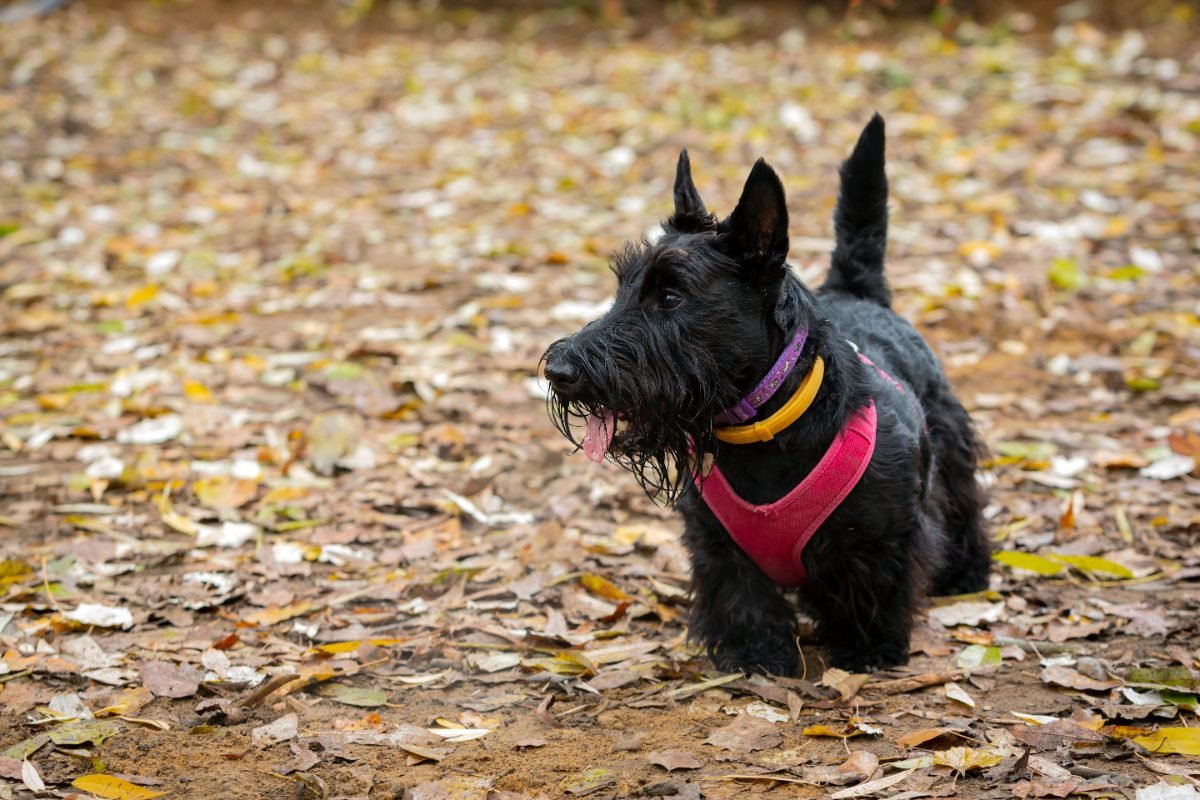
He was bred to dig his way toward a badger. Your flower bed is a soft target with excellent acoustics.
Owners who punish digging get a dog who digs when they are not looking. The instinct does not switch off, it just goes underground, so to speak. :/
Give him a legal place to do it.
- A dedicated digging pit or sandbox, with toys buried in it
- Reward him enthusiastically for using it
- Fence off beds you actually care about
- Bury wire or lay paving along fence lines, they dig out
- Earthdog trials and barn hunt are brilliant sanctioned outlets
Same logic applies to barking. Alert barking is part of the package. Teach a “quiet” cue to moderate it, do not expect to remove it.
Mistake 3: Trusting Recall Around Small Animals
A Scottie who comes reliably in the garden will absolutely not come back when a squirrel is involved.
This is a hunting terrier with genuine prey drive and a two hundred year history of pursuing things into holes. Once the chase starts, your voice becomes irrelevant background noise.
- On lead outside a securely fenced area, always
- Fences need depth, not just height, they excavate
- Long lines for controlled freedom
- Never assume a cat is safe unless raised together, and even then supervise
- Small pets loose in the house is asking for trouble
Mistake 4: Missing the Bladder Cancer Signs
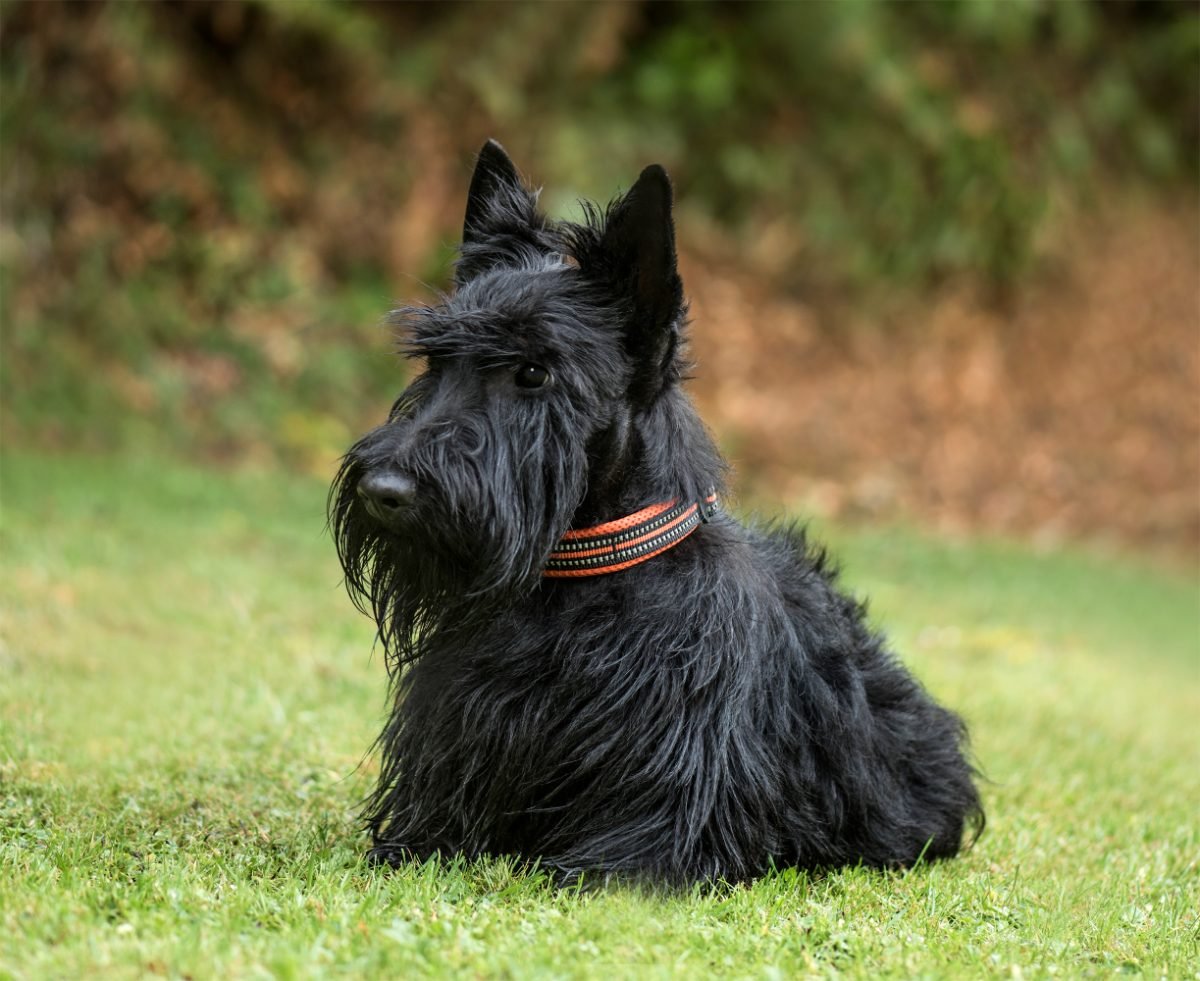
This is the health mistake that costs Scotties years, and most owners have never heard about it.
Scottish Terriers have a dramatically elevated risk of transitional cell carcinoma, a bladder cancer. Estimates place their risk many times higher than the average dog. Caught early it is treatable. Caught late it usually is not.
The problem is that early symptoms look exactly like a routine urinary tract infection, so they get treated with antibiotics for months while the real thing progresses.
Take these seriously in any Scottie, especially over seven:
- Blood in the urine
- Straining or frequent small urinations
- Recurrent “UTIs” that keep coming back after treatment
- Accidents in a previously reliable dog
Ask your vet for imaging or a urine test for the BRAF mutation rather than accepting a third round of antibiotics. Also worth doing: limit exposure to lawn herbicides, which studies have associated with increased risk in this breed specifically.
Mistake 5: Correcting a Stubborn Dog Harshly
Scotties rank low on obedience lists and owners take it as a challenge. That goes badly.
A Scottie under harsh correction does not become compliant, he becomes resentful and more entrenched. Terriers were bred to keep going when things got unpleasant. Making training unpleasant is therefore a strange strategy.
- Short sessions, five to ten minutes, then stop
- High value food, and play as a reward, terriers love a game
- Ask once and wait, never repeat the cue five times
- Reward the behaviours that matter, lead manners, leave it, quiet, recall
- Socialise early and consistently, Scotties can get dog reactive
- Accept that he will always have opinions
Mistake 6: Assuming Small Means Low Effort
People choose Scotties partly because 20 pounds sounds convenient. Some of it is, and some of it very much is not.
The realities people underestimate:
- Grooming is a real recurring cost, every 6 to 8 weeks, forever
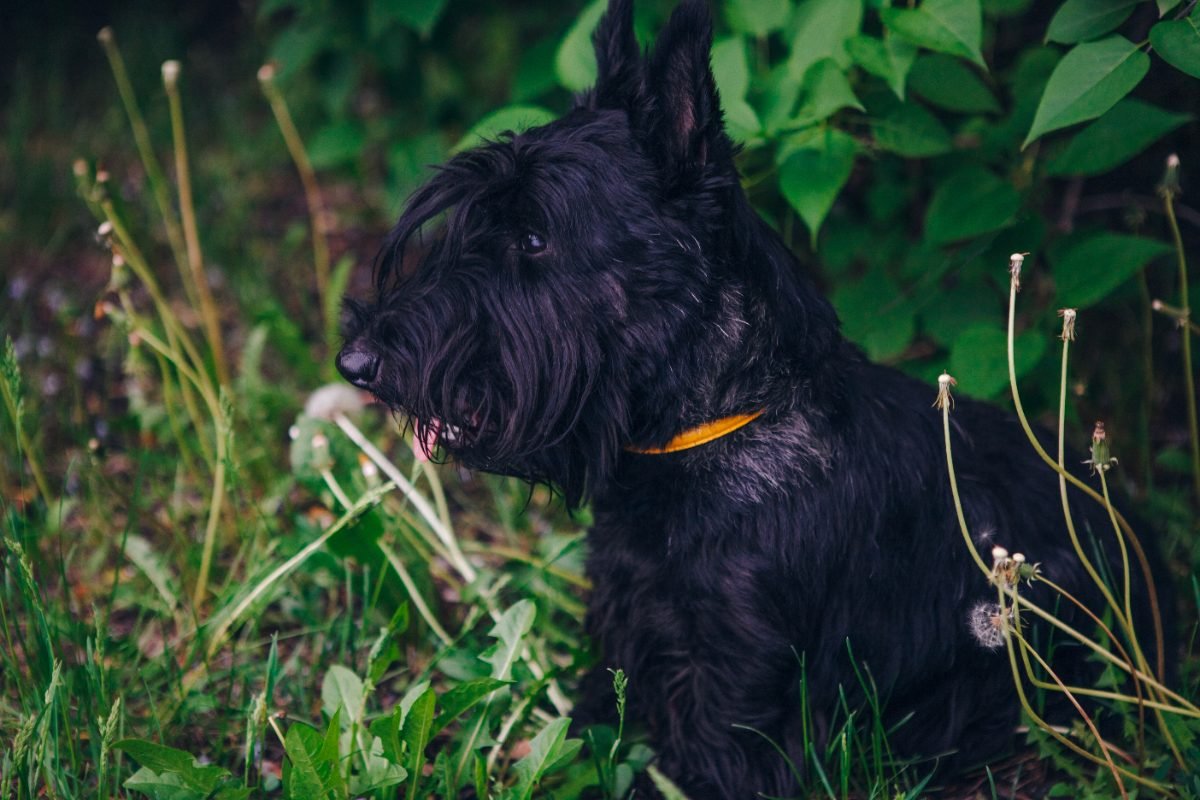
- That beard collects everything, food, water, mud, and needs combing daily
- They are not fragile lap dogs, they need a proper hour of exercise
- They can be dog reactive, so walks need managing
- They shed little but require more grooming than heavy shedders
None of that is a dealbreaker. It is just a different shape of work than most people picture when they imagine a small dog.
What Getting It Right Looks Like
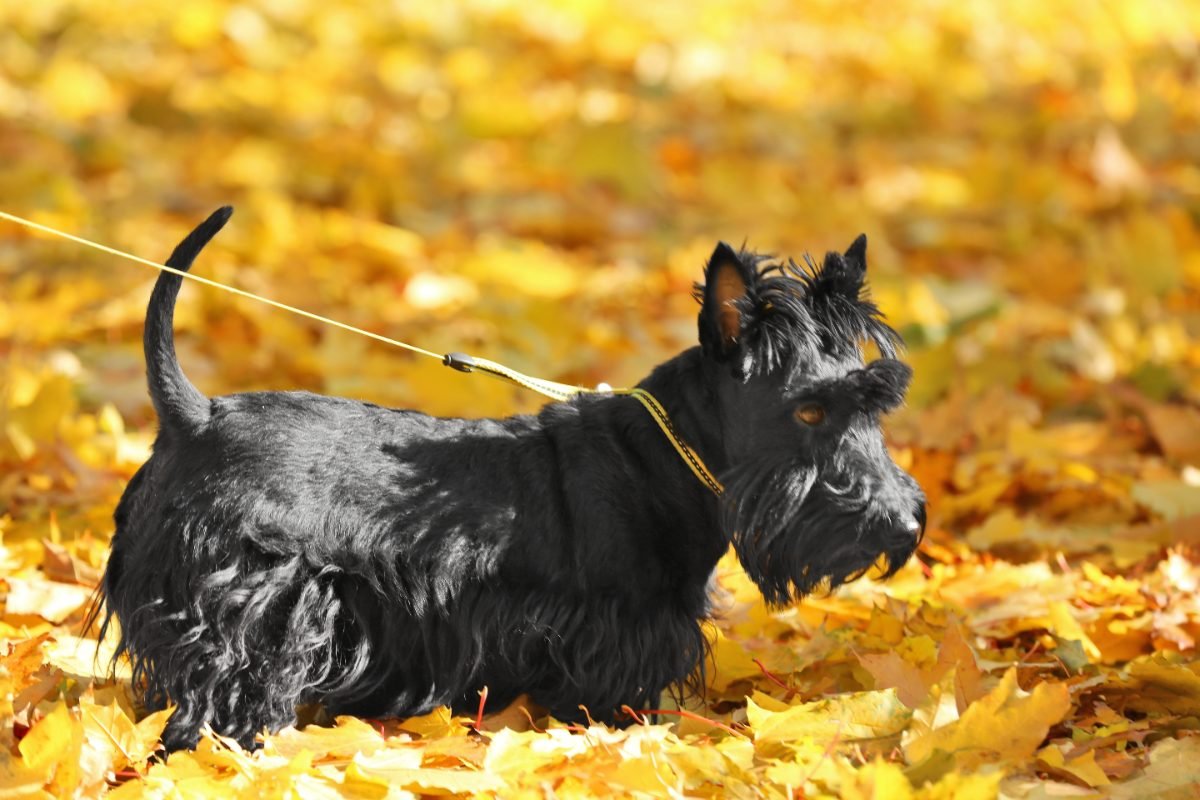
Handle those six and the Scottish Terrier is a superb companion.
He is clean, low shedding, apartment viable, quietly affectionate with his own people, and genuinely brave in a way that is out of all proportion to his size. He does not demand constant attention. He simply expects to be treated as a colleague rather than a pet.
The list is short:
- Hand strip, or clip on purpose
- Give him somewhere legal to dig
- On lead outside a fence
- Take urinary symptoms seriously, especially after seven
- Train with food, humour and patience
- Budget for grooming every 6 to 8 weeks
Final Thoughts
Scotties do not really do neediness, and people sometimes read that as a lack of affection. It is not. He simply expresses devotion through proximity and quiet supervision rather than through fuss.
Groom him properly. Redirect the digging. Keep him on lead. Watch the bladder as he ages. Never try to out-stubborn him, because you will lose and he will enjoy it.
Do that and you get a decade or more of one of the most characterful dogs on earth.
He will still ignore you when it suits him. That is not a bug. 🙂

I’ve spent 10+ years in dog training, digging into what makes dogs (and their humans) tick. At Smart Dog Learning, I share my no-nonsense, fun approach to training so you can enjoy life with a well-behaved, happy pup—no boring lectures, just practical results 😉