

You’re petting your dog on the couch and your fingers hit a little bump that wasn’t there yesterday. You look closer. It’s a tick.
Don’t panic. Tick removal takes about a minute once you know how. Here’s exactly what to do, what to skip, and when to call your vet.
Why you should remove ticks quickly
Ticks can carry diseases like Lyme disease, ehrlichiosis, anaplasmosis and Rocky Mountain spotted fever. The longer a tick stays attached and feeding, the higher the chance it passes something on.
- Check your dog after every walk in grass, woods or brush.
- Remove any tick you find right away.
- Don’t wait for it to fall off on its own.
Most tick bites don’t make dogs sick. But quick removal is the easiest way to keep the odds on your side.

What you need
Keep a small tick kit by the door during tick season. It saves a frantic search for tweezers.
- Fine-tipped tweezers or a tick removal tool (the little hooks or forks made for this)
- Disposable gloves so you don’t touch the tick
- Soap and water or a pet-safe antiseptic for the bite
- A small zip-top bag or jar to save the tick
- Treats and, ideally, a helper to hold your dog
Regular flat beauty tweezers can squeeze the tick’s body. Fine pointed tips grip much better.
Step 1: Get your dog calm and still
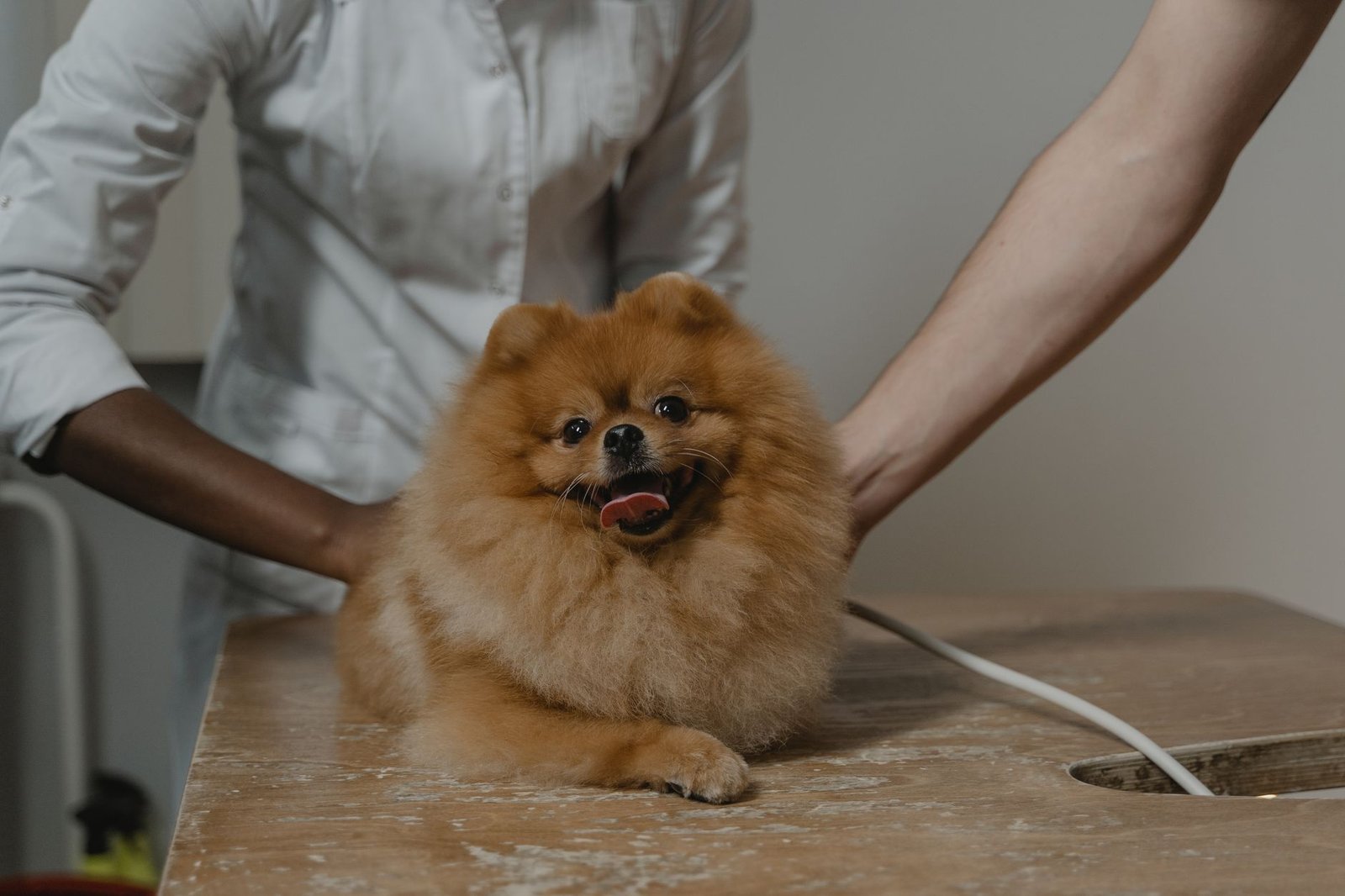
A wiggly dog makes this harder. Pick a bright spot and settle your dog on the floor or a table they’re used to.
- The "Safe / Use with care / Never use" ingredient chart for your bathroom cabinet
- The 24-hour patch test, step by step
- 5 starter recipes and a "when to call the vet" guide
- Ask a helper to hold your dog gently and offer treats.
- A lick mat with a smear of plain pumpkin or xylitol-free peanut butter works great as a distraction.
- Put on your gloves.
Step 2: Part the fur and find the head
Spread the fur around the tick so you can see where it enters the skin. You want to grab the tick by its head and mouthparts, not its fat body.
Take a second to look. A good grip is the whole game.
Step 3: Grip close to the skin
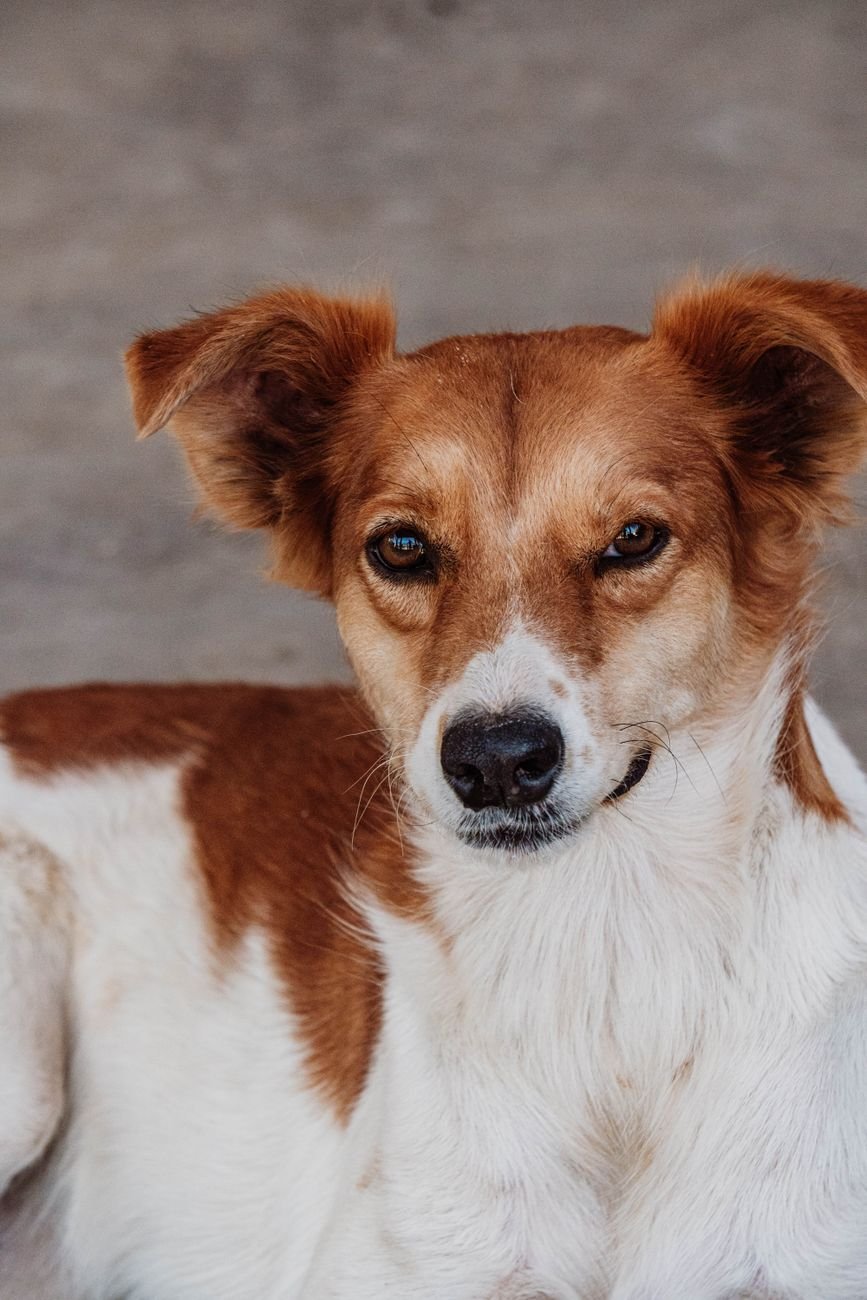
Slide the tweezer tips down to where the tick meets the skin. Grip as close to the skin as you can, without pinching your dog.
- With tweezers: grasp the tick right at the skin line.
- With a tick tool: slide the notch under the tick until it catches the head, following the tool’s instructions.
Try not to squeeze the body. That can push the tick’s fluids into the bite.
Step 4: Pull straight up, slow and steady
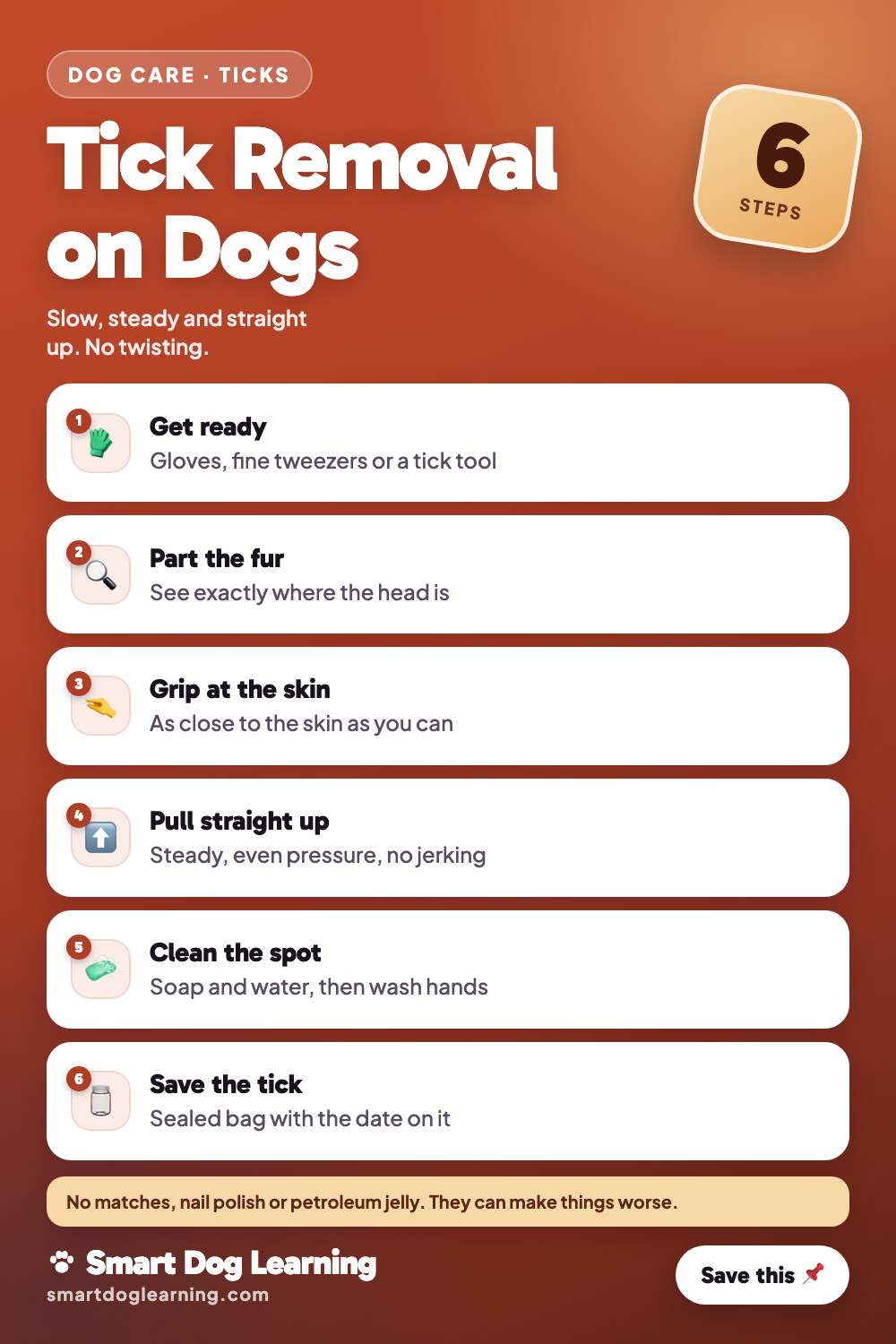
This is the key step. Pull upward with steady, even pressure until the tick lets go.
- Don’t twist or jerk. That can break off the mouthparts.
- It might take a few seconds. Keep the pressure even.
- Some tick tools use a gentle turning motion. If yours does, follow its directions.
Once it’s out, look at the bite. If you see a tiny dark bit left in the skin, jump to the section on the head below.

Step 5: Clean the bite and your hands
- Wash the bite with mild soap and water, or a pet-safe antiseptic.
- Wash your hands well, even if you wore gloves.
- Clean your tweezers too.
Then give your dog a treat. They earned it.
Step 6: Save or dispose of the tick
Never crush a tick with your fingers. You have a few safe options.
- Save it in a sealed bag or jar with the date written on it. If your dog gets sick later, your vet may want to know what kind of tick it was.
- Drop it in rubbing alcohol in a sealed container.
- Wrap it tightly in tape and throw it away.
- Flush it down the toilet.
What not to do
You’ll find plenty of old tricks online. Skip all of these.
- No matches or heat. You’ll burn your dog.
- No nail polish, petroleum jelly or rubbing alcohol on an attached tick. Smothering it doesn’t make it let go, and it wastes precious time.
- No essential oils. Many are irritating or toxic to pets.
- No squeezing, twisting or yanking.
Slow, steady, straight up. That’s the method.
If the head stays in
It happens, even when you do everything right. A tiny dark bit stays in the skin.
- Try to lift it out gently with clean tweezers.
- If you can’t get it easily, leave it alone. Digging can cause more irritation and infection.
- Keep the spot clean. The body usually pushes it out as the skin heals.
A small red bump for a few days is normal. Call your vet if it gets bigger, oozes, smells, or still bothers your dog after a week.
Where ticks hide on dogs
Ticks love warm, hidden spots. Run your fingers slowly over your dog after every outdoor adventure and check here first:
- Inside and around the ears
- Around the eyelids and on the face
- Under the collar or harness
- In the armpits and groin
- Between the toes
- Around the tail and under it
When to call your vet
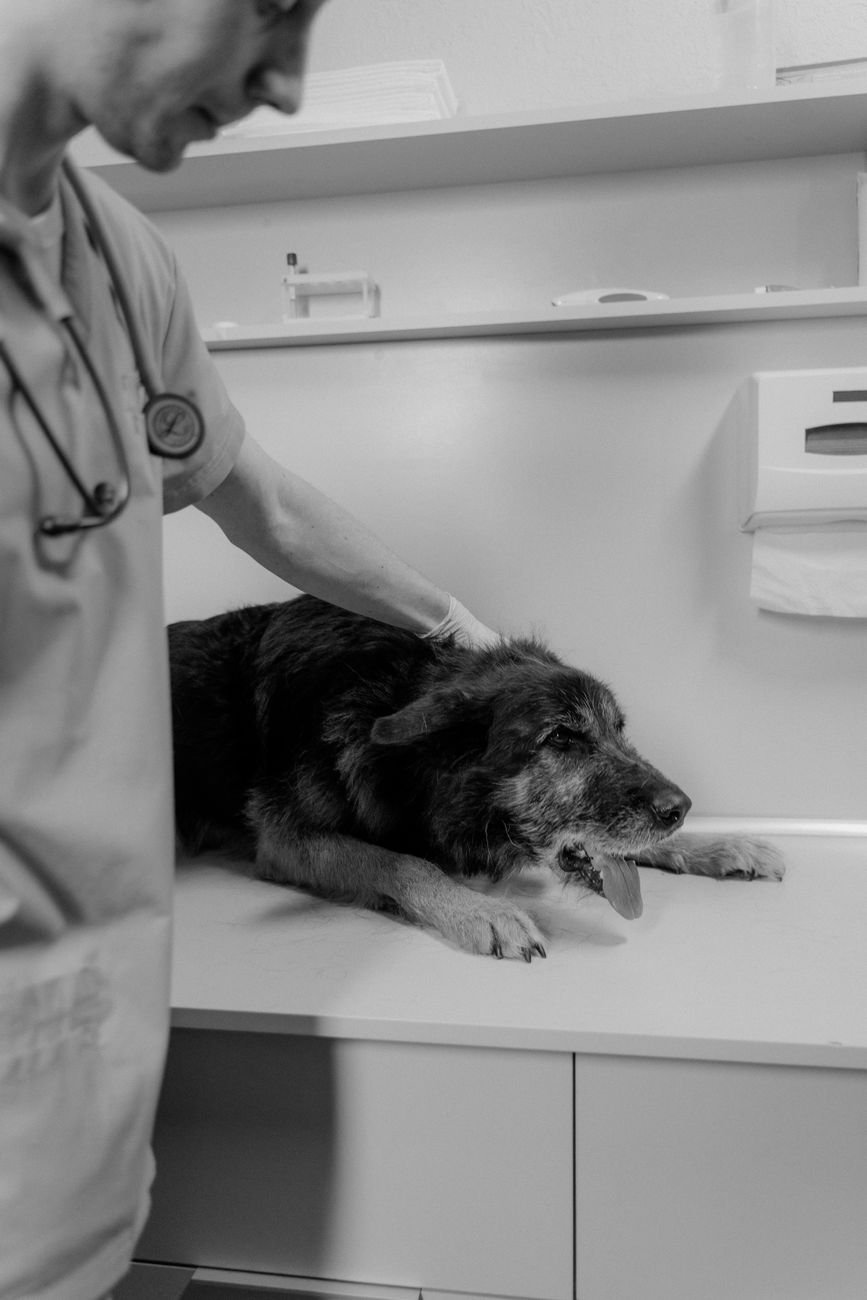
Signs of tick-borne illness can show up weeks after the bite, so keep an eye on your dog for a while. Call your vet if you notice:
- Tiredness, low energy or less interest in food
- Fever, or your dog feels hot
- Limping, or limping that moves from leg to leg
- Swollen joints or lymph nodes
- Weakness in the back legs
- A bite that looks infected
Tell your vet when and where the tick was. That’s what the saved tick and date are for.
Prevention beats removal
Your vet can recommend a tick preventive that suits your dog, your area and your lifestyle. Use it on schedule, all season.
One important note: never use dog flea or tick products on cats. Some contain ingredients that are toxic to cats. For more on keeping pests away, see our guide to flea remedies for dogs.
Common questions
How do I remove a tick from my dog without tweezers?
Use a tick removal tool if you have one. Avoid using your fingers, since squeezing the body is risky.
What does a tick bite look like on a dog?
Usually a small red bump. It can stay a little swollen for a few days after the tick is removed.
Is it bad if the tick head is still in my dog?
Usually not. Keep the spot clean and watch it. Call your vet if it gets red, swollen or sore.
Should I take my dog to the vet after a tick bite?
Not always. Watch your dog for a few weeks and call your vet if you see fever, limping, tiredness or poor appetite.
Can I get sick from a tick on my dog?
The tick itself can bite people too. Wear gloves, never crush ticks with bare fingers and wash your hands afterward.
Tick Removal on Dogs: Step by Step
Ingredients
Instructions
- Ask a helper to hold your dog gently and offer treats.
- A lick mat with a smear of plain pumpkin or xylitol-free peanut butter works great as a distraction.
- Put on your gloves.





Leave a Reply