

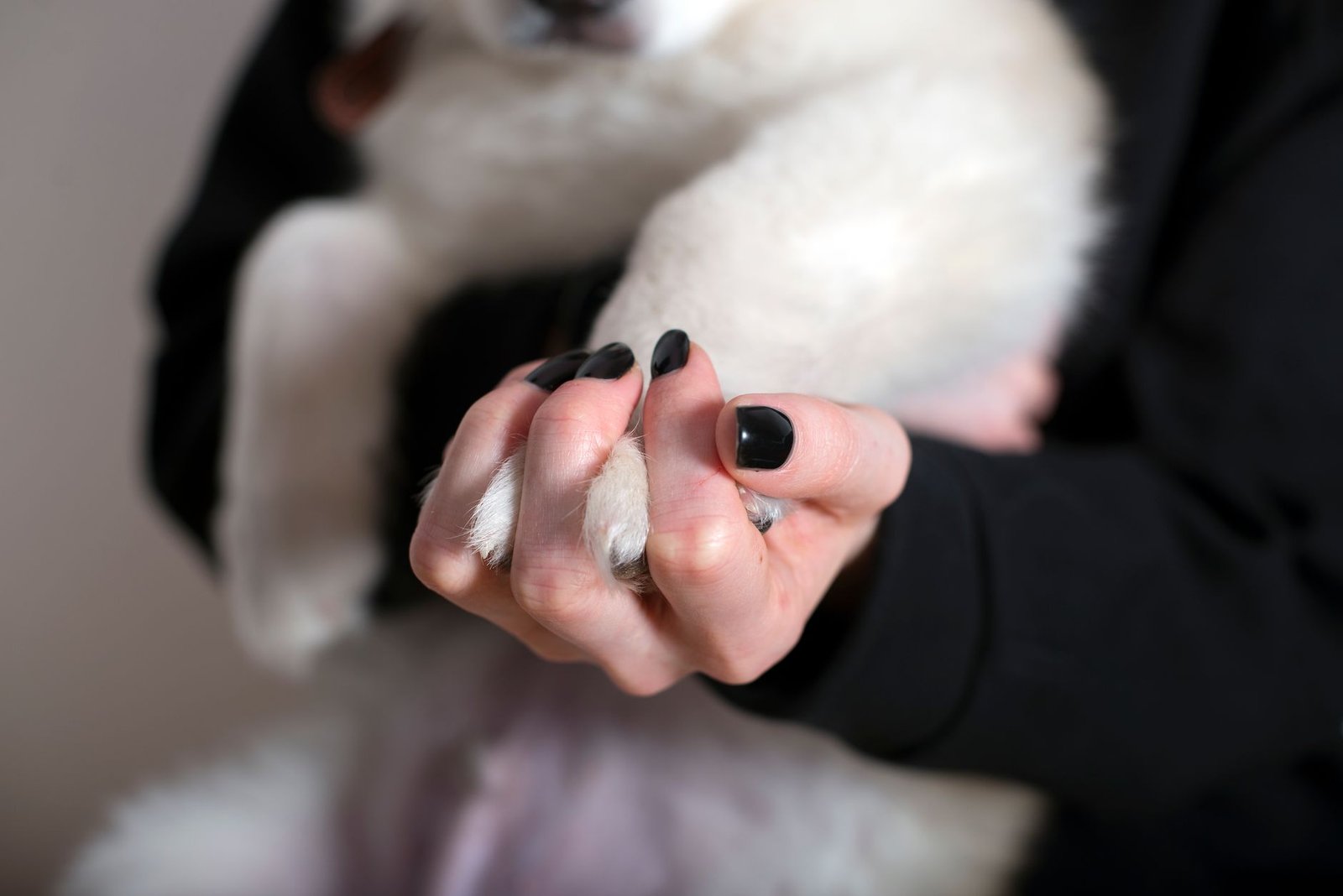
Most dogs hate nail trims. Most owners hate them more. One bad cut and suddenly your dog hides every time the clippers come out.
The good news: you can learn how to cut dog nails at home without wrestling. The secret isn’t technique. It’s going slowly and making the whole thing worth your dog’s while.
Why trimming matters
Long nails aren’t just a looks thing. They change how your dog stands and walks.
- They push the toes sideways, which can make walking uncomfortable.
- They snag on carpet and can tear.
- They can curl and grow into the paw pad, especially dewclaws.
- They scratch floors, furniture and people.
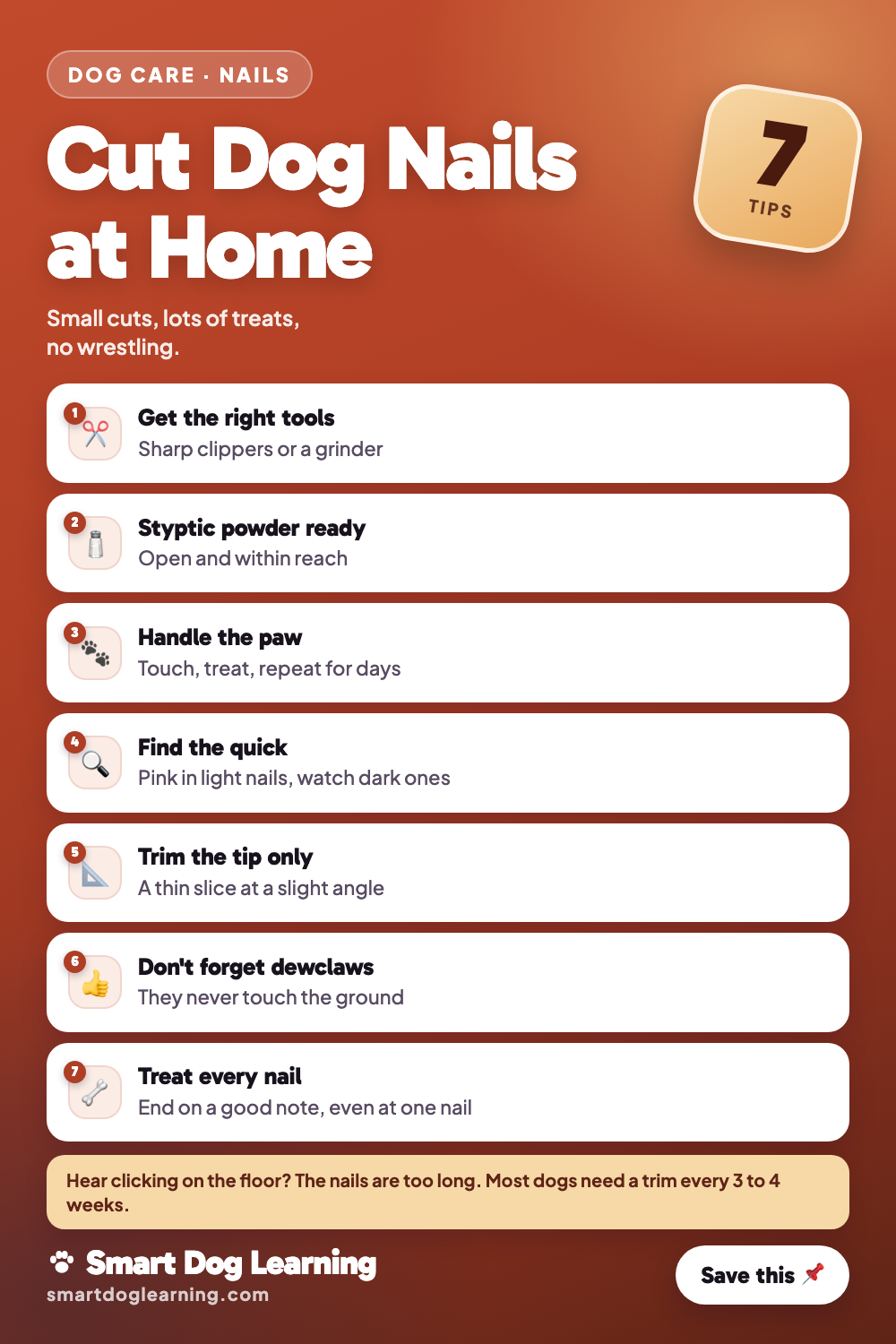
A simple rule: if you hear clicking on a hard floor, it’s time for a trim.
The tools you need
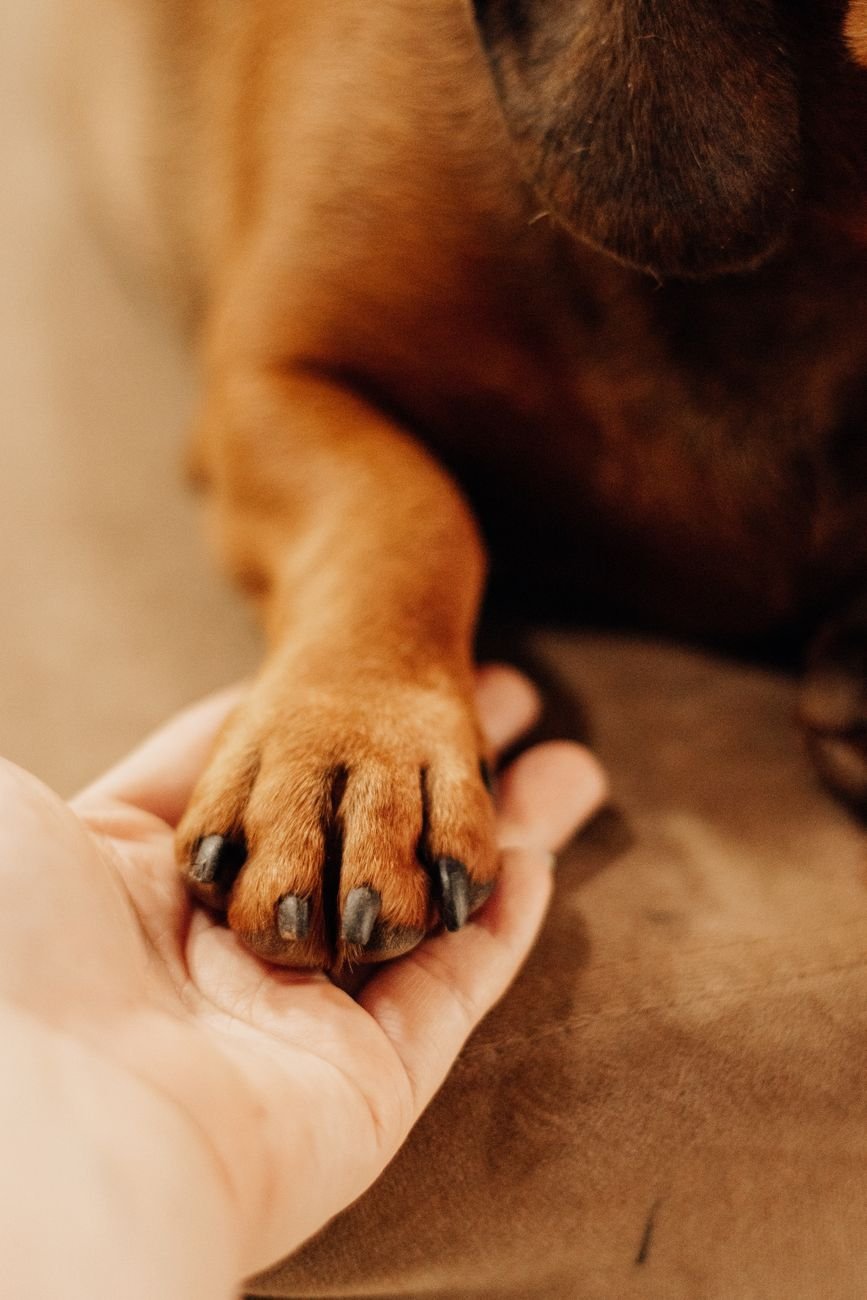
Good tools make this faster and kinder. Dull clippers squeeze the nail instead of cutting it.
- Scissor-style clippers are easy to control and work on most dogs.
- Guillotine clippers suit small and medium dogs with thinner nails.
- A nail grinder files the nail down slowly. Great for nervous dogs and dark nails, once your dog accepts the buzz.
- Styptic powder to stop bleeding if you cut too short.
- Small, soft treats and a lick mat if your dog likes one.
- Good light, like a lamp or a window.
Replace clippers when they start to crush instead of cut.
Get your dog used to it first
This part takes the longest. It also makes every future trim easy.

- The "Safe / Use with care / Never use" ingredient chart for your bathroom cabinet
- The 24-hour patch test, step by step
- 5 starter recipes and a "when to call the vet" guide
Spread it over a week or two, a minute or two a day:
- Touch your dog’s paw, then give a treat.
- Hold the paw for a second, then treat.
- Gently press a toe to extend the nail, then treat.
- Show the clippers, let your dog sniff, then treat.
- Touch the clippers to a nail without cutting, then treat.
If your dog pulls away, go back a step. Rushing now costs you later.
Find the quick
Inside each nail is the quick, a living part with blood vessels and nerves. Cut into it and it hurts and bleeds. Your goal is to trim the tip in front of it.
- Light nails: you’ll see the quick as a pink area inside. Stay well in front of it.
- Dark nails: you can’t see it, so trim tiny slices. Look at the cut end after each one.
On a dark nail, the cut end looks white or gray at first. When a small dark dot appears in the center, stop. You’re close to the quick.
How to cut dog nails, step by step
Pick a calm time, like after a walk. Sit somewhere comfortable with your dog lying down or sitting next to you.
- Hold the paw gently but firmly, with your thumb on the pad and a finger on top.
- Press the toe lightly to extend the nail.
- Cut the tip only, at a slight angle that follows the nail’s curve.
- Treat right away. Every nail gets a reward at first.
- Move to the next nail. Stop the moment your dog gets stressed.
It’s fine to do one paw today and another tomorrow. Even one nail a day works. A calm dog matters more than a finished job.
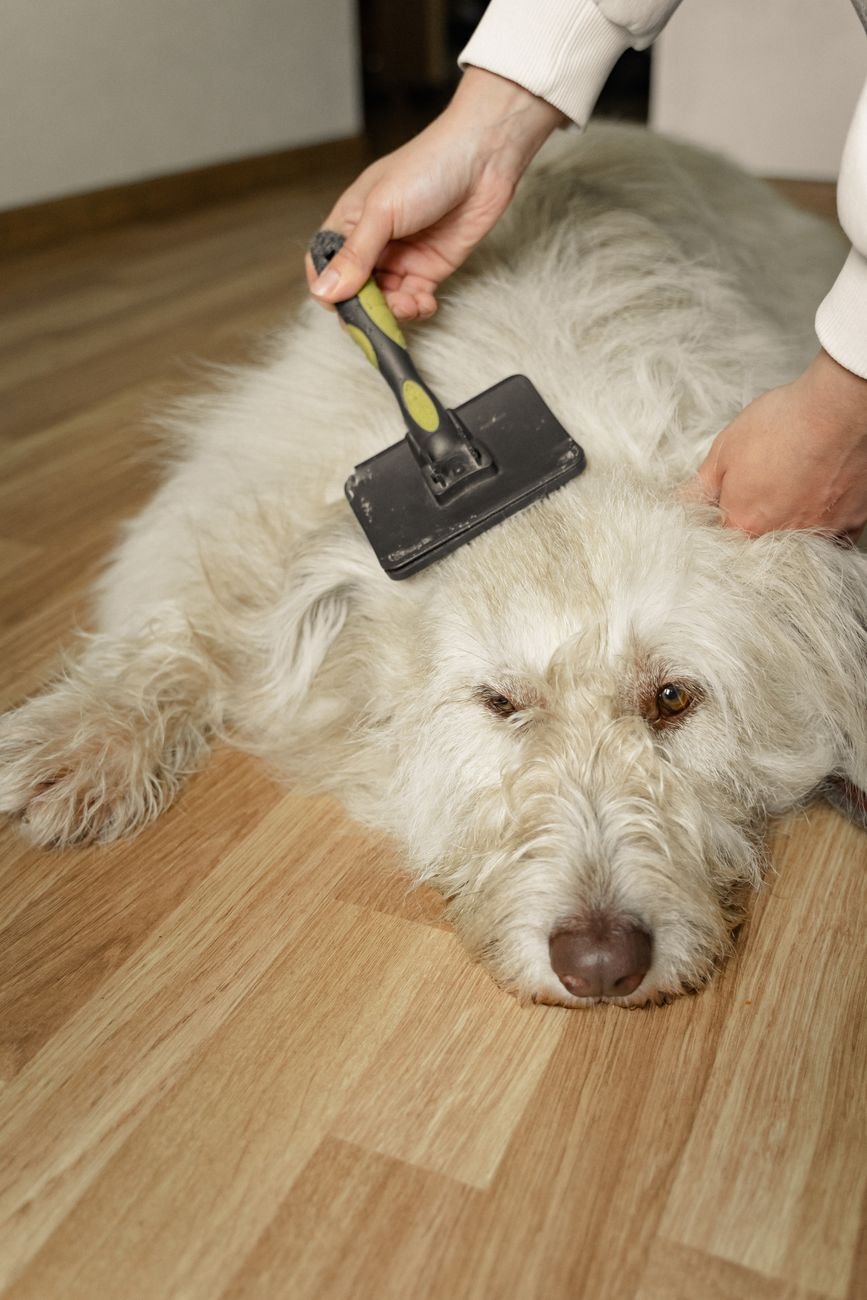
Front paws vs back paws
Front nails usually grow faster and wear down less, so they need more attention. Back nails often stay shorter on their own.
- Start with the paw your dog minds least.
- For back paws, many dogs are calmer lying on their side.
- Bend the back leg gently, the way it naturally bends. Never pull it straight out.
Don’t forget the dewclaws
Dewclaws are the little nails higher up on the inside of the leg. Some dogs have them on the back legs too.
They never touch the ground, so they never wear down. Check them every time. An overgrown dewclaw can curl around and dig into the skin.
Using a grinder instead
A grinder takes longer but makes hitting the quick less likely. Many owners with dark-nailed dogs prefer it.
- Introduce the sound first. Turn it on nearby and treat.
- Touch it to the nail for a second or two at a time.
- Keep long fur away from the spinning part. Hold it back or wrap it in an old nylon stocking.
- Stop if the nail gets warm, then come back to it.
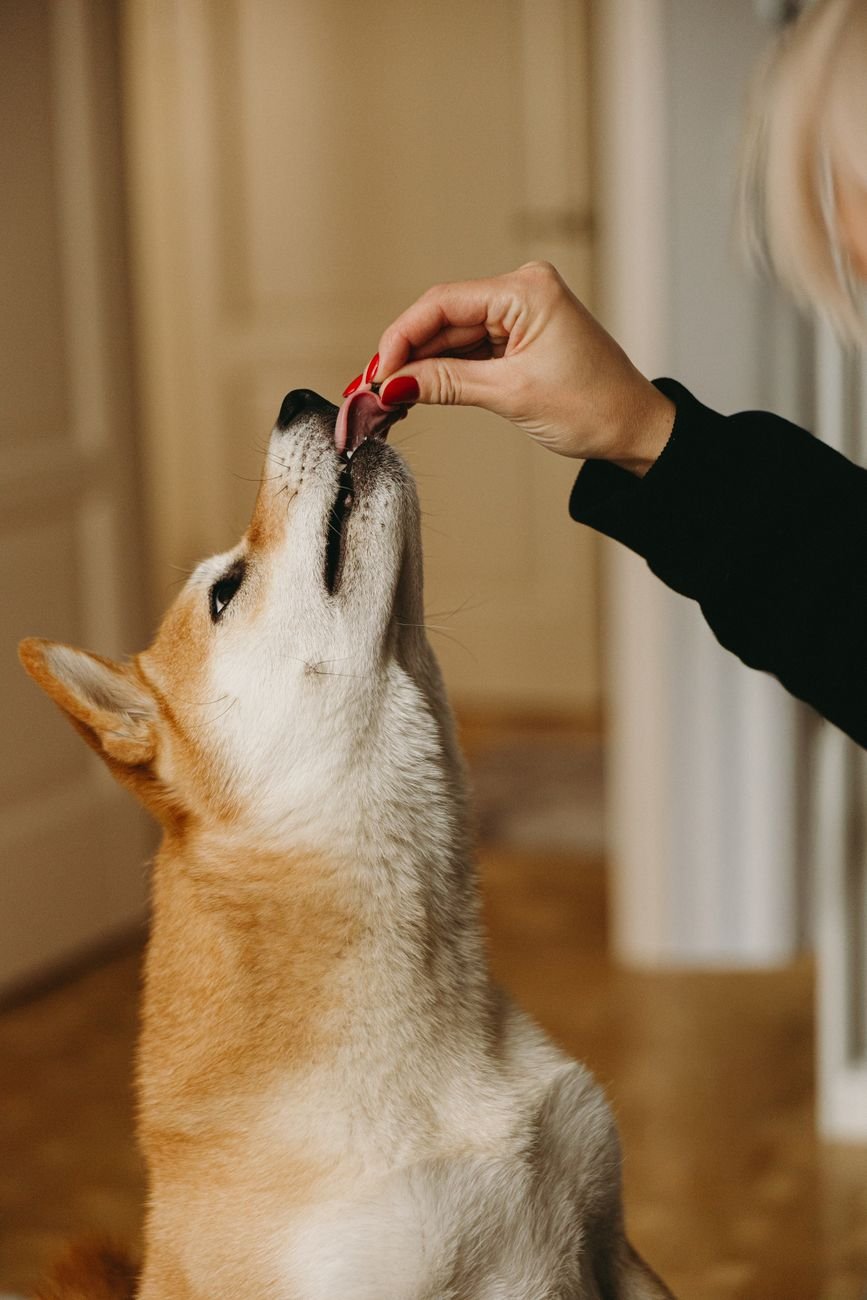
If you cut the quick
It happens, even to groomers. Stay calm, because your dog reads your reaction.
- Press styptic powder onto the nail tip and hold it for a moment.
- No powder? Cornstarch or flour can help in a pinch.
- Give a treat and stop for the day.
Call your vet if the bleeding doesn’t stop after a few minutes of steady pressure, or if the nail looks cracked or infected later.
How often to trim
Most dogs need a trim every 3 to 4 weeks. Dogs who walk a lot on pavement may need it less often. Small and indoor dogs often need it more.
If the nails are very long, trim a little every week. The quick slowly recedes as the nails get shorter.
When to get help
Some dogs are truly scared, and that’s okay. Forcing it only makes the fear worse.
- Ask your vet or a groomer to do it while you keep working on the paw-touch steps at home.
- Talk to your vet about very anxious dogs. They can suggest a plan.
- Get help if a nail is broken, split or bleeding badly.
Starting with a puppy? Begin handling paws on day one. It’s on our new puppy checklist, and these dog training tips for new owners show how to use rewards for every new skill.

Common questions
Can I use human nail clippers on my dog?
Only on very small puppies. Dog nails are thicker and rounder, so human clippers tend to crush them.
How short should I cut my dog’s nails?
Just short enough that they don’t touch the floor when your dog stands. Stay in front of the quick.
Is a grinder better than clippers?
Neither is better. Clippers are faster, and a grinder gives more control on dark nails.
Should I trim nails before or after a bath?
After a bath is easier for many dogs, since the nails are a bit softer.
My dog won’t let me touch their paws. What now?
Go back to touching a leg and treating, then work down to the paw over a few weeks. Ask your vet if it doesn’t improve.




Leave a Reply