Samoyed Care Guide: Everything New Owners Need to Know
The Samoyed is a walking cloud with a permanent grin, and he knows exactly how good he looks.
That famous “Sammy smile” is not an accident either. The upturned mouth corners were selected for because they stop drool forming icicles in Siberian cold. Even his face is functional.
He is also loud, shed-heavy, escape prone and completely convinced that rules are suggestions. Let’s talk about what you are actually signing up for.
What Exactly Is a Samoyed?
The Samoyed comes from Siberia, where the Samoyedic peoples used him to herd reindeer, haul sledges and sleep in the tent as a living heater.
That last part matters more than people realise. This breed was bred to live inside with humans, not chained outside in a yard. Thousands of years of sleeping alongside families produced a dog that is genuinely bad at being alone.
The Quick Stats
- Height: 19 to 23.5 inches at the shoulder
- Weight: 35 to 65 pounds, males noticeably bigger
- Lifespan: 12 to 14 years, good for the size
- Coat: Double coated, white to biscuit, enormous
- Energy: High, this is a working spitz not a decorative one
- Shedding: Constant, plus two catastrophic seasonal blowouts
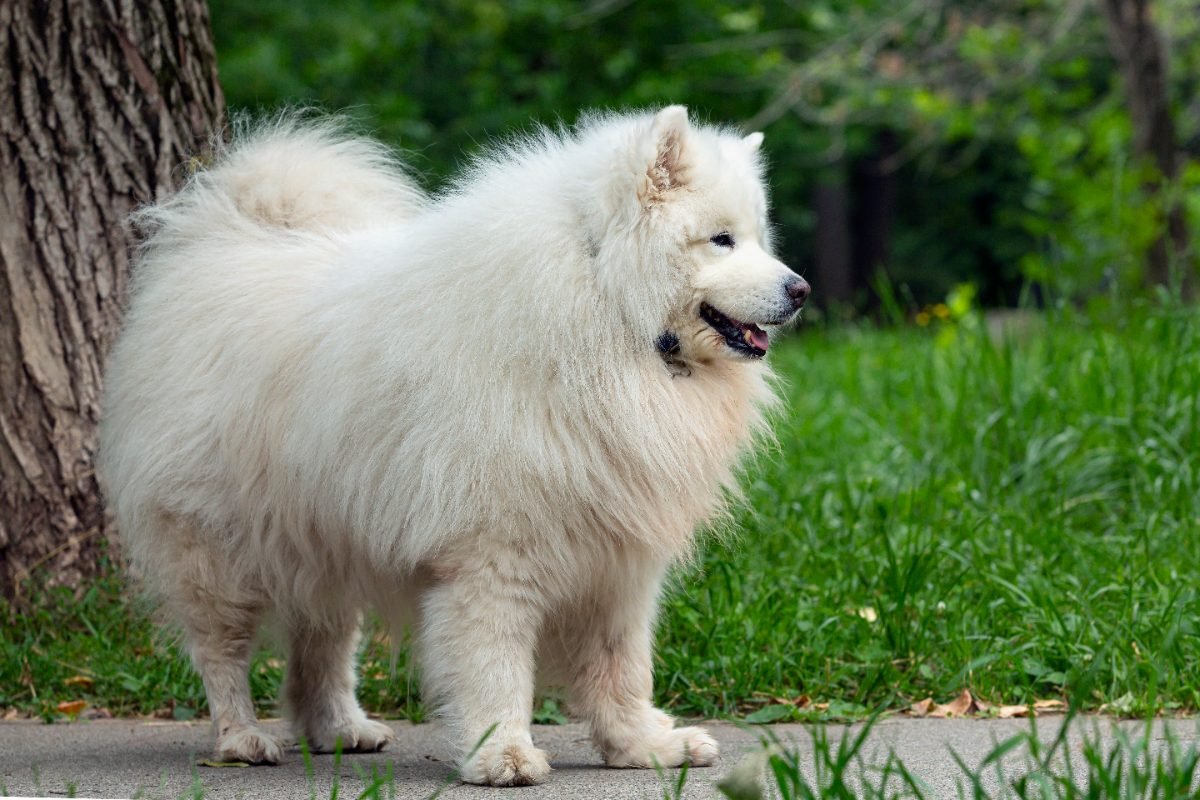
FYI Samoyeds are smaller than they photograph. A lot of that silhouette is air and hair.
The Temperament Is Relentlessly Social
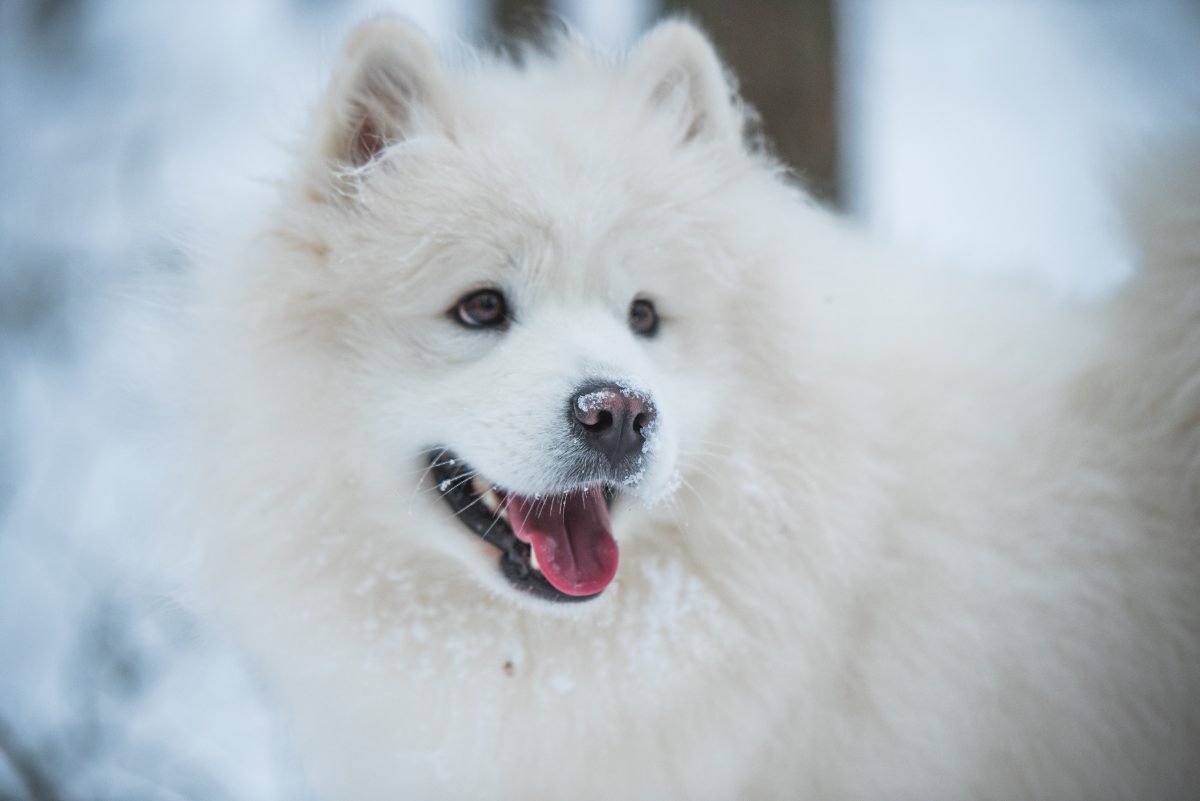
Samoyeds are famously friendly. To everyone. Including burglars.
This is not a guard dog and will never be one. He will greet an intruder with the same delight he greets you, then show them where the treats are kept.
What to expect:
- Genuinely affectionate and people focused, sometimes overwhelmingly
- Excellent with children and other dogs
- Vocal, and I mean vocal, they talk, howl, whine and argue
- Mischievous and clever, they get bored and invent projects
- Prone to separation anxiety, this breed does not cope alone
- Stubborn in the way all spitz breeds are stubborn
IMO the barking is the most under-communicated part of the breed. A bored Samoyed left in a garden will vocalise for hours and your neighbours will find out about it before you do.
That Coat Is a Genuine Second Job
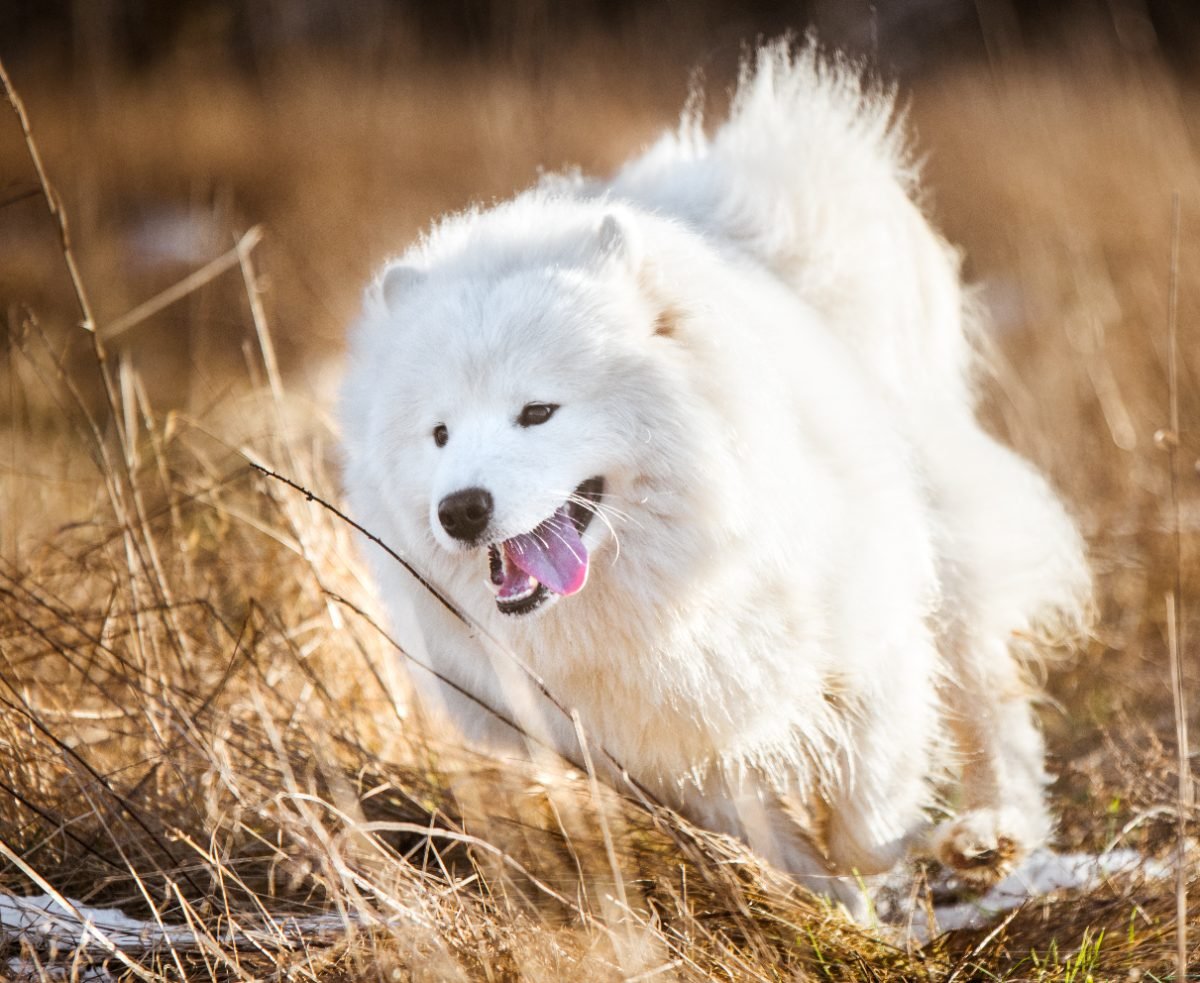
Let’s not be gentle about this. The Samoyed coat is one of the highest maintenance coats in dogdom.
That dense undercoat mats against the skin if you neglect it, and a matted Samoyed either needs hours of careful work or a shave down that damages coat regrowth permanently.
- Brush thoroughly three to four times a week, daily when blowing coat
- Line brush in sections down to the skin, never just the top layer
- Undercoat rake plus a slicker, and a good pin brush
- Bathe every 6 to 8 weeks and dry completely with a forced air dryer
- Never shave a Samoyed, that coat insulates against heat as well as cold
- Nails every 3 weeks, ears checked weekly
They blow coat twice a year and it is genuinely absurd. Expect to fill carrier bags with fur. Some owners spin it into yarn, which tells you everything about the volume involved.
Exercise Needs Are Higher Than People Expect
The fluffy appearance fools people. This is a sledge dog.
An adult Samoyed needs 1 to 2 hours of real exercise daily, and a bored one becomes a digger, a barker and an escape artist.
- Two solid walks plus play or training work
- They excel at hiking, canicross, skijoring and carting
- Secure fencing at least 6 feet, they climb and dig with intent
- Never off lead in unfenced areas, prey drive plus wanderlust
- Mental work matters as much as physical
Puppies need restraint though. Five minutes per month of age twice daily until growth plates close around 14 to 18 months, because hip dysplasia runs in the breed.
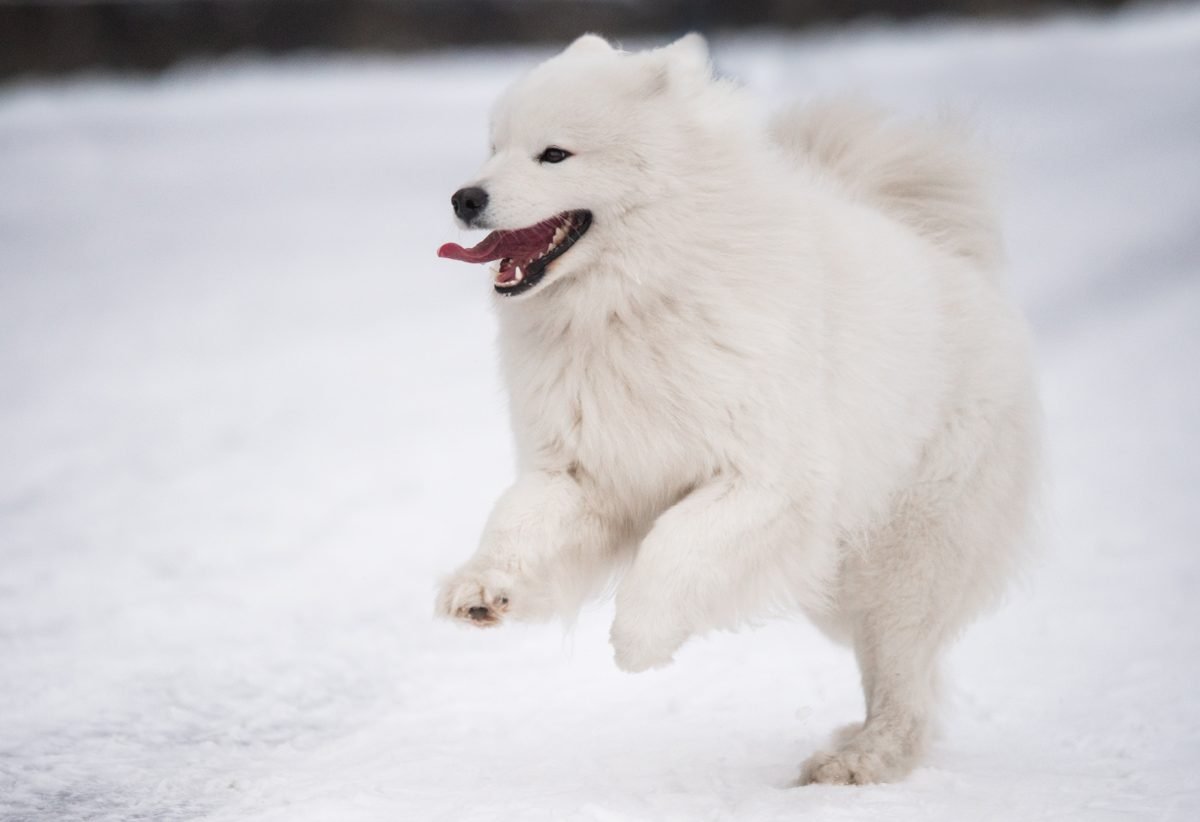
Heat Is the Serious Risk
That coat was engineered for minus 60 Siberian winters.
Samoyeds overheat easily and, like most working breeds, will keep going past the point of sense. Heat stroke is a real and recurring cause of emergency vet visits in this breed.
- Walk early morning and late evening in summer
- Air conditioning is equipment, not luxury
- Learn the signs: heavy panting, drooling, bright gums, wobbling
- Cooling mats, shade, constant water
- Resist every urge to shave, it makes overheating worse not better
Training a Dog Who Negotiates
Samoyeds are intelligent and completely unimpressed by authority. Spitz breeds were bred to make independent decisions in the field, and it shows.
- Short, upbeat sessions with high value food
- Reward based only, harsh handling produces a dog who avoids you
- Start recall early and never fully trust it, sighthound-level wanderlust
- Redirect digging into a sanctioned digging pit rather than fighting it
- Teach a “quiet” cue early, before barking becomes a hobby
- Crate train, it helps enormously with the separation anxiety
Health Issues to Budget For
- Hip dysplasia, ask for OFA scores on both parents
- Progressive retinal atrophy and other eye conditions, needs eye certification
- Samoyed hereditary glomerulopathy, a kidney disease specific to the breed, testable
- Diabetes mellitus, Samoyeds are overrepresented
- Hypothyroidism
- Subvalvular aortic stenosis, so ask about cardiac clearances
That kidney condition is breed specific and genetic. Any breeder worth buying from will know exactly what you mean when you ask about it.
The Honest Cost Breakdown
- Puppy from a health testing breeder: $1,500 to $4,000
- First year including vet, gear, grooming tools and training: $2,500 to $4,000
- Annual after that: $1,800 to $3,000
- Professional grooming if outsourced: $90 to $150 every 6 to 8 weeks
- A good forced air dryer, if you DIY: $200 to $400 and worth every penny
Is a Samoyed Right for You?
Good fit if you:
- Are home most of the day or can take the dog with you
- Live somewhere cool, or have serious air conditioning
- Genuinely enjoy grooming, several times a week, forever
- Want an active outdoor companion
- Can tolerate a vocal dog and have tolerant neighbours
Skip this breed if you:
- Work long hours away from home
- Want a low shedding or low maintenance dog
- Live in a hot climate
- Need a guard dog
- Value a quiet house above almost everything
Final Thoughts
The Samoyed is one of the most beautiful and genuinely joyful dogs you can own, and he will cost you in hair, noise and time.
Brush him properly several times a week. Keep him cool. Exercise him like the working dog he is. Do not leave him alone all day. Teach a quiet cue before you need one.
Do that and you get twelve to fourteen years of a smiling, ridiculous, endlessly affectionate companion who thinks every single day is the best one yet.
You will never wear black again, but honestly that seems like a fair trade. 🙂

I’ve spent 10+ years in dog training, digging into what makes dogs (and their humans) tick. At Smart Dog Learning, I share my no-nonsense, fun approach to training so you can enjoy life with a well-behaved, happy pup—no boring lectures, just practical results 😉