


Picking puppy names is the fun part of bringing a dog home. It’s also easy to get wrong in a way you only notice weeks later, when your puppy stares blankly at you across the yard.
Some names are simply easier for dogs to pick out. Here’s how to choose one your puppy will learn fast, plus how to teach it and a big list of names to get you started.
Why some names work better
Your puppy doesn’t understand words the way you do. They learn that a certain sound means “pay attention, something good is coming.”
So the best names are sounds that stand out:
- They’re short, so you can say them quickly and the same way every time.
- They have clear, crisp sounds that cut through background noise.
- They don’t blend in with words you say all day.
Keep it to one or two syllables
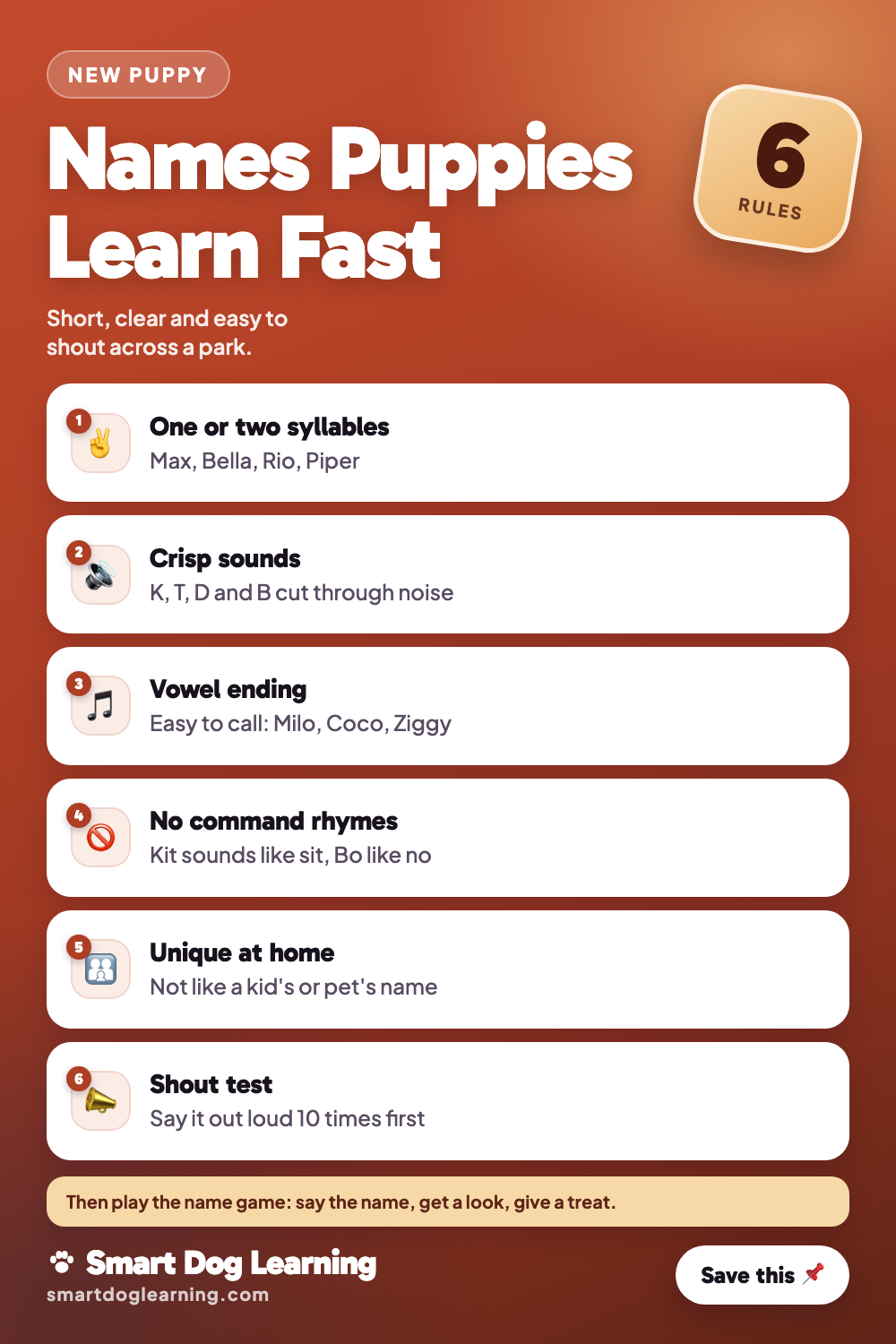
Short names are easy to call and easy to hear. Think Max, Luna, Rio, Bear, Piper or Juno.
Love a long name? Go for it. Just plan a short version for daily use.
- Works for puppies, adults, rescues and seniors
- One page per problem, step by step
- Printable PDF, free
- Sir Wigglesworth becomes Wiggles.
- Persephone becomes Percy.
- Bartholomew becomes Bart.
Pick the nickname early and have everyone use it. A puppy called five different things is a confused puppy.
Choose crisp sounds and vowel endings
Hard consonants like K, T, D, B and P are punchy and easy to hear. Names that end in a vowel sound, like Milo, Coco or Ziggy, are easy to call with a rising, happy tone.
- Crisp: Kobe, Toby, Dixie, Piper, Biscuit
- Vowel ending: Milo, Lulu, Benny, Rosie, Theo
- Softer, harder to hear outside: Phil, Seth, Fern
Soft names still work. They just need a bit more practice.

Avoid names that sound like commands
This one trips up a lot of new owners. If the name rhymes with a cue, your puppy has to guess which one you meant.
- Kit sounds like “sit.”
- Bo or Joe sound like “no.”
- Ray sounds like “stay.”
- Dawn sounds like “down.”
- Bree sounds a lot like “free,” a common release word.
Say your top choice next to “sit, stay, down, come, no.” If any of them blur together, keep looking.
Make it unique in your house
Your puppy shouldn’t share a sound with anyone else at home.
- Skip “Molly” if your daughter is Holly.
- Don’t pair “Benny” with an older dog called “Penny.”
- Avoid words you say constantly, like “Honey” if that’s what you call your partner.
Do the shout test
Before you commit, try the name in real life for a day or two.
- Shout it across the yard, like you’re calling a puppy back from a squirrel.
- Say it in the vet’s waiting room. Would you be happy saying it out loud?
- Say it in a cheerful voice 10 times. Still love it?
Honestly, if it makes you smile, that counts for a lot. You’ll say it thousands of times.
How to teach your puppy its name
Puppies can start learning their name the day they come home. Keep sessions short and fun.
- Grab a handful of tiny treats in a quiet room.
- Say the name once in a happy voice.
- The moment your puppy looks at you, say “yes” and give a treat.
- Repeat 5 to 10 times, then stop while it’s still fun.
- Do a few sessions a day, then move to the yard and busier places.
Many puppies catch on within a few days of regular practice. Every puppy is different, so don’t stress if yours takes longer.
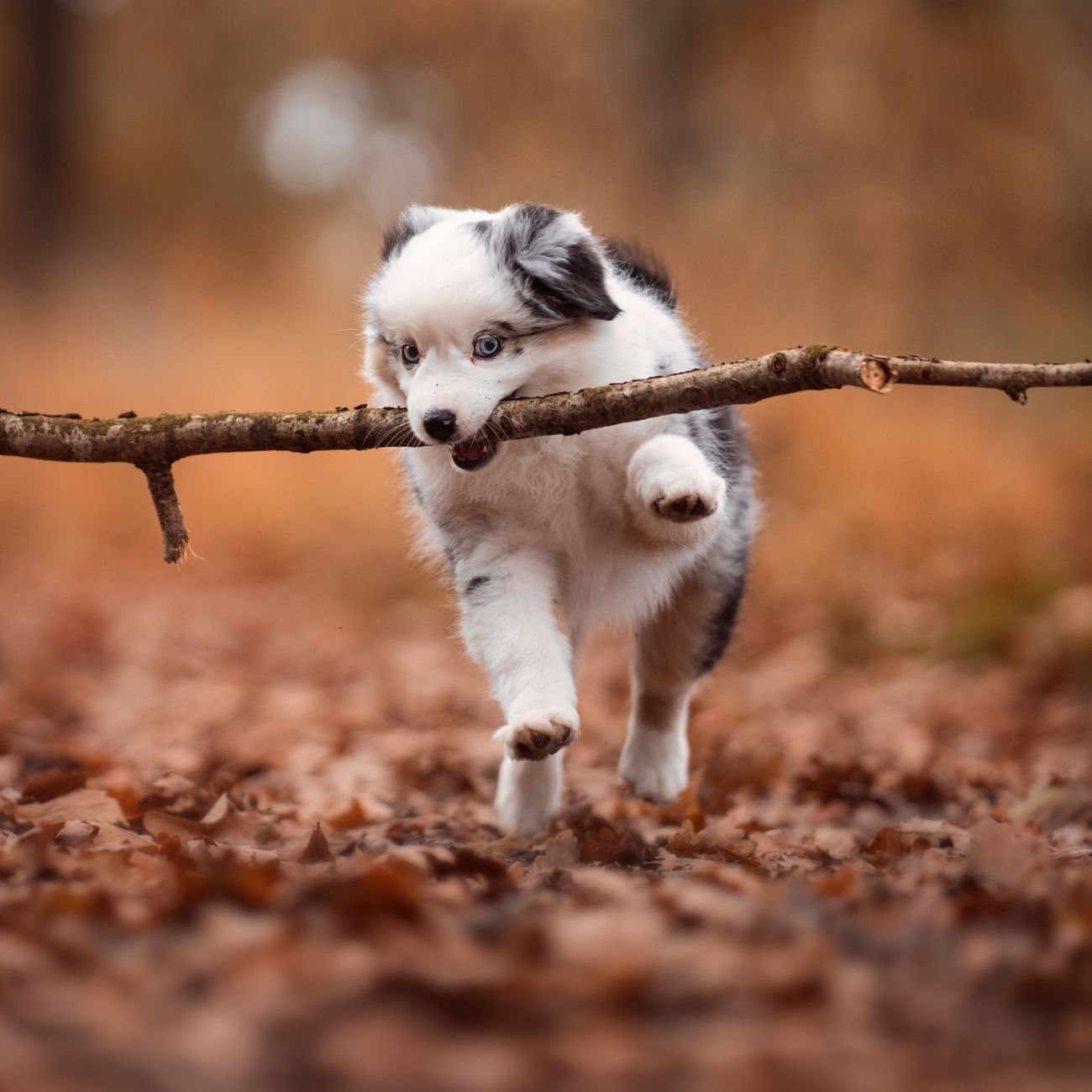
Name mistakes that slow learning
- Using the name when you’re angry. If the name means trouble, your puppy will stop wanting to look.
- Repeating it over and over. “Max, Max, MAX” teaches them the first two don’t matter.
- Using it for everything. Say the name to get attention, then give the cue.
- Changing it every week. Pick one and stick with it.
Got a rescue with an old name? You can rename an older dog the same way. Pair the new name with treats and they’ll usually switch over.
Match the name to the dog they’ll become
Your puppy won’t stay tiny forever. A name that’s adorable at 10 pounds might feel odd on a 90-pound adult.
- Think about adult size. “Peanut” on a Great Dane is funny, and that’s fine if you’re in on the joke.
- Watch their personality for a few days. A calm, thoughtful puppy and a bouncy goofball may suit different names.
- Look at their coat. Colors and markings inspire great names, like Mocha, Ginger, Smudge or Patch.
- Get everyone’s vote. Kids love helping choose, and they’ll use the name more if they picked it.
It’s fine to wait a few days before you decide. Just settle on one before training starts in earnest.
Puppy names to get you started
All of these are short and easy to call. Check the command rule for your own cues before you choose.
Boy puppy names
- Milo, Toby, Teddy, Rocky, Ozzy
- Bear, Duke, Finn, Gus, Jax
- Archie, Benny, Buddy, Leo, Theo
Girl puppy names
- Luna, Bella, Daisy, Piper, Rosie
- Coco, Lulu, Pepper, Willow, Zoe
- Hazel, Ivy, Maple, Nala, Ruby
Want more? Here’s our full list of girl dog names.
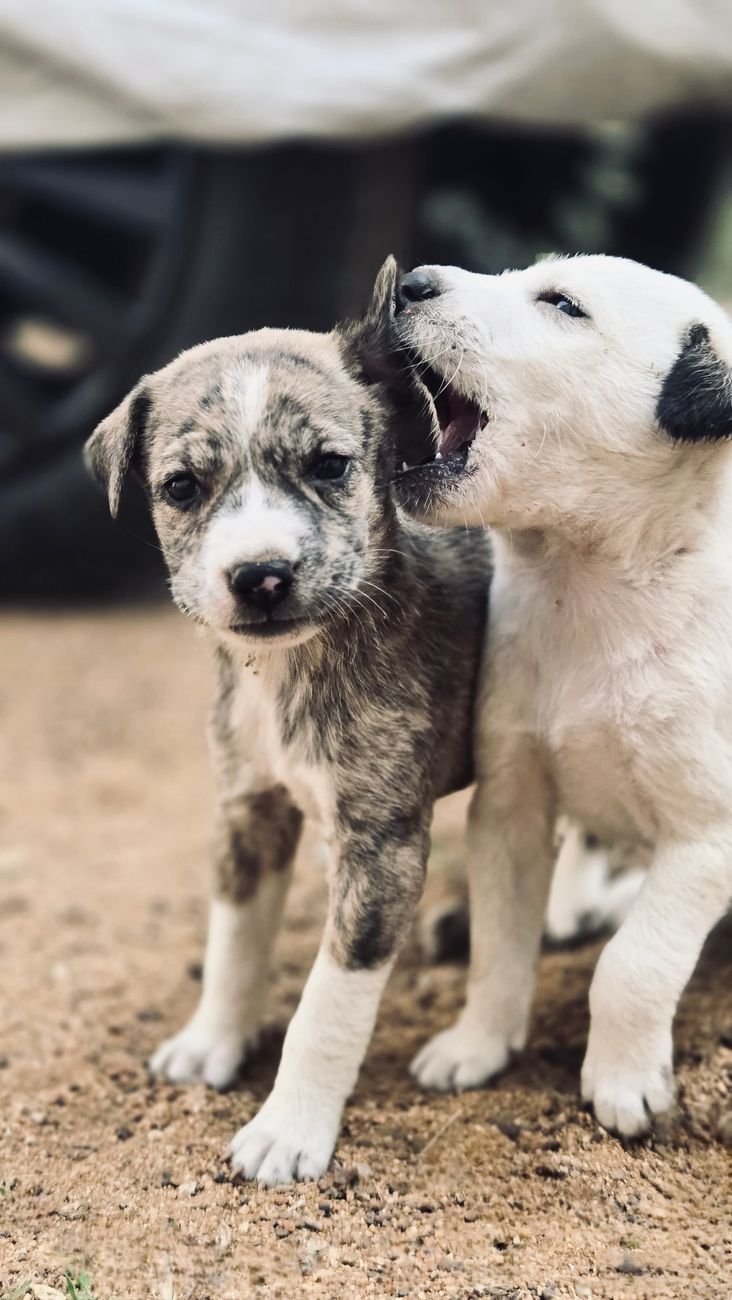
Food names
- Biscuit, Mochi, Waffles, Nacho, Peanut
- Cookie, Taco, Pickles, Nugget, Pretzel
Names for big puppies
- Atlas, Bruno, Diesel, Moose, Titan
- Thor, Kodiak, Tank, Odin, Bruce
Names for tiny puppies
- Pip, Bean, Pebble, Mini, Button
- Gizmo, Kiwi, Tinker, Pixie, Dot
Common questions
How long does it take a puppy to learn its name?
With a few short sessions a day, many puppies respond within a few days to a couple of weeks.
Is it OK to give a puppy a long name?
Yes. Just use a short nickname every day so your puppy hears one clear sound.
Can I change my puppy’s name?
Yes, at any age. Pair the new name with treats and praise, and stop using the old one.
What names should I avoid for a puppy?
Names that rhyme with commands, sound like a family member’s name, or that you’d feel silly calling in public.
Should I use my puppy’s name when correcting it?
Try not to. Keep the name linked to good things so your puppy always wants to look at you.



Leave a Reply