

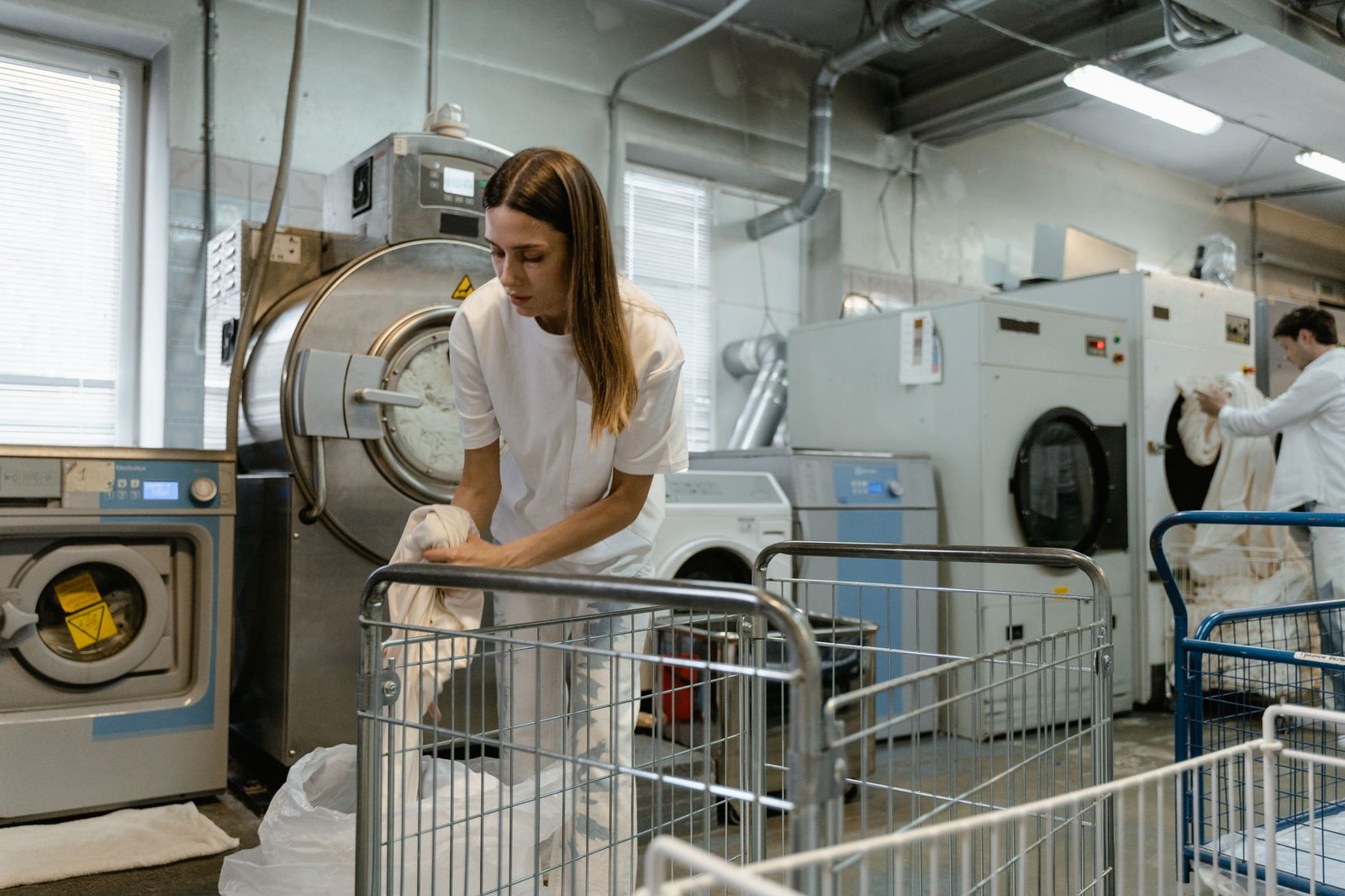
Laundry would be easy if nothing ever got dirty. Then the dog rolls in something, a coffee spills, and the gym towels start to smell like a swamp.
These laundry hacks fix the three problems that ruin most loads: stains, stubborn smells and pet hair. No fancy gadgets, just the right order and a few cheap tools.
The golden rules of stains
Most ruined clothes aren’t ruined by the stain. They’re ruined by what happened next.
- Act fast. Fresh stains come out far more easily.
- Blot, don’t rub. Rubbing pushes the stain deeper.
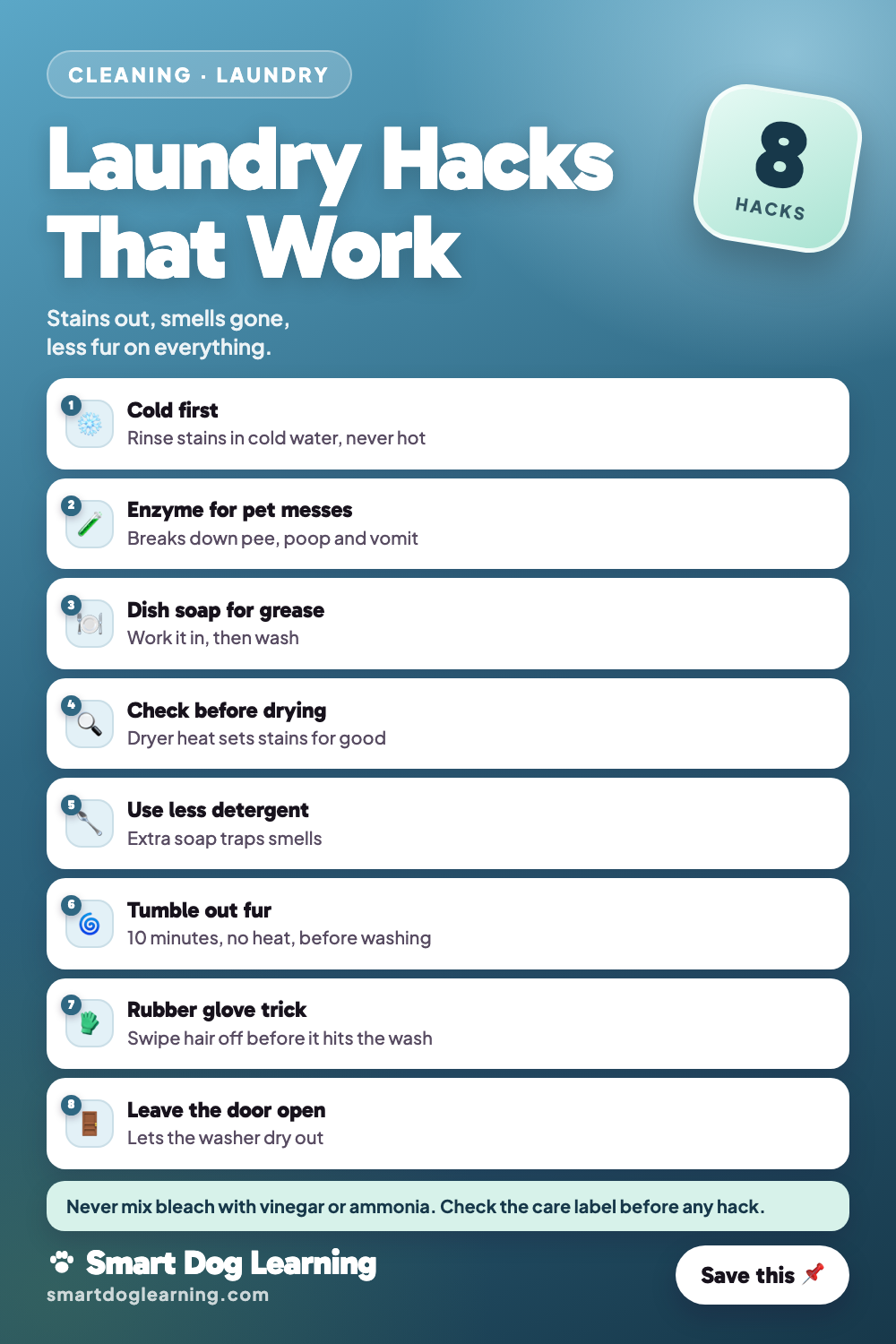
- Start with cold water. Hot water cooks protein stains like blood and egg into the fabric.
- Work from the back of the fabric, to push the stain out the way it came in.
- Check the care label before you try anything strong.
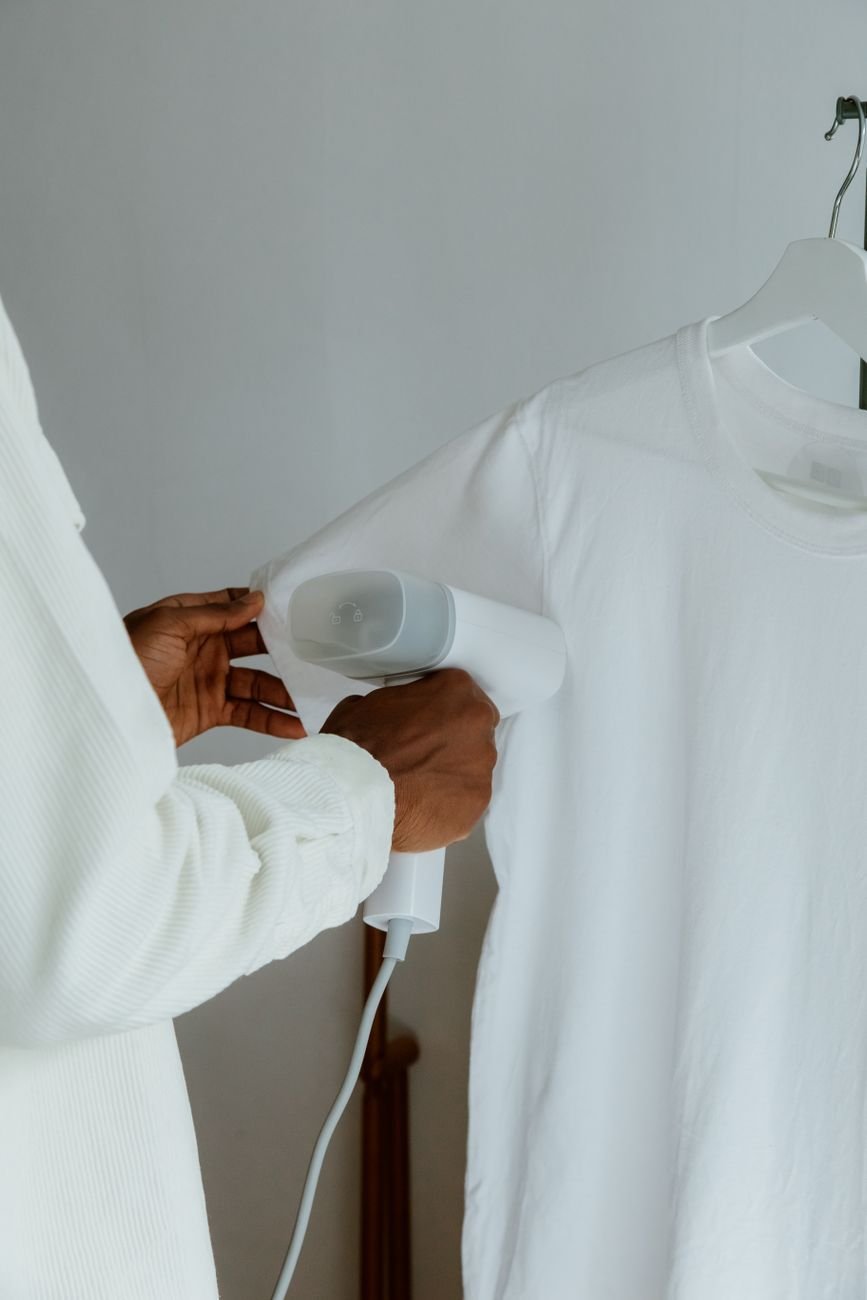
Stain-by-stain cheat sheet
Different stains need different fixes. Here are the everyday ones:
- Blood: rinse in cold water, then rub in a little liquid detergent.
- Grease and oil: work in a drop of dish soap, let it sit 10 minutes, then wash in the warmest water the label allows.
- Grass: pretreat with an enzyme detergent and let it soak.
- Coffee and tea: rinse in cold water from the back, then pretreat.
- Red wine: blot, flush with cold water, and treat with an oxygen-based stain remover on colorfast fabric.
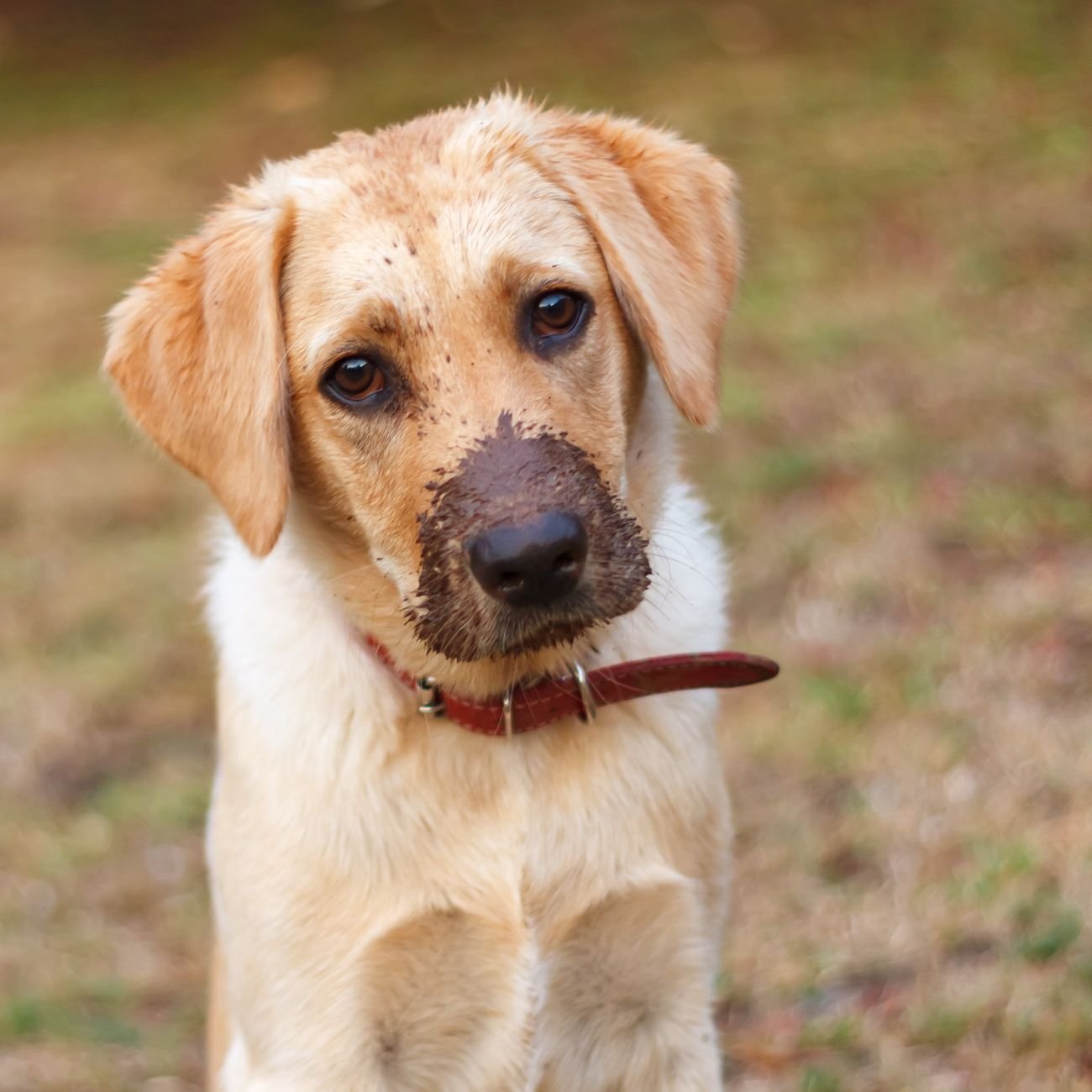
- Mud: let it dry, brush off as much as you can, then wash.
Before anything goes in the dryer, check that the stain is gone. Heat sets it for good.
- A never-mix chart: the cleaner combinations that make toxic fumes
- A surface guide: what not to use on stone, wood, cast iron and more
- 5 starter cleaners and a shopping list
Pet messes: pee, poop and vomit
Pet accidents are protein-based, which is why regular detergent sometimes leaves a smell behind.
- Scrape off solids and shake off as much as you can outside.
- Rinse from the back with cold water.
- Soak in cold water with an enzyme laundry cleaner made for pet messes.
- Wash on the warmest setting the fabric allows.
- Sniff before drying. If any smell remains, repeat the enzyme soak.
Getting the smell fully out matters. If a dog can still smell urine on a blanket, they may pee there again.
Why your towels smell musty
Towels that smell even after washing usually have buildup, not dirt.
- Use less detergent. Too much soap leaves a film that traps odor. Follow the line on the cap.
- Skip fabric softener on towels. It coats the fibers and makes them less absorbent.
- Wash towels in hot water if the label allows.
- Move wet laundry to the dryer right away. A forgotten load turns sour fast.
- Dry completely before folding. Damp towels in a closet will smell again.
Keep the washer from stinking
Sometimes the smell is coming from the machine, not the clothes.
- Leave the door or lid open between loads so the drum dries.
- Wipe the rubber door seal on front loaders once a week.
- Clean the detergent drawer every month or so.
- Run a cleaning cycle with a washer cleaner product, following your manual.
- Clean the drain filter if your machine has one. It’s often full of pet hair.
Pet hair: get it off before the wash
Here’s the honest truth. Water doesn’t remove pet hair well. It just moves it around and clogs the machine.
- Shake items outside first, hard.
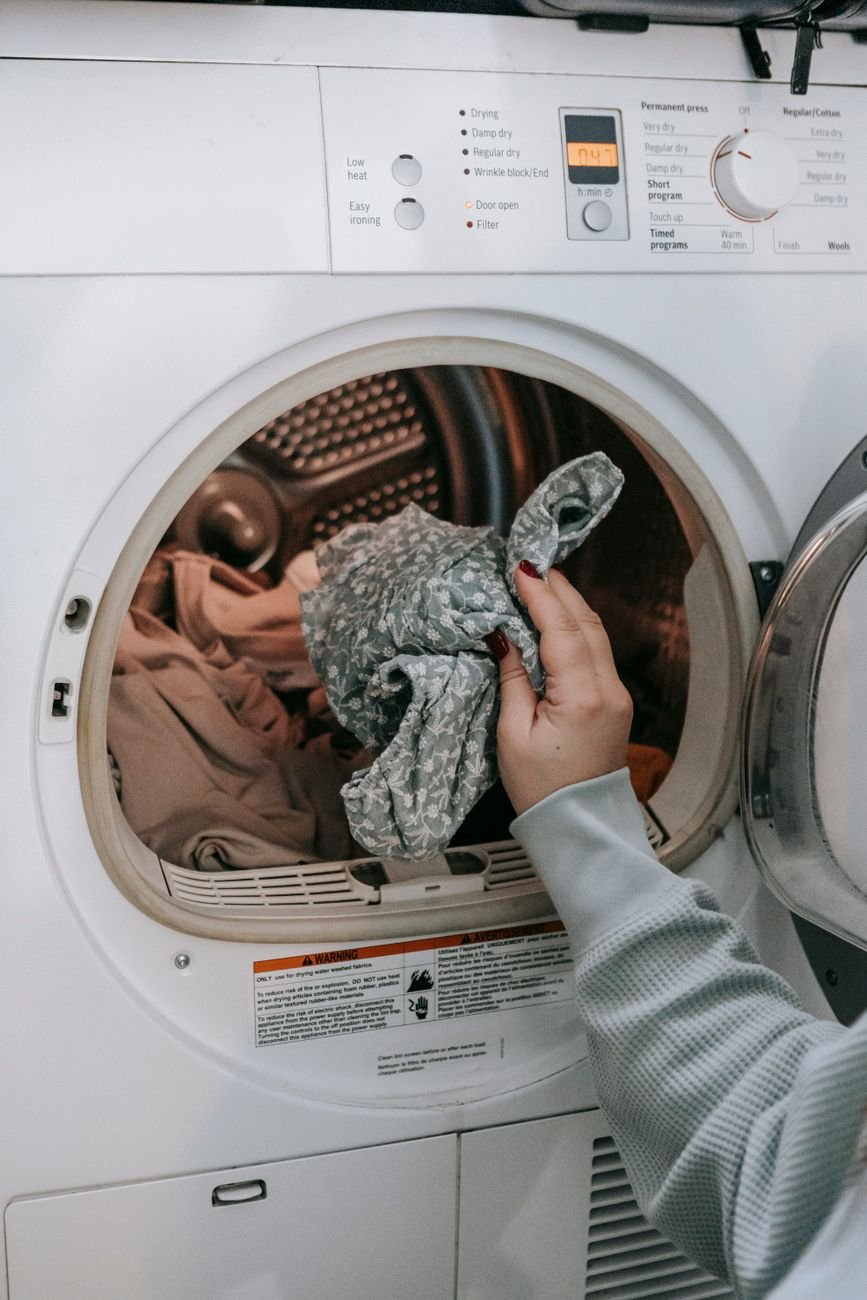
- Run a 10-minute tumble in the dryer on no heat before washing. The lint trap catches a surprising amount.
- Swipe with a damp rubber glove to pull hair into clumps.
- Use a lint roller on dark clothes before they go in.
Pet hair: during and after
A few small changes cut the fur on clean clothes.
- Wash pet bedding separately from your clothes.
- Add wool dryer balls to help lift hair into the lint trap.
- Clean the lint trap every load, and after the pre-tumble too.
- Wipe the empty drum with a damp cloth after a bedding load.
Brushing your dog a few times a week means less hair on everything. For the car, these car cleaning hacks for dog hair do the same job.
Washing dog beds and blankets
Dog bedding gets gross faster than you’d think. Wash covers and blankets every week or two.
- Vacuum or shake the bed first.
- Use hot water if the label allows and an unscented detergent.
- Add an extra rinse so no detergent stays in the fabric.
- Dry fully before it goes back on the floor.
Making a bed yourself? Pick one with a removable cover. Our DIY dog bed ideas are all washable.
Safety: what not to mix
Some popular “hacks” online are actually dangerous.
- Never mix chlorine bleach with vinegar, ammonia or other cleaners. It can release toxic gas.
- Vinegar is not a disinfectant, and it can wear down rubber seals over time. Your manual knows best.
- Keep detergent pods locked away. They’re a real danger to kids and pets who bite them.
- Don’t put essential oils on pet bedding. Many are irritating or toxic to cats and dogs.
A simple weekly laundry rhythm
Laundry feels endless when it piles up. A routine keeps it small.
- One load a day, start to finish, folded and away.
- Towel day once a week, on hot.
- Pet bedding day every week or two.
- Stain station: a small basket with stain remover by the hamper.
If your laundry space is a mess too, our laundry room organization ideas make the whole job faster.
Common questions
What gets pet urine smell out of clothes?
A cold rinse, then a soak with an enzyme cleaner made for pet messes, then a normal wash. Sniff before drying.
Why do my clean clothes still smell?
Usually too much detergent, a dirty washer or wet clothes left sitting. Fix all three and the smell goes.
How do I get dog hair out of the washing machine?
Wipe the drum with a damp cloth, clean the drain filter, and pre-tumble fur-covered items in the dryer before washing.
Does hot water remove stains better?
Not always. Hot water can set protein stains like blood. Start cold, then wash warm once the stain is out.
Are dryer sheets safe around pets?
Not as a chew. Keep the box out of reach and toss used sheets straight in the trash, since pets who chew or swallow them can get sick.


Leave a Reply