
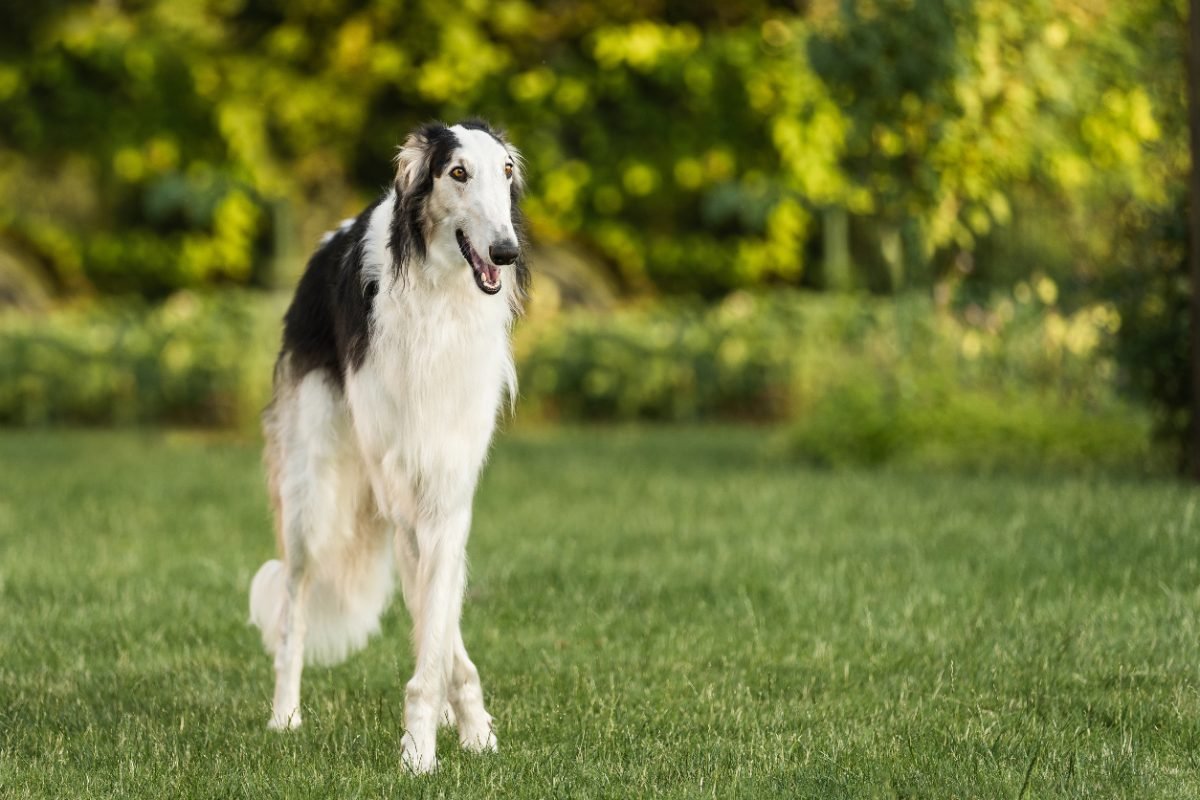
7 Borzoi Puppy Training Tips for a Well-Behaved Dog
Training a Borzoi puppy is nothing like training a Labrador puppy, and the sooner you accept that the happier you both will be.
This is a sighthound bred to course wolves across the Russian steppe, making split second decisions a mile from the nearest human. He is not wired to check in with you. He is wired to spot something, commit, and go.
So the goal is not obedience in the retriever sense. It is a calm, well mannered dog who can be safely managed. Here are seven tips that actually work.
1. Accept That Recall Will Never Be Bulletproof
Start here, because everything else follows from it.
A Borzoi in prey drive is functionally deaf. That is not a training failure, it is 900 years of selective breeding doing its job. Sighthounds hunt by sight and speed, independent of the handler, and a Borzoi can hit 35 to 40 miles per hour in a handful of strides.
Train recall anyway, properly and enthusiastically. Just never bet the dog’s life on it.
- Practise recall in a securely fenced area only
- Pay enormously, roast chicken not kibble
- Never call him if you cannot enforce it, that teaches the cue is optional
- Use a long line for controlled freedom in open spaces
- On lead everywhere unfenced, permanently, no exceptions
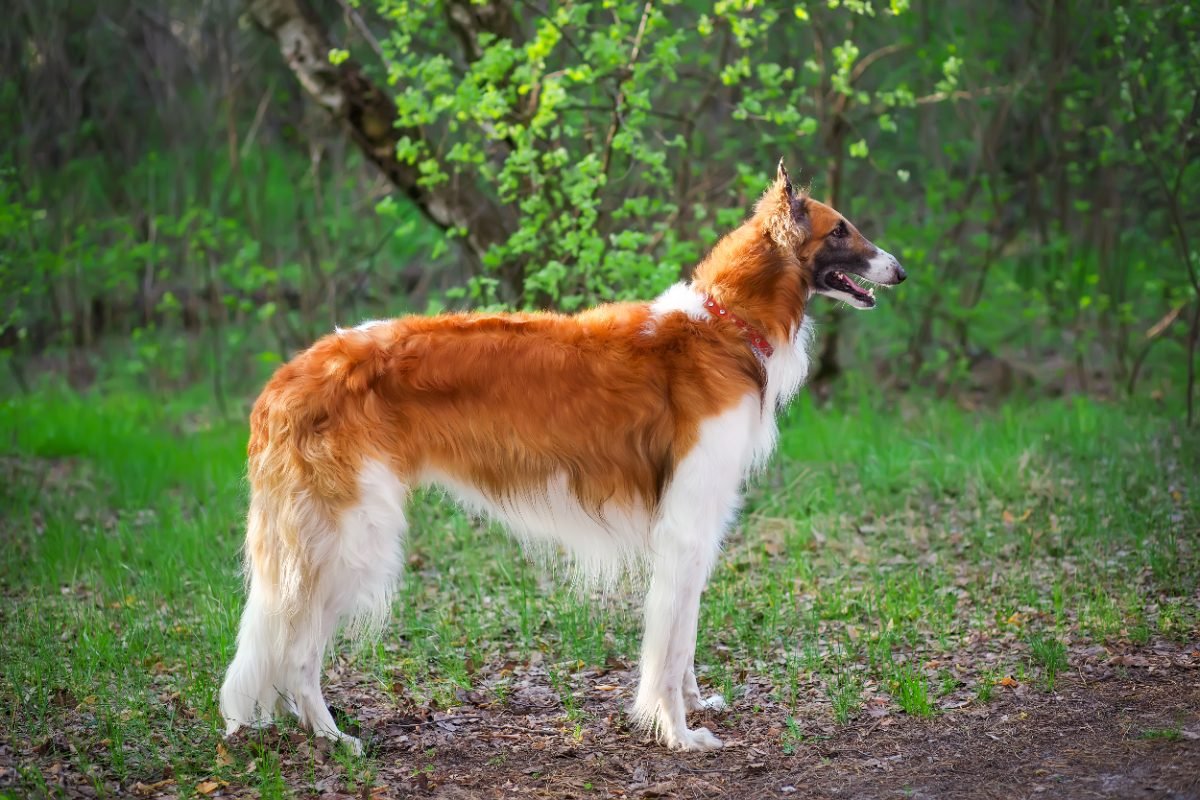
2. Socialise Early and Very Gently
Borzoi are naturally reserved with strangers, and puppies that miss early exposure grow into genuinely shy adults. Shyness in a 100 pound dog is a real problem.
But the approach has to suit the breed. A Borzoi puppy is sensitive, and rough or overwhelming socialisation backfires badly.
- Aim for 100+ calm new people before 16 weeks
- Let him approach, never let people crowd or loom over him
- No forced greetings, no strangers grabbing his head
- Calm adult dogs only, skip busy chaotic dog parks
- Reward relaxed observation from a distance, not excitement
Quality matters more than volume here. Ten good introductions beat fifty stressful ones.
3. Drill Handling Before You Need It
This one saves you years of grief and it takes five minutes a day.
Borzoi are tall, deep chested and often need veterinary handling under sedation because they were never taught to accept it. Sighthounds also process anaesthesia differently, so vet visits already carry more complexity than average.
- Touch paws, ears, mouth, tail and belly daily from week one
- Practise standing still on a table or raised surface
- Get him used to nail clippers before you actually clip
- Teach him to accept a muzzle calmly, so it is never associated with crisis
- Reward stillness generously, that is the behaviour you want
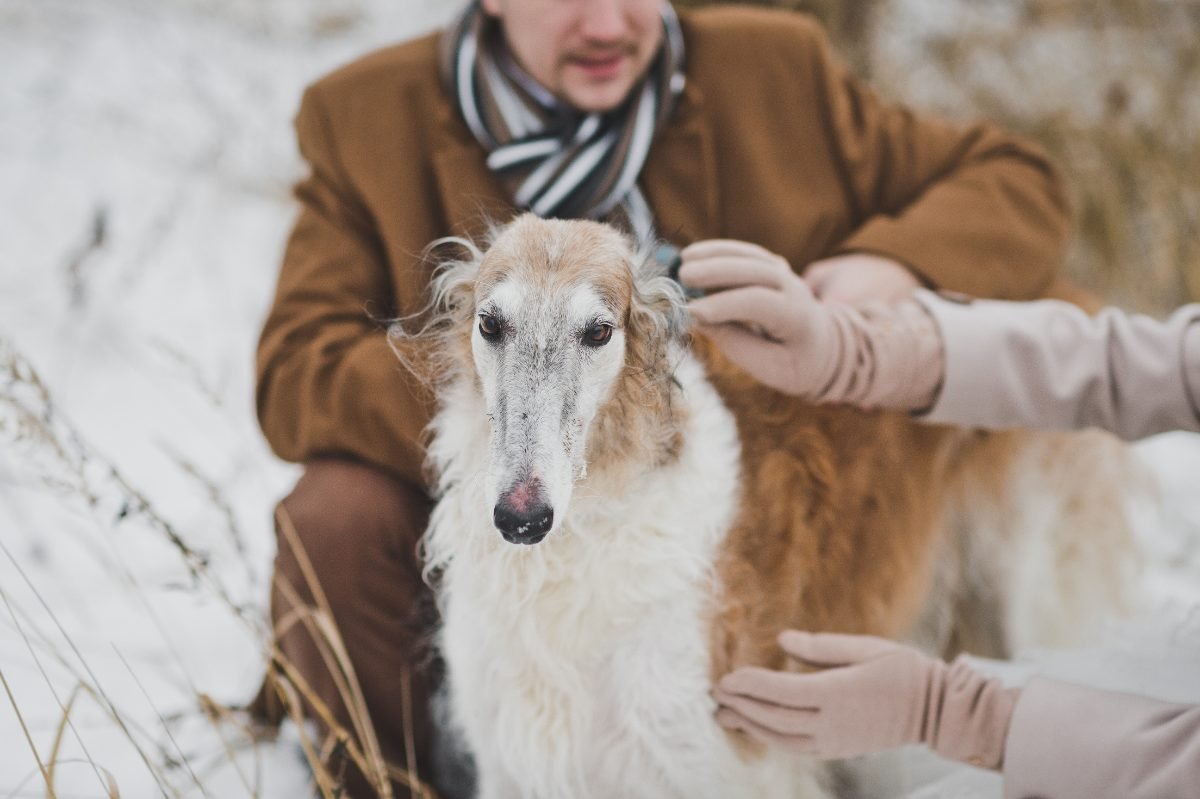
4. Protect Those Joints While He Grows
Borzoi grow enormous, fast, and their growth plates stay open until roughly 18 months. What you do with a Borzoi puppy physically has permanent consequences.
Five minutes of formal exercise per month of age, twice daily. A five month old gets 25 minute walks, not a hike.
- Free play on grass is fine, he self regulates
- No forced running, jogging or long structured hikes
- Limit stairs, lift him in and out of cars
- No jumping, no hard turns, no agility work until fully grown
- Large breed puppy food to slow the growth curve
The urge to let a young sighthound sprint is strong. Resist it on hard ground and in tight turns until the skeleton finishes.
5. Use a Martingale and Never a Flat Collar
Practical, and genuinely important.
A Borzoi’s neck is often wider than his narrow head, which means he can back straight out of an ordinary collar in about a second. Every sighthound rescue has stories that start exactly this way.
- Martingale collar, correctly fitted, from day one
- Or a well fitted Y front harness for walks
- Never a choke chain or prong, this breed shuts down under pressure
- Attach the lead to two points for extra security in busy areas
- Check fit monthly, puppies grow fast
6. Train in Short, Quiet, Positive Sessions
Borzoi are intelligent but they bore quickly and they do not care about pleasing you for its own sake.
Ask a Borzoi to sit fifteen times and he will simply stop participating. That is not defiance, it is a considered opinion. :/
- Five minutes, two or three times a day, then stop
- High value food, delivered fast
- Ask once, wait, do not repeat the cue
- Never harsh corrections, sensitive sighthounds shut down and stay shut down
- End every session on a success, however small
IMO owners who enjoy this breed are the ones who stopped needing the dog to prove obedience and started aiming for good manners instead.
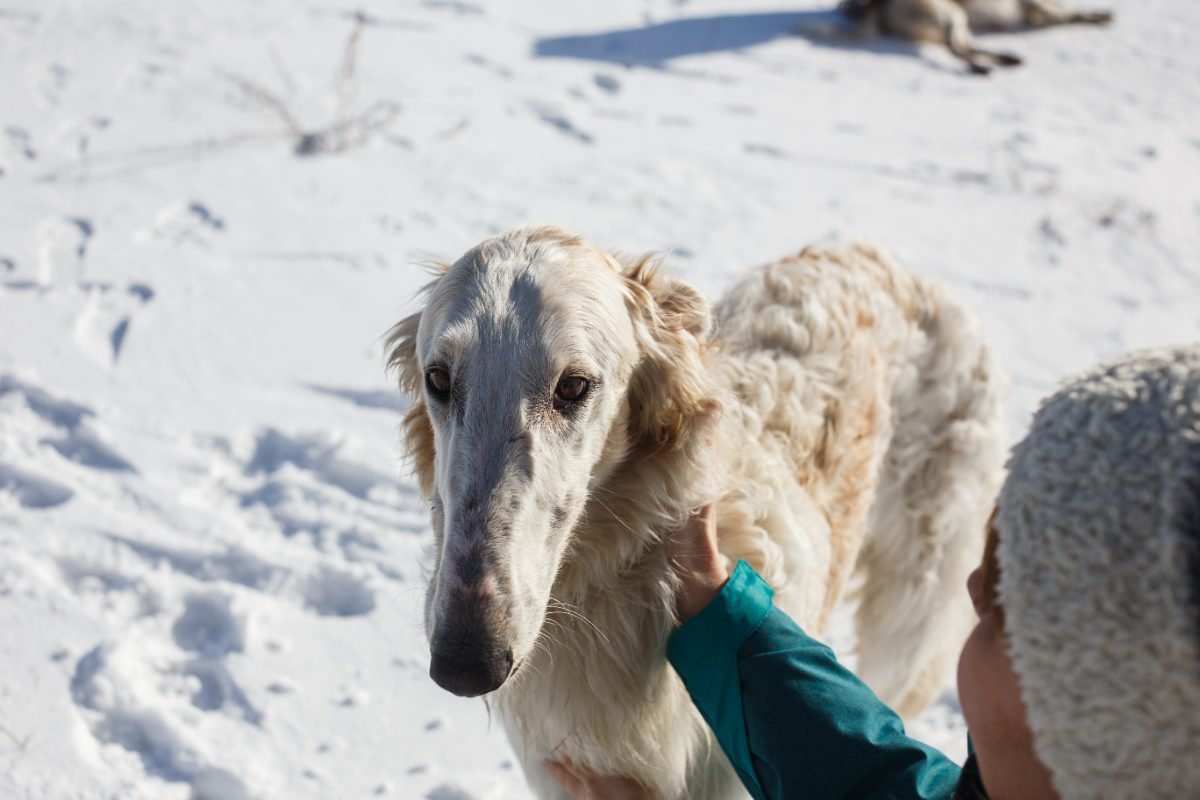
7. Teach a Settle, Because Adults Do Almost Nothing
Here is the good news after all those warnings. A grown Borzoi is one of the calmest housemates you can have.
They sprint hard for ten minutes and then lie down for the rest of the day. Puppies do not arrive knowing this, so teach the off switch deliberately.
- Reward calm lying down, do not just manage the excitable moments
- Teach a solid “place” or settle on a bed
- Give him a soft, well padded spot, they have almost no body fat
- Crate train early, it helps with rest and with vet stays
- Do not reward pacing or attention seeking with attention
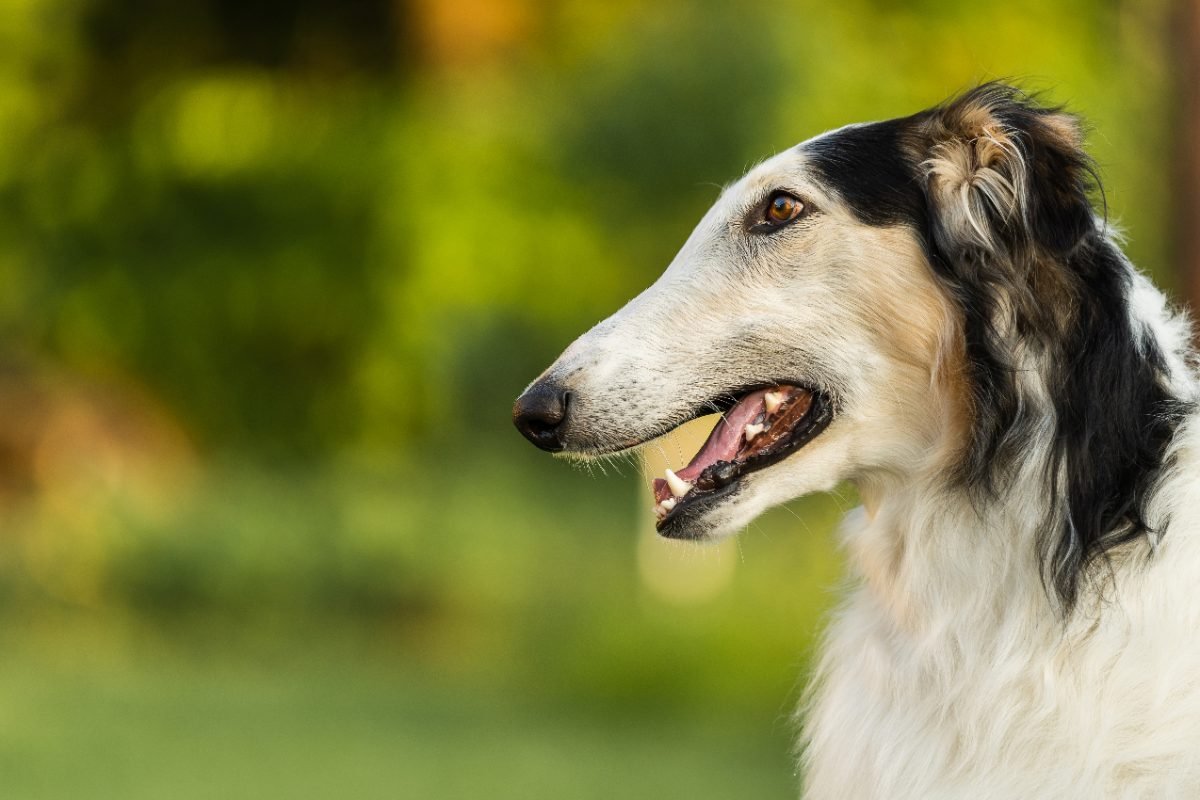
What Good Looks Like at Two Years
A well raised Borzoi is quiet, elegant, affectionate with his own people and politely reserved with everyone else. He walks nicely on lead, tolerates handling, sleeps most of the day, and reminds you he is a predator only when something small moves fast.
If you want the full picture on the breed, read our <a href=”https://smartdoglearning.com/borzoi-care-guide/”>Borzoi care guide</a>, and for the first year specifically see our <a href=”https://smartdoglearning.com/borzoi-puppy-guide/”>Borzoi puppy guide</a>.
Final Thoughts
Train the Borzoi in front of you, not the dog you read about in a generic puppy book.
Socialise gently. Handle him daily. Protect the joints. Use a martingale. Keep sessions short and kind. Teach a settle. And treat recall as a nice bonus rather than a safety system.
Do that and you get ten to twelve years of one of the most graceful, gentle, quietly funny dogs in existence.
He still will not come back if a rabbit appears. Plan accordingly. 🙂
I’ve spent 10+ years in dog training, digging into what makes dogs (and their humans) tick. At Smart Dog Learning, I share my no-nonsense, fun approach to training so you can enjoy life with a well-behaved, happy pup—no boring lectures, just practical results 😉