

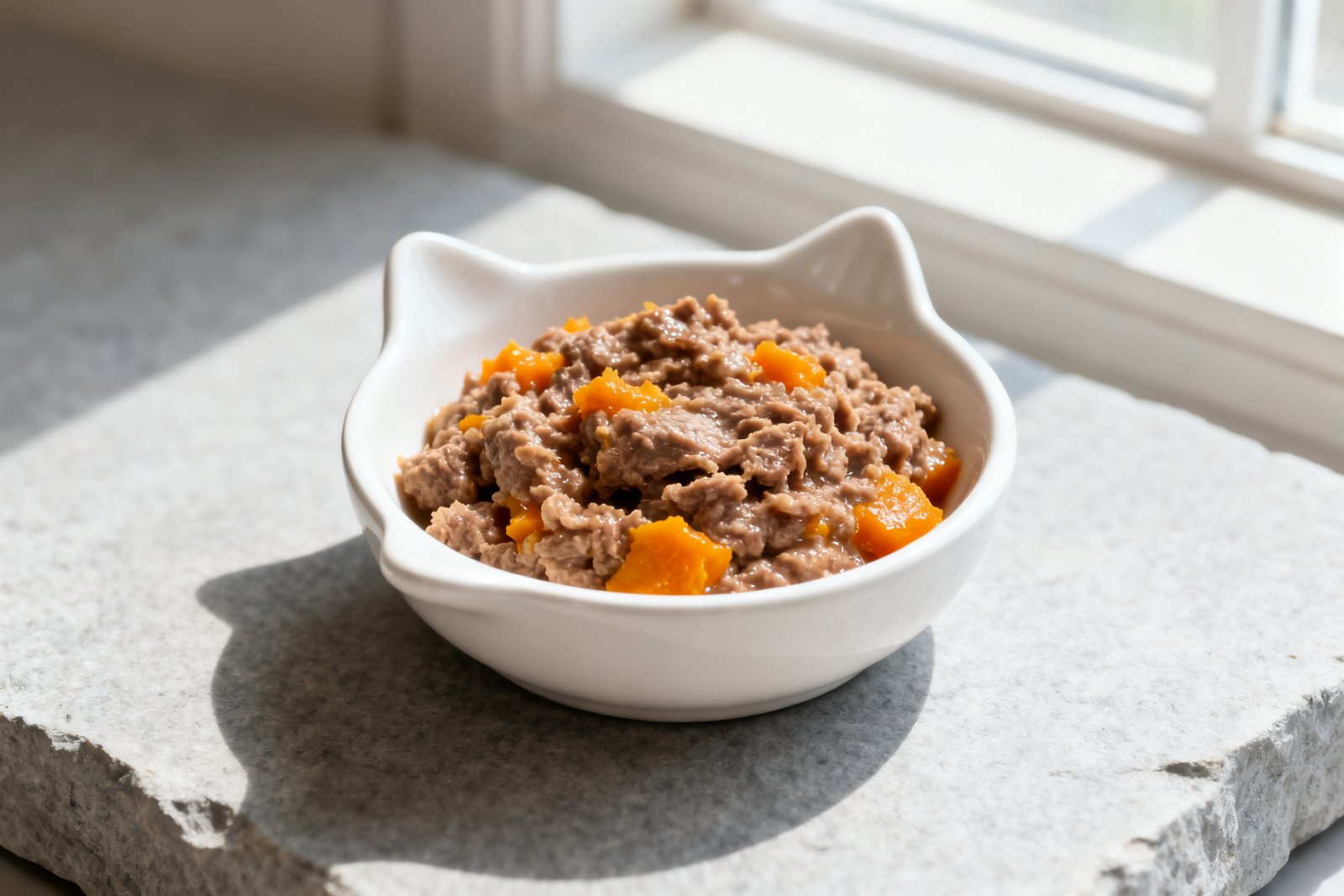
If your cat turns up their nose at chunky food or you want a simple, gentle meal you can trust, this Beef Mash For Cats hits the sweet spot. It’s soft, moist, and easy for picky or sensitive eaters, with a short ingredient list and the right add-ins for feline needs.
I make this when one of my cats needs a bland week or when I want to stock the freezer with portions I can thaw fast. You’ll cook the beef low and slow, fold in pumpkin for fiber, and add crucial nutrients like taurine and calcium so it’s not just tasty, it’s balanced for cats.
Why This Beef Mash Works For Cats
This recipe keeps things simple and specific to what cats need. Cats are obligate carnivores, so the base is beef with a tiny bit of beef liver for natural vitamins. We cook the meat gently to keep it moist, then mash it so it’s easy to lap up.
The other key is balance. Store-bought cat food is fortified for a reason. At home, you’ll add taurine and a calcium source to help align the mash with feline nutrition. A spoon of pumpkin adds fiber for regular digestion without loading up carbs. The result is soft, savory, and easy to portion and freeze.
Ingredients You’ll Need
Short list, big impact. Choose lean ground beef, add a little liver, then finish with taurine, calcium, and salmon oil for the nutrients cats actually need.
- 2 lb ground beef, 90% lean
- 2 oz beef liver, very finely minced
- 1/2 cup plain pumpkin puree, not pie filling
- 1 1/4 cups water or unsalted beef bone broth, plus more as needed
- 2 tsp eggshell calcium powder, about 1 tsp per pound of meat
- 1/2 tsp taurine powder supplement, check label; many are 1/4 tsp = 1000 mg
- 2 tsp salmon oil, or pet-safe fish oil
- 2 tbsp very soft cooked carrots or peas, finely mashed, optional
How to Make Beef Mash For Cats
Cook the beef gently, stir in the good stuff, cool quickly, then portion and serve.
- Warm a large nonstick skillet over medium heat. Add the ground beef and minced liver, breaking the meat into small crumbles with a spatula.
- Cook gently for 6 to 8 minutes, stirring often, until no pink remains and the juices run clear. Avoid browning hard or crisping the edges; keep the heat moderate for a tender mash.
- Pour in 1 cup of the water or unsalted broth and reduce heat to low. Simmer 3 to 5 minutes so the meat absorbs moisture and softens.
- Turn off the heat. Stir in the pumpkin puree until it disappears into the meat. If using mashed carrots or peas, fold them in now.
- Let the pan stand uncovered for 5 minutes to cool slightly, then transfer the mixture to a large bowl. Stir in the remaining 1/4 cup warm water if it looks dry.
- When the mash is warm, not hot (you should be able to touch it comfortably), sprinkle in the eggshell calcium and taurine, stirring thoroughly so the powders are evenly dispersed and no pockets remain.
- Add the salmon oil and stir again until glossy and evenly coated. Taste is for humans, not cats, so skip any seasoning; do not add salt.
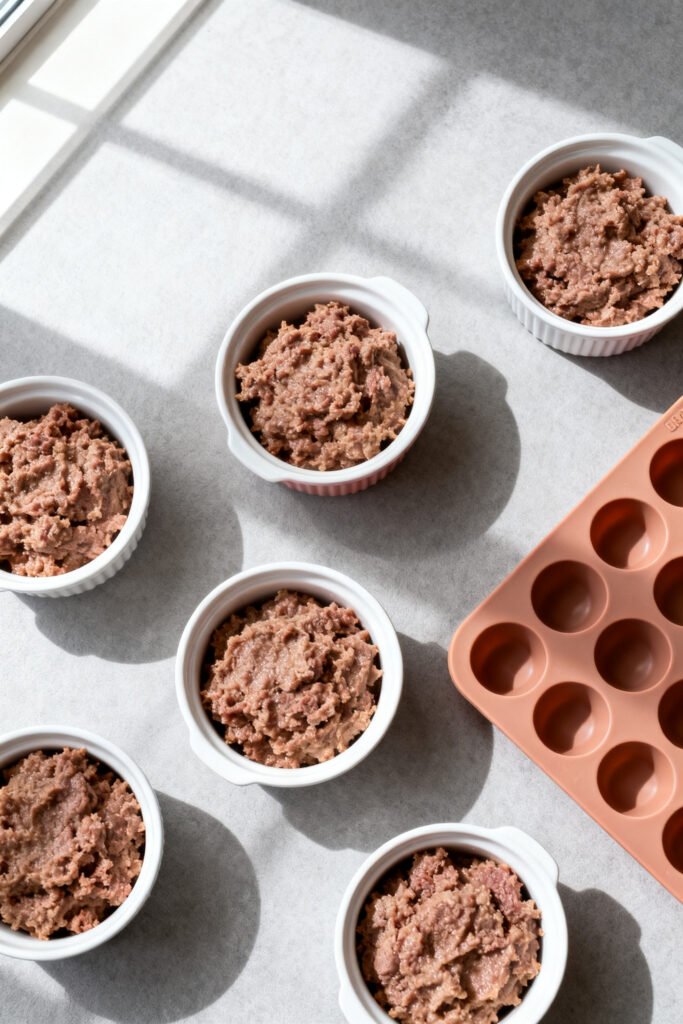
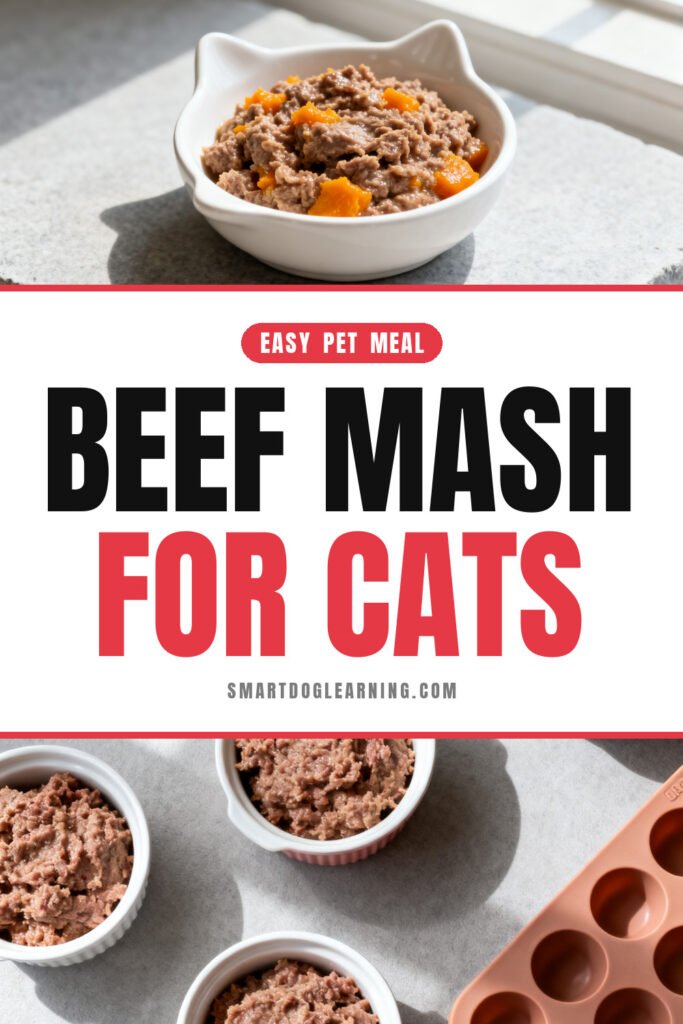
- Cool to room temperature. Portion into clean 1/4-cup scoops for immediate use, and pack the rest into freezer-safe containers or silicone trays.
- Serve 1 portion per meal for most adult cats, adjusting based on your vet’s guidance, your cat’s size, and activity. Add a spoon of warm water before serving if your cat loves extra gravy.
- Refrigerate leftovers up to 3 days, or freeze up to 2 months. Thaw in the fridge before serving and stir well.
Storage, Make-Ahead, and Reheating
Let the mash cool to room temperature, then cover and refrigerate for up to 3 days. For longer storage, portion into 1/4-cup scoops or silicone trays and freeze for up to 2 months. Label with the date so you remember what you made.
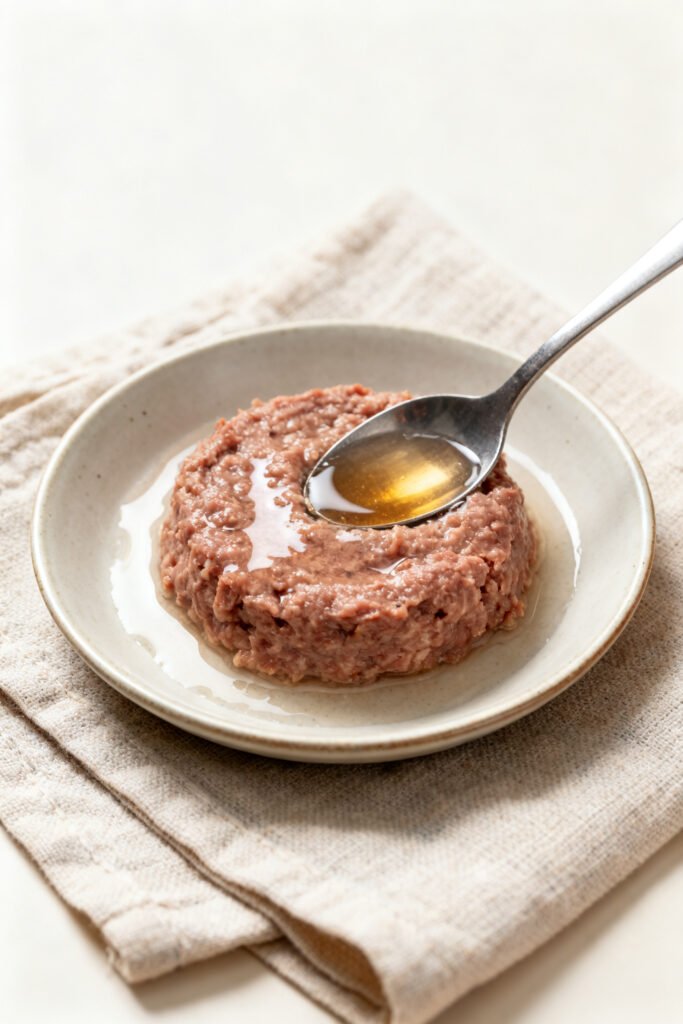
To serve from frozen, thaw overnight in the fridge or use the defrost setting on your microwave in short bursts just until chilled or slightly cool. Never serve piping hot. If the mash seems a little dry after thawing, stir in a teaspoon or two of warm water or unsalted bone broth.
Common Mistakes to Avoid
- Skipping taurine or calcium: These are not optional for cats. Add taurine and a safe calcium source so the meal is closer to balanced.
- Using onions or garlic: Alliums are toxic to cats. Don’t add them in any form, including powders or broths with onion/garlic.
- Cooking beef too hot and dry: High heat makes the meat tough and crumbly. Keep heat medium and add water or broth for a moist mash.
- Serving it too hot: Cats prefer food just slightly cool or room temp. Let it cool to protect delicate mouths and keep flavors appealing.
- Too much liver: A little is great; a lot can cause vitamin A issues. Stick to the small measured amount here.
Variations and Substitutions
- Beef swaps: Use ground turkey or chicken if beef doesn’t sit well with your cat. Keep the same gentle cooking and add taurine and calcium.
- Broth options: Water works fine. If using broth, make sure it’s unsalted and free from onion, garlic, and spices.
- More moisture: Stir in extra warm water right before serving if your cat prefers a looser texture.
- Fish oil alternatives: Krill oil or sardine oil can replace salmon oil. Use a pet-safe oil and follow label amounts.
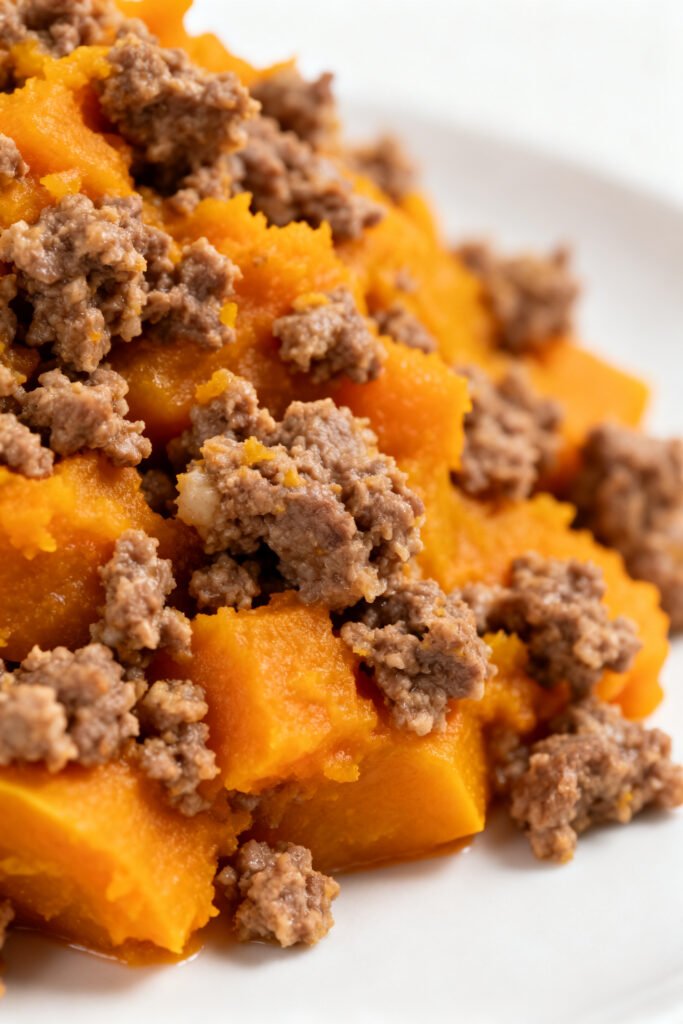
- Pumpkin swap: Plain mashed butternut squash can work in a pinch. Keep the amount small so carbs stay low.
What to Serve With It
Most cats will happily eat this mash as-is. If your vet approved a mixed feeding plan, you can spoon the mash over your cat’s usual complete wet food to boost protein and moisture. For extra hydration, stir in warm water just before serving to create a soft, meaty porridge.
If your cat is transitioning from dry food, start by blending a teaspoon or two of mash into their regular meal. Increase a little each day until you reach the portion your vet recommends.
Your Questions, Answered
Is this Beef Mash For Cats a complete diet on its own?
It’s balanced in a simple way with taurine, calcium, and healthy fats, but every cat is different. For full-time feeding, talk with your veterinarian or a board-certified veterinary nutritionist to confirm amounts for your cat’s weight and age. Many people use this mash as part of a mixed plan with a complete commercial food.
Can I skip the taurine if I use beef liver?
No. Taurine is essential for cats and can be lost during cooking. A little liver adds nutrients, but it does not consistently provide enough taurine. Always add a taurine supplement according to the label and your vet’s guidance.
My cat is sensitive to fish oil. What can I use instead?
Try krill oil or sardine oil if fish oil upsets your cat, or ask your vet about algae-based omega-3 drops. You can also leave oil out and rely on the natural fats in beef, but adding a pet-safe omega-3 is often helpful for skin and coat.
Can I use 80% lean beef instead of 90%?
You can, but drain off excess fat so the mash isn’t greasy. Too much fat can cause loose stools for some cats. Add a splash more warm water to keep it moist after draining.
How do I transition my cat to homemade food without stomach upset?
Go slowly. Start with 1 to 2 teaspoons mixed into their regular food for a day or two, then increase by a teaspoon or so each day as long as stools stay normal. If you notice vomiting, diarrhea, or lethargy, pause and call your vet.
A Warm Note Before You Cook
Homemade cat food can be a lovely way to care for your tiny carnivore. Keep the add-ins consistent, watch your cat’s energy and stool, and check in with your vet if you’re feeding this often. A little planning goes a long way toward a happy, purring taste-tester.
Beef Mash For Cats
Ingredients
- 2 lb ground beef, 90% lean
- 2 oz beef liver very finely minced
- 1/2 cup plain pumpkin puree not pie filling
- 1 1/4 cups water or unsalted beef bone broth plus more as needed
- 2 tsp eggshell calcium powder about 1 tsp per pound of meat
- 1/2 tsp taurine powder supplement check label; many are 1/4 tsp = 1000 mg
- 2 tsp salmon oil or pet-safe fish oil
- 2 tbsp very soft cooked carrots or peas finely mashed, optional
Instructions
- Warm a large nonstick skillet over medium heat. Add the ground beef and minced liver, breaking the meat into small crumbles with a spatula.
- Cook gently for 6 to 8 minutes, stirring often, until no pink remains and the juices run clear. Avoid browning hard or crisping the edges; keep the heat moderate for a tender mash.
- Pour in 1 cup of the water or unsalted broth and reduce heat to low. Simmer 3 to 5 minutes so the meat absorbs moisture and softens.
- Turn off the heat. Stir in the pumpkin puree until it disappears into the meat. If using mashed carrots or peas, fold them in now.
- Let the pan stand uncovered for 5 minutes to cool slightly, then transfer the mixture to a large bowl. Stir in the remaining 1/4 cup warm water if it looks dry.
- When the mash is warm, not hot (you should be able to touch it comfortably), sprinkle in the eggshell calcium and taurine, stirring thoroughly so the powders are evenly dispersed and no pockets remain.
- Add the salmon oil and stir again until glossy and evenly coated. Taste is for humans, not cats, so skip any seasoning; do not add salt.
- Cool to room temperature. Portion into clean 1/4-cup scoops for immediate use, and pack the rest into freezer-safe containers or silicone trays.
- Serve 1 portion per meal for most adult cats, adjusting based on your vet’s guidance, your cat’s size, and activity. Add a spoon of warm water before serving if your cat loves extra gravy.
- Refrigerate leftovers up to 3 days, or freeze up to 2 months. Thaw in the fridge before serving and stir well.
Notes



Leave a Reply