DIY Window Cleaner That Leaves No Streaks Behind
You don’t need a fancy spray to get glass that looks invisible. You just need a smart mix, a few cheap tools, and a couple of pro habits. I’ll show you exactly what to use, how much to use, and why your current method probably leaves streaks. Ready to banish hazy panes for good?
Why Store-Bought Sprays Fail (And Your Paper Towels Don’t Help)
Most commercial glass cleaners load up on dyes, scents, and additives you don’t need. That stuff leaves residue, and residue equals streaks. Paper towels? They shed lint, drink cleaner unevenly, and push dirt around like a lazy broom. You can do way better with a few humble swaps.
The No-Streak Formula That Actually Works
Let’s build a cleaner that cuts grease, dries fast, and leaves nothing behind. No chemistry degree required.
The Simple Recipe
- 1 cup distilled water (prevents mineral spots)
- 1 cup isopropyl alcohol (70% or 91%) (speeds drying and kills grease)
- 2 tablespoons white vinegar (melts mineral haze)
- Optional: 1 drop mild dish soap for heavy grime days
Mix in a clean spray bottle. Label it like a responsible human. Shake lightly before each use.
Why This Combo Wins
- Alcohol evaporates fast, so streaks don’t have time to form.
- Vinegar breaks down hard-water spots and fingerprints.
- Distilled water avoids the white crust your tap water leaves behind.
- Dish soap (one drop) cuts oily buildup without leaving suds—don’t overdo it.
Tools That Level Up Your Shine
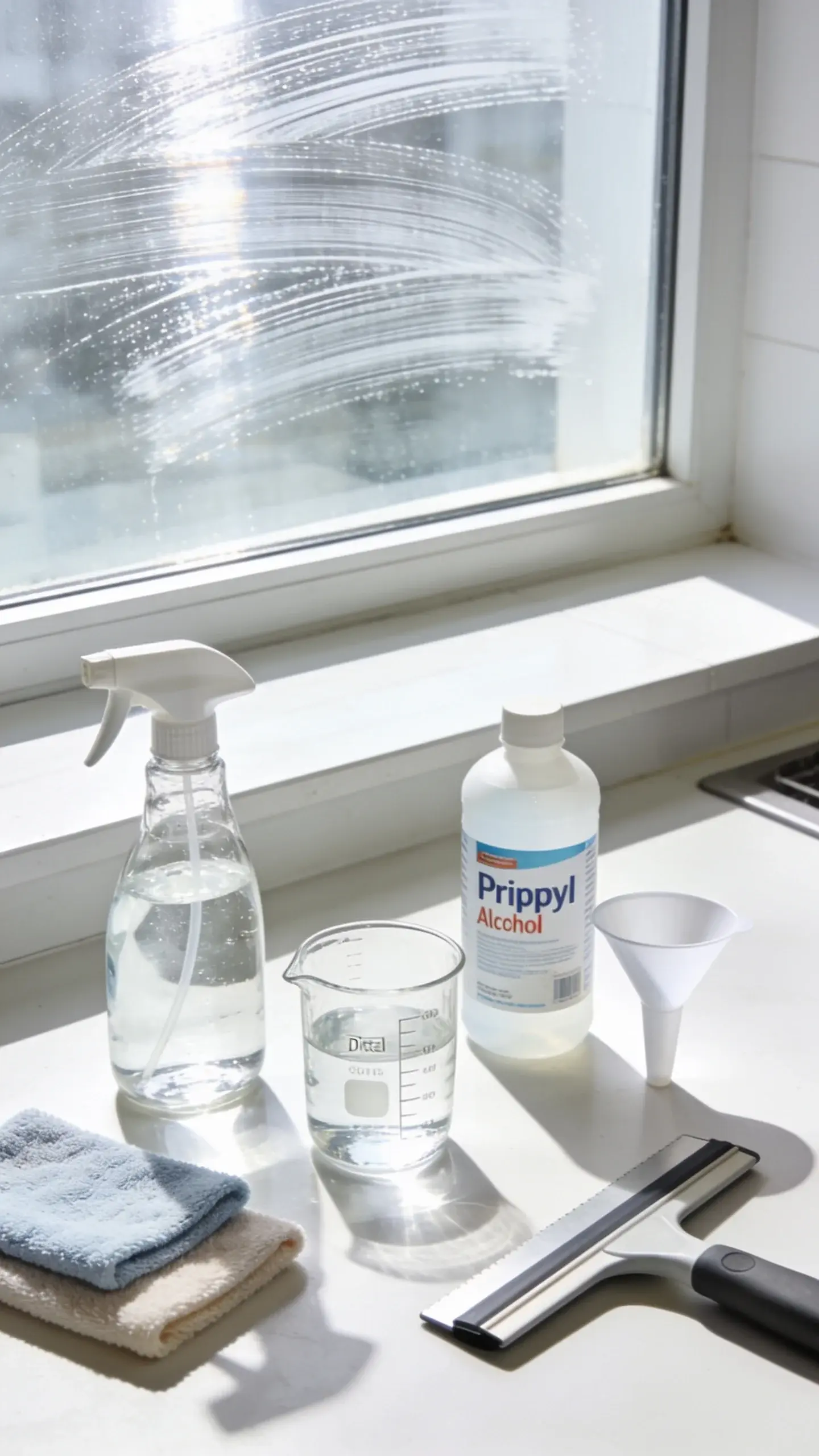
Gear matters. You wouldn’t mop a floor with a napkin, right?
- Microfiber cloths (tight-weave, glass-specific if possible)
- Squeegee with a sharp rubber blade (game-changer on large windows and showers)
- Detail cloth for edges and corners (think: a clean, dry microfiber)
- Soft brush or vacuum to clear dust and cobwebs before you spray
- Bucket if you tackle big windows; otherwise, your spray bottle works fine
Microfiber vs. Newspaper vs. Paper Towels
– Microfiber: Best absorbency, low lint, reusable. Winner, hands down.
– Newspaper: Old-school, works in a pinch, can smudge ink.
– Paper Towels: Linty and streak-prone—pass, IMO.
The Step-By-Step Method (Zero Streaks, Pinky Promise)
Ready for the flow? Follow this order every time.
- Dust first. Dry brush or vacuum screens, sills, and frames. Spraying dust creates mud—gross.
- Pre-treat gunk. Sticky spots or bird “art”? Hit them with a dab of cleaner and let it sit 30 seconds.
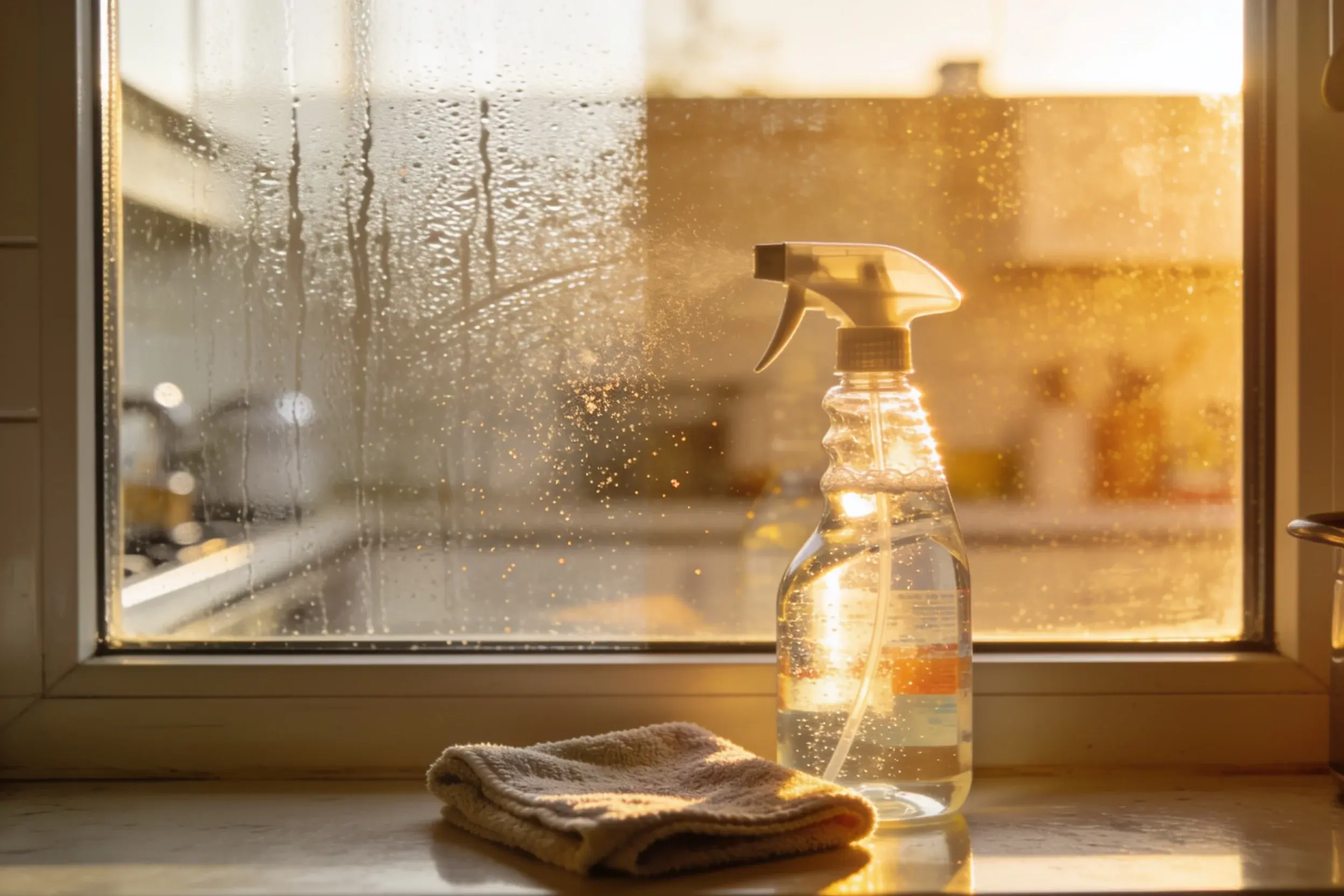
- Spray lightly. Mist the glass—don’t drench it. Too much liquid leaves drip marks.
- Agitate with microfiber. Wipe in gentle circles to lift grime.
- Squeegee time. Pull from top to bottom with overlapping strokes. Wipe the blade after each pass.
- Detail the edges. Use a dry microfiber to polish corners and the bottom edge where drip lines hide.
- Final buff. One quick, dry wipe in horizontal strokes inside, vertical outside. If you see a streak, you’ll know which side it’s on. FYI, this trick saves sanity.
Common Streak-Causers (And Easy Fixes)
You’re not messy—you’re human. Here’s what usually messes up the shine.
- Too much cleaner: Use a light mist. Flooding equals streaks.
- Dirty cloths: Wash microfiber without fabric softener; it kills absorbency.
- Sun-blasted windows: Clean on a cloudy day or early morning. Heat flash-dries cleaner and locks in streaks.
- Hard water: Always use distilled in your mix to dodge mineral marks.
- Old squeegee blade: Replace or flip it when it starts chattering or skipping.
Microfiber Care 101
– Wash in warm water with mild detergent.
– Skip bleach and fabric softener.
– Low heat dry or air dry.
– Keep them for glass only—no greasy kitchen crossovers.
Special Situations: Mirrors, Tinted Glass, And Shower Doors
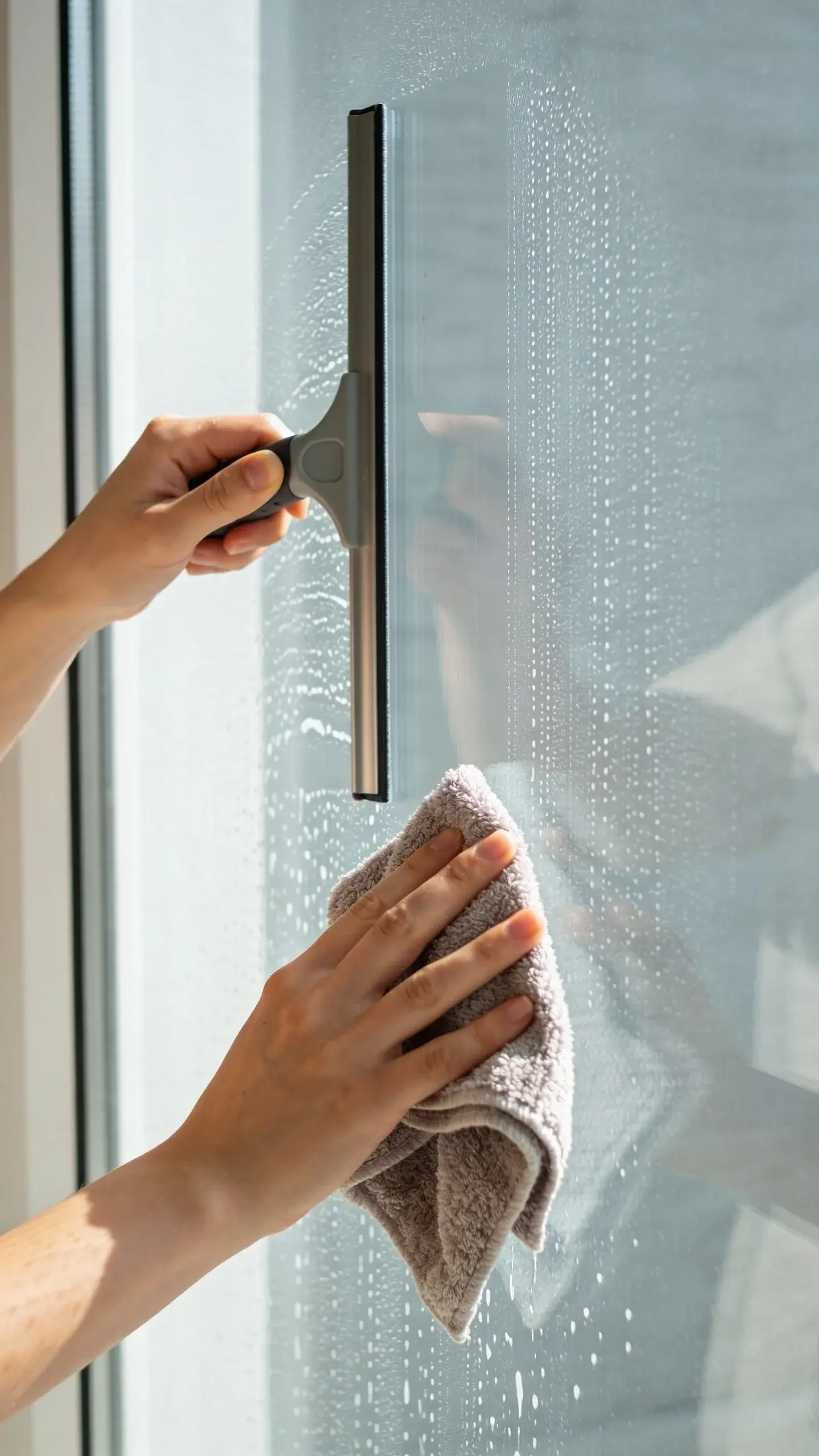
Not all glass wants the same TLC.
Mirrors
– Spray the cloth, not the mirror. Liquids creep behind the edges and cause black spots.
– Buff quickly; mirrors show every smudge.
Car Windows
– Roll windows down slightly to clean the top grime strip.
– Avoid ammonia on aftermarket tint—use the alcohol-vinegar mix only.
– Clean the inside in horizontal strokes, outside in vertical to identify streak culprits.
Shower Doors
– For heavy scale, paste 2 parts baking soda + 1 part vinegar, scrub gently, then rinse and finish with the no-streak spray.
– Keep a mini squeegee in the shower and do a 10-second swipe after each use. Future you will cheer.
Upgrades And Variations
Want to tweak the recipe or routine? You’ve got options.
- Fragrance: Add 3–4 drops of lemon or lavender essential oil. Smells nice, doesn’t affect shine.
- Grease-heavy kitchens: Use the dish soap drop, then follow with a second quick spray of the base mix to remove any soap film.
- Ultra-eco route: 1:1 distilled water and vinegar works, but expect slower drying. Buff well.
- Anti-fog boost (bathroom mirrors): Rub a tiny smear of glycerin, then buff until invisible. Not forever, but helpful.
FAQ
Can I use regular tap water in the mix?
You can, but expect spots if you have hard water. Distilled water removes that variable and keeps the finish crystal clear. It’s cheap and worth it, IMO.
Is vinegar safe on all glass surfaces?
Yes, on glass. Avoid using vinegar on natural stone sills or frames—acid can etch stone. If you might hit stone, spray the cloth, not the surface.
What if my windows still streak after all this?
Check your cloths first. If they feel slick, they’re coated with softener. Wash them properly, swap to a fresh microfiber, and use less spray. Also, avoid cleaning in direct sun.
Can I store the cleaner long-term?
Absolutely. The alcohol preserves it. Keep it sealed and out of heat. Give it a quick shake before use to remix any separated components.
Is ammonia better than vinegar?
Ammonia cuts grease well, but it smells harsh and can damage tint or some coatings. The alcohol-vinegar blend hits the sweet spot: fast-drying, low-residue, low-odor.
What’s the best cloth texture for glass?
Tight-weave microfiber labeled for glass or mirrors. The smoother texture grabs oils without leaving lint. Keep a separate, plush microfiber just for final buffs if you like a showroom finish.
Conclusion: Your Windows, But Make Them Invisible
You don’t need blue liquid or twelve steps—just the right mix, the right tools, and a quick routine. Use distilled water, alcohol, and a splash of vinegar, then squeegee and buff like a pro. Do it out of direct sun, keep your microfibers clean, and you’ll get that satisfying, no-streak gleam every time. Now go blind your neighbors with your spotless shine—kidding. Kind of.

I’ve spent 10+ years in dog training, digging into what makes dogs (and their humans) tick. At Smart Dog Learning, I share my no-nonsense, fun approach to training so you can enjoy life with a well-behaved, happy pup—no boring lectures, just practical results 😉