DIY Floor Cleaner For Hardwood, Tile, And Laminate Floors
Let’s cut to the chase: your floors look a little meh, and store-bought cleaners cost way too much for a jug of mystery potion. You want something that actually works, smells nice, and won’t wreck your wood or haze your tile. Cool—same. I’ve tested a bunch of DIY mixes, and I’ve got the simple, safe recipes and tips that keep floors clean without drama. Ready to ditch the sticky residue and streaks?
Know Your Floor: What It Loves (And Hates)
Hardwood, tile, and laminate act like three siblings with wildly different taste. You can’t just dump one potion on all three and hope for the best.
- Hardwood: Hates standing water and harsh vinegar. Loves pH-neutral, low-moisture cleaning.
- Tile (ceramic/porcelain): Tough and chill. Accepts diluted vinegar. Grout may need special care.
- Laminate: Basically a cat—avoids water and drama. Prefers light mists and gentle cleaners.
Quick Safety Notes
- Always spot test in a corner.
- Use distilled water if your tap water leaves mineral spots.
- Skip bleach and ammonia—too harsh for regular cleaning (and mixing them is dangerous, FYI).
The Core DIY Cleaner Recipes (By Floor Type)
You want simple, right? These are minimal-ingredient winners that won’t leave hazy residue.
1) Hardwood Cleaner (Sealed Finishes)
- 2 cups warm water
- 1 teaspoon mild dish soap (dye-free, scent-light)
- Optional: 1 teaspoon rubbing alcohol for faster drying
Directions: Mix in a spray bottle. Lightly mist your microfiber mop, not the floor. Work in sections and dry any damp spots as you go.
Why it works: The tiny bit of surfactant lifts grime without wrecking the finish. Alcohol speeds evaporation—less chance of water spots.
2) Tile Cleaner (Ceramic/Porcelain)
- 2 cups warm water
- 1 tablespoon white vinegar
- 1 teaspoon mild dish soap
- Optional: 3-4 drops essential oil (tea tree, lemon). Keep it minimal to avoid residue.
Directions: Mix in a bucket or bottle. Mop with a damp (not dripping) microfiber. Rinse mop head occasionally to avoid streaks.
Why it works: Vinegar cuts mineral film and soap handles grease. The combo leaves a clean, non-sticky finish on tile.
3) Laminate Cleaner
- 2 cups distilled water
- 1 teaspoon rubbing alcohol
- 2-3 drops mild dish soap
Directions: Put in a fine-mist spray bottle. Lightly spritz and mop with a flat microfiber pad. Do not soak—laminate swells faster than my grocery bill.
Why it works: Low moisture + quick evaporation keeps boards safe while the soap lifts smudges.
Special Moves For Stains, Scuffs, And Grout
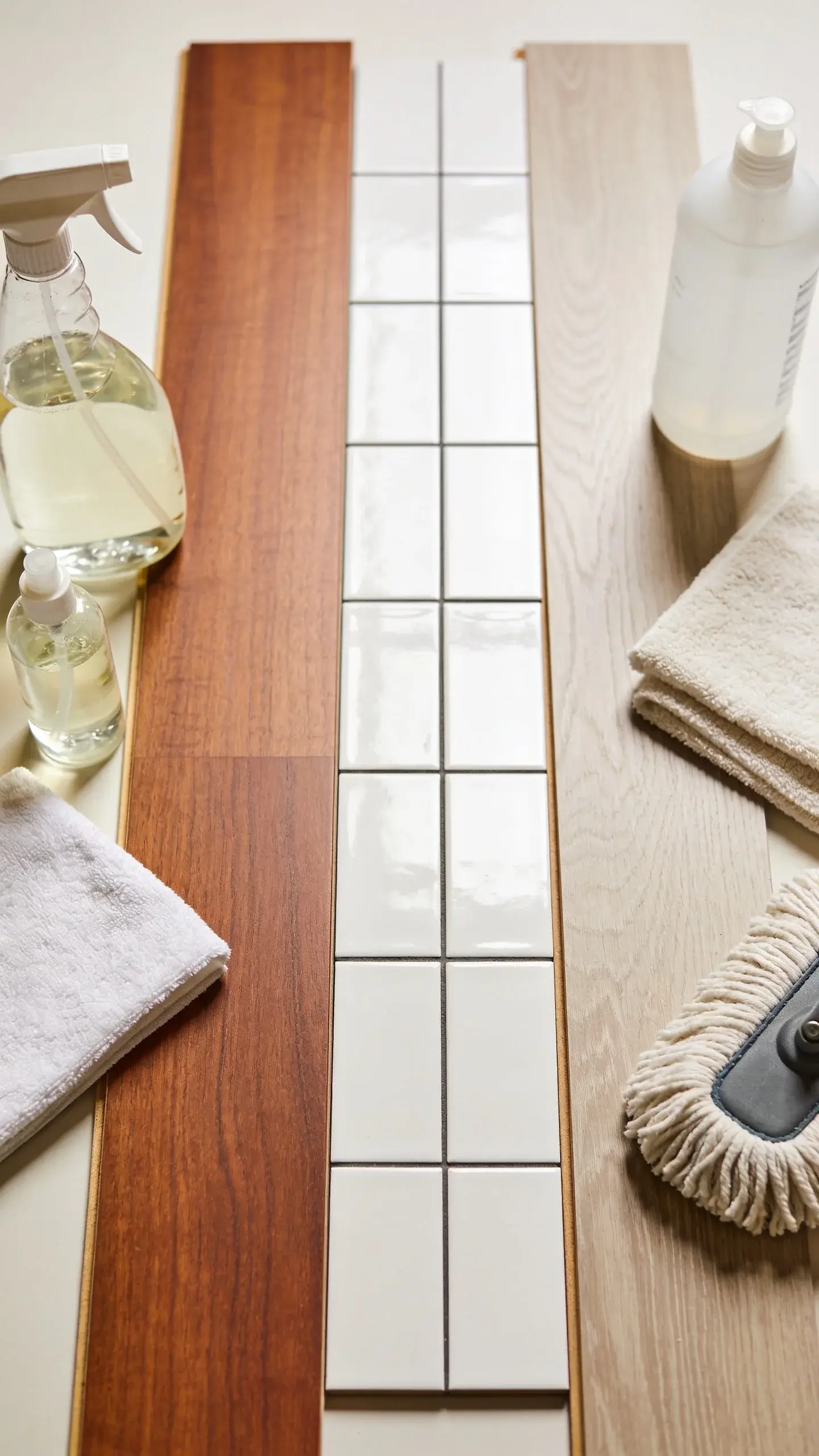
Because life happens. Pets, kids, spaghetti night…you get it.
Hardwood Spot Fixes
- Scuff marks: Rub gently with a clean tennis ball or melamine sponge (very light touch).
- Sticky spots: Dab a bit of the hardwood cleaner, wait 30 seconds, wipe dry.
- Water spots: A tiny bit of olive oil on a cloth can blend light dull spots. Buff well.
Tile & Grout TLC
- Greasy tiles: Add an extra drop of dish soap to your mop bucket, then rinse with plain water.
- Grout refresh: Make a paste of baking soda and water. Apply to grout, spritz with vinegar, let fizz 3-5 minutes, scrub with a soft brush, rinse well.
- Avoid: Colored grout can be sensitive—test the paste in a hidden area first.
Laminate Emergencies
- Streaks or film: Switch to distilled water and cut back on soap.
- Sticky messes: Warm a cloth with hot water, wring well, then wipe. Follow with your laminate spray.
- Edge swelling: Keep moisture away from seams. If you spill, towel it up ASAP.
Tools That Make You Look Like You Tried (With Minimal Effort)
You don’t need a closet of gadgets. Just a few MVPs.
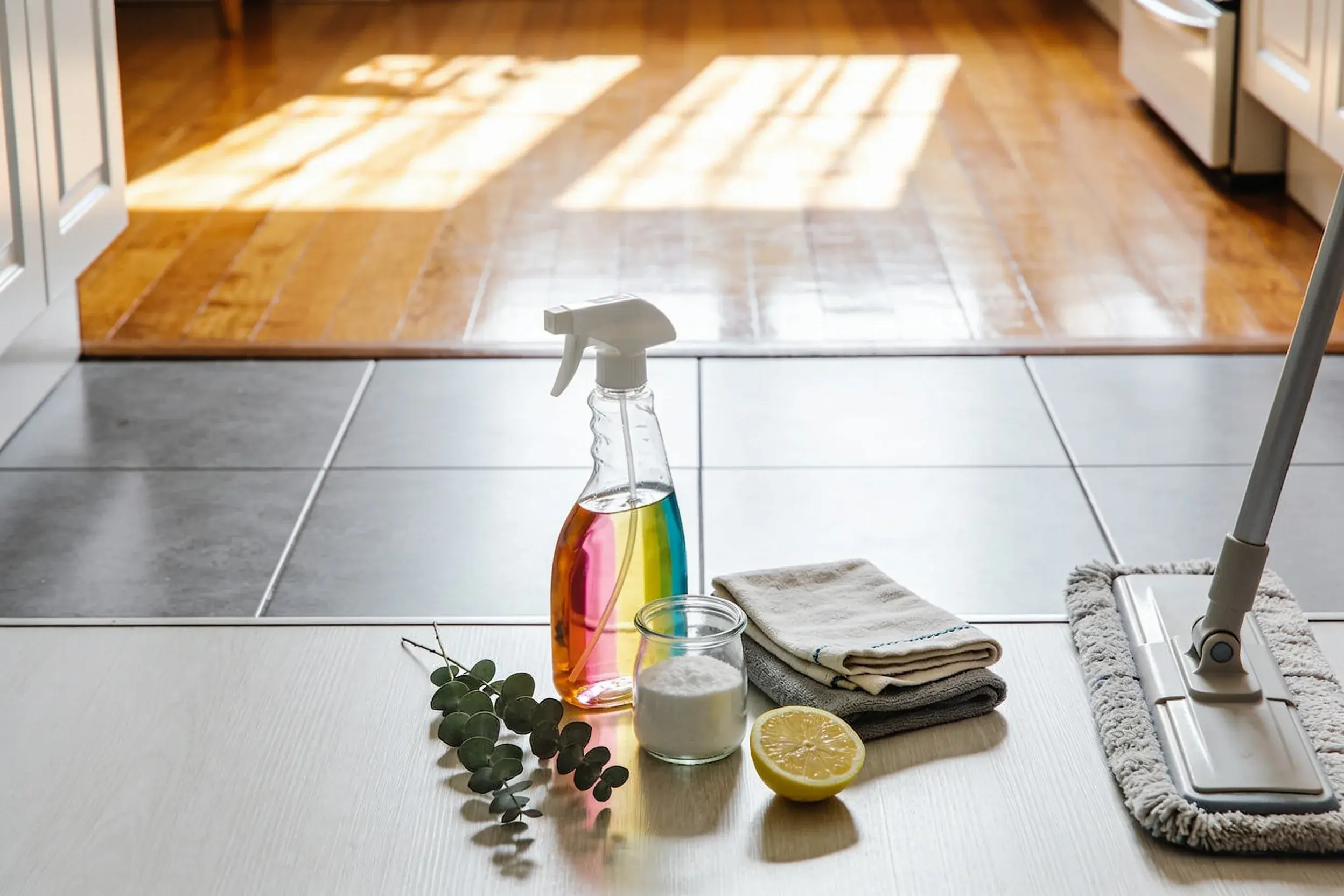
- Microfiber mop: Flat, washable pads. They pull dust and grip grime without scratching.
- Fine-mist spray bottle: Especially for laminate and hardwood.
- Soft-bristle brush: For grout and stubborn corners.
- Vacuum or dust mop: Always remove grit before wet cleaning to avoid micro-scratches.
Pro Tip: The Two-Pad Method
Use one pad for the first pass, swap to a fresh pad halfway through. Your floors won’t get redecorated with dirty water. Simple, but clutch.
Make It Smell Nice Without Leaving Residue
Want a fresh scent without the fake-perfume cloud? Same.
- Citrus peels infusion: Soak orange or lemon peels in white vinegar for 1-2 weeks. Strain and use the vinegar in your tile formula at the same dilution. Smells bright, costs nothing.
- Essential oils: 2-4 drops per 2 cups of solution, max. More than that can leave oily streaks, IMO.
- Rinse strategy: If fragrance hangs around or feels tacky, do a quick pass with plain water and a clean pad.
Weekly Routine That Actually Sticks
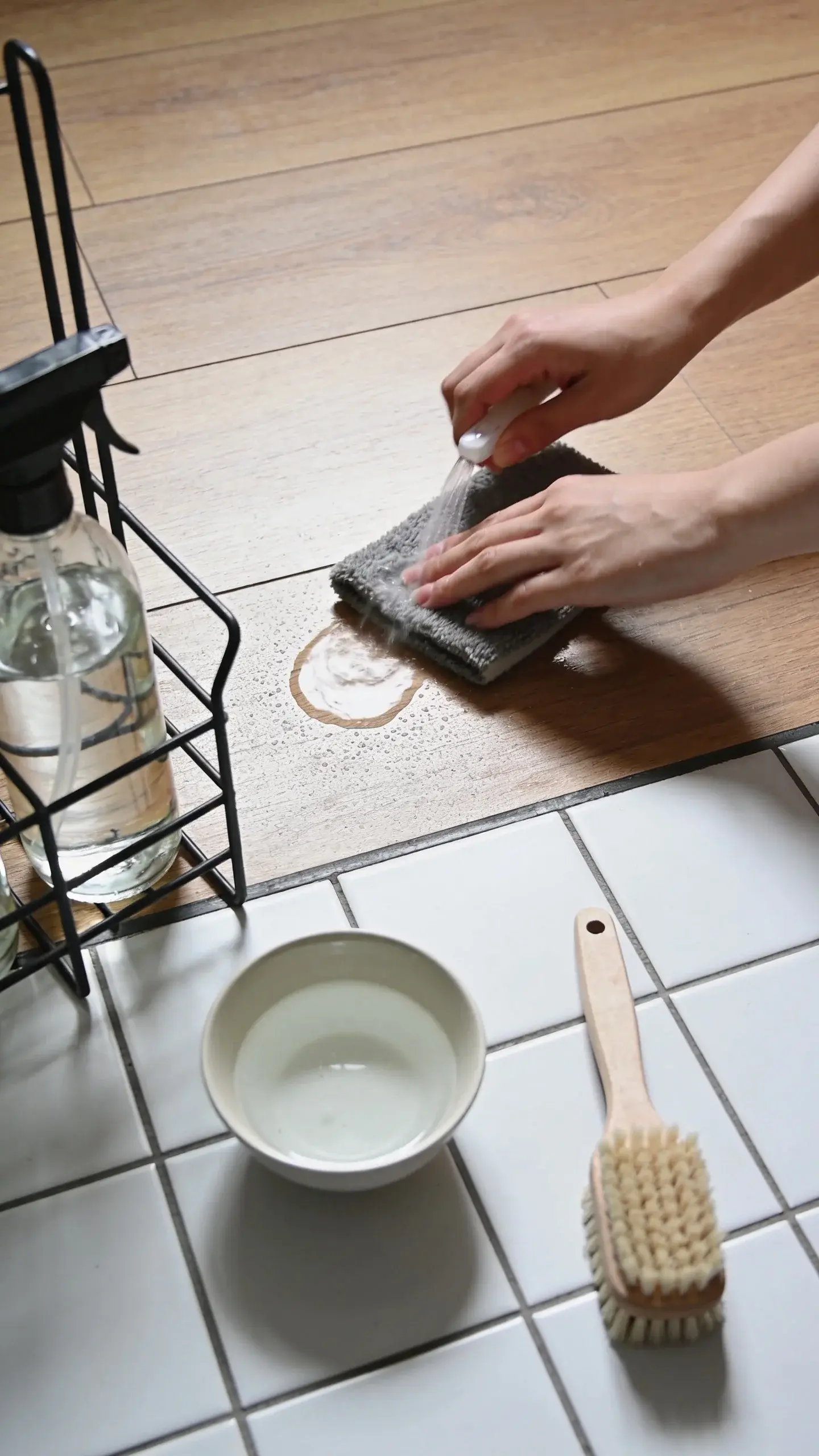
Consistency beats hero-level scrubbing. Here’s a routine you’ll actually follow.
- Daily/Every Other Day: Quick vacuum or dry dust mop. Gets the grit before it scratches.
- Weekly: Damp mop with your floor-specific DIY cleaner. Keep it light and fast.
- Monthly: Detail grout lines and do a spot check for scuffs or dull patches.
- Seasonal: For hardwood, check humidity (35-55% is the sweet spot). It matters more than you think, FYI.
What If You’ve Got a Hazy Film Already?
Try this reset on tile or laminate:
- Mix 2 cups warm water + 1 tablespoon white vinegar (no soap).
- Lightly mop and buff dry with a clean towel.
- If haze persists, your old cleaner might’ve had wax or polymers. You may need a specialty remover once—then stick to the DIY recipes.
Common Mistakes To Dodge
- Too much soap: More suds = more residue. Keep it tiny.
- Soaking floors: Puddles are bad news for wood and laminate seams.
- Undiluted vinegar on hardwood: Can dull finishes over time. Save vinegar for tile, diluted only.
- Dirty mop heads: Wash pads after each session. Otherwise you’re just redepositing grime—gross.
FAQ
Can I use vinegar on hardwood floors?
Short answer: not directly. Undiluted vinegar can dull polyurethane finishes over time. If you insist, keep it extremely diluted and only for occasional spot use. IMO, stick with a mild soap solution for hardwood and you’ll sleep better.
What’s the best way to avoid streaks?
Use distilled water, keep soap amounts tiny, and change pads mid-clean. Also, dampen the mop rather than the whole floor and work in small sections. Finish with a quick dry buff if you’re chasing that showroom shine.
Do essential oils damage floors?
In small amounts, they’re fine, especially on tile. On hardwood and laminate, use 2-4 drops per 2 cups of solution max. Too much oil = smeary residue that grabs dust like a magnet.
How often should I clean tile grout?
Light maintenance monthly keeps it from turning into a saga. Do a baking soda paste and quick brush on heavy-traffic zones. Seal grout once or twice a year if it’s unsealed to slow stains.
Can I use these recipes on engineered wood?
Yes—if it has a sealed finish. Treat it like regular sealed hardwood: low moisture, mild soap, and a microfiber mop. Avoid vinegar and puddles.
Why does my laminate smell musty after mopping?
Usually too much water or a mop pad that’s, um, seen things. Use less liquid, add a teaspoon of rubbing alcohol for faster drying, and wash your pads hot. Problem solved.
Wrap-Up: Clean Floors, No Drama
You don’t need a chemistry degree or a pricey cleaner to get gorgeous floors. Use the right mix for your surface, keep moisture in check, and swap those mop pads like a boss. Do that, and your hardwood, tile, and laminate will look fresh without the sticky residue—promise. Now go flex those sparkling floors.

I’ve spent 10+ years in dog training, digging into what makes dogs (and their humans) tick. At Smart Dog Learning, I share my no-nonsense, fun approach to training so you can enjoy life with a well-behaved, happy pup—no boring lectures, just practical results 😉