All Purpose Cleaner DIY Recipe For Every Room In Your Home
Want one simple spray that tackles kitchens, bathrooms, mirrors, and mystery spills? You got it. This DIY cleaner costs pennies, smells amazing, and leaves surfaces sparkling without the harsh fumes. We’ll mix one base recipe, tweak it for different rooms, and add pro tips so you don’t accidentally haze your granite or wage war on your stainless. Ready to clean smarter, not harder?
The One Bottle Wonder: Your Base DIY All-Purpose Cleaner
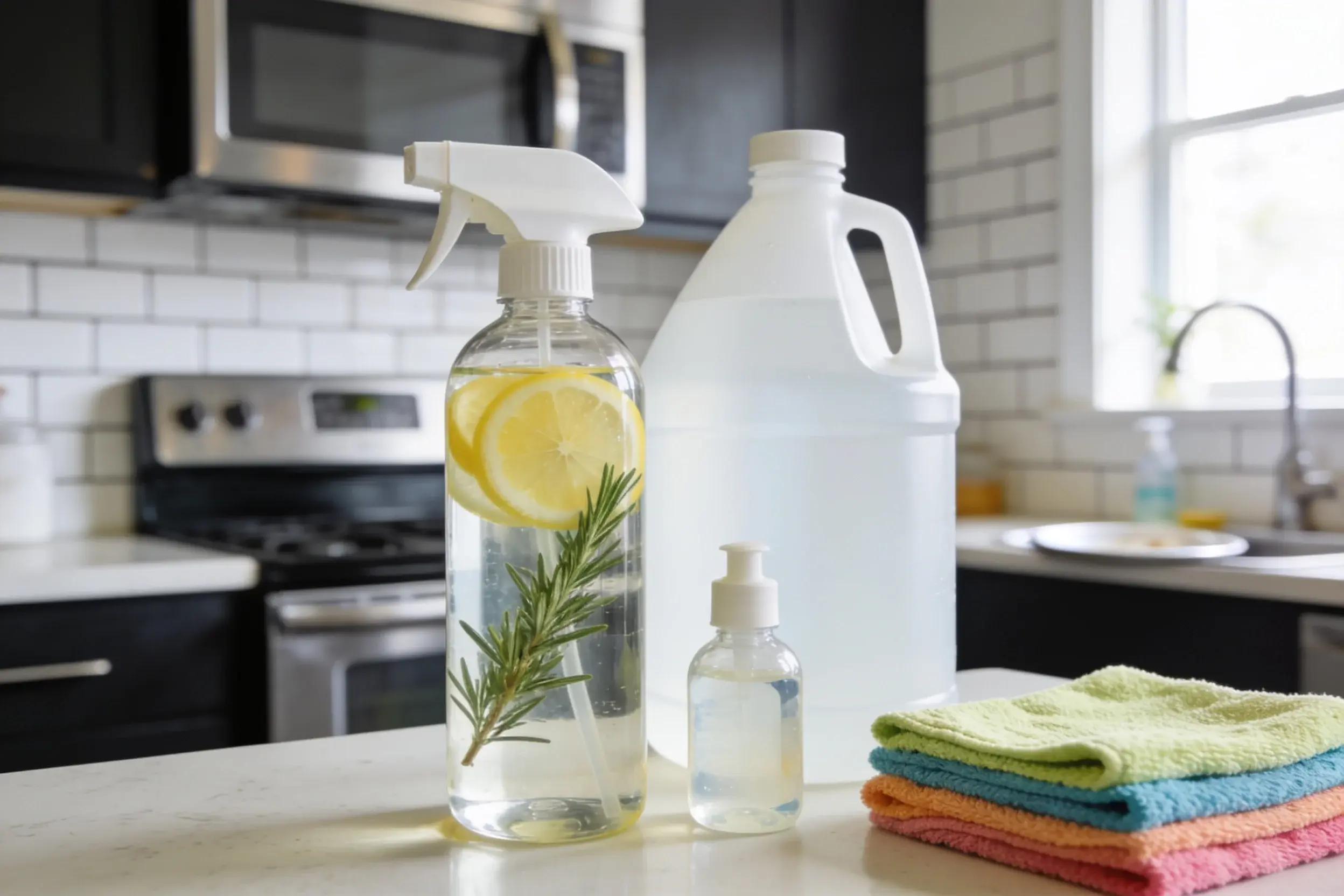
Base Recipe (Everyday Surfaces)
- 1 1/2 cups warm water
- 1/2 cup white distilled vinegar
- 1 teaspoon mild dish soap (free of dyes if possible)
- Optional: 10–15 drops essential oil (lemon, tea tree, lavender, or peppermint)
How To Mix
- Add water to a 16–24 oz spray bottle.
- Pour in vinegar, then dish soap. Swirl gently. Don’t shake like a margarita or you’ll get bubbles.
- Add essential oils if you want a nice scent and mild antimicrobial boost. FYI, tea tree and lemon pull double duty here.
Where It Shines
- Sealed tile, laminate, vinyl, and most countertops (but keep vinegar away from stone—more on that in a second)
- Appliance exteriors (except specialty finishes)
- Cabinets, doors, and baseboards
Pro Move: Spray on, let it sit 60 seconds, then wipe with a microfiber cloth for streak-free swagger.
Stone Counters Need Boundaries: The No-Vinegar Version
Vinegar and citrus can etch marble, granite, travertine, and limestone. Let’s keep your counters pretty.
Stone-Safe Cleaner
- 2 cups warm water
- 1 teaspoon mild dish soap
- Optional: 5–10 drops gentle essential oil (avoid citrus on stone)
How To Use
- Spray lightly, wipe with a damp microfiber, then buff dry with a clean towel.
- For oily spots, park a soapy wet cloth on the area for 2 minutes, then wipe.
IMO: Buffing is the secret sauce for that “did a pro come over?” shine.
Bathroom Blitz: Soap Scum, Grout, and Mirrors
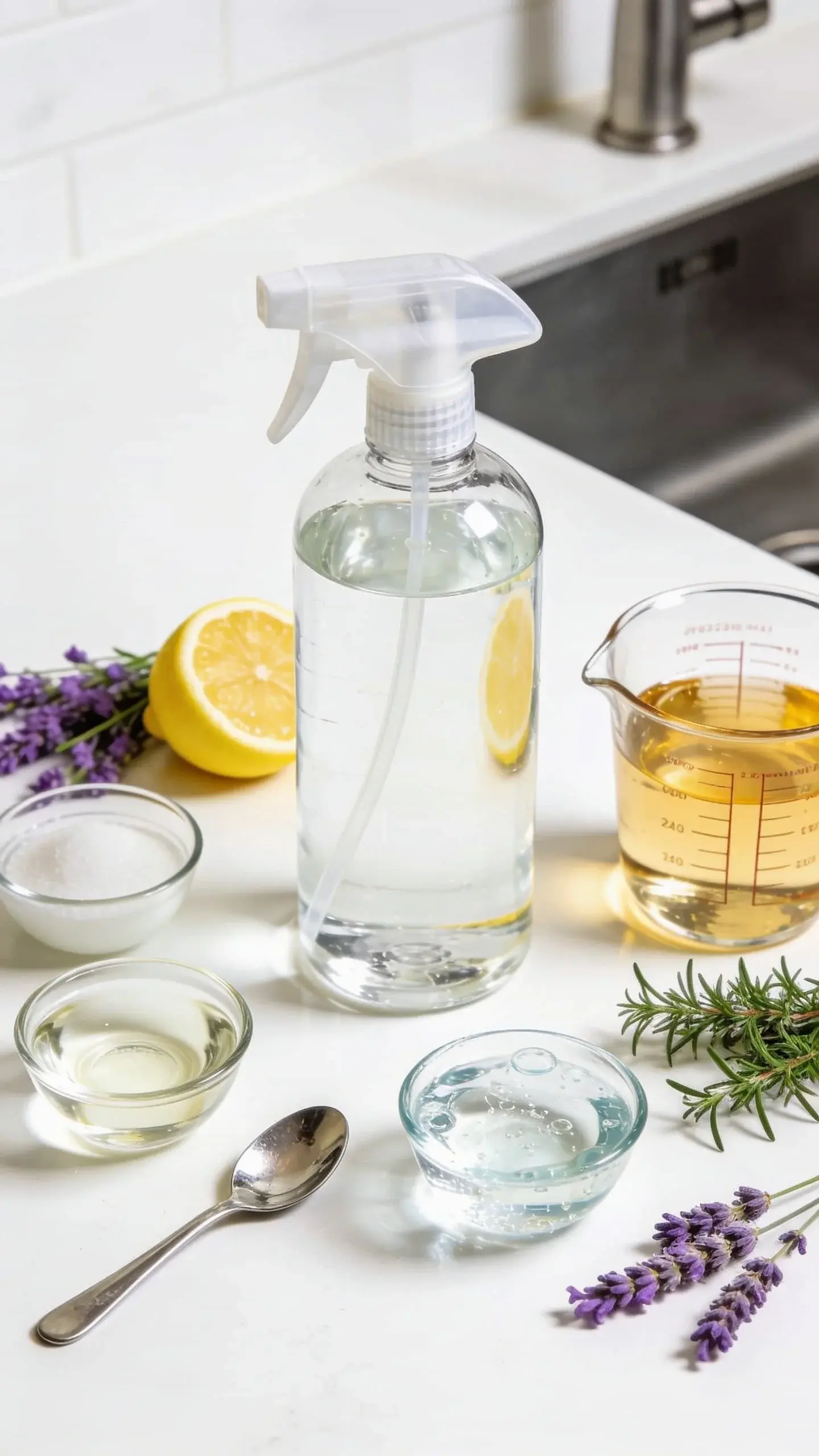
Bathrooms throw curveballs—soap scum, hard water, toothpaste art. Here’s the playbook.
Soap Scum and Tubs
Scum-Buster Spray
- 1 cup white vinegar (warmed slightly for extra oomph)
- 1 cup water
- 1 tablespoon dish soap
Use It Like This: Spray walls and tub, wait 5–10 minutes, scrub with a non-scratch sponge, rinse well. If it still laughs at you, sprinkle baking soda on your sponge and scrub—baking soda + soap is a power couple.
Grout Refresh
- Make a paste: 3 parts baking soda + 1 part water.
- Spread on grout, spritz vinegar over it (it’ll fizz, which is your little cleaning firework), wait 5 minutes.
- Scrub with a stiff brush and rinse.
Note: Skip vinegar on natural stone shower tiles. Use the stone-safe cleaner and a gentle brush instead.
Mirror And Glass Magic
Streak-Free Glass Mix
- 1 1/2 cups water
- 1/2 cup vinegar
- 1 tablespoon isopropyl alcohol (70% or 91%)
Spray sparingly and wipe with a flat-weave microfiber. Polish with a dry corner. No newspaper needed. No drama either.
Kitchen Confidence: Counters, Appliances, and Sinks
You want clean without stripping finishes or leaving weird films. Let’s dial it in.
Counters and Backsplashes
- Use the base vinegar cleaner on laminate, sealed wood, and tile.
- Use the stone-safe cleaner on granite, marble, and quartzite.
Stainless-Steel Appliances
- Wipe with the base cleaner sprayed on your cloth, not directly on the steel.
- Buff with a few drops of mineral oil on a cloth, following the grain. Instant showroom vibes.
Sinks (Stainless or Porcelain)
- Sprinkle baking soda, spritz base cleaner, scrub, and rinse.
- Disposal refresh: 1/2 cup baking soda, followed by 1/2 cup vinegar. Let fizz 5 minutes, flush with hot water.
Floors, Furniture, and the “Oops” Spills
Hard Floors (Tile, Vinyl, Laminate)
- Bucket mix: 1 gallon warm water + 1/2 cup vinegar + a few drops of dish soap.
- Mop lightly. Too much soap = sticky floors. Rinse mop head as you go.
Sealed Wood Floors
- Skip vinegar long-term; it can dull finishes.
- Use: 1 gallon warm water + a few drops of dish soap. Wring mop until just damp, then dry quickly.
Fabric And Rugs (Spot Cleaning)
- Blot, don’t rub. Always test in an inconspicuous spot.
- Mix: 1 cup water + 1 teaspoon dish soap + 1 teaspoon white vinegar. Blot, then rinse with damp water-only cloth.
Make It Smell Fancy: Scent Combinations That Don’t Clash
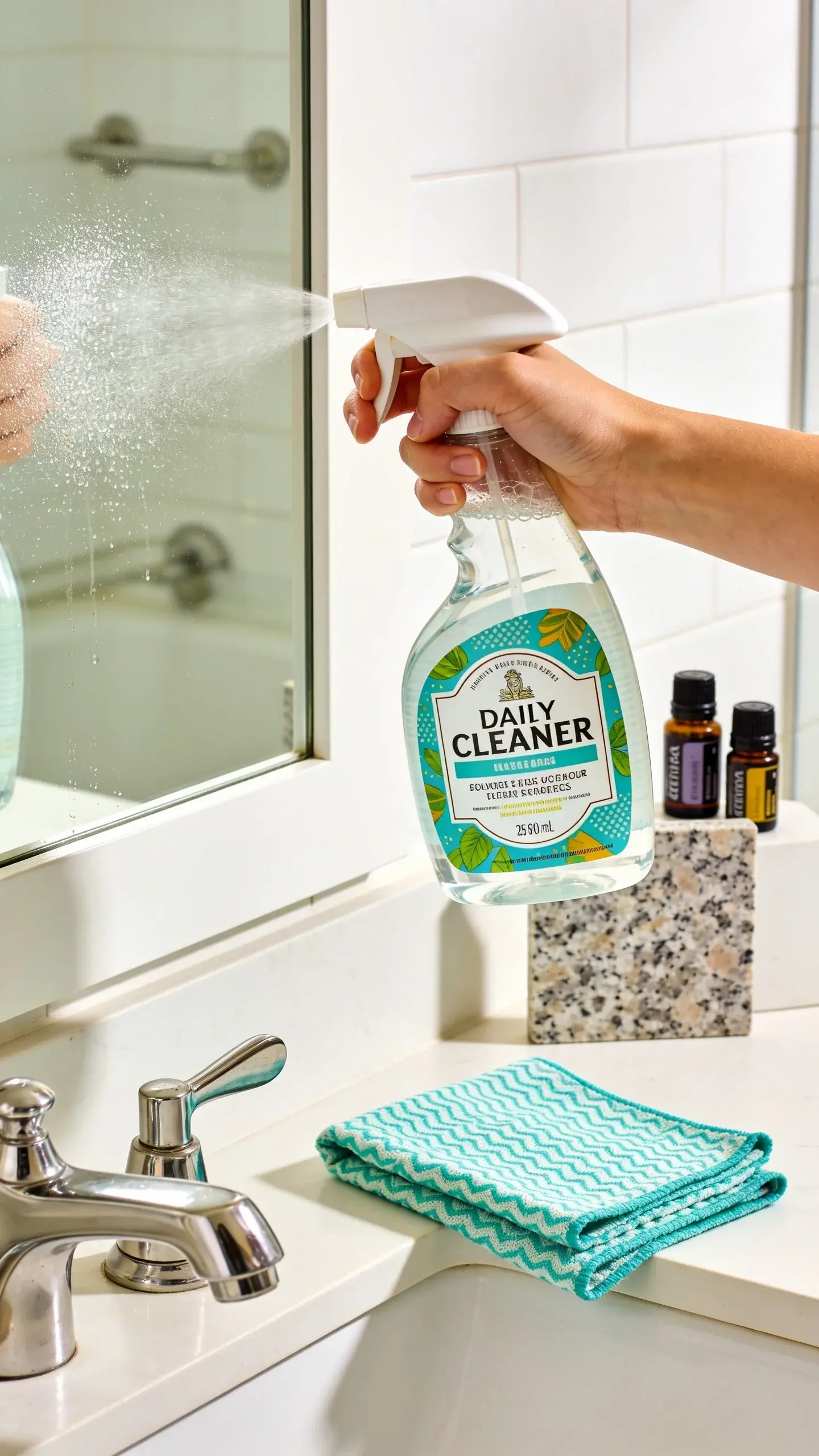
Want your house to smell like you hired a spa? Choose one vibe per bottle so fragrances don’t arm-wrestle.
- Bright & Clean: Lemon + peppermint
- Herbal Calm: Lavender + rosemary
- Germ-Fight Adjacent: Tea tree + eucalyptus (great for bathrooms)
FYI: Essential oils add scent and mild benefits, but they don’t replace proper disinfection.
When You Actually Need A Disinfectant
All-purpose cleaners remove grime. Disinfectants kill germs—different jobs. When someone’s sick or you handled raw meat, step up your game.
- Hydrogen Peroxide (3%): Spray on clean surface, let sit 5 minutes, then wipe.
- Rubbing Alcohol (70%+): Great for small high-touch spots. Let sit 30 seconds to 1 minute, then wipe.
- Bleach Solution (Occasional Use): 1/2 teaspoon unscented bleach per 2 cups water. Wear gloves, ventilate, never mix with vinegar or ammonia—like, ever.
Pro Tip: Clean first, then disinfect. Dirt blocks germ-killing power. Science wins.
Storage, Safety, And Smart Habits
- Label bottles with contents and date. Vinegar-based mixes stay fresh ~3 months; alcohol mixes ~6 months.
- Keep away from kids and pets. These are gentler than commercial stuff, but still not a beverage.
- Use microfiber cloths. They trap grime better and reduce streaks.
- Patch test new surfaces, especially painted, lacquered, or specialty finishes.
FAQ
Can I use this on real wood furniture?
Yes, but go gentle. Lightly spritz a cloth with the stone-safe, no-vinegar mix and wipe with the grain. Buff dry. For antique or oiled finishes, stick to a dry dusting cloth and a dedicated wood polish, IMO.
Will vinegar ruin my grout?
On sealed ceramic tile grout, occasional vinegar use is fine. On natural stone or unsealed grout, vinegar can slowly etch and weaken it. When in doubt, use the stone-safe cleaner and a soft brush.
Are essential oils safe for pets?
Used sparingly in cleaners and wiped dry, most are fine around healthy pets. Avoid spraying directly on pet surfaces and skip strong oils like tea tree around cats. Ventilate and keep pets out until everything dries.
Why does my cleaner leave streaks?
Too much soap or using a fluffy towel usually causes streaks. Cut the dish soap to 1/2 teaspoon, use a flat-weave microfiber, and buff dry. Also, don’t overspray—less is more.
Can I make it stronger for heavy grime?
Absolutely. Add up to 1 tablespoon dish soap to the base, let it sit longer, and use warm water in the mix. For stuck-on messes, hit it with baking soda paste, then your spray. Patience > elbow grease, IMO.
Is this safe for quartz countertops?
Yes—use the stone-safe, no-vinegar version. Quartz resists staining, but acidic cleaners can dull the resin binders over time. Wipe, then buff dry for that fancy-magazine finish.
Conclusion
One base cleaner, a couple of smart swaps, and every room in your home stays fresh without a cabinet full of chemicals. Mix a bottle, label it, and get in the habit of quick daily wipe-downs. Your future self will thank you when weekend cleaning takes 15 minutes instead of a full cardio session. Simple, effective, and low-drama—just how cleaning should be.

I’ve spent 10+ years in dog training, digging into what makes dogs (and their humans) tick. At Smart Dog Learning, I share my no-nonsense, fun approach to training so you can enjoy life with a well-behaved, happy pup—no boring lectures, just practical results 😉