How to Set Up the Perfect Guinea Pig Cage
Guinea pigs don’t ask for much—just a safe palace where they can zoom, munch hay, and judge you with their adorable side-eye. Set up their cage right and you’ll have happy squeaks, dramatic popcorn jumps, and far fewer vet visits. The good news? You don’t need fancy gear. You just need space, smart layout, and a few key materials that make life comfy (and clean).
Start with Size: Bigger Beats “Barely Enough”
You can’t spoil a guinea pig with too much space. You absolutely can cramp one with too little. Aim for at least 7.5 square feet for one guinea pig, but they’re social, so plan for two and give them 10.5+ square feet (think 2×4 C&C grid or larger).
- Good: 2×4 C&C cages (27″ x 56″) for two pigs
- Better: 2×5 C&C for more zoomies and less drama
- Avoid: Pet store “starter” cages—they’re small and overpriced
Why so big? Guinea pigs don’t climb like hamsters. They run. They do straight-line sprints and need room for “popcorning” (yes, the joyful hop). Give them space and you’ll see that goofy happiness daily.
Choose the Right Cage Type
Several options work well, but some make your life easier than others.
- C&C Cages (Cubes & Coroplast): Customizable, affordable, easy to clean. IMO, the best option for most people.
- MidWest Guinea Habitat: Decent starter size, folds up, good for renters. Not as sturdy as C&C but solid.
- DIY Playpen + Waterproof Liner: Great for temporary setups or travel. Watch for gaps—escape artists exist.
- Wooden Hutches: Use indoors only and line them well. Wood absorbs urine and smells fast if you skip liners.
Location, Location, Location
Place the cage in a quiet room with stable temperature (65–75°F). Avoid drafts, direct sun, and kitchens (fumes and Teflon can harm them). Keep them near the action but not in the middle of chaos. They like to hear your voice but hate surprise drum solos.
Build a Comfortable Base
Flooring matters because guinea pig feet are delicate. You need soft, absorbent, and easy to clean.
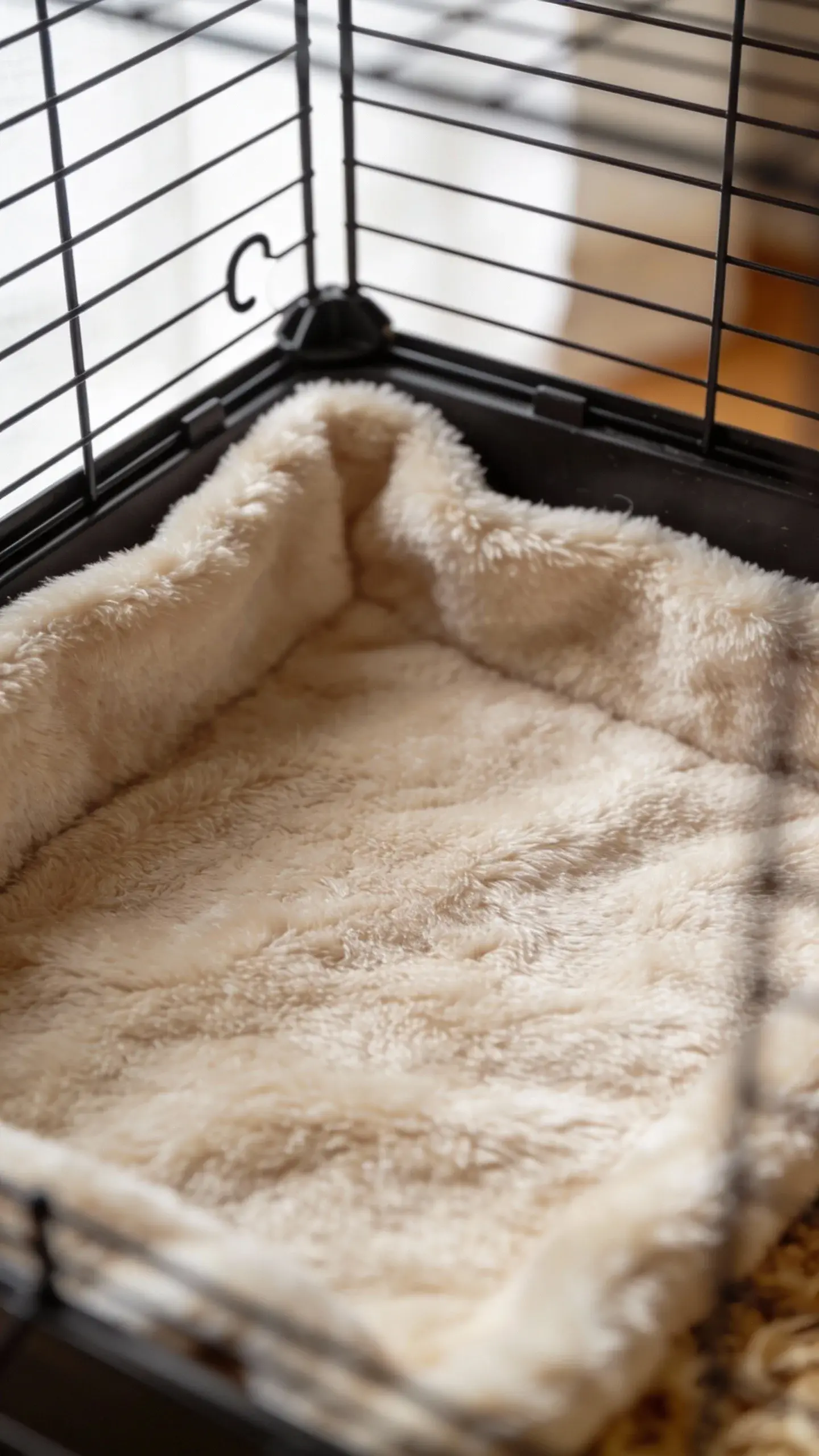
- Coroplast + Fleece: A top-tier combo. Fleece wicks moisture to an absorbent layer underneath, keeping topside dry.
- Paper Bedding: Soft, absorbent, easy to spot-clean. Use a 2–3 inch layer.
- Avoid: Pine/cedar shavings with strong aromatic oils—they can irritate lungs and skin.
Fleece Setup 101
Want to try fleece? You’ll need:
- Bottom liner: Washable fleece pad with absorbent core, or fleece on top of towels/pet pads
- At least two sets: One in the cage, one in the wash
- Daily spot-clean: Use a handheld vacuum or litter scoop
FYI: Wash fleece separately with fragrance-free detergent. Skip fabric softener—it kills the wicking.
Food, Water, and the Holy Hay
Guinea pigs run on hay and drama. But mostly hay. Keep the essentials simple and consistent.
- Unlimited grass hay: Timothy, orchard, or meadow. Always fresh. Always available.
- Pellets: Plain, timothy-based pellets with added vitamin C. About 1/8 cup per pig per day.
- Fresh veggies: Daily mix of leafy greens (romaine, green leaf, cilantro, bell pepper for vitamin C). Introduce slowly to avoid tummy issues.
- Water: A sturdy bowl or bottle—many people use both. Change daily.
Smart Hay Setup
Hay gets everywhere, because of course it does. Try:
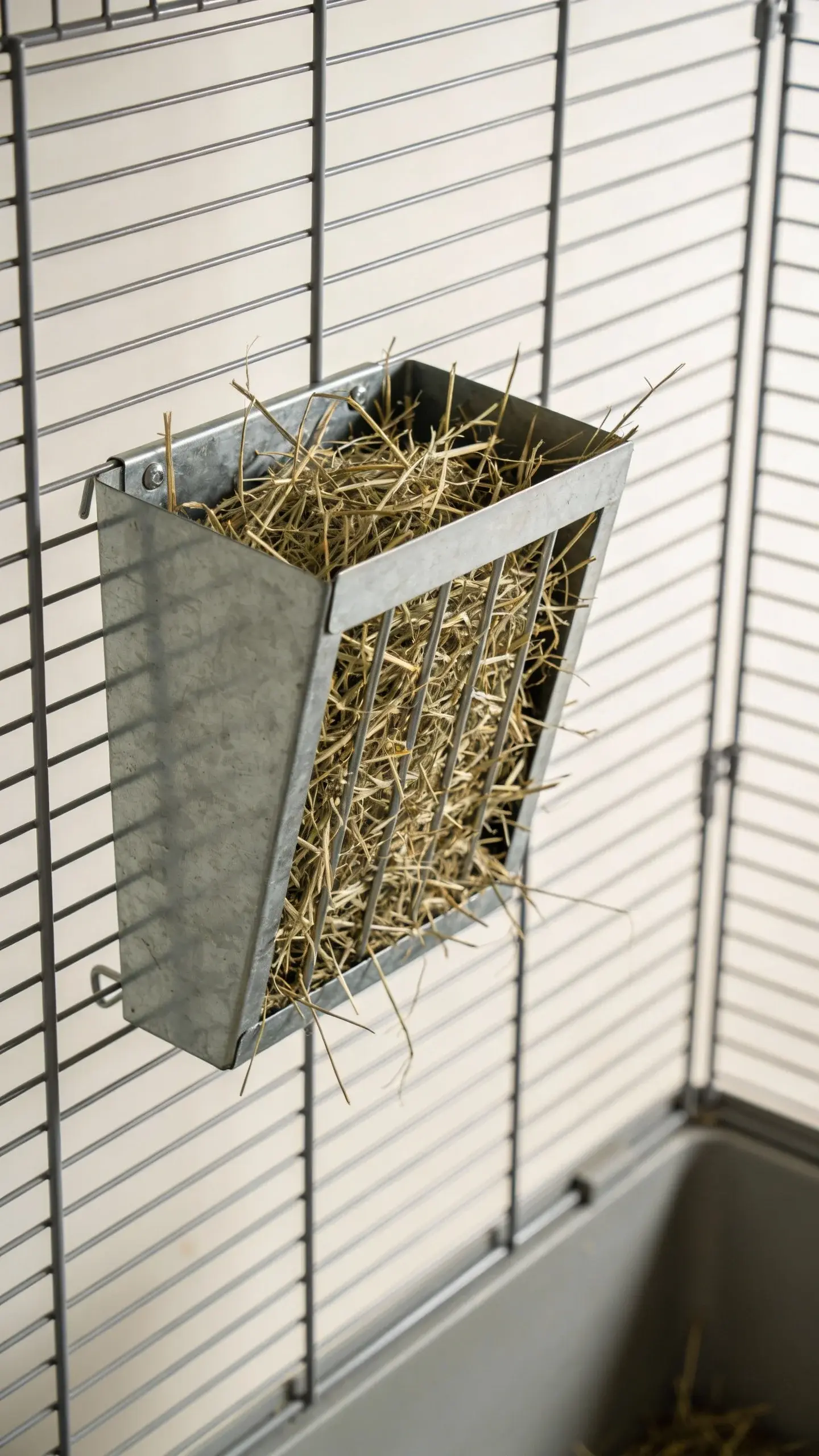
- Hay rack or hay bag: Keeps hay clean and reduces waste.
- Litter/hay kitchen area: Put a washable mat or paper bedding under the hay zone to catch mess.
Layout: Zones Make a Happy Pig Paradise
Think of the cage like a tiny studio apartment. You need zones for eating, sleeping, and running.
- Hay kitchen: Corner with hay rack and bedding pad to manage mess.
- Water + pellets: Near the hay so they don’t commute far (they’re divas).
- Hideouts: At least two hideys for two pigs, ideally more. Use wood, plastic, or fabric tunnels.
- Open runway: Leave a clear path for zoomies—no clutter in the middle.
Enrichment That Actually Works
Skip tiny plastic toys. Go for:
- Tunnels and arches: Corrugated tunnels or fleece tunnels
- Chews: Apple wood sticks, hay cubes, untreated wicker
- Foraging: Hide veggies in hay or use a snuffle mat
Cleaning and Maintenance Without Losing Your Mind
A clean cage = healthy pigs and a home that doesn’t smell like a barn. Routine helps.
- Daily: Spot-clean poops, refresh hay and water, wipe any wet spots.
- Every 2–4 days (fleece): Swap liners, wash used set.
- Weekly (paper bedding): Full bedding change and wipe-down.
Use a pet-safe cleaner or a simple 50/50 white vinegar and water mix. Dry thoroughly before pigs go back in. And yes, they will immediately poop on the clean liner. It’s their love language.
Safety Basics You Shouldn’t Skip
Guinea pigs chew like tiny beavers, so remove hazards before they find them.
- No loose cords or plastic bags near the cage.
- Secure grids: If using C&C, use 9×9 grids (or smaller spacing) to prevent heads from getting stuck.
- Floor time safety: Block off areas under couches and radiators. Supervise always.
- No wire floors: Their feet can get injured fast.
Temperature and Airflow
Keep the room comfortable and steady. Use fans indirectly (aim them away). In hot climates, freeze water bottles and wrap them in towels for DIY coolers. In cold climates, keep drafts out and bedding plush.
Bringing It All Together: A Sample Setup
Here’s a simple, practical cage layout that works for most pairs:
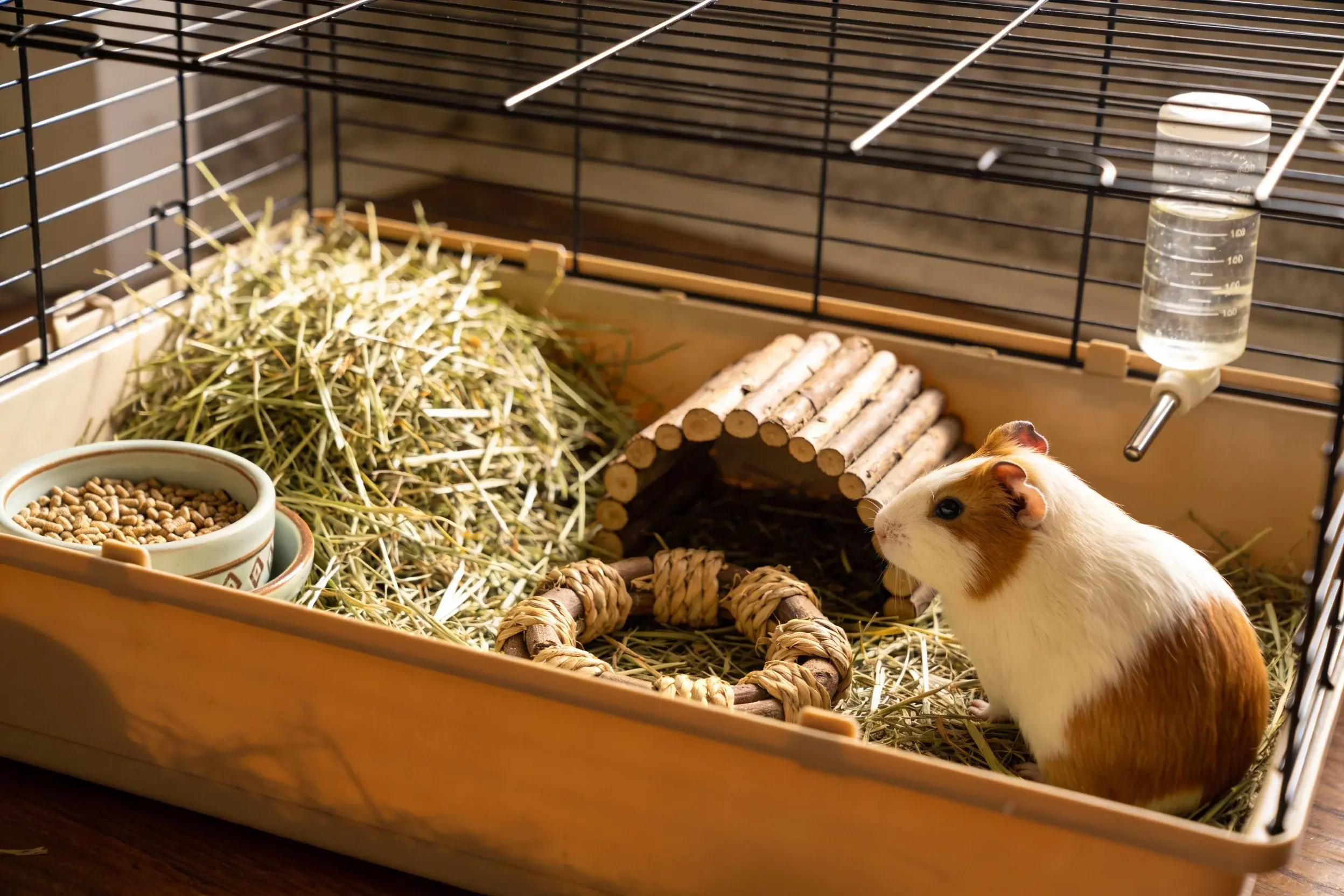
- 2×4 or 2×5 C&C cage with coroplast base
- Fleece liner with a washable pad in the hay area
- Hay rack over a litter pad, pellet bowl beside it
- Water bottle and a heavy ceramic water bowl
- Two to three hideys plus a tunnel
- Open middle runway for laps and popcorns
This setup keeps mess contained, gives them privacy, and leaves a big space for sprints. They’ll use every inch.
FAQ
How many guinea pigs should live together?
Guinea pigs thrive with a buddy. Adopt a pair of the same sex (or a neutered/spayed pair). Solo pigs can get lonely and stressed, which affects health and behavior.
Can I stack levels to save space?
You can add a small loft for a hay kitchen, but don’t rely on vertical space. Guinea pigs don’t climb well. Prioritize floor space and keep ramps gentle with side rails and grip.
What’s the best bedding overall?
IMO, fleece over absorbent layers is the easiest long-term and the most cost-effective. If you want low-laundry, high-absorption, go with paper bedding. Both work. Pick what you’ll maintain consistently.
Do I need toys?
Not in the cat-toy sense. They prefer functional enrichment: tunnels, hideouts, chew-safe woods, and foraging opportunities. Rotate items weekly to keep things interesting.
How do I stop the cage from smelling?
Keep hay fresh, spot-clean daily, and change bedding on schedule. Provide good airflow and avoid scented sprays. If odor persists, check for hidden wet spots under hideys and switch to more absorbent pads.
Can I put the cage on the floor?
You can, but raised stands work better. They protect pigs from drafts, make cleaning easier, and help shy pigs feel safer because you approach at their eye level, not from above like a hawk.
Conclusion
Set up a guinea pig cage with space, soft flooring, endless hay, and smart zones, and you’ll basically build a tiny paradise. Keep it clean, keep it safe, and sprinkle in tunnels and hideys for drama-free living. Do that, and your pigs will reward you with squeaks, zoomies, and that smug “we live better than you” face. Fair enough, honestly.

I’ve spent 10+ years in dog training, digging into what makes dogs (and their humans) tick. At Smart Dog Learning, I share my no-nonsense, fun approach to training so you can enjoy life with a well-behaved, happy pup—no boring lectures, just practical results 😉