
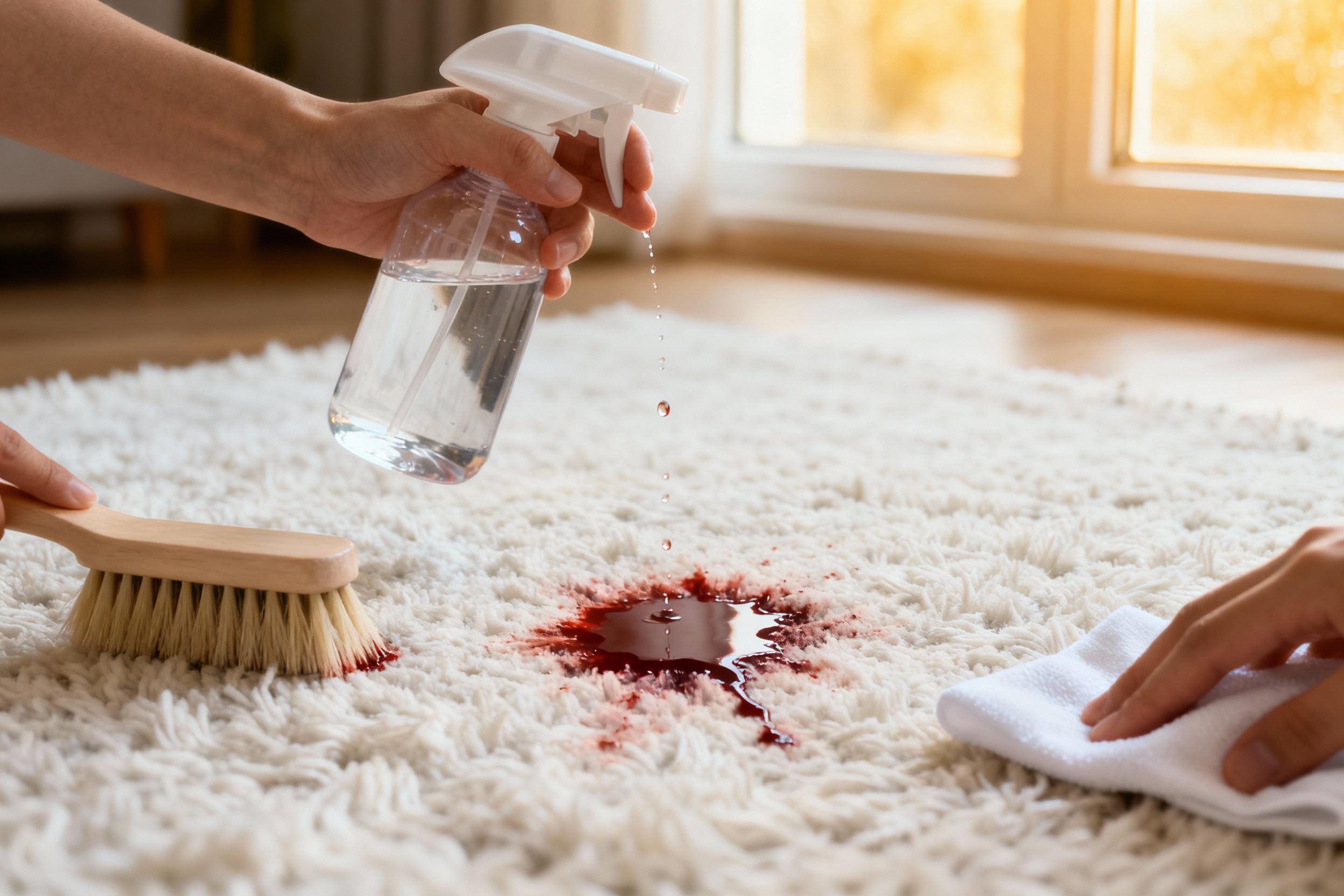
The Best Way To Remove Blood Stains From Carpet—no Harsh Chemicals
Blood stain on your carpet? Yep, that happens—pets, paper cuts, rogue nosebleeds. The good news: you don’t need harsh chemicals or a hazmat suit to fix it.
With a few gentle household ingredients and the right technique, you can erase the evidence like it never happened. Let’s keep your carpet soft, your air clean, and your sanity intact.
First, Don’t Panic—Act Fast
Fresh blood lifts way easier than dried blood. The longer it sits, the more it binds to fibers.
So what do you do first? Blot—don’t rub. Grab a clean white cloth or paper towel and gently press on the stain to soak up as much as possible.
Rubbing will grind the stain deeper and make your carpet hate you. Key rule: Use cold water. Heat sets blood like you’re cooking an egg. Cold keeps proteins from binding.
The Gentle-but-Mighty Cold Water Method
If the stain’s fresh, you can often win with just cold water.
- Dampen a clean cloth with cold water.
- Blot the stain from the outside in.
Don’t scrub.
- Rinse the cloth, re-dampen, and repeat until the stain fades.
- Blot with a dry towel to remove excess moisture.
If that doesn’t do it, no worries. We’ve got a few more natural boosters.
Option 2: Salt Paste for Fresh Stains
Salt absorbs moisture and helps lift color. Great for brand-new stains.
- Mix cold water with table salt to make a thick paste.
- Spread it over the stain and let it sit 10–20 minutes.
- Blot with a damp cloth to remove.
Repeat if needed.
- Finish by blotting with a dry towel.
FYI: Test on a hidden spot first. Salt won’t usually bleach carpet, but better safe than salty.
Option 3: Baking Soda + Cold Water
Baking soda lightly lifts stains and neutralizes odors. Perfect if a pet contributed to the crime scene.
- Sprinkle baking soda directly on the damp stain.
- Spritz with cold water until slightly bubbly and damp, not soupy.
- Let sit 30–60 minutes.
- Blot with a clean cloth, then vacuum once dry.
Pro tip: Don’t over-wet.
A soggy carpet pad = funk city.
Option 4: Hydrogen Peroxide (3%)—The Stain Whisperer
Hydrogen peroxide (the everyday 3% kind) works wonders on blood. It breaks down the proteins and lifts color. But treat it like a semi-permanent dye remover—always patch test first, especially on dark or wool carpets.
- Test in an inconspicuous spot.
Wait 5 minutes. No color change? You’re good.
- Apply a small amount directly onto the stain.
- Let it fizz for 5 minutes.
- Blot with a clean cloth.
- Repeat if needed, then rinse with cold water and blot dry.
Important: Use 3% only.
Anything stronger can bleach or damage fibers. IMO, this is the best all-around fix for dried stains.
Peroxide + Dish Soap Combo
For stubborn dried blood, mix a simple solution:
- 1 cup cold water
- 1 tablespoon hydrogen peroxide (3%)
- 2–3 drops clear, dye-free dish soap
Dab on, wait 5 minutes, blot with a clean cloth, then rinse with cold water. Repeat as needed.
Option 5: Enzyme Cleaners (Pet-Safe and Effective)
If you want a store-bought but gentle option, use an enzyme-based cleaner.
These break down the proteins in blood without harsh chemicals.
- Choose a product labeled for biological stains (pet messes usually qualify).
- Apply as directed—usually saturate, let sit 10–15 minutes.
- Blot with a clean cloth. Don’t rinse unless the label says to.
Note: Enzymes need time to work. If you wipe them immediately, they can’t digest the stain.
Patience, grasshopper.
Things People Do That Make Stains Worse
You know what wrecks carpets? A few usual suspects.
- Hot water or steam: It sets the stain. Keep it cold.
- Scrubbing: Frays fibers and spreads the stain.
- Colored cloths: Dye transfer is real.
Use white towels.
- Too much liquid: Soaking the pad creates odors and mold.
- Bleach: Hard pass. It’ll remove color faster than the stain.
Deep Dive: Why These Methods Work
Blood contains proteins that bind to fibers as they dry. Heat speeds up the binding, which is why we avoid it.
Cold Water
Cold water keeps proteins from denaturing and setting.
It lets you lift the stain before it bites down.
Salt and Baking Soda
They draw out moisture and pigment while staying gentle on fibers. Also, baking soda fights smells like a tiny deodorant superhero.
Hydrogen Peroxide
Peroxide oxidizes the pigments in blood. That fizzy action?
It’s breaking down the stain so you can blot it away. Strong stuff, but still mild compared to harsh cleaners.
Enzymes
Enzymes literally digest proteins. It sounds gross, but it’s science doing you a solid.
Great for old stains and mystery spots.
When the Stain’s Dried and Stubborn
Old blood needs a bit more patience, but you still don’t need heavy chemicals.
- Rehydrate first: Dampen with cold water and let it sit 10 minutes.
- Loosen fibers: Gently lift dried bits with a spoon or dull butter knife.
- Apply peroxide or enzyme cleaner: Let it sit, then blot.
- Repeat in cycles: Small applications work better than flooding the carpet.
Wool or Delicate Carpets
Use cold water + a tiny drop of gentle dish soap. Avoid peroxide unless a pro gives the okay. Wool can be dramatic (and expensive), so test obsessively.
Drying and Fluffing So It Looks Normal Again
After cleaning, you want the carpet dry—fast.
- Blot with a dry towel to pull out moisture.
- Point a fan at the area or open windows.
- Once dry, brush fibers with a spoon or soft brush to fluff the texture.
FYI: If it still looks darker, it might just be damp.
Check again after it fully dries.
FAQ
Can I use vinegar on blood stains?
You can, but IMO it’s not the best first choice. Vinegar is acidic and sometimes helps, but it can also lock in protein stains if you use it before removing most of the blood. Try cold water, baking soda, or peroxide first.
What if I only have warm water?
Wait for cold if you can.
Warm or hot water can set blood fast. If you’re in a pinch, use the coolest water from the tap and switch to ice-cold as soon as possible.
Will hydrogen peroxide bleach my carpet?
3% peroxide usually won’t bleach light-colored synthetic carpet, but it can lighten certain dyes and natural fibers. Always patch test.
If any color lifts, switch to enzyme cleaner or the baking soda method.
The stain keeps reappearing. Why?
That’s wicking. Liquid soaked into the pad and rose back up as the top dried.
Re-treat with minimal liquid, blot thoroughly, then weigh down a stack of dry towels on the spot for a few hours to pull moisture up.
Is dish soap safe on carpets?
Yes—use a tiny amount of clear, dye-free soap diluted in cold water. Too much soap leaves residue that attracts dirt and makes the spot look grimy later. Less is more.
When should I call a pro?
If the carpet is wool/silk, the stain is huge and old, or repeated DIY tries changed the color or texture.
A pro can extract deep moisture and treat fibers without drama.
Conclusion
You don’t need harsh chemicals to beat blood stains—just speed, cold water, and a smart lineup: salt, baking soda, 3% hydrogen peroxide, or enzyme cleaner. Blot, don’t scrub. Test before you go big.
And dry it well so the spot doesn’t come back to haunt you. Clean carpet, clean conscience—case closed.

I’ve spent 10+ years in dog training, digging into what makes dogs (and their humans) tick. At Smart Dog Learning, I share my no-nonsense, fun approach to training so you can enjoy life with a well-behaved, happy pup—no boring lectures, just practical results 😉