The Best Toilet Cleaning Hacks You Need To Try
Let’s be honest: toilet cleaning sits next to “taxes” and “breaking up over text” on the list of Things We’d Rather Not Do. But you can turn this dreaded chore into a quick, oddly satisfying mission with the right hacks. We’re talking less scrubbing, fewer toxic fumes, and results that make you say, “Huh, that actually worked.” Ready to rescue your bathroom dignity?
Start With a Dry Bowl (Trust Me)
Most people jump straight in with cleaner and water.
Don’t. You’ll just dilute everything and waste time. First, turn off the water valve behind the toilet and flush once to empty the bowl.
Dry the sides with a few squares of toilet paper and toss them in the trash. Now your cleaner sticks, works harder, and doesn’t slide off into the abyss. Big win already.
The Power Combo: Pumice + Acid
Hard water stains and limescale rings can troll you for months.
Beat them with the tag team of a pumice stone and a mild acid.
- Citric acid powder (1-2 tablespoons) or white vinegar (1 cup) kills mineral deposits without scorching your sinuses.
- Pumice stone gently abrades stains on porcelain without scratching if you keep it wet.
How to use it
- Sprinkle citric acid around the bowl or pour vinegar so it hugs the ring.
- Let it sit 15–30 minutes. Take a sip of something. You earned it.
- Wet the pumice and scrub only the stained ring in short, gentle strokes.
- Turn water back on, flush, and admire your shiny throne.
FYI: Skip pumice on coated or specialty finishes.
Standard porcelain? You’re golden.
Borax + Vinegar = The Overnight Reset
When a bowl looks haunted, go nuclear (gently). This combo dissolves mineral buildup and deodorizes without harsh bleach.
Overnight treatment
- Turn off the water and flush to lower the waterline.
- Sprinkle 1/2 cup borax around the bowl.
Swish to coat the sides.
- Pour in 1 cup white vinegar. Let it fizz. That’s the magic.
- Leave overnight.
Scrub in the morning with a stiff brush and flush.
This hack also cuts down on that weird gray film that creeps back every week. Less re-cleaning? Yes please.
Toilet Brush Upgrades That Actually Matter
Your brush decides how hard you scrub and how gross your bathroom smells.
Invest wisely.
- Silicone bristles: They don’t trap bacteria and hair. They dry faster. They last longer.
Win-win-win.
- Curved head: Gets under the rim without wrist yoga.
- Ventilated holder: Dry = less stink. Closed swamp cups are the enemy.
Pro move: Clean the brush while you’re at it
After scrubbing, trap the brush under the toilet seat so it hangs over the bowl. Pour a splash of hot water and a little vinegar over the bristles.
Let it drip dry for 10 minutes. You avoid “eau de swamp” and keep things more sanitary, IMO.
Under-the-Rim Gunk: The Hidden Villain
Those jets under the rim spray water into the bowl. When they clog, the toilet stops flushing well and stains streak down.
Gross but fixable.
Quick jet clean
- Wear gloves. You’ll thank me later.
- Soak paper towels in vinegar and press them along the rim to cover the jets. Let sit 20–30 minutes.
- Use a stiff nylon brush, old toothbrush, or interdental brush to scrub each jet.
- Flush a few times to clear the loosened gunk.
If the jets still look off, repeat with a bit of citric acid solution.
Avoid metal picks—they can scratch and cause future buildup to stick more easily.
The Tank: Silent Source of Stains
Everyone ignores the tank until it grows a science project. Clean it and your bowl stays clean longer.
Simple tank refresh
- Remove the tank lid carefully. Set it on a towel.
- Pour in 1–2 cups white vinegar.
Let sit 30–60 minutes.
- Gently brush the walls, float, and flapper with a soft brush. Don’t use harsh abrasives.
- Turn water off, flush to drain, then turn water on and let it refill.
Avoid drop-in bleach tablets. They corrode rubber parts and shorten your toilet’s lifespan. Your wallet will cry later.
Stain-Specific Hacks That Work Fast
Because not all toilet nasties play by the same rules.
Brown/rust streaks
- Use a rust remover with oxalic acid or a paste of Bar Keepers Friend.
Apply, wait 5 minutes, scrub, flush.
Blue ring from cleaner residue
- Hit it with vinegar first. If it hangs on, use a mild abrasive like baking soda paste.
Organic stains or funky smells
- Enzyme cleaner (pet stain remover works) around the seat hinges and base. Let it sit so enzymes do their thing.
Seat and hinge grime
- Pop the caps, unscrew the seat, and clean the hidden zone with vinegar solution.
- Dry everything and reassemble.
Takes 5 minutes and feels life-changing.
Daily Micro-Habits That Prevent the Sunday Scrub
Five minutes a week keeps your bathroom from starring in a horror film.
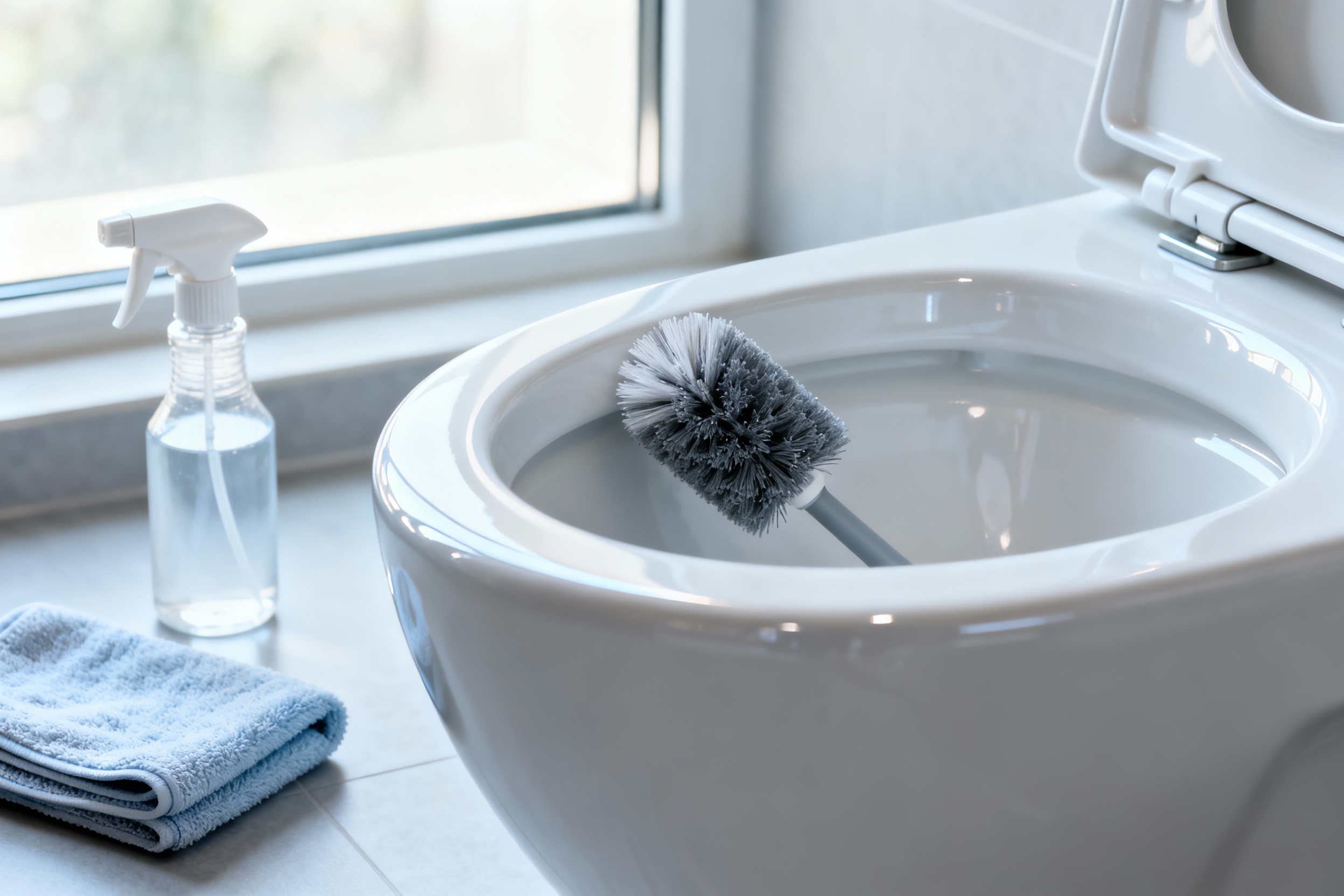
- Swish-and-swish: Keep a spray bottle of 50/50 vinegar and water on the tank. After a flush, spritz the bowl and swish with the brush. Takes 10 seconds.
- Seat wipe: Quick wipe of the seat, lid, and handle with a disinfecting wipe every other day.
It’s cleaner and, frankly, less embarrassing.
- Keep the brush dry: Let it drip over the bowl before returning it to the holder. Moist = microbes.
- Soft water hack: If you have brutal hard water, consider a small softener attachment or add a monthly citric acid clean to your routine.
Natural vs. Chemical: Pick Your Fighter
You can go natural, you can go industrial, or you can mix and match like a sane person.
Here’s the short version.
- Natural route: Vinegar, citric acid, baking soda, and borax handle most problems without harsh fumes.
- Chemical route: Bleach or hydrogen peroxide disinfect fast, and acid-based cleaners melt mineral buildup quickly.
Never mix bleach with acids or ammonia. That combo creates dangerous gases. If you forgot high school chemistry, no shame—just remember: bleach plays alone. FYI, I lean natural for maintenance and go targeted chemical for gnarly situations, IMO.
FAQ
How often should I deep-clean the toilet?
Weekly for a quick clean, monthly for a deeper session.
If you have hard water or lots of people, bump it up. The daily swish habit lets you stretch deep cleans without the ick.
Can I use bleach for everything?
Bleach disinfects but doesn’t remove mineral stains well. Use it on a pre-cleaned surface for sanitizing.
For rings and limescale, choose vinegar, citric acid, or a dedicated descaler first.
Is a pumice stone safe for my toilet?
Yes for standard porcelain, as long as you keep the stone and surface wet. Avoid on coated or specialty finishes. Test a tiny spot first if you feel nervous.
Do those blue drop-in tablets work?
They color the water and mask smells, but they often damage rubber parts in the tank.
You’ll pay for it with leaks and repairs later. Use bowl-only gel cleaners or rim clips instead.
What if my toilet still smells after cleaning?
Clean under the seat hinges and around the base bolts. Check the tank for mildew.
If odors persist, you might have a wax ring issue or dry floor flange. At that point, call a pro and save your sanity.
Can I clean a toilet without harsh fumes?
Absolutely. Use vinegar, citric acid, and baking soda with good ventilation.
They handle 90% of messes. Save strong chemicals for occasional deep disinfecting or heavy rust.
Conclusion
Toilet cleaning doesn’t need drama or a gas mask. Start with a dry bowl, use smart acids for stains, keep a better brush, and don’t ignore the tank or those sneaky rim jets.
Build a few tiny habits, and your throne stays shiny with almost no effort. Not glamorous—but extremely satisfying, IMO.

I’ve spent 10+ years in dog training, digging into what makes dogs (and their humans) tick. At Smart Dog Learning, I share my no-nonsense, fun approach to training so you can enjoy life with a well-behaved, happy pup—no boring lectures, just practical results 😉