
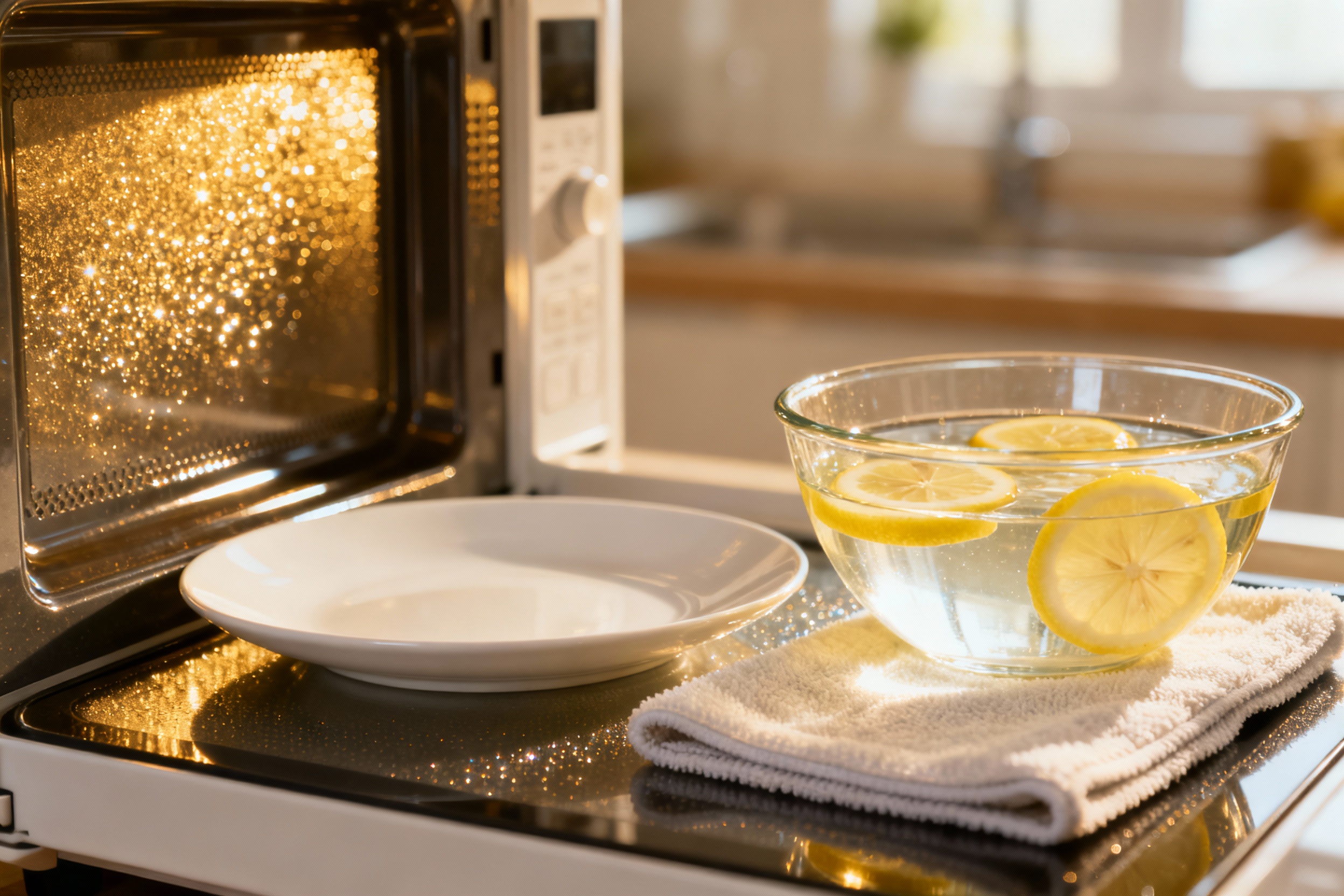
Microwave Cleaning Hacks You’ll Wish You Knew Sooner
You don’t need a hazmat suit to clean your microwave. You just need a few pantry staples and a game plan. In ten minutes, you can erase spaghetti explosions, mystery odors, and crusty corners you’ve ignored for—no judgment—months.
Ready to turn that splattery cave back into a respectable appliance?
The Steam-Soak Shortcut (Your New Default)
You can tackle 90% of microwave messes with steam. It softens baked-on gunk so you can wipe it off without scrubbing your arm off. This trick handles stains, smells, and general “ew.”
How to do it
- Fill a microwave-safe bowl with 1 cup water.
Add 2 tablespoons white vinegar or half a lemon.
- Microwave on high for 3–5 minutes until it steams like a sauna.
- Let it sit for 2 minutes (door closed) to loosen grime.
- Carefully remove the bowl (steam burns = not fun). Wipe walls, ceiling, and door with a cloth or paper towel.
FYI: Lemon smells nicer; vinegar works harder. IMO, use vinegar for serious stink and lemon when you’re just freshening up.
The Citrus Spa Treatment (For Stubborn Funk)
Curry, fish, or bacon ghosting your microwave?
Citrus does more than smell pretty. It cuts grease and neutralizes odors fast.
Lemon scrub method
- Slice a lemon. Squeeze the juice into a bowl with 1 cup water, toss in the rinds.
- Microwave 3–4 minutes, let it sit 2 minutes.
- Dip a cloth in the hot lemon water and buff the interior, especially the ceiling where splatters hide.
Pro tip: Add a splash of vinegar if you want extra odor-fighting power.
Yes, your kitchen will smell like a wage-earning spa.
The Baking Soda Backup (When Stuff Won’t Budge)
Sometimes gunk laughs at steam. That’s when you bring out baking soda. It’s gentle, non-toxic, and gets into corners like a pro.
Make a quick paste
- Mix 2 tablespoons baking soda with 1 tablespoon water to form a paste.
- Spread it on stuck-on spots.
Let it sit 5 minutes.
- Wipe with a damp cloth. Repeat if needed. Rinse with clean water to remove residue.
Skip harsh scrubbing pads.
You want to clean the microwave, not sand it.
The Turntable, Track, and Door Gasket (AKA The Forgotten Trio)
If your microwave still looks grimy after a wipe-down, check the parts you never think about: the glass plate, the roller ring, and the rubber gasket around the door. They collect crumbs like it’s their job.
- Glass turntable: Remove and wash with hot, soapy water or toss it in the dishwasher. Dry completely before putting it back.
- Roller ring/wheels: Pull it out and wipe down.
It gets greasy and makes the plate wobble if you ignore it.
- Door gasket: Use a damp cloth or cotton swab to clean the groove. Food hides here like it’s in witness protection.
Extra credit: underneath the turntable
Lift the plate and check for spills on the floor of the microwave. Wipe it down so heat distributes evenly and your leftovers don’t spin-scream.
No-Scrub Deodorizers That Actually Work
You don’t need fancy cleaners to banish smells.
A few cheap options do the job.
- Vinegar cup: Place a small bowl of pure white vinegar inside overnight (microwave off). It absorbs odors by morning.
- Coffee grounds: A small bowl of fresh grounds inside for a few hours neutralizes stubborn smells. Your microwave will smell like a café planned a comeback tour.
- Baking soda sit: Leave an open box inside when not in use.
Replace monthly for best results.
IMO, coffee works fastest; baking soda wins for set-and-forget.
Grease and Fingerprint Fixes (Outside Counts Too)
You cleaned the inside, but the door looks like a thumbprint museum. Quick fix: a DIY degreaser.
Shiny exterior, zero streaks
- Mix a few drops of dish soap in warm water. Dip a microfiber cloth and wring it out.
- Wipe the exterior, handle, and buttons.
Use a light touch on the control panel.
- Rinse with a clean damp cloth. Dry with a microfiber towel.
For stainless steel, wipe with the grain. For the love of shine, skip abrasive sponges.
When to Avoid Certain Cleaners (Don’t Void Your Sanity)
Microwaves hate certain products.
Protect your appliance and your dinner.
- No bleach. It can damage interiors and leaves fumes you do not want near food.
- No oven cleaner. Too harsh and can corrode finishes.
- No metal scrubbers. They scratch and create spots that trap grime.
- No soaking vents. Keep water away from vent holes and the waveguide cover (the small panel on the side or top).
Read the room (and the manual)
If your microwave has a special coating or sensor panel, check the manual for cleaning restrictions. You want to clean it, not void the warranty for funsies.
Speed-Clean Routine You’ll Actually Use
You don’t need a 30-minute ritual every time soup decides to go supernova. Do this quick routine once a week.
- Steam for 3 minutes: Water + vinegar or lemon.
- Wipe everything: Walls, ceiling, door, turntable, and around the gasket.
- Spot-treat: Baking soda paste on stubborn splatters.
- Freshen: Leave the door open for 5 minutes to air out.
- Exterior swipe: Microfiber cloth with soapy water, then dry.
Total time: 8–10 minutes.
Less time than your pasta needed to cool before it erupted.
Little Habits That Prevent Big Messes
Small changes save you from cleanup meltdowns—literally.
- Cover your food. A microwave cover or a damp paper towel stops splatter attacks.
- Use lower power. Reheat at 50–70% power to avoid boil-overs.
- Stir halfway. It prevents hot pockets (the dangerous kind, not the delicious kind).
- Wipe spills immediately. Fresh mess wipes in one pass. Dried mess takes five.
FAQ
Can I use essential oils in the microwave to make it smell nice?
You can add a drop to the lemon-steam bowl for scent, but keep it minimal. Oils can leave residue and interfere with food flavors.
Stick to lemon and vinegar for everyday use and only use oils for the water you plan to discard.
How do I clean the waveguide cover safely?
The waveguide cover is the small panel inside (usually paperlike or mica). Wipe it gently with a slightly damp cloth only. If it’s stained or burned, don’t scrub it—replace it, because damage there can affect performance.
Is it safe to microwave vinegar?
Yes, in small amounts with water.
Use a microwave-safe bowl and avoid superheating by placing a wooden stir stick or toothpick in the bowl. Let it rest before removing to avoid steam burns.
My microwave smells like burnt popcorn. Help?
Do a vinegar steam cycle twice.
Then leave a bowl of coffee grounds or baking soda inside overnight. If the smell lingers, wipe with a 1:1 vinegar-water mix and air it out with the door open for 15 minutes.
Can I use disinfecting wipes on the control panel?
Yes, lightly, but don’t soak it. Wring wipes out well, avoid seams, and follow with a dry microfiber cloth.
Moisture and electronics don’t vibe.
What if I see rust spots inside?
Clean thoroughly, dry the interior, and touch up small chips with microwave-safe appliance paint if your manufacturer approves it. If rust spreads or you see exposed metal arcing, retire the microwave. Safety first, leftovers second.
Conclusion
You don’t need a cleaning marathon or a shopping spree to fix a funky microwave.
Steam it, wipe it, treat the stubborn spots, and clean the parts you never see. Keep a lemon and some vinegar on standby, and you can handle any splatter saga. Do the quick weekly routine and, FYI, your future self will thank you every time leftovers reheat without smelling like last Thursday’s popcorn.

I’ve spent 10+ years in dog training, digging into what makes dogs (and their humans) tick. At Smart Dog Learning, I share my no-nonsense, fun approach to training so you can enjoy life with a well-behaved, happy pup—no boring lectures, just practical results 😉