How To Deep Clean Your Couch And Remove Hidden Odors
You know that faint “what’s that smell?” vibe your living room sometimes gives off? Yeah, your couch probably knows. Crumbs, pet naps, and movie-night spills add up.
The good news: you can deep clean your couch and banish those hidden odors without calling in a cleaning crew. Let’s get in there and make your sofa smell like it’s got its life together.
Start With a Couch Recon Mission
Before you touch a cleaner, figure out what you’re dealing with. You don’t want to turn a mild funk into a full-blown disaster.
- Check the fabric tag. Look for codes: W (water-based cleaners), S (solvent-only), W/S (either), and X (vacuum only).
Respect the code or risk weird water marks.
- Identify the stink sources. Pet smells, musty vibes, old spills, or general “lived-in” air? Each has a fix.
- Open the windows. Ventilation is your friend. Fresh air helps dry time and reduces lingering odors.
The Power Vacuum: Suck Up the History
You can’t deep clean on top of crumbs and dust bunnies.
Remove cushions if possible and go to town.
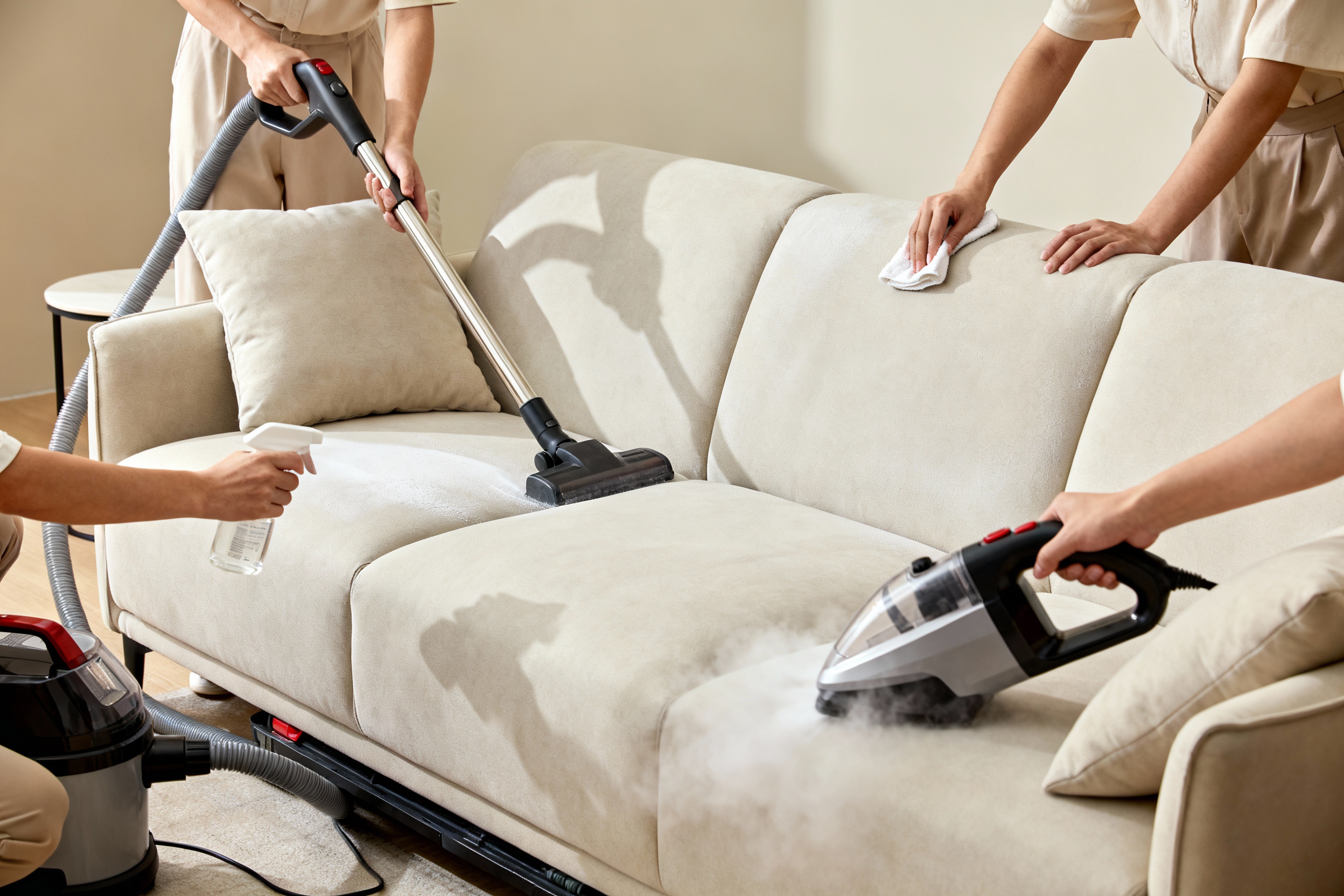
- Use a crevice tool along seams and under cushions. That’s where the popcorn bits hide.
- Brush attachment for fabric surfaces. Lift dust and hair without roughing up delicate fibers.
- Flip cushions and vacuum both sides.
If you find a remote from 2018, congrats?
FYI: Pet Hair Hack
Use a slightly damp rubber glove or a lint brush to pull up stubborn fur before vacuuming. It grabs hair like Velcro, minus the drama.
Odor Neutralizers: Baking Soda and Friends
Baking soda never met a couch funk it couldn’t challenge. It neutralizes odors instead of just masking them.
- Sprinkle a generous layer of baking soda on seats, backs, and cushions.
- Gently massage it into the fabric with your hand or a soft brush.
- Let it sit for 30–60 minutes for mild smells, up to overnight for stubborn odors.
- Vacuum thoroughly. Multiple passes so you don’t leave white dust behind.
Upgrade: Baking Soda + Essential Oils
If your fabric code allows and you’re not sensitive to scents, mix 1 cup baking soda with 5–8 drops of lavender, lemon, or eucalyptus oil.
It’s optional, but it adds a spa moment for your sofa.
Spot Cleaning: Handle Stains Without Spreading the Chaos
Treat stains before you steam or shampoo. Always test a hidden area first because couch fabric can be dramatic.
- Water-safe (W/W-S): Mix warm water with a drop of mild dish soap. Blot, don’t scrub.
Rinse with a damp cloth, then blot dry.
- Solvent-only (S): Use a dry-cleaning solvent or rubbing alcohol (isopropyl 70%). Lightly mist and blot with a clean cloth. It evaporates fast and avoids water marks.
- Grease or makeup: Cornstarch absorbs oil.
Sprinkle, wait 15–20 minutes, vacuum, then spot clean.
Protein Stains (Milk, Sweat, Pet Mess)
Use an enzyme cleaner labeled safe for upholstery. Enzymes break down proteins that cause smells. Follow the directions and don’t overdo it—more isn’t more.
Dealing With Deep Odors: Steam, Shampoo, or Alcohol
When the funk feels baked in, go deeper—based on your fabric code.
- Steam cleaning (W/W-S): A garment steamer or upholstery steam cleaner lifts grime and kills odor-causing bacteria.
Use distilled water and short passes. Don’t soak.
- Upholstery shampoo (W): Use a dedicated upholstery cleaner or a tiny bit of gentle detergent. Lightly agitate with a soft brush.
Extract with a wet/dry vac if you have one, or blot like your life depends on it.
- Rubbing alcohol (S): Fill a spray bottle with isopropyl alcohol. Mist lightly and scrub with a soft brush in sections. It evaporates quickly and can reset matted fibers too.
IMO, this is clutch for microfiber.
Pro Tip: Manage Moisture
Over-wetting = mildew and water rings. Work in small zones, extract or blot up liquid immediately, and aim a fan at the area. You want “damp,” not “soggy.”
Kill the Musty Vibes: Airflow and Sun (Carefully)
Odors love stagnant air.
You don’t.
- Crank the airflow: Fans + open windows speed dry time and push out stale air.
- Sunlight helps with odors and bacteria, but avoid direct, harsh sun on delicate or dark fabrics. 30–60 minutes of indirect light works wonders.
- Dehumidify if your space feels damp. Moisture makes smells cling like an ex.
Fabric Refreshers: Make It Smell Clean, Not Perfumed
After the deep clean, use light refreshers to keep things fresh between big efforts.
- DIY spray (W/W-S): 1 cup distilled water + 1 tbsp vodka or rubbing alcohol + 5 drops essential oil. Mist lightly—don’t drench.
- Charcoal bags tucked behind cushions absorb odors quietly.
Replace every 2–3 months.
- Vinegar steam trick: Boil a small pot of vinegar-water on the stove while you air out the room. The smell fades, the odors go with it. Not directly on the couch though, please.
When the Smell Won’t Quit: Hidden Culprits
Still catching whiffs after all that?
Time to investigate the couch’s dark secrets.
- Under the frame: Vacuum underneath. Dust and pet hair gather down there like they pay rent.
- Cushion cores: If foam smells, remove covers (if zipper allows), spritz foam lightly with enzyme cleaner or alcohol, air dry thoroughly with a fan.
- Old spills in seams: Use a small detailing brush or toothbrush with a tiny bit of cleaner to tease out grime, then blot dry.
- Mildew: Musty + spotty growth means mold. Clean with a fabric-safe mildew remover or a 50/50 alcohol-water mix and lots of airflow.
If it’s deep in the frame, call a pro.
Maintenance: Keep It Fresh With Tiny Habits
You don’t need to deep clean every week. Just be a little consistent.
- Weekly: Quick vacuum and fluff cushions. Rotate if possible.
- Monthly: Baking soda refresh + vacuum.
- Quarterly: Spot clean seams, check cushion cores, and do a light steam if fabric permits.
- Immediately: Blot spills right away.
Water ring prevention saves future you a lot of sighing.
Protect the Couch You Just Saved
Consider a fabric protector spray (check compatibility). It helps repel spills and makes future cleanups less dramatic. Slipcovers also work, especially if pets treat your sofa like a timeshare.
FAQs
How often should I deep clean my couch?
Most households can deep clean every 3–6 months.
If you have pets, kids, or lots of guests, aim for the shorter end. Weekly vacuums and monthly baking soda sessions keep odors from settling in, FYI.
Can I use vinegar directly on my couch?
Only if your fabric code says W or W/S, and even then, dilute it. Straight vinegar can leave a lingering scent and might discolor delicate fabrics.
Test a hidden spot and use it sparingly.
Is steam cleaning safe for all couches?
Nope. Steam works great for many W or W/S fabrics, but it can damage S-only or X fabrics and warp delicate weaves. Always check the tag and go low and slow with steam.
When in doubt, test first.
How do I remove urine smell from a couch?
Blot as much as possible, then use an enzyme cleaner designed for pet messes. Saturate the area lightly (don’t flood), let it sit per instructions, then blot and air dry with a fan. Repeat if needed.
Enzymes beat perfume every time, IMO.
What if my couch still smells after everything?
Look deeper: foam cushions, under the frame, or mold inside the structure. Try targeted enzyme or alcohol treatments on foam and max out airflow. If the frame or padding has absorbed odors, a professional cleaning or cushion replacement might be the move.
Can I put cushion covers in the washing machine?
Only if the tag allows it and the zipper seems sturdy.
Wash cold, gentle cycle, and air dry to prevent shrinkage. Re-cover while slightly damp to keep the shape right.
Conclusion
Your couch doesn’t need to smell like “mystery” anymore. With the right fabric-safe methods, a little baking soda, and some targeted cleaning, you can kick out deep odors and reclaim your living room.
Keep up a simple routine, spot clean fast, and let airflow do its thing. Your nose (and your guests) will thank you.

I’ve spent 10+ years in dog training, digging into what makes dogs (and their humans) tick. At Smart Dog Learning, I share my no-nonsense, fun approach to training so you can enjoy life with a well-behaved, happy pup—no boring lectures, just practical results 😉