How To Clean Makeup Brushes Fast (and Make Them Last Longer)
Your makeup brushes look cute on your vanity, but if they’re caked in foundation and who-knows-what, they’re basically germ sticks. Clean brushes blend better, last longer, and save your skin from surprise breakouts. The best part?
You can wash them fast—like, under 10 minutes fast—and keep them fluffy. Let’s do this.
Why You Should Clean Them (Yes, Even If They Look “Fine”)
Dirty brushes cause streaky makeup, clogged pores, and weird textures. You wouldn’t reuse a face towel for weeks, right?
Same energy here. Clean bristles pick up product evenly and blend like a dream. Plus, regular cleaning extends brush life, so you don’t need to replace your favorites every few months.
The Fastest Way To Clean Makeup Brushes
You don’t need a fancy gadget. You need soap, water, your hands, and maybe a silicone cleaning mat if you’re feeling extra.
What you’ll need
- Mild soap: fragrance-free dish soap, baby shampoo, or a brush cleanser
- Olive oil or cleansing oil (optional): for stubborn cream products
- Lukewarm water: never hot
- Clean towel and a counter edge for drying
- Silicone mat (optional): speeds things up
Five-minute wash method
- Wet only the bristles with lukewarm water, pointing them downward.
Keep water off the ferrule (that metal part). Water inside the ferrule loosens glue and ruins the brush.
- Soap it up. Put a drop of cleanser in your palm or on a silicone mat.
Swirl the brush gently until the suds turn… questionable.
- Rinse and repeat until the water runs clear. For foundation and concealer brushes, add a tiny drop of oil to break down residue, then rewash with soap.
- Reshape the bristles with your fingers. Think “original shape,” not “mop.”
- Dry at an angle with bristles pointing down off a counter edge.
Never dry upright. Never use a hairdryer. Your brushes hate heat, FYI.
The 60-Second Spot-Clean Between Looks
You don’t need a full wash if you just want to switch eyeshadow colors or remove surface gunk.
Quick spot-clean method
- Spritz a brush cleaner or 70% isopropyl alcohol onto a clean cloth or paper towel.
- Swipe the brush back and forth until color stops transferring.
- Wave it in the air for 10 seconds.
Done.
This won’t deep clean, but it keeps your blends smooth and your shades from getting muddy. Do a real wash weekly if you wear makeup often.
How Often Should You Clean Different Brushes?
Some brushes get dirtier faster. Sorry, foundation brushes—you’re the problem.
- Foundation, concealer, cream product brushes/sponges: every 2–3 uses
- Powder, blush, bronzer brushes: every 1–2 weeks
- Eyeshadow brushes: weekly if you use them often; spot-clean between colors
- Eyebrow and eyeliner brushes: after each use if you use pomades or gels
IMO, if your skin’s acne-prone or sensitive, lean more frequent. Your face will thank you.
Products That Actually Work (And What To Skip)
You don’t need a 12-step brush cleansing routine.
Keep it simple.
Great options
- Unscented dish soap: cuts oils fast, cheap, effective
- Baby shampoo: gentle on bristles, ideal for natural hair brushes
- Solid brush cleanser: convenient, great for travel
- 70% isopropyl alcohol: for spot-cleaning synthetic brushes only
- Olive oil or cleansing oil: removes long-wear creams; always follow with soap
Things to avoid
- Hot water: melts glue, frizzes bristles
- Conditioner: coats bristles and ruins pick-up
- Hairdryer or radiator: deforms shape and weakens glue
- Bleach or harsh disinfectants: damages fibers and skin
Make Them Last Longer With These Habits
Treat your brushes right and they’ll return the favor—like tiny, fluffy loyalty programs.
Smart drying setup
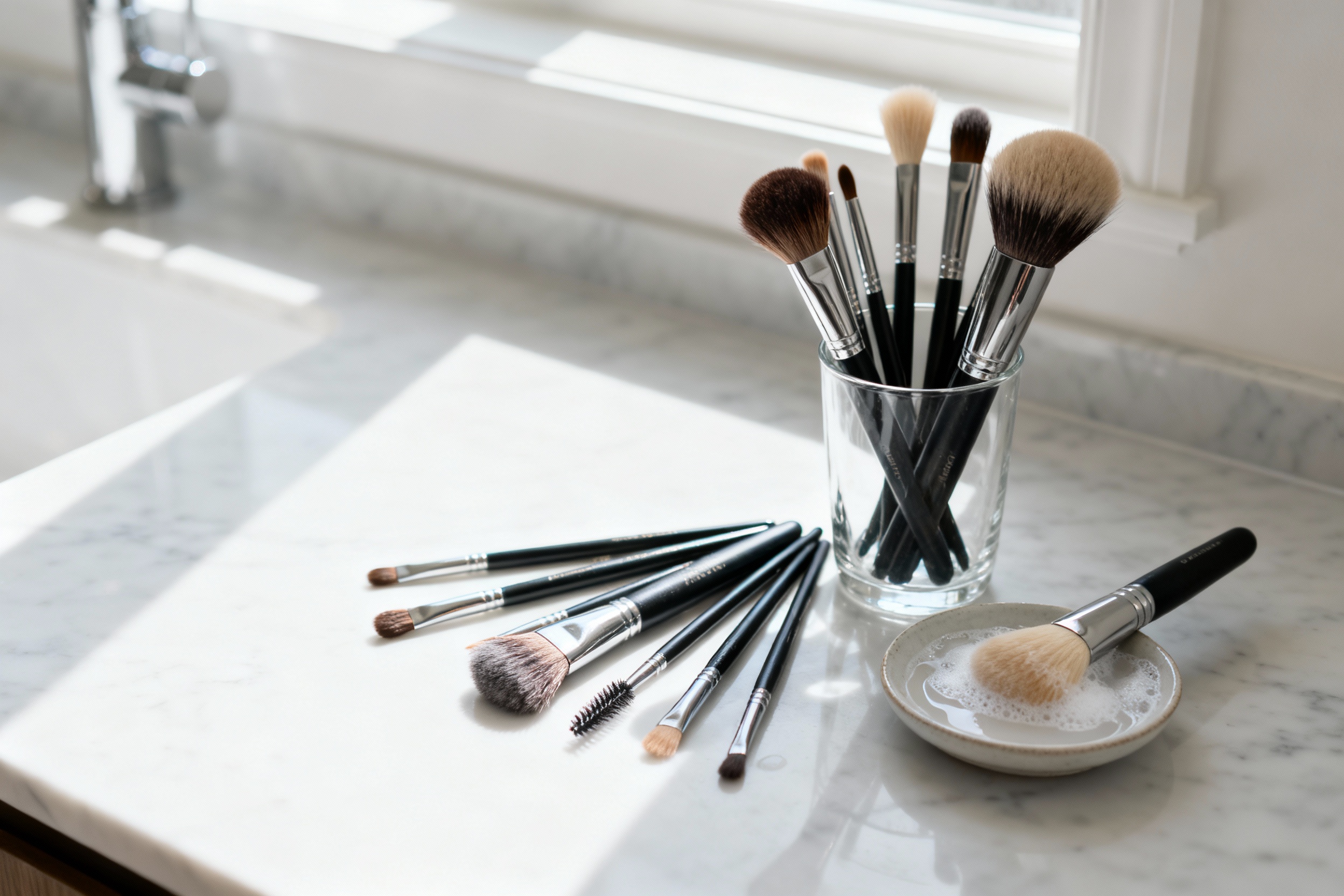
- Always dry bristles down. Roll a towel and prop handles on it so the bristles hang off the edge.
- Space them out so air circulates. Crowded brushes stay damp and funky.
- Let them dry overnight before using again.
Storage tips
- Keep them upright in a cup or brush holder once dry.
- Use brush guards for delicate or tapered shapes to maintain their silhouette.
- Don’t store in airtight bags.
Moisture + darkness = bacterial rave.
Technique matters
- Use light pressure when washing. Aggressive scrubbing causes shedding.
- Swirl, don’t stab into mats or your palm.
- Dedicate brushes for creams vs powders to minimize deep-cleaning time.
Special Care: Natural vs. Synthetic Bristles
Yes, it matters.
And no, you don’t need a microscope to tell the difference—most brands list it.
Natural hair brushes
- Think goat, sable, pony—great for powder products.
- Use gentle soap (baby shampoo or dedicated cleanser).
- Avoid alcohol or harsh detergents. They dry out the hair.
- Reshape carefully and use a brush guard as they dry to keep that precise taper.
Synthetic brushes
- Usually nylon or taklon—awesome for creams and liquids.
- Dish soap works perfectly to cut oils.
- Spot-clean with 70% alcohol when you need speed.
- They bounce back better, but still avoid heat and rough handling.
Speed Hacks for the Chronically Busy
You want clean brushes without the chore? Same.
- Batch wash by category: all eye brushes first, then face brushes.
- Use a solid cleanser and keep it by your sink—less mess, faster swirls.
- Rotate sets: two basic brush sets means one can dry while you use the other.
- Clean as you go: spot-clean eyeshadow brushes mid-look to avoid muddy blends.
- Sponge shortcut: a dry color-removal sponge (those black tins) wipes powder pigment instantly.
FAQ
Can I use regular hand soap to clean brushes?
You can in a pinch, but it can dry out bristles if it’s heavily fragranced or harsh.
I prefer baby shampoo or gentle dish soap. Your brushes will feel softer and last longer.
How do I clean beauty sponges fast?
Soak the sponge under warm water, then massage in a solid cleanser or dish soap. Squeeze, rinse, repeat until water runs clear, then squeeze out excess and let it air-dry in an open space. Microwaving sponges is a no—it can melt or deform them.
My brush still looks stained.
Is it clean?
Some pigments stain bristles, especially white ones. If the water runs clear and no product transfers onto a towel, you’re good. Staining is cosmetic, not dirty—annoying, but safe.
How do I disinfect brushes?
For synthetics, spritz 70% isopropyl alcohol after washing, then let them dry.
For natural hair, skip alcohol and rely on thorough washing plus complete drying. Clean > oversanitized when it comes to brush longevity.
Why do my brushes shed?
Usually because of rough scrubbing, hot water, or water creeping into the ferrule. Wash gently, keep the bristles pointing down, and avoid heat. If a brush sheds from day one, it’s probably a quality issue, IMO.
How long should brushes take to dry?
Most small eye brushes dry in 3–4 hours.
Dense face brushes can take 8–12 hours. Wash at night, set them to dry bristles-down, and they’ll be ready by morning.
Conclusion
Clean brushes don’t need to be a whole saga. With the right soap, a quick swirl-rinse-reshape routine, and smart drying, you’ll get fresher makeup, fewer breakouts, and brushes that last for years.
Do a speedy spot-clean when you’re rushed and a weekly wash for maintenance—easy. Your skin, your blends, and your bank account will all be happier, FYI.

I’ve spent 10+ years in dog training, digging into what makes dogs (and their humans) tick. At Smart Dog Learning, I share my no-nonsense, fun approach to training so you can enjoy life with a well-behaved, happy pup—no boring lectures, just practical results 😉