How To Clean Blood Stains On Sofa
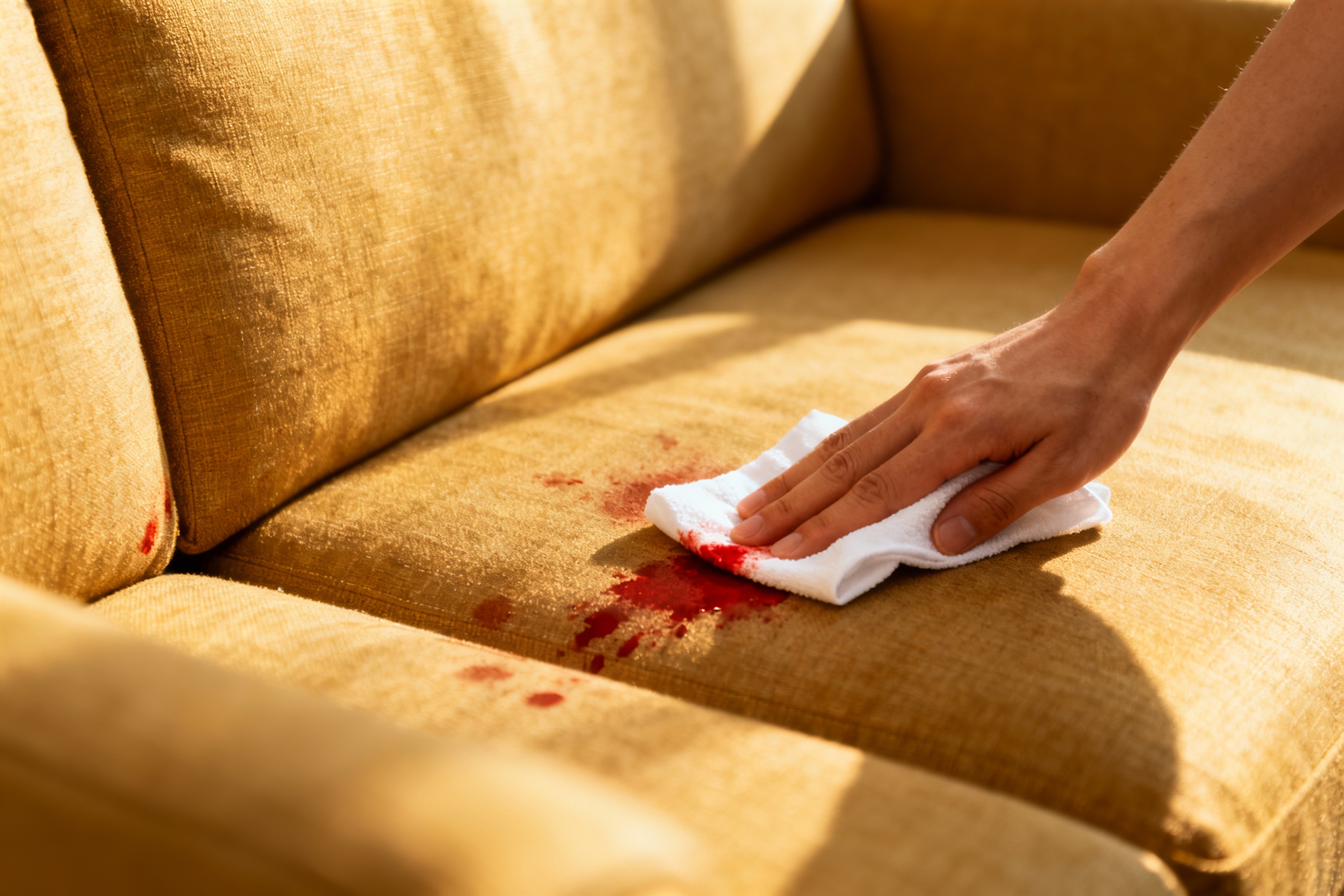
Spilled some blood on the sofa? It happens—nosebleeds, kitchen mishaps, kids doing kid things. Don’t panic and definitely don’t rub it in.
You can save your couch, and you won’t need a hazmat suit. Grab a few basics from the kitchen and let’s fix this fast.
Know Your Fabric Before You Touch Anything
Before you start dabbing like a CSI extra, check the care tag. It usually reads W, S, WS, or X.
- W: Water-based cleaners are safe.
- S: Solvent-only (dry-cleaning type) cleaners.
- WS: Either water or solvent works.
- X: Vacuum only.
No liquids. Yes, it’s annoying.
If the tag bailed on you or faded to mystery hieroglyphs, test your cleaner on a hidden spot first. Better a tiny secret patch than a giant “oops” in the center cushion.
Act Fast: The Emergency Blot
The fresher the blood, the easier it lifts.
You snooze, you scrub.
- Blot, don’t rub: Use a clean white cloth or paper towel. Rubbing spreads the stain and shoves it deeper.
- Cold water only: Hot water cooks the proteins and locks the stain. Keep it chilly.
- Work from the outside in: You want to shrink the stain, not make a ring.
If the stain already dried, skip ahead to the treatments.
You’ll need a bit more muscle.
Choose Your Weapon: Treatments That Actually Work
Pick based on what you have and your fabric type. Start mild, then escalate.
Cold Water + Dish Soap (for W and WS fabrics)
This combo handles most fresh stains.
- Mix 1 cup cold water with a few drops of clear dish soap.
- Dip a cloth and dab the stain. Keep blotting and lifting.
- Rinse by blotting with plain cold water to remove soap residue.
- Blot dry with a towel.
Tip: If bubbles make a mess, you used too much soap.
Less is more, IMO.
Hydrogen Peroxide 3% (test first; great on light fabrics)
Hydrogen peroxide breaks down blood like a pro, but it can lighten dark fabrics. Test, always.
- Drip a tiny amount on the stain. Let it fizz—very satisfying.
- Blot with a clean cloth.
Repeat if needed.
- Follow with a cold water blot to remove residue.
FYI: Skip this on wool, silk, or anything labeled S or X.
Enzyme Cleaner (pet stain remover works wonders)
Enzymes eat the proteins in blood (science to the rescue).
- Choose an enzyme cleaner safe for upholstery.
- Apply per label instructions and let it dwell for 5–10 minutes.
- Blot thoroughly and follow with a cold water rinse blot.
This works on both fresh and dried stains and is couch-safe for most W/WS fabrics.
Salt Paste or Baking Soda (gentle abrasives for W/WS)
When life gives you pantry staples, make stain fighters.
- Salt paste: Mix salt with cold water into a paste, spread on the stain, let it sit 10–15 minutes, then blot off and rinse with cold water.
- Baking soda: Sprinkle on a damp stain, let it pull moisture and odor, then vacuum once dry.
These are great as pre-treatments before the soap or enzyme step.
Isopropyl Alcohol (for S fabrics)
Solvent-only fabrics need non-water solutions.
- Dampen a cloth with 70% isopropyl alcohol.
- Blot gently; don’t soak the cushion.
- Follow with a dry cloth to lift residue.
You can also use a dry-cleaning solvent designed for upholstery. Open windows—your nose will thank you.
How To Handle Dried Blood (A Little Crunchy, Still Fixable)
Dried stains need a rehydrate-and-lift strategy.
- Loosen the crust: Scrape gently with a dull knife or spoon.
- Rehydrate: Dab with cold water for a minute to soften.
- Treat: Use enzyme cleaner or hydrogen peroxide (on safe fabrics). Peroxide shines here.
- Blot and repeat: Several rounds beat one aggressive scrub.
If nothing budges, combine an enzyme cleaner first, then follow with peroxide on light, non-delicate fabrics.
Don’t mix them directly—alternate and rinse between.
What Not To Do (Because Regret Is Expensive)
Avoid these common mistakes:
- No hot water: It sets the stain like cement.
- No colored cloths: Dyes can transfer. White cloths only.
- No soaking cushions: Water can cause mildew and water rings.
- No bleach on upholstery: It weakens fibers and causes ugly patches.
- No random “miracle hacks”: Toothpaste and hair spray won’t help here, IMO.
Dealing With Leather and Faux Leather
Leather laughs at water but cries at harsh chemicals. Be gentle.
- Blot fresh blood with a dry cloth—no rubbing.
- Use a slightly damp cloth with mild dish soap.
Wipe, then immediately dry.
- For lingering marks, use a leather cleaner per instructions.
- Condition afterward to keep it supple.
Faux leather handles mild soap and water fine, but test first. Avoid alcohol unless the manufacturer says it’s cool.
Finish Strong: Rinse, Dry, and De-odorize
Wrap it up the right way so the stain doesn’t boomerang.
- Rinse blot: Always follow cleaners with a cold water blot to remove residue.
- Dry: Press with a dry towel, then aim a fan at the spot. Speed matters.
- De-odorize (optional): Sprinkle baking soda over the dry area, let sit for an hour, then vacuum.
If a faint ring forms, lightly clean the surrounding area with a diluted soap solution to blend the edges, then dry evenly.
Spot-Proofing Your Future Self
You can’t bubble-wrap your life, but you can prep your sofa.
- Fabric protector: Use a reputable spray on W/WS fabrics.
Test first.
- Keep a kit: White cloths, enzyme cleaner, 3% hydrogen peroxide, dish soap, isopropyl alcohol.
- Act fast: The best stain remover is speed plus cold water.
And maybe keep the vampire cosplay away from the beige cushions. Just saying.
FAQ
Can I use hydrogen peroxide on dark fabrics?
Peroxide can lighten dark or bright fabrics. Always spot test in a hidden area first.
If it lightens, switch to an enzyme cleaner or isopropyl alcohol (for S fabrics).
What if my sofa tag says X?
X means vacuum only—no liquids. Blot up fresh blood dry, then call a professional upholstery cleaner. DIY liquids can leave rings or damage the fabric.
Will vinegar remove blood stains?
Vinegar helps with some stains, but blood responds better to cold water, dish soap, and enzymes.
Vinegar can sometimes set protein stains, so I’d skip it here.
How do I avoid water rings?
Use minimal liquid, blot instead of scrubbing, and dry quickly with a fan. If a ring appears, lightly clean a wider area with a very diluted soap solution, then dry evenly so it blends.
Is baking soda enough on its own?
Baking soda helps deodorize and can lift some moisture, but it won’t fully remove blood. Use it as a helper, not the main event.
Pair it with soap, enzymes, or peroxide.
When should I call a pro?
If the fabric says X, the stain covers a large area, the sofa is silk/wool/velvet, or your test spot reacted badly. Pros have solvents and steam tools that save the day (and your couch).
Conclusion
Blood on the sofa isn’t a disaster—it’s a to-do list. Check your fabric, keep it cold, blot like a champ, and choose the right cleaner for the job.
With quick action and a little patience, your couch goes back to drama-free lounging. And hey, maybe keep a stain kit handy for next time—because life happens, and upholstery shouldn’t suffer for it.

I’ve spent 10+ years in dog training, digging into what makes dogs (and their humans) tick. At Smart Dog Learning, I share my no-nonsense, fun approach to training so you can enjoy life with a well-behaved, happy pup—no boring lectures, just practical results 😉