
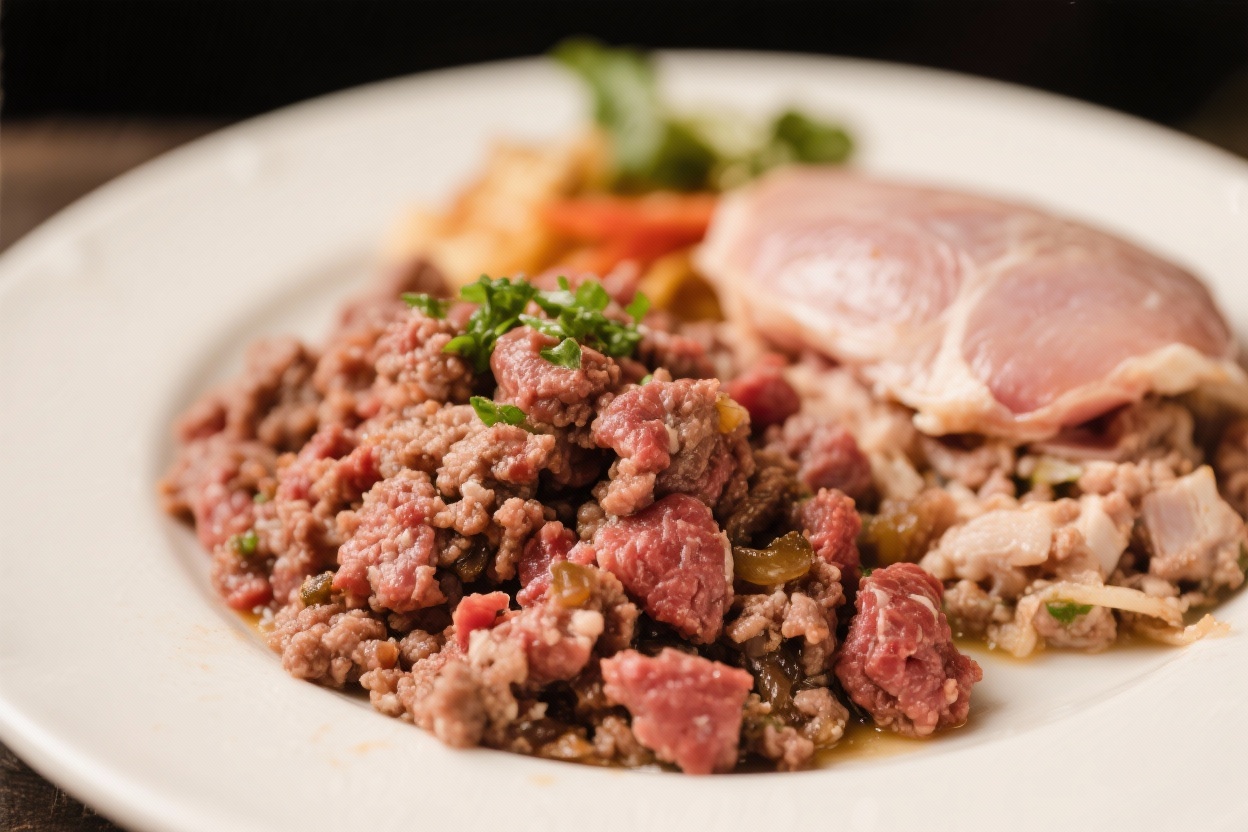
Ground Beef and Turkey Cat Food – A Simple, Protein-Rich Homemade Meal
If you’ve been thinking about making fresh food for your cat, this simple ground beef and turkey recipe is a great place to start. It’s straightforward, budget-friendly, and packed with the protein cats crave. You control the ingredients, skip unnecessary fillers, and keep flavors mild and cat-friendly.
With a few key add-ins for balance, you can make a batch that stores well and serves easily.
What Makes This Recipe So Good
- High-quality protein: Ground beef and turkey offer a balanced mix of flavors and textures most cats enjoy.
- Easy to prepare: One pan, quick cooking, and minimal chopping. It’s weeknight-friendly.
- Customizable: You can adjust fat and moisture for your cat’s preferences and needs.
- Budget-conscious: Uses common, affordable ingredients you can find anywhere.
- Balanced add-ins: Simple supplements help make it more complete than meat alone.
What You’ll Need
- 1 pound ground turkey (93% lean is a good middle ground)
- 1 pound ground beef (80–90% lean)
- 1 large egg, lightly beaten (for protein and choline)
- 1/2 cup chicken or turkey liver, finely minced (do not exceed; liver is potent)
- 1/2–3/4 cup low-sodium bone broth or water (for moisture)
- 1 tablespoon salmon oil or sardine oil (omega-3s for skin and coat)
- 1/2 teaspoon finely ground eggshell powder or food-grade calcium carbonate
- 1/4 teaspoon taurine powder (cats require taurine; cooking reduces natural levels)
- 1/8 teaspoon iodized salt or a pinch of kelp powder (iodine support; don’t overdo it)
- Optional: 1–2 tablespoons pumpkin purée (fiber for stool quality)
- Optional: 1–2 tablespoons finely minced hearts or gizzards (extra taurine and texture)
Important note: This recipe aims to be balanced for occasional or rotational feeding. For long-term exclusive feeding, consult your veterinarian or a board-certified veterinary nutritionist to confirm nutrient adequacy for your cat’s age, size, and health conditions.
How to Make It
- Prep your space. Wash your hands, clean surfaces, and set out a large skillet or sauté pan.
Have a mixing bowl and storage containers ready.
- Cook the meats. Add the ground turkey and ground beef to the skillet over medium heat. Break up with a spatula and cook until no pink remains. Keep heat moderate to avoid browning too hard.
- Add moisture. Pour in the broth or water and simmer 1–2 minutes to keep the mixture soft and moist.
Cats often prefer a tender, wet texture.
- Stir in liver and optional organs. Mix in minced liver (and hearts or gizzards if using). Cook just until the liver changes color, 1–2 minutes. Do not overcook.
- Cool slightly. Remove from heat and let the mixture cool until warm, not hot.
This protects heat-sensitive nutrients you’ll add next.
- Add supplements. Stir in the beaten egg, salmon oil, eggshell powder or calcium carbonate, taurine, and iodine source. If using pumpkin, add it now. Mix thoroughly for even distribution.
- Adjust texture. If it looks dry, stir in a bit more warm water or broth.
You’re aiming for soft, scoopable, and slightly saucy.
- Portion. Divide into daily servings. A general starting point is about 2–4% of your cat’s body weight per day in food, split into two meals. Adjust based on your vet’s guidance and your cat’s body condition.
- Serve. Offer a small amount first to check acceptance.
Warm to room temperature; avoid serving straight from the fridge.
Storage Instructions
- Refrigerate: Store in airtight containers for up to 3 days.
- Freeze: Portion into small containers or silicone trays and freeze up to 2–3 months. Label with the date.
- Thaw safely: Thaw overnight in the fridge. For serving, warm gently in a baggie under warm water—do not microwave directly if it creates hot spots.
- Discard leftovers: Remove and discard any uneaten portion after 1–2 hours at room temperature.
Why This Is Good for You
- Control over ingredients: You decide the quality, fat level, and additives, which is helpful for picky eaters or cats with sensitivities.
- Hydration support: Added water or broth helps increase moisture, which supports urinary health.
- Omega-3 boost: Salmon oil supports skin, coat, and overall inflammation balance.
- Taurine and calcium included: Two essential nutrients cats need every day are built into the recipe.
- Fresh aroma: Freshly prepared meat often encourages better eating in reluctant cats.
Pitfalls to Watch Out For
- Skipping supplements: Meat alone is not complete.
Cats require taurine and adequate calcium. Don’t omit these.
- Too much liver: Keep liver to about 5–7% of the recipe. Excess can cause vitamin A toxicity.
- Overcooking: High heat reduces taurine and dries out the food, lowering palatability.
- Seasonings: Avoid onion, garlic, chives, and excess salt.
These can be harmful to cats.
- Texture too dry: Dry, crumbly mixes turn many cats off. Add moisture until soft and cohesive.
- Rapid diet changes: Transition gradually over 5–7 days to avoid digestive upset.
Alternatives
- Protein swaps: Use ground chicken or rabbit for variety. Stick to poultry or rabbit for milder fats and flavors.
- Fat adjustments: If your cat needs fewer calories, choose leaner meats and skim fat.
For weight gain, add a bit more 80% lean beef or increase oil slightly (under vet guidance).
- Fish oil options: If salmon oil isn’t tolerated, try krill oil or sardine/anchovy oil. Keep doses modest.
- Calcium source: Substitute finely ground eggshell (about 1/2 teaspoon per pound of boneless meat) with food-grade calcium carbonate if you prefer a consistent measure.
- Broth alternatives: Use plain water if you can’t find low-sodium broth. Never use broths with onion or garlic.
FAQ
Can I feed this exclusively?
This recipe can be part of a balanced rotation, but cats have specific nutrient requirements.
For exclusive long-term feeding, ask your veterinarian or a board-certified veterinary nutritionist to confirm nutrient adequacy for your cat’s life stage and health.
Do I have to add taurine?
Yes. Cooking reduces taurine levels, and cats cannot synthesize enough on their own. Adding taurine powder helps ensure your cat meets daily requirements.
Can I serve it raw?
If you prefer raw feeding, discuss safe sourcing and pathogen risks with your vet.
Many owners lightly cook to reduce risk while preserving texture and nutrients. Food safety is especially important in homes with children, elderly, or immunocompromised people.
How much should I feed per day?
As a starting point, offer 2–4% of your cat’s body weight daily, split into two meals. Adjust based on body condition, age, and activity, and check with your vet for a personalized plan.
Is pumpkin necessary?
No, it’s optional.
A small amount can help with stool quality and hairball control, but skip it if your cat doesn’t tolerate it or doesn’t need extra fiber.
What if my cat won’t eat it?
Warm to room temperature, add a little extra broth, or sprinkle a few freeze-dried meat crumbles on top as a topper. Transition gradually by mixing with your cat’s current food.
Can I use multivitamins instead of individual supplements?
Possibly, but choose a feline-specific product and verify dosing with your vet. Not all multivitamins cover taurine and calcium adequately for homemade diets.
Is ground beef safe for cats?
Yes, when fully cooked and unseasoned.
Choose reasonable fat levels and balance with poultry and supplements for a better nutrient profile.
Wrapping Up
This Ground Beef and Turkey Cat Food is simple, flexible, and cat-approved in many homes. With the right supplements and a gentle cooking approach, you can serve a fresh, moist meal that supports your cat’s daily needs. Keep portions sensible, store it safely, and loop in your vet for long-term feeding advice.
Small steps and consistency make homemade feeding both manageable and rewarding.
Printable Recipe Card
Want just the essential recipe details without scrolling through the article? Get our printable recipe card with just the ingredients and instructions.

I’ve spent 10+ years in dog training, digging into what makes dogs (and their humans) tick. At Smart Dog Learning, I share my no-nonsense, fun approach to training so you can enjoy life with a well-behaved, happy pup—no boring lectures, just practical results 😉