
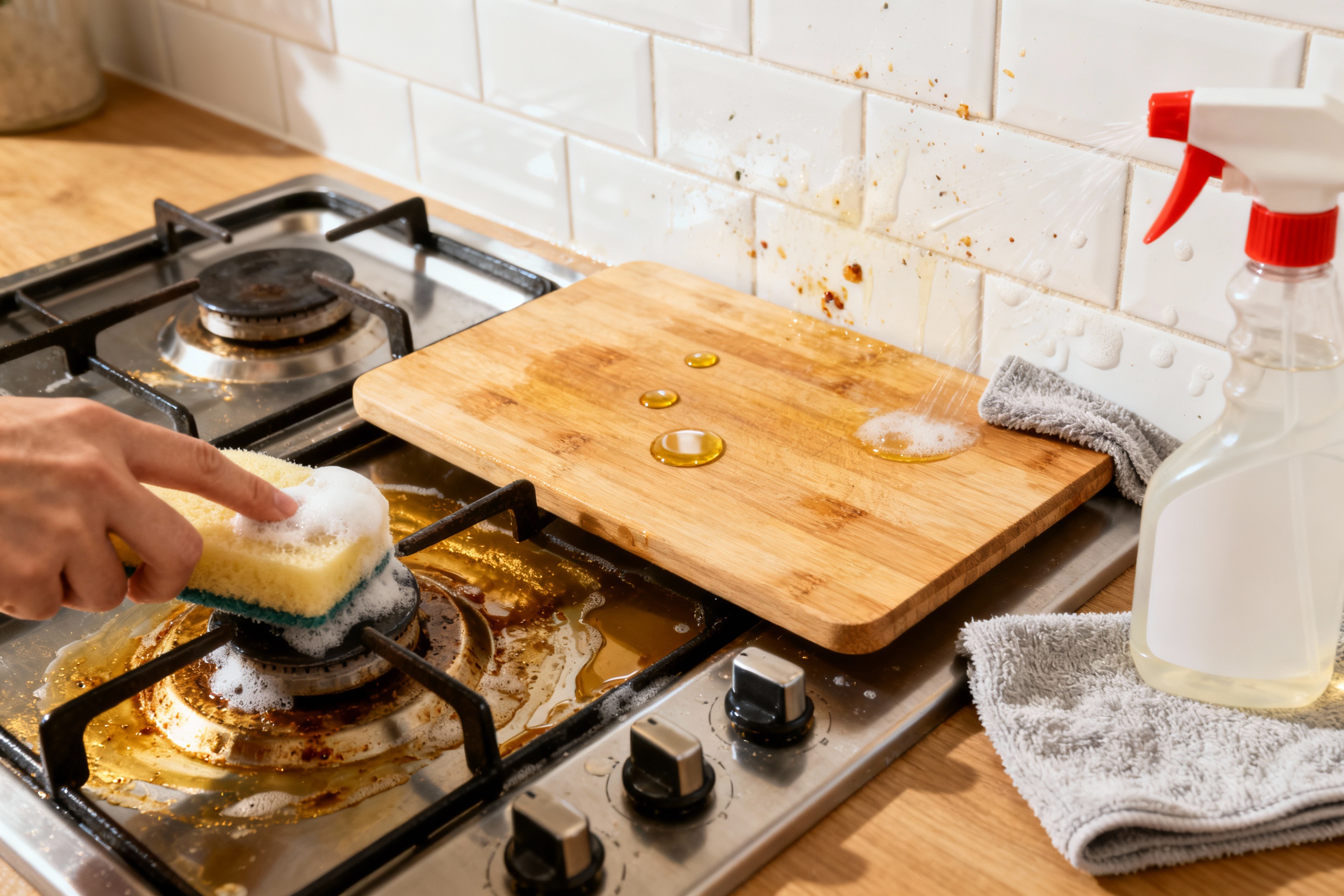
Easy Ways To Remove Grease Build-up In The Kitchen
Grease happens. You cook, you sauté, you blink—and suddenly your backsplash looks like it survived a bacon-themed fireworks show. The good news?
You don’t need harsh chemicals or a full weekend to fix it. With a few easy tricks (and a little elbow grease—sorry), you can get your kitchen shiny again without losing your mind.
Know Your Grease Enemies
Grease builds up sneaky-fast because it’s basically sticky dust. Oil particles float, land, and bond with dirt.
Then they call their friends. Grease likes:
- Cabinets over the stove
- Range hoods and vent filters
- Backsplashes and grout lines
- Microwave doors and handles
- Oven knobs, fridge handles, and light switches
If you see a slightly yellow tint or feel a tacky film, that’s grease asking you to deal with it. Politely decline its invitation to stay forever.
Simple Cleaners That Actually Work
You don’t need 12 specialty sprays. You need a few basics that pack a punch.
- Dish soap + hot water: Classic.
Dish soap cuts oil because it’s designed to emulsify fats. Use it for fresh or medium build-up.
- White vinegar spray: 1:1 vinegar and warm water. It dissolves light grease and leaves glass and stainless streak-free.
- Baking soda paste: Mix with a little water.
Mild abrasive for stuck-on spots and grimy handles.
- Lemon and salt: Great for cutting boards and sinks. Smells good and looks like you tried.
- Rubbing alcohol (70%): Cuts through fingerprints and light grease on stainless. Evaporates fast, no streaks.
- Degreasing dish soap + vinegar duo: Soap first, then vinegar rinse.
Don’t mix them in one bottle (you’ll neutralize the soap). Clean, then rinse.
When To Use a Commercial Degreaser
If your cabinets feel velcro-level sticky or you inherited a “vintage” stove that’s more brown than white, grab a dedicated kitchen degreaser. Choose one that’s safe for your surface (wood, painted, stainless) and follow the instructions. IMO, keep it as your “break glass in case of calamity” option.
Grease-Proof Your Cabinets (Without Ruining the Finish)
Cabinets soak up grease like a sponge, especially near the stove.
You need something gentle but effective.
- Start with dish soap and warm water. Use a microfiber cloth. Wipe with the grain. Rinse and wring the cloth often.
- Spot-treat stubborn areas. Dab on a baking soda paste.
Let it sit for 5–10 minutes, then wipe gently. No aggressive scrubbing—your finish matters.
- Rinse and dry. Water can damage wood. Dry right away with a clean towel.
- Optional: Add a protective layer. A tiny amount of mineral oil or a cabinet cream can help prevent future stickiness.
High-Gloss vs.
Matte Finishes
– High-gloss: Shows smudges but cleans easily. Use vinegar spray or a few drops of dish soap in warm water. – Matte/painted: Treat gently. Skip abrasives and stick to diluted dish soap.
De-Gunk the Range Hood and Filters
This spot collects grease like it’s building a museum exhibit.
You’ll love this trick.
- Pop out the metal filters. Most slide right out. If not, check the tiny latch.
- Soak in hot, soapy water. Add a generous squeeze of degreasing dish soap. Let sit 15–20 minutes.
- Boost with baking soda. Sprinkle into the sink for extra cutting power.
Scrub gently with a soft brush.
- Rinse and dry completely. Don’t reinstall while damp.
- Wipe the hood exterior. Use vinegar spray or a mild degreaser. Always wipe with the metal grain on stainless.
Charcoal Filters?
If your hood vents back into the room, you might have a charcoal filter. You can’t wash those. Replace them every 3–6 months (depends on how much you cook).
Backsplashes, Grout, and the Sneaky Spots
Tile and grout grab grease like Velcro. Then dust sticks.
Then you cry. Let’s skip the tears.
- Ceramic or glass tile: Vinegar spray works great. For tougher spots, dish soap first, then vinegar.
- Grout lines: Make a baking soda and water paste.
Apply with an old toothbrush. Let it sit 10 minutes, mist with vinegar, then scrub lightly and rinse.
- Painted drywall: Go gentle. Use diluted dish soap (a few drops in warm water).
No abrasives, no vinegar if the paint’s delicate.
Don’t Forget These
– Oven knobs: Pull them off (if removable) and soak in soapy water. – Microwave keypad and handle: Alcohol on a cloth cuts smudges without streaks. – Light switches: Wipe with a barely damp cloth and a touch of dish soap, then dry.
Pots, Pans, and Cooktop TLC
Your cookware and stove collect that caramelized mystery layer that laughs at weak cleaners. Time to clap back.
- Stainless pans: Boil water with a spoonful of baking soda. Let it simmer.
Stuck bits lift off. For exteriors, use a baking soda paste.
- Cast iron: Scrub with coarse salt and a splash of hot water. Dry fully and re-oil.
No soap flood, please.
- Nonstick: Mild dish soap only. Avoid abrasives. If there’s buildup, soak warm soapy water, then use a soft sponge.
- Gas grates: Soak in hot, soapy water with a bit of vinegar.
Scrub with a nylon brush. Dry before putting back.
- Glass cooktops: Baking soda + a little water + a microfiber cloth. For burnt rings, lay a warm, soapy towel on top for 15 minutes before wiping.
Pro Tip
Grease is easiest to clean while warm.
Not hot, not cold—warm. If the surface is safe to touch, it’s prime time.
Prevent Build-up Without Becoming a Cleaning Robot
I love shortcuts. Here are the ones that keep things sane.
- Wipe while you wait. Simmering sauce?
Two minutes to wipe the backsplash with a soapy cloth.
- Use splatter screens and lids. They reduce grease at the source. Less airborne oil = less cleaning.
- Run the vent fan every time you cook. And keep it on for 10 minutes after you finish.
- Line cabinet bottoms or tops. Use removable shelf liners, or even parchment on top cabinets. Swap every few months.
- Weekly quick clean: Vinegar spray on stainless, soapy wipe on cabinets near the stove.
Five minutes, tops.
My 10-Minute Weekly Reset (IMO, the MVP)
– Spray vinegar on the hood, backsplash, and stove. – Wipe down cabinet doors near the cooking zone with soapy water. – Quick swipe of handles and switches with alcohol. – Done. You just blocked a month of grime.
What Not To Do (Because Regret Is Expensive)
Save your finish, your lungs, and your sanity.
- Don’t mix chemicals. Vinegar and bleach? Absolutely not.
Bleach and ammonia? Hard no.
- Don’t use steel wool on stainless or painted cabinets. It scratches and invites rust or peeling.
- Don’t soak wood. Use a damp cloth, then dry immediately.
- Don’t spray electronics directly. Spray the cloth, then wipe.
- Don’t overdo vinegar on stone. It etches marble and some natural stones. Use stone-safe cleaners there.
FAQ
Can I use baking soda on everything?
Baking soda works on many surfaces, but not all.
It’s mildly abrasive, so skip it on high-gloss finishes, delicate plastics, and soft metals if you worry about micro-scratches. When in doubt, test a tiny spot first.
How do I get sticky residue off painted cabinets?
Start with warm water and dish soap. If it still feels tacky, apply a small amount of vinegar on a cloth and wipe gently, then rinse with water and dry.
For heavy build-up, a diluted degreaser made for painted surfaces can help, but test first.
What’s the best way to clean stainless steel without streaks?
Use rubbing alcohol on a microfiber cloth and wipe with the grain. For heavier grease, wash first with a drop of dish soap and warm water, then finish with alcohol or a stainless-safe spray. Dry buffs out the shine.
How often should I clean range hood filters?
If you cook most days, clean metal filters monthly.
If you fry a lot, every two weeks. Replace charcoal filters every 3–6 months since you can’t wash those.
Is vinegar safe on granite or marble?
Nope. Acidic cleaners can etch stone.
Use a stone-safe cleaner or warm water with a tiny drop of dish soap, then dry immediately. FYI, reseal your stone yearly to make cleanup easier.
Do I need hot water, or is cold fine?
Hot water helps melt grease and boosts dish soap performance, so use it whenever practical. Cold works for quick wipes, but hot makes tough jobs faster.
Your future self will thank you.
Wrap-Up: Keep It Simple, Keep It Consistent
You don’t need a cleaning marathon. You need small, simple moves that stop grease from settling down and applying for citizenship. Use dish soap and hot water for everyday messes, call in vinegar and baking soda for the stubborn stuff, and treat your surfaces with a little respect.
Do a quick weekly reset and, IMO, you’ll spend less time scrubbing and more time cooking—and eating—without the sticky side quest.

I’ve spent 10+ years in dog training, digging into what makes dogs (and their humans) tick. At Smart Dog Learning, I share my no-nonsense, fun approach to training so you can enjoy life with a well-behaved, happy pup—no boring lectures, just practical results 😉