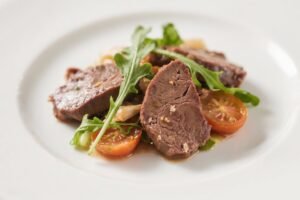
Beef Liver and Rabbit Cat Food - A Simple, Nutritious Homemade Recipe
Ingredients
- Fresh rabbit meat (boneless), about 1.5 pounds
- Fresh beef liver, 4–6 ounces (do not exceed 10% of total recipe by weight)
- Chicken heart or beef heart, 6–8 ounces (taurine-rich; optional but recommended)
- Egg yolks, 2 large (lightly cooked)
- Salmon oil or sardine oil, 1–2 teaspoons (omega-3s)
- Bone broth (unsalted, onion-free), 1/2–3/4 cup
- Pumpkin purée (plain), 1–2 tablespoons (fiber; optional)
- Taurine supplement powder, 500–1,000 mg (if not using heart)
- Calcium source: finely ground eggshell powder (about 1 teaspoon) or a vet-approved calcium supplement
- Vitamin E supplement (optional, per label dosage)
- Water, as needed
Instructions
- Prep your tools: Clean your cutting board, knife, and a large mixing bowl. Have a food processor or meat grinder ready.
Wash your hands before and after handling raw meat.
- Trim the rabbit: Cut the boneless rabbit into chunks. If you’re starting with bone-in rabbit, carefully remove bones and save them for broth—do not include cooked bones in the food.
- Portion the liver: Measure 4–6 ounces of beef liver. Do not exceed 10% of the total recipe by weight to avoid vitamin A overload.
- Prepare the heart: Slice chicken or beef heart into small pieces. If you’re skipping heart, plan to add the taurine supplement later.
- Lightly cook (optional): For cats sensitive to raw, gently poach the rabbit and heart until just cooked through.
Lightly sear the liver for 30–60 seconds per side. Avoid overcooking to preserve nutrients and moisture.
- Cook the egg yolks: Soft-scramble or lightly poach the yolks until just set. Raw yolks are rich in nutrients but lightly cooking reduces food safety risks.
- Combine ingredients: Add rabbit, liver, heart, and egg yolks to a bowl.
Mix in salmon oil, bone broth, and pumpkin purée (if using). Add the calcium source and taurine (if no heart used). If using vitamin E, add now per label directions.
- Adjust texture: Pulse the mixture in a food processor to your cat’s preferred texture—chunky, minced, or smooth.
Add a splash of water or broth for moisture.
- Portion: Divide into daily servings. A general starting guideline is about 2–4% of your cat’s body weight per day, split into 2 meals, adjusting for age, activity, and body condition.
- Chill promptly: Refrigerate portions you’ll use within 2–3 days and freeze the rest.