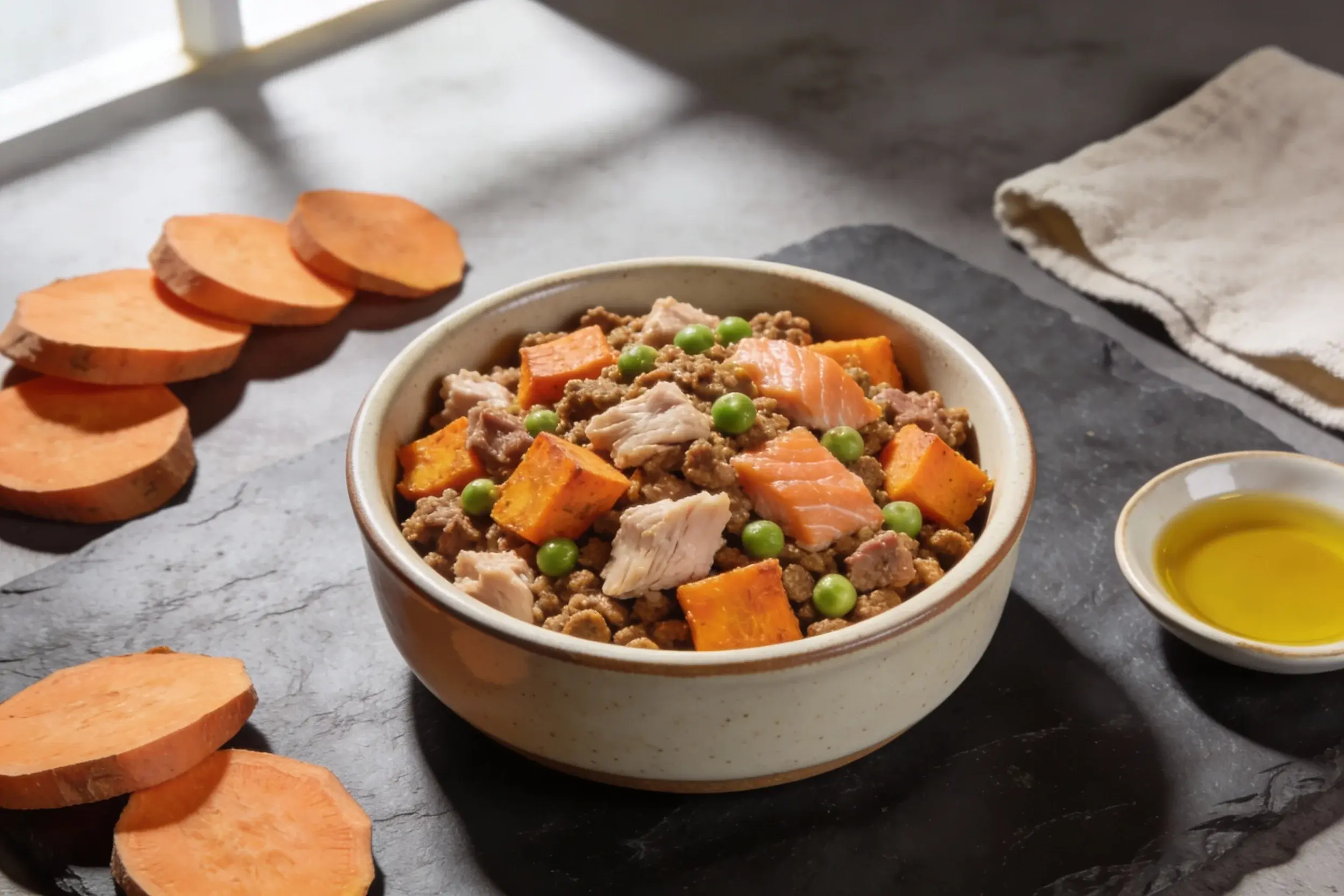
Allergy-Friendly Dog Food With Sweet Potato For Sensitive Dogs Made Simple
Your dog keeps scratching, chewing their paws, or leaving mystery “tummy surprises” on the rug? You’re not alone. Food sensitivities hit plenty of pups, and finding a diet that actually helps can feel like a puzzle with missing pieces. Let’s talk about a hero ingredient that quietly does the heavy lifting: sweet potato. It’s gentle, nutritious, and surprisingly powerful for sensitive dogs.
Why Sweet Potato Works for Sensitive Dogs
Sweet potato isn’t just a trendy carb. It’s a simple, whole-food ingredient that most dogs digest easily. That’s gold when you’re dealing with itchy skin or upset stomachs.
Here’s what makes it shine:
- Novel carbohydrate: Many sensitive dogs react to common carbs like corn or wheat. Sweet potato offers a clean swap.
- Fiber for gut health: The soluble and insoluble fiber combo supports firm stools and steady digestion.
- Beta-carotene boost: It supports skin, coat, and immune health—aka fewer itch-fests.
- Low-fat, energy-dense: Great for pups who need gentle fuel without oily side effects.
Spotting Food Sensitivities: Is It Really the Food?
Not every itch equals a food allergy, but food sensitivities show patterns. Watch your dog like a detective.
Common signs of food issues:
- Chronic ear infections or head shaking
- Itchy paws, belly, or armpits (and the constant licking that follows)
- Soft stools, gas, or intermittent vomiting
- Red, inflamed skin or hot spots
If your dog’s symptoms stick around year-round (not just in spring) and they don’t respond to flea meds or environmental allergy treatment, food could be the culprit. FYI, true food allergies are less common than sensitivities, but both cause drama.
What “Allergy-Friendly” Actually Means
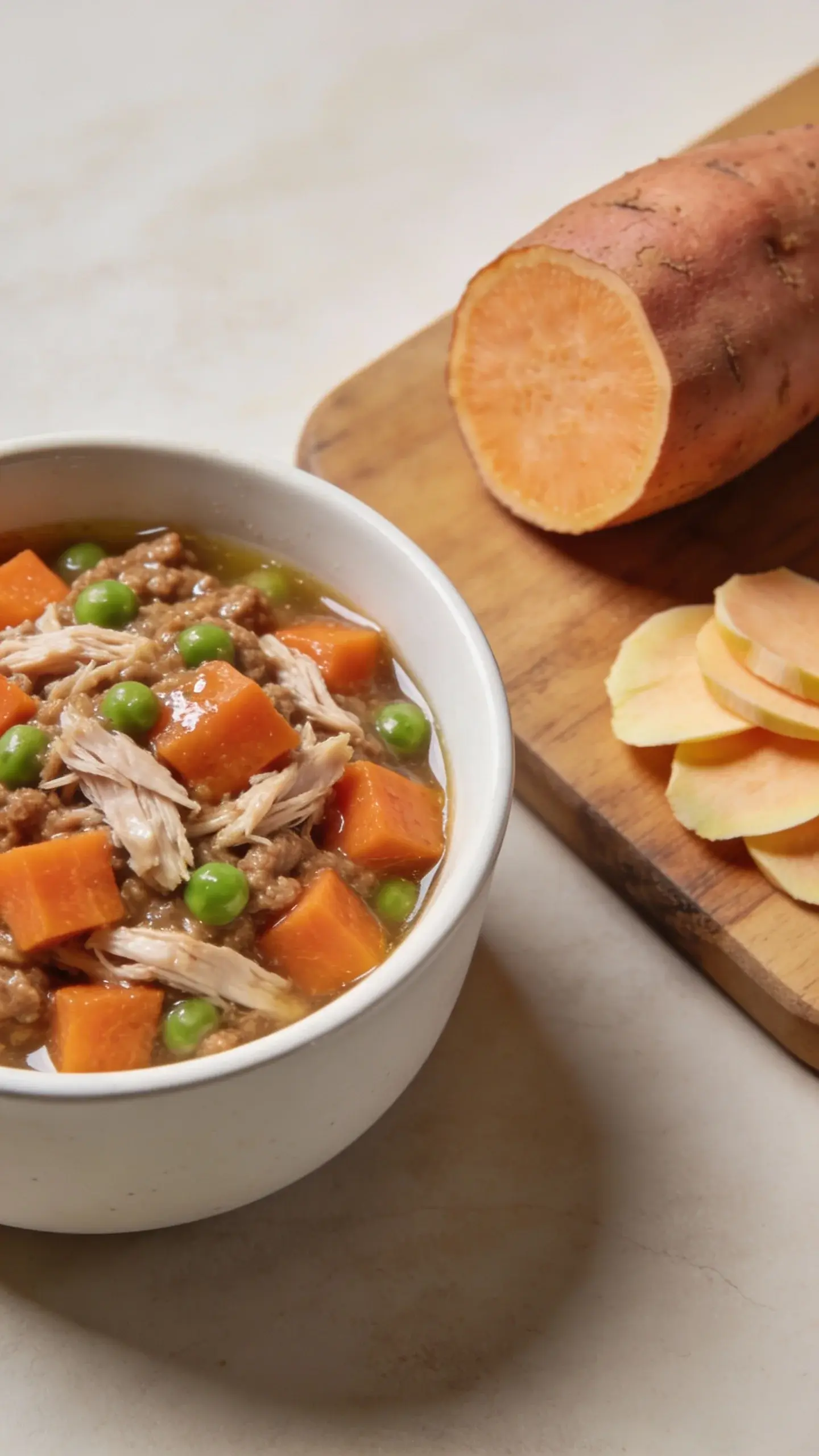
Labels love to shout “hypoallergenic,” but that term doesn’t mean much unless the formula follows a strategy.
Look for these markers:
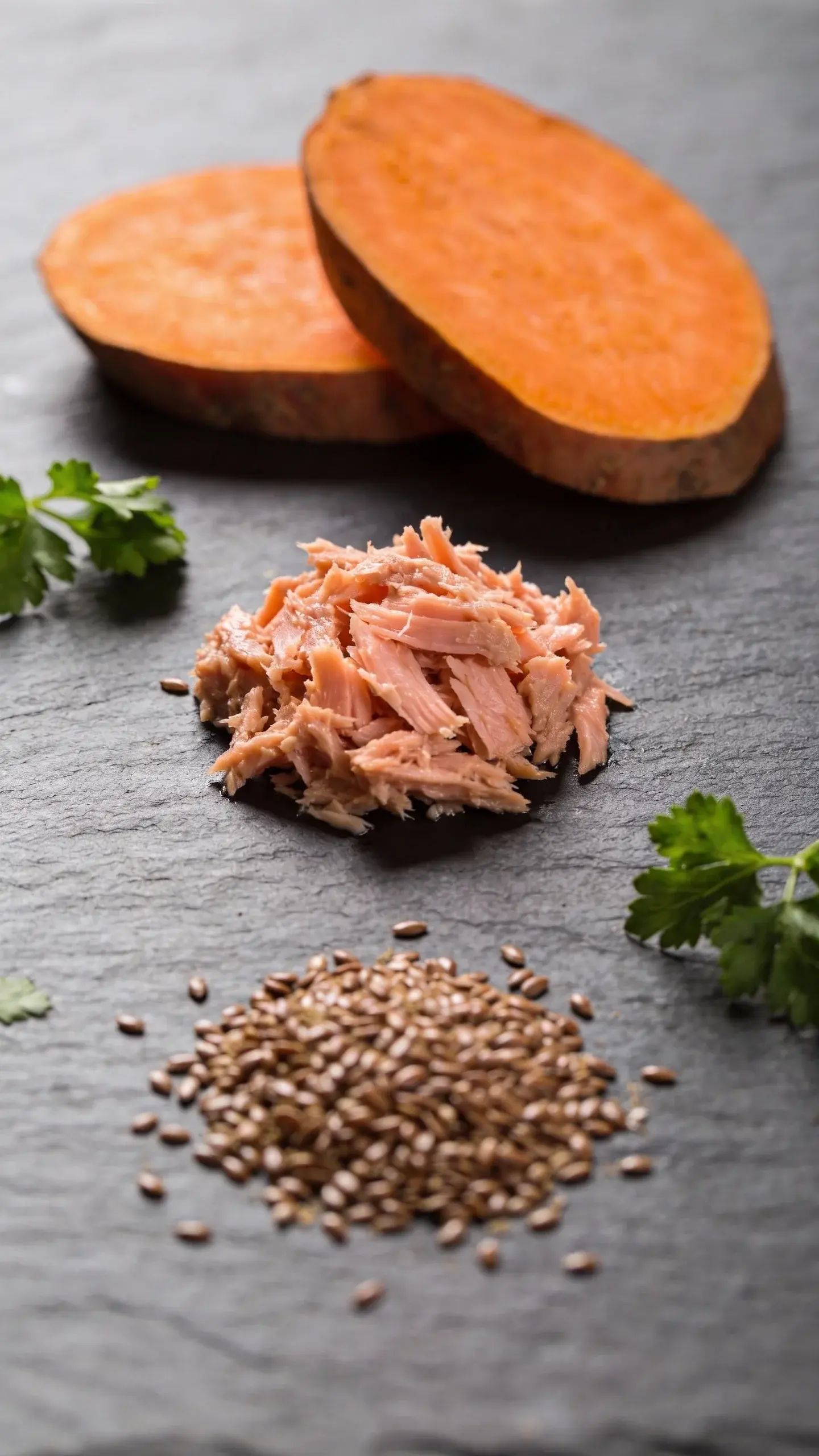
- Limited-ingredient diet (LID): Short ingredient list, usually one protein + one carb, like salmon + sweet potato.
- Novel or single protein: Proteins your dog hasn’t eaten before, e.g., duck, venison, or fish.
- No common triggers: Avoid chicken, beef, dairy, soy, wheat, and sometimes eggs.
- Transparent sourcing: Clear, named ingredients (“salmon meal,” not “meat meal”).
Hydrolyzed vs. Novel Protein
Hydrolyzed diets break proteins into tiny fragments so the immune system ignores them. They’re vet-prescribed and effective, but pricey. Novel protein + sweet potato often works well for mild to moderate sensitivities and you can buy it over the counter.
How to Choose a Sweet Potato-Based Food
You’ve got options. Kibble, canned, fresh, even DIY—so pick what your budget and schedule allow. IMO, the formula matters more than the format.
Checklist when reading labels:
- Protein first: Pick a single, named protein your dog handles well (e.g., salmon, turkey, or duck).
- Sweet potato high up: It should appear in the first few ingredients for meaningful content.
- Short list, clean extras: Skip artificial colors and vague terms like “animal digest.”
- Added omega-3s: Fish oil or algae oil calms itchy skin.
- Probiotics or prebiotics: Inulin, FOS, or named probiotic strains support gut balance.
Ingredients to Avoid (Common Triggers)
- Chicken or beef (yes, even “chicken fat” can set some dogs off)
- Wheat, corn, soy
- Dairy, eggs, and “flavor” that isn’t clearly defined
Transitioning Without Tummy Turmoil
Even the best food fails if you switch too fast. Go slow, keep the peace.
Seven-day switch plan:
- Days 1–2: 25% new food, 75% old
- Days 3–4: 50/50
- Days 5–6: 75% new, 25% old
- Day 7+: 100% new
If your dog has a sensitive stomach, extend each step to three days. Add a spoonful of plain canned pumpkin or a dog-safe probiotic to help. If diarrhea shows up and sticks around more than a day, slow down the transition or call your vet.
Elimination Diet 101
Still unsure what’s causing the issue? Do an elimination diet:
- Pick one protein + sweet potato, nothing else.
- Feed it exclusively for 6–8 weeks. No treats unless they match the formula.
- Reintroduce other foods one at a time and watch for reactions.
It’s a slog, but it’s the gold standard. Patience now saves you years of guessing later.
Store-Bought vs. Homemade: What’s Best?
Both can work. The “best” is the one your dog thrives on and you can sustain.
Store-bought perks:
- Complete and balanced nutrition (when AAFCO-compliant)
- Convenience and consistency
- Options for grain-free or grain-inclusive alongside sweet potato
Homemade perks:
- Total control over ingredients
- Great for extreme sensitivities
- Freshness and palatability
But big PSA: Homemade diets need a vet nutritionist’s recipe. You must add a complete vitamin-mineral supplement and balance calcium to phosphorus. Otherwise, you’ll create new problems while trying to solve the old ones. IMO, if you go DIY, get a recipe formulated specifically for your dog’s weight, age, and health.
Sweet Potato Serving Tips (for toppers or treats)
- Steam or bake plain—no butter, salt, or spices
- Mash and mix a spoonful into meals to entice picky eaters
- Slice thin, bake at low heat for chewy homemade treats
Keep portions modest. Too much fiber can cause soft stools (the opposite of what we want).
What Results Should You Expect—and When?
Food sensitivities don’t vanish overnight, but you should see a trajectory.
Typical timeline:
- Week 1–2: Better stool quality, less gas, reduced paw licking
- Week 3–4: Skin calms, fewer hot spots, less ear gunk
- Week 6–8: Coat looks shinier, itch outbreaks drop
If symptoms keep flaring, consider hidden triggers (treats, table scraps, flavored meds), environmental allergies, or a different protein source.
FAQs
Is sweet potato better than regular potato for allergies?
Often, yes. Sweet potato is botanically different and tends to be better tolerated. It also brings more fiber and beta-carotene. That said, some dogs do fine with white potato—use whatever your dog’s system loves.
Can grain-inclusive diets still be allergy-friendly?
Absolutely. Many dogs tolerate grains like oatmeal or barley just fine. The key is avoiding your dog’s specific triggers while keeping the formula limited and clean. Sweet potato can pair with grains or stand alone—flexible is the name of the game.
Will grain-free with sweet potato cause heart issues?
Current research links certain grain-free diets to DCM in some dogs, but it’s complex and still evolving. Choose brands with strong quality control, added taurine, and balanced nutrition. If you’re worried, pick a grain-inclusive formula that still uses sweet potato and talk to your vet about taurine testing for peace of mind.
Can I use sweet potato treats during an elimination diet?
Yes—if sweet potato is already part of the test diet and the treats contain only sweet potato. Any added chicken, beef, or dairy can ruin the experiment. Check every label like a hawk.
What if my dog still itches on a sweet potato LID?
Try a different protein source, confirm no off-plan treats sneak in, and consider hydrolyzed diets. If itching persists, ask your vet about environmental allergies, skin infections, or parasites. Food is big, but it’s not always the only villain.
How much sweet potato is too much?
Keep it to 10% or less of daily calories if you’re using it as a topper or treat. Too much can cause soft stools or excess calories. For complete diets, follow the feeding guide and your vet’s advice.
Bottom Line
Sweet potato brings gentle carbs, gut-friendly fiber, and skin-loving nutrients to the table. Pair it with a simple, single protein and you’ve got a powerful plan for sensitive dogs. Transition slowly, keep treats consistent, and give it a few weeks to work. Your dog gets relief, you get fewer vet trips, and your carpets get a second chance—win-win, IMO.

I’ve spent 10+ years in dog training, digging into what makes dogs (and their humans) tick. At Smart Dog Learning, I share my no-nonsense, fun approach to training so you can enjoy life with a well-behaved, happy pup—no boring lectures, just practical results 😉