How To Clean Dog Poo Stains On Velvet Sofa
Accidents happen—usually five minutes before guests arrive. Velvet makes it feel ten times scarier, but you can fix it fast with the right moves. We’ll walk through a no-panic plan that actually works, saves your sofa, and keeps your sanity intact. Keep reading, grab a few supplies, and let’s evict that stain like it owes you rent.
First, Don’t Panic: What To Do In The First 60 Seconds
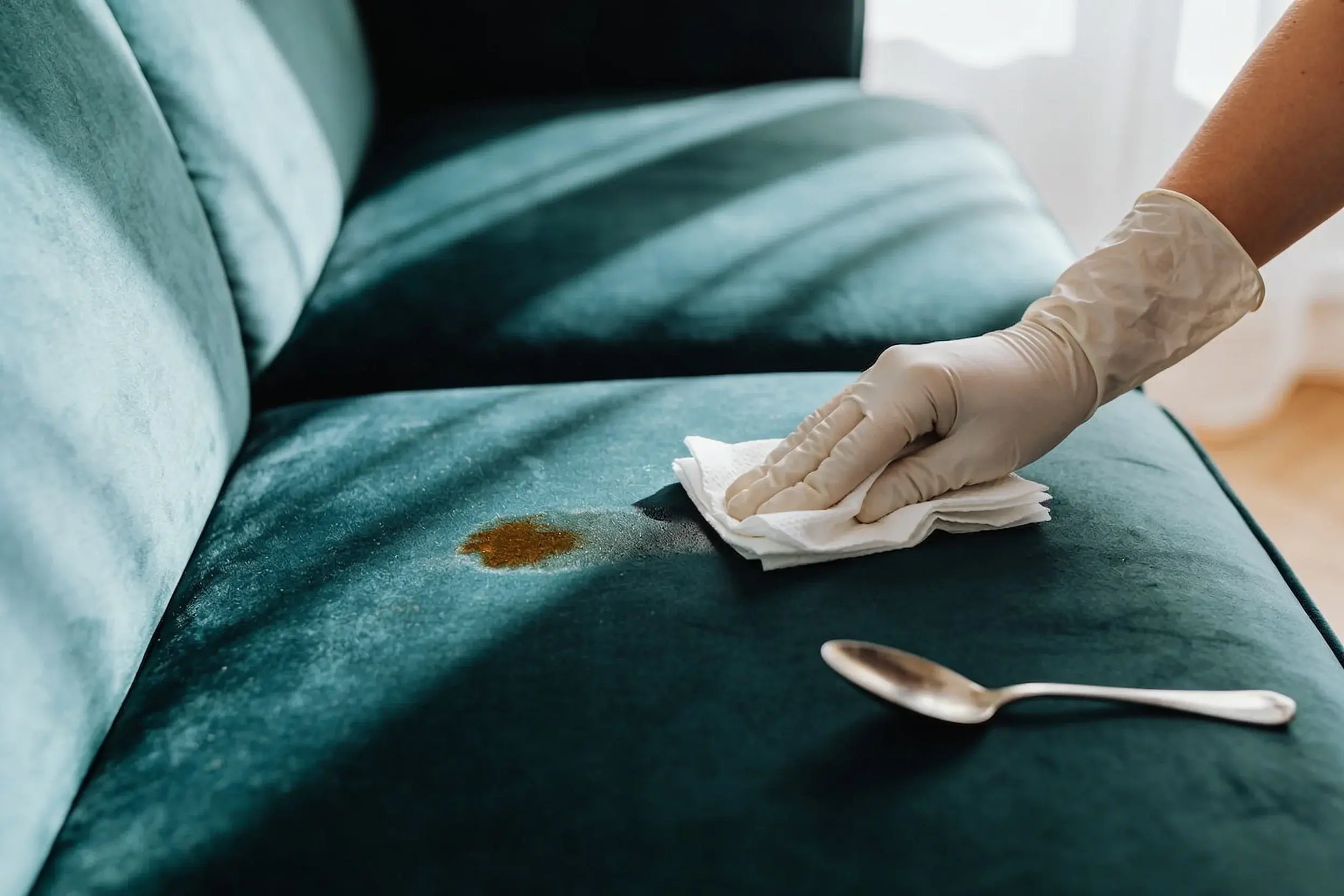
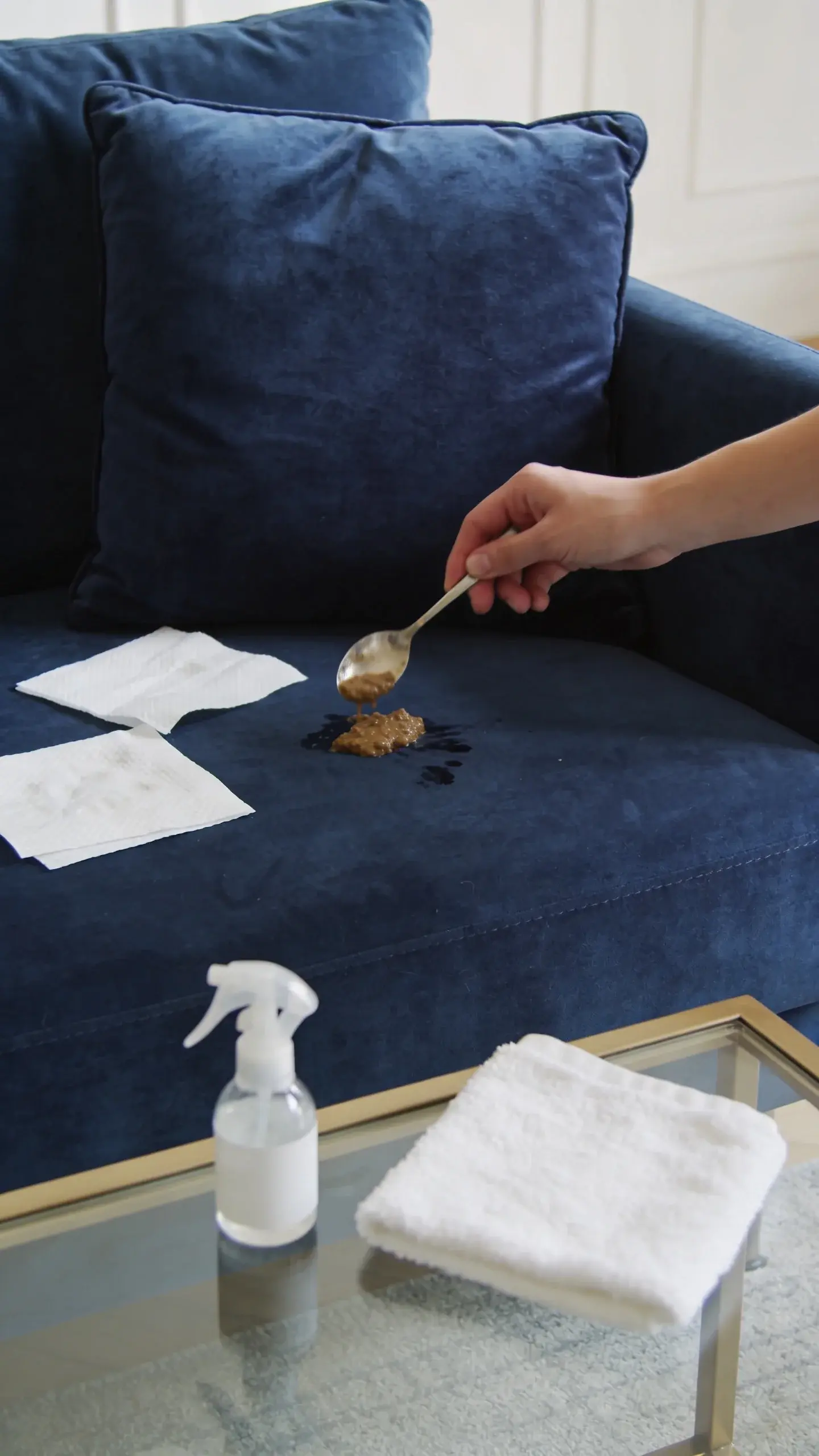
You want speed, not chaos. Scoop up any solids with a spoon or a dull knife—no scraping like you’re icing a cake. Blot (don’t rub) the area with paper towels to lift moisture. You’re minimizing spread and saving the velvet pile from damage.
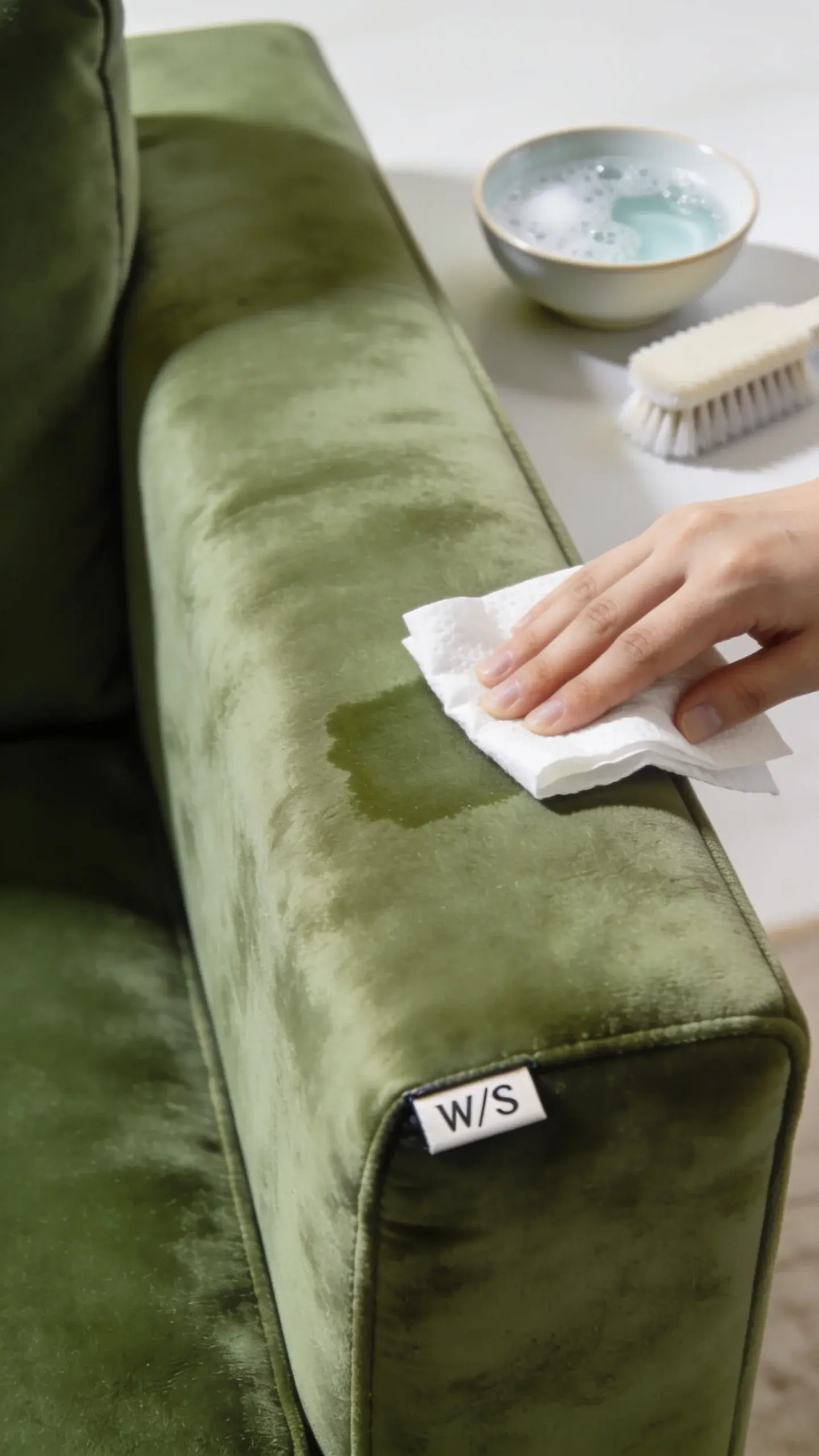
Important: If your velvet is silk or rayon (aka viscose), it’s more delicate. Check the care tag for “W,” “S,” or “W/S.” No tag? Start with the gentlest approach and do a tiny hidden test first.
Know Your Velvet: Why Technique Matters
Velvet has a nap (those fibers that lay in one direction). Rubbing grinds stain deeper and crushes the pile. Moisture helps lift stains, but too much water can leave rings or stiff spots.
Decoding Care Codes
- W: Water-based cleaners are safe. Congrats, cleaning just got easier.
- S: Solvent-only. Use dry-cleaning solvent, not water-based mixes.
- W/S: Either is fine; still test first.
- No tag? Test both water and solvent in a hidden area and see which behaves better.
Grab Your Kit: Simple Supplies That Work
You don’t need a chemistry lab—just a smart lineup:
- Disposable gloves (you’ll thank me later)
- Spoon or dull knife
- Plain white paper towels or microfiber cloths
- Small bowl of cool water
- Mild dish soap (dye- and fragrance-free if possible)
- White vinegar (for odor and stain backup)
- Enzyme cleaner safe for upholstery (pet-specific, check label)
- Dry-cleaning solvent (for “S” code velvet)
- Soft-bristle brush or clean toothbrush
- Hairdryer on cool or a fan
The Step-By-Step: From Disaster To “Can’t Even Tell”
Follow this in order and you’ll avoid spreading the mess.
1) Remove Solids And Blot
- Lift solids with the spoon. Toss immediately.
- Blot the stain with dry paper towels. Keep switching to clean sides until they come up mostly dry.
2) Pre-Treat With Enzymes (If “W” or “W/S”)
- Lightly mist an enzyme cleaner on the stain. Don’t soak—velvet hates floods.
- Let it sit for 5–10 minutes to break down organic matter.
- Blot with a clean, damp cloth (cool water) to lift residue.
Why enzymes? They digest the proteins in poo, which tackles both stain and stink. Science for the win.
3) Gentle Soap Solution
- Mix 1 cup cool water + 1–2 drops mild dish soap. More soap = more residue. Don’t do it.
- Dip a cloth in the suds (not the water), squeeze nearly dry, then dab the stain. Work from the outside in.
- Blot with a separate damp cloth (plain water) to rinse.
- Repeat until the stain lifts. Keep it light and patient—IMO, slow and steady beats one aggressive pass.
4) Tackle Odor And Shadow Stains
- Mix 1 part white vinegar to 3 parts water.
- Dab lightly, wait 2–3 minutes, then blot with a damp cloth to rinse.
- Blot dry with a towel.
FYI: Vinegar smell fades as it dries. Your dog’s “signature scent” will not be missed.
5) For “S” Code Velvet: Use Solvent
- Skip water. Apply a small amount of dry-cleaning solvent to a clean cloth.
- Dab the stain gently; do not rub.
- Blot with a dry cloth to lift. Repeat as needed.
If you see dye transfer or pile change, stop and call a pro. No shame—velvet can be diva fabric.
6) Dry The Right Way
- Blot out as much moisture as possible.
- Point a fan or use a hairdryer on cool. Heat can set stains and warp pile.
- Once dry, lightly brush the nap in one direction to restore that luxe look.
Common Mistakes That Make Stains Worse
- Rubbing like you’re polishing silver: This spreads the stain and crushes the pile.
- Over-wetting: Water rings and stiffness are hard to reverse.
- Skipping the test patch: Especially for dark or delicate velvet. Dye bleed equals heartbreak.
- Using colored cloths: Dyes can transfer and add a whole new problem.
- Bleach or harsh cleaners: No. Just no.
Deep-Clean Rescue Plan (If The Stain Set Overnight)
Missed it and found a crime scene in the morning? You still have options.
- Enzyme soak-but-not-really: Lightly mist enzyme cleaner, cover with plastic wrap for 15 minutes to prevent drying, then blot. Don’t drench.
- Repeat gentle soap rinse: Alternate enzyme and soap cycles 1–2 times.
- Solvent spot (for S or W/S): If water methods stall, test solvent and dab.
- Professional extraction: If you still see a halo, call a velvet-savvy pro. IMO, that’s cheaper than a new sofa.
Odor-Proofing And Future-Proofing
You cleaned the stain—now make sure your nose agrees.
- Enzyme encore: Do one last light enzyme pass to neutralize lingering odor, then blot dry.
- Baking soda caution: You can sprinkle a tiny amount after it’s dry and vacuum gently, but some velvets trap powder. Test first.
- Protective strategy: Use a velvet-safe fabric protector, keep a throw on frequent napping zones, and stash a mini cleanup kit nearby.
- Behavior hacks: Block access when you’re out, add potty breaks, and rule out health issues if accidents repeat.
FAQs
Can I use a steam cleaner on a velvet sofa?
Skip it for spot cleaning. Steam can set stains, crush the pile, and leave marks. If you want a full refresh, hire a pro who knows velvet and uses low-moisture methods.
What if the stain left a water ring?
Lightly mist the entire panel with distilled water, then blot and dry evenly to blend the ring—very light touch. Follow by brushing the nap. If the ring remains, a pro can re-level the pile and finish.
Is hydrogen peroxide safe on velvet?
Generally, no. Peroxide can bleach dyes and damage fibers. Stick to enzyme cleaners, mild soap, or solvent (for S code). Always patch test if you go rogue.
How do I restore crushed velvet pile after cleaning?
When fully dry, brush the nap gently with a soft brush in the direction of the pile. You can also hover a hairdryer on cool while brushing to fluff. Slow and gentle beats force every time.
What’s the best enzyme cleaner for pet messes?
Look for one labeled “enzyme” or “bio-enzymatic” and “safe for upholstery.” Clear, unscented options work best IMO, since heavy fragrances just mask odors and can irritate pets.
When should I call a professional?
If the fabric is silk or viscose, the stain is old and set, or your attempts cause dye transfer, stop and call a velvet-experienced upholstery cleaner. That’s a save, not a surrender.
Wrap-Up: You’ve Got This
Velvet looks fancy, but it doesn’t need drama. Move fast, blot gently, use enzymes and mild soap (or solvent if required), and dry with care. Brush the nap, banish the odor, and bring back the cozy throne your dog pretends not to love. FYI, keeping a tiny cleanup kit nearby turns “ugh” into “handled” in under fifteen minutes.

I’ve spent 10+ years in dog training, digging into what makes dogs (and their humans) tick. At Smart Dog Learning, I share my no-nonsense, fun approach to training so you can enjoy life with a well-behaved, happy pup—no boring lectures, just practical results 😉