
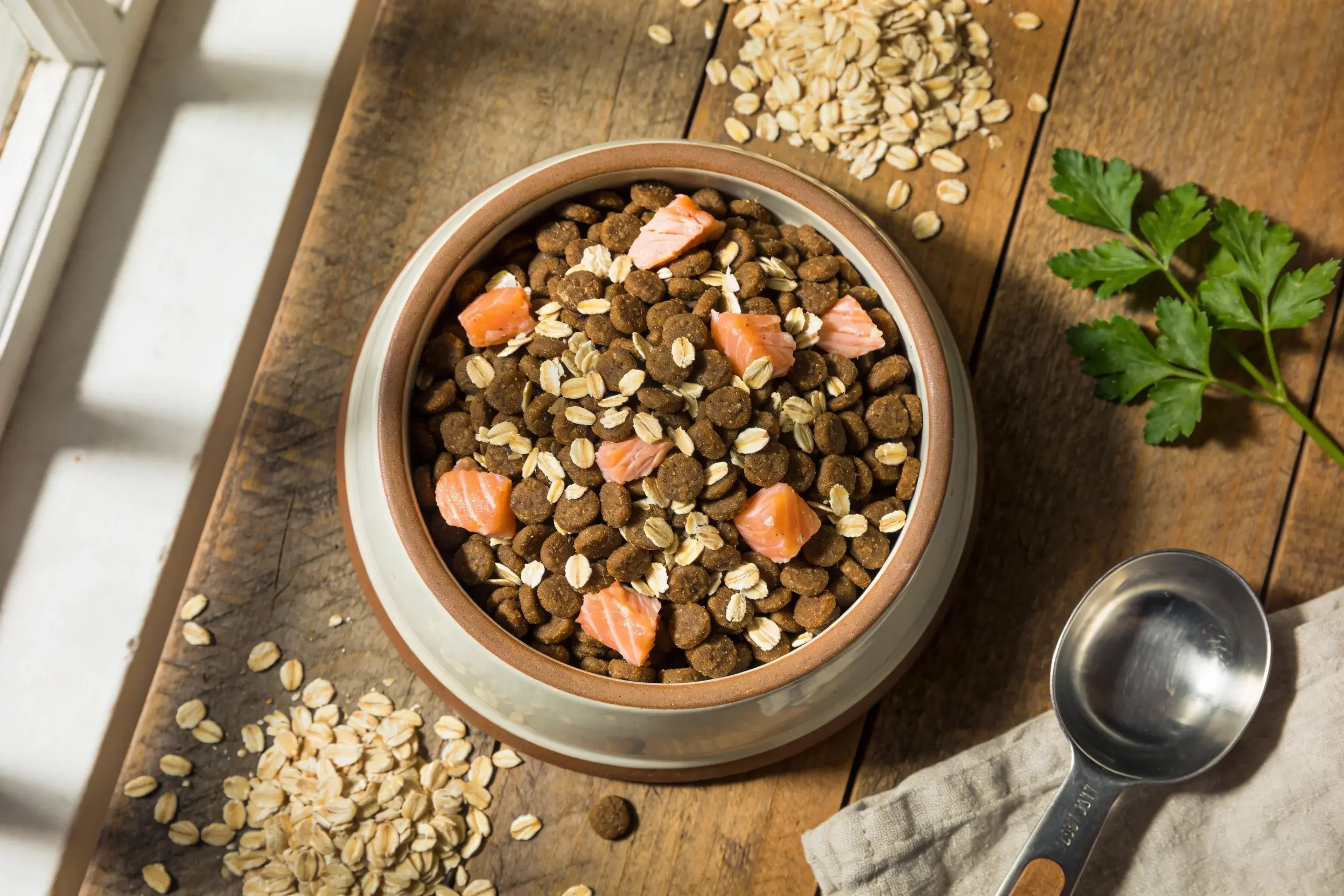
Why Allergy-Friendly Dog Food With Oatmeal Works For Some Dogs
Your dog’s belly hates you, or at least it feels that way when you’re cleaning up another surprise on the rug. If your pup itches nonstop, gets gassy enough to inflate a parade balloon, or has mystery skin flare-ups, food sensitivities might be the culprit. That’s why allergy-friendly dog food with oatmeal gets so much love. It’s gentle, it’s simple, and for many dogs, it just works.
What “Allergy-Friendly” Actually Means
Allergy-friendly food won’t magically cure every issue. It simply reduces common triggers. Think of it like switching from a buffet to a curated menu your dog’s gut can handle.
Most “allergy-friendly” formulas:
- Limit common allergens like beef, chicken, dairy, soy, wheat, and sometimes corn.
- Use simpler ingredient lists so you can pinpoint what helps or hurts.
- Often feature novel proteins (duck, fish, venison) and gentle carbs like oatmeal.
Is it perfect? Nope. But for dogs with sensitive tummies or mild to moderate intolerances, it can be a game changer, IMO.
Why Oatmeal Helps Sensitive Dogs
Oatmeal doesn’t just belong in human breakfast bowls. It’s one of the friendliest grains in dog nutrition.
- Low allergen potential: Dogs rarely react to oats compared to wheat or soy.
- Soluble fiber for gut health: Beta-glucans in oats help soothe the digestive tract and support regular stools. Less chaos, more consistency.
- Prebiotic support: Oat fiber feeds beneficial gut bacteria, which can calm inflammation over time.
- Skin-friendly nutrients: Oats contain B vitamins, zinc, and antioxidants that support skin and coat health.
What About Gluten?
FYI: Oats are naturally gluten-free. Cross-contamination can happen in processing, but high-quality pet foods use certified suppliers or test for contaminants. If your dog has a rare gluten sensitivity, check the label or ask the brand.
Who Actually Benefits from Oatmeal-Based Diets?

Not every dog needs oatmeal. But some dogs thrive on it.
- Dogs with chronic soft stools or mild diarrhea that flare with rich foods.
- Itchy or flaky pups with suspected food triggers.
- Senior dogs who need gentler digestion and steady energy.
- Dogs with chicken/beef sensitivities who need a reset with a novel protein plus a gentle carb.
Red Flags That Say “Try a Switch”
If you see these regularly, a transition to an allergy-friendly formula might help:
- Chronic ear infections (yeasty, smelly, repetitive)
- Hot spots, paw licking, or belly rashes
- Gas, vomiting, or inconsistent stools
Of course, rule out parasites, environmental allergies, and other medical issues with your vet first. Food isn’t the villain 100% of the time.
How Oatmeal Compares to Other Carbs
You’ve got options: rice, potatoes, peas, barley, sweet potatoes. Why choose oatmeal?
- Versus rice: Oatmeal brings more soluble fiber and micronutrients. Rice digests fast and works for short-term bland diets, but oatmeal often supports long-term gut balance better.
- Versus potatoes/sweet potatoes: Those are fine, but some dogs get sugar spikes or looser stools. Oats tend to keep things… predictable.
- Versus peas/legumes: Peas add protein and fiber but can cause gas for some dogs. Oatmeal is gentler and less likely to bloat your pup like a pufferfish.
Quality Matters
Look for:
- Named animal protein first (e.g., salmon, turkey), not “meat by-product.”
- Clearly listed oats/oatmeal/oat fiber high in the ingredient list.
- AAFCO statement for your dog’s life stage (growth, adult maintenance, all life stages).
- No vague additives or artificial colors.
What’s Going On Inside the Gut (Short Version)
Dog guts love stability. Oatmeal helps build it.
- Soluble fiber turns into a gel that slows digestion and improves nutrient absorption.
- Fermentation of fiber feeds good bacteria, which produce short-chain fatty acids that support the intestinal lining.
- Less irritation = calmer immune response, which can ease skin and ear symptoms linked to food sensitivities.
Science-y enough? Cool. The takeaway: oatmeal supports a calmer gut, which often shows up as healthier skin and fewer “uh-oh” moments.
How to Transition Without Drama
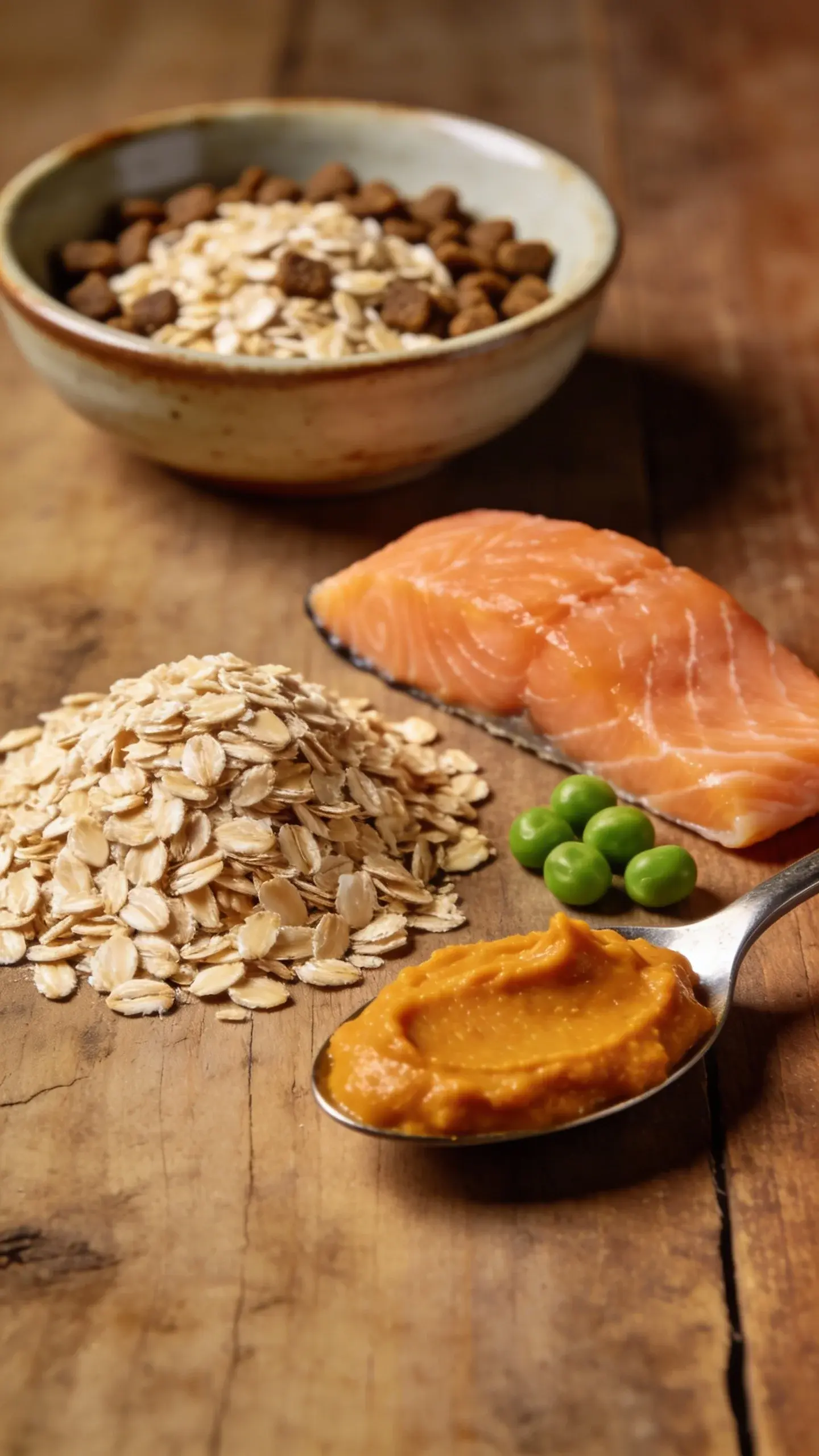
Don’t flip a switch overnight unless your vet tells you to. Transition over 7–10 days.
- Days 1–3: 25% new food, 75% old food.
- Days 4–6: 50/50 mix.
- Days 7–10: 75% new, 25% old.
Tips:
- Keep treats simple and aligned with the new protein/carb sources.
- Add a probiotic (vet-approved) for the first 2–4 weeks.
- Track symptoms: poop score, itchiness, ear gunk, energy, breath. Yes, you’re that person now.
When to Call the Vet
If your dog shows vomiting, blood in stool, severe lethargy, or persistent diarrhea beyond 48 hours, stop and call your vet. Food changes should make life better, not worse.
Realistic Expectations (And When It’s Not Enough)
Important reality check: If your dog has a true food allergy, only an elimination diet can confirm the trigger. Oatmeal-based foods help many dogs with sensitivities, but they won’t cure everything.
Consider professional help if:
- Symptoms don’t improve after 6–8 weeks on a high-quality, limited-ingredient formula.
- Your dog has year-round itching that doesn’t budge.
- You suspect multiple allergies (food + environmental).
Sometimes you need prescription hydrolyzed diets. Not sexy, but effective, IMO.
What to Look For on the Label
Shopping time. Read labels like a detective with snacks.
- Short ingredient list with a single protein source, like “salmon” or “turkey.”
- Oatmeal or oats listed in the top 5 ingredients.
- Omega-3s (fish oil or flaxseed) for skin support.
- No fillers or artificial dyes.
- Guaranteed analysis that fits your dog’s needs: adequate protein (usually 22–28% for adults), moderate fat, and fiber around 3–6%.
Bonus Adds That Play Nice With Oats
- Pumpkin for extra soluble fiber.
- Probiotics and prebiotics (FOS, MOS, chicory root).
- Skin-support nutrients like vitamin E, biotin, zinc, and EPA/DHA.
FAQs
Will oatmeal make my dog gain weight?
Not if the overall calories stay balanced. Oatmeal provides carbs and fiber, but the protein and fat levels matter more for weight. Choose a formula that fits your dog’s activity level and measure portions. Walks still required, sorry.
Is oatmeal better than grain-free?
“Better” depends on your dog. Many dogs do great with wholesome grains like oats. Grain-free isn’t automatically healthier and sometimes uses heavy legumes, which don’t suit every gut. If your dog has no grain issues, oatmeal can be a smart, gut-friendly choice.
Can puppies eat oatmeal-based allergy-friendly food?
Yes, if the food carries an AAFCO statement for growth or all life stages. Puppies need higher protein and specific minerals (hello, calcium/phosphorus balance). Don’t guess here—check the label or ask your vet.
What if my dog reacts to the new food?
Stop and reassess. Check for other ingredients that might be the problem—maybe it’s the protein, not the oats. Switch to a different protein-plus-oat combo or talk to your vet about an elimination trial with hydrolyzed or novel proteins.
Can I just cook oatmeal and add it to my dog’s food?
In moderation, plain cooked oatmeal can help during tummy troubles. But don’t DIY a full diet without guidance. Balanced dog foods provide complete nutrition—vitamins, minerals, amino acids—you won’t hit those targets with oats and vibes alone.
How long until I see improvements?
Mild digestive changes can improve within a week. Skin and ear issues usually take 4–8 weeks to calm down as inflammation fades. Be patient, track symptoms, and resist the urge to change five things at once.
Conclusion
Allergy-friendly dog food with oatmeal works for many dogs because it keeps ingredients simple, supports the gut with soothing fiber, and dodges common triggers. It won’t fix every itch or ear infection, but it often moves the needle in the right direction. Try a smart transition, read labels like a pro, and give it a few weeks. Your pup’s belly—and your carpet—might finally catch a break.

I’ve spent 10+ years in dog training, digging into what makes dogs (and their humans) tick. At Smart Dog Learning, I share my no-nonsense, fun approach to training so you can enjoy life with a well-behaved, happy pup—no boring lectures, just practical results 😉