How To Prepare Allergy-Friendly Dog Food Without Common Allergens
Your dog’s dinner should not double as a science experiment with mystery ingredients. If your pup scratches, licks paws, or has tummy drama after meals, food allergens might be the culprit. The good news? You can cook allergy-friendly dog meals at home without the usual troublemakers. It’s easier than you think—and yes, your dog will still inhale it like a vacuum.
Spot the Culprits: Common Allergens to Dodge
Food allergies in dogs usually come from proteins, but carbs can cause issues too. The biggest offenders: chicken, beef, dairy, eggs, soy, wheat, and corn. Some dogs also react to fish and lamb. Yep, the “sensitive” stuff in big-brand kibble doesn’t always help.
So what do you do? You swap the usual troublemakers for novel proteins and gentle carbs. Think duck instead of chicken, or sweet potato instead of wheat. Your dog gets the nutrients, and you get fewer vet visits. Win-win.
Red Flags Your Dog Might Have Food Allergies
- Itchy skin, ear infections, or paw licking on repeat
- Soft stool, gas, or vomiting after meals (not just the “ate a sock” kind)
- Chronic butt scooting (sorry, but it’s a thing)
FYI: Always rule out fleas and environmental allergies first. Food isn’t always the villain, but it’s a common plot twist.
Pick Your Safe Staples: Proteins, Carbs, and Fats
You’ll build meals around a few allergy-friendly building blocks. Keep it simple and rotate ingredients slowly.
Protein Options (Choose One)
- Turkey or duck – lean and usually well-tolerated
- Pork – another solid option if poultry triggers issues
- Venison or rabbit – great for tough cases, pricier but clutch
- Plant-based (limited) – lentils or chickpeas can help, but many dogs need animal protein for full amino acid profiles
Carb and Fiber Options (Pick One or Two)
- Sweet potato or pumpkin – gentle on the gut, easy energy
- White rice – good for sensitive stomachs
- Quinoa or oats – for dogs that tolerate grains (avoid if grain-sensitive)
Healthy Fats
- Olive oil or coconut oil – small amounts for skin and coat
- Algal oil – plant-based omega-3s if fish is off-limits
IMO: Start with one protein and one carb for 2–3 weeks. Keep everything else boring and simple so you can actually spot changes.
Must-Have Add-Ons: Vitamins and Minerals
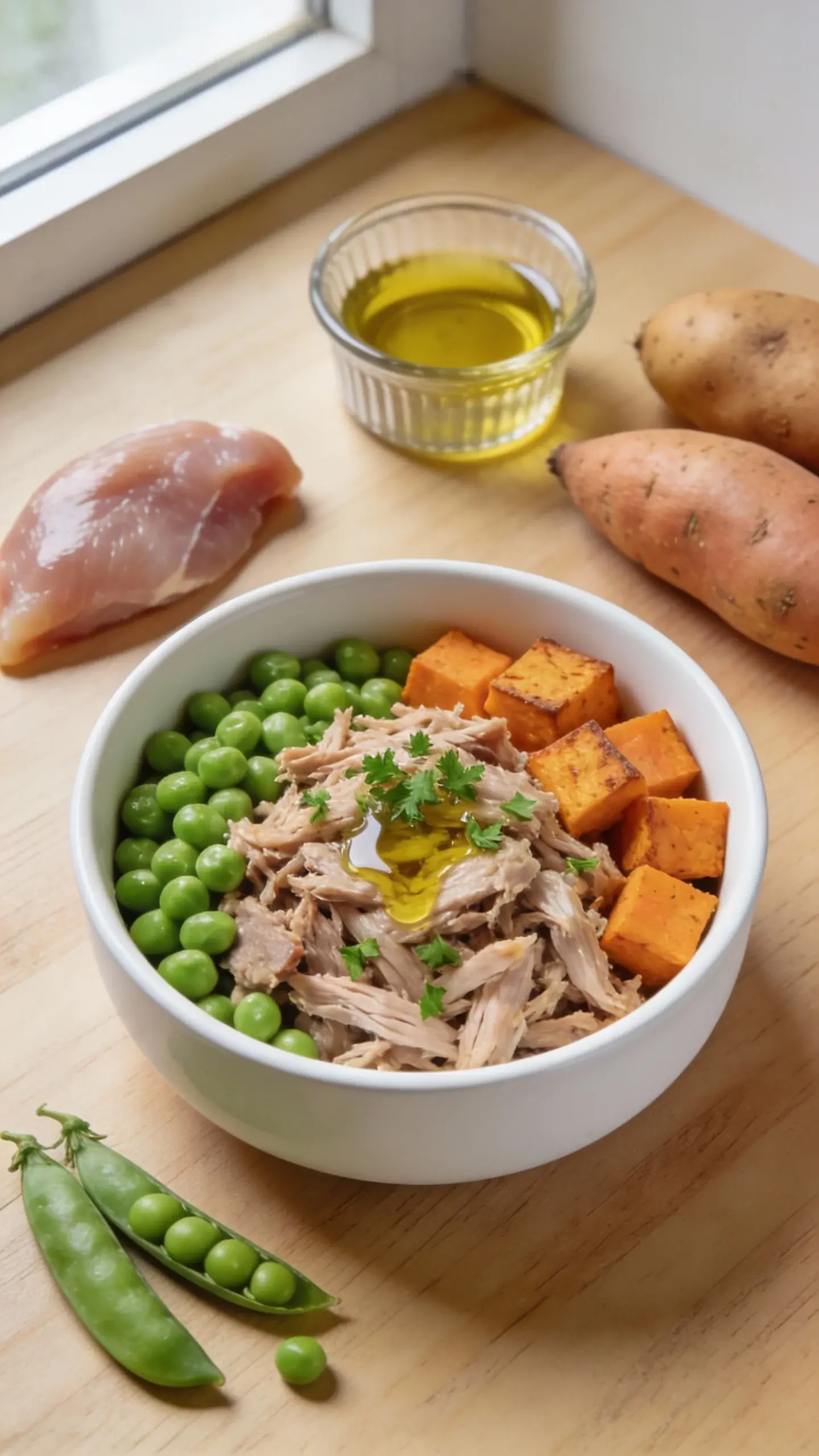
Homemade dog food can miss key nutrients if you don’t plan. Don’t panic—you just need to round it out smartly.
- Calcium: Essential if you don’t feed bones. Use ground eggshell powder (if no egg allergy), or a vet-recommended calcium supplement.
- Omega-3s: Algal oil works great if fish triggers allergies.
- Micronutrients: A canine multivitamin designed for homemade diets helps cover gaps.
- Fiber: Pumpkin, green beans, or psyllium (tiny amounts) can help stool quality.
How Much Calcium?
General guide: about 1,000–1,200 mg calcium per pound of cooked boneless meat. If eggs cause issues, skip eggshells and use a calcium carbonate supplement instead.
Simple, Allergen-Friendly Recipes to Try
These are templates, not holy scripture. Adjust amounts for your dog’s size and check with your vet for individualized needs, especially if your dog has a medical condition.
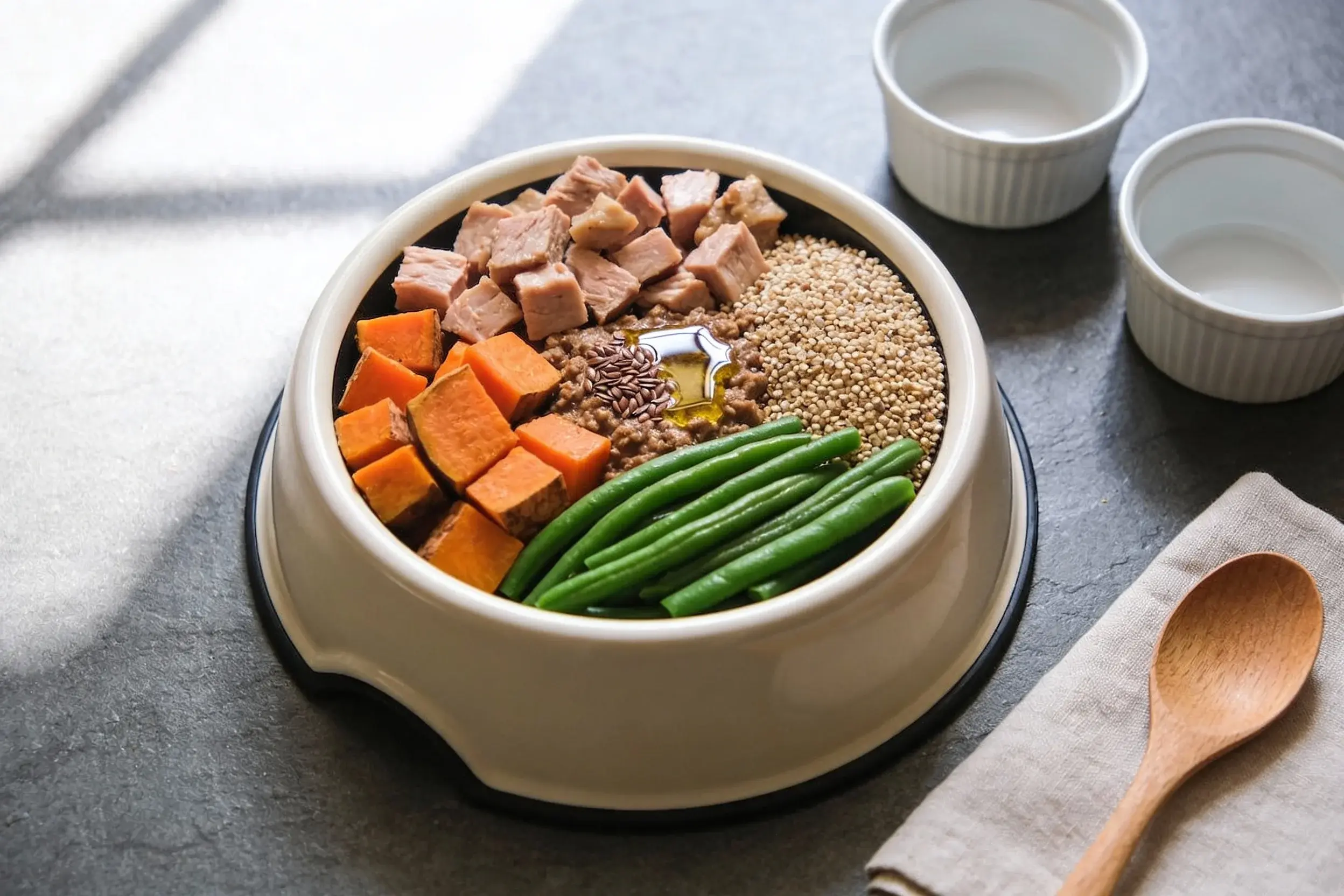
Recipe 1: Turkey + Sweet Potato Bowl
- Protein: 1 lb ground turkey (93% lean)
- Carb: 2 cups cooked sweet potato, mashed
- Veg: 1 cup chopped green beans, steamed
- Fat: 1 tbsp olive oil
- Add-ons: calcium supplement per label, algal oil per weight, canine multivitamin
Instructions:
- Brown turkey in a skillet. Drain excess fat if needed.
- Steam green beans until soft. Mash sweet potato.
- Combine everything, cool, then add supplements.
- Portion into meals and refrigerate up to 3 days or freeze.
Recipe 2: Pork + Pumpkin Comfort Mix
- Protein: 1 lb lean ground pork
- Carb: 1.5 cups white rice, cooked
- Veg/Fiber: 1 cup pumpkin puree (plain, not pie filling)
- Fat: 1 tbsp coconut oil
- Add-ons: calcium, algal oil, canine multivitamin
Instructions:
- Cook pork thoroughly and drain.
- Mix with rice and pumpkin.
- Stir in fats and supplements after cooling.
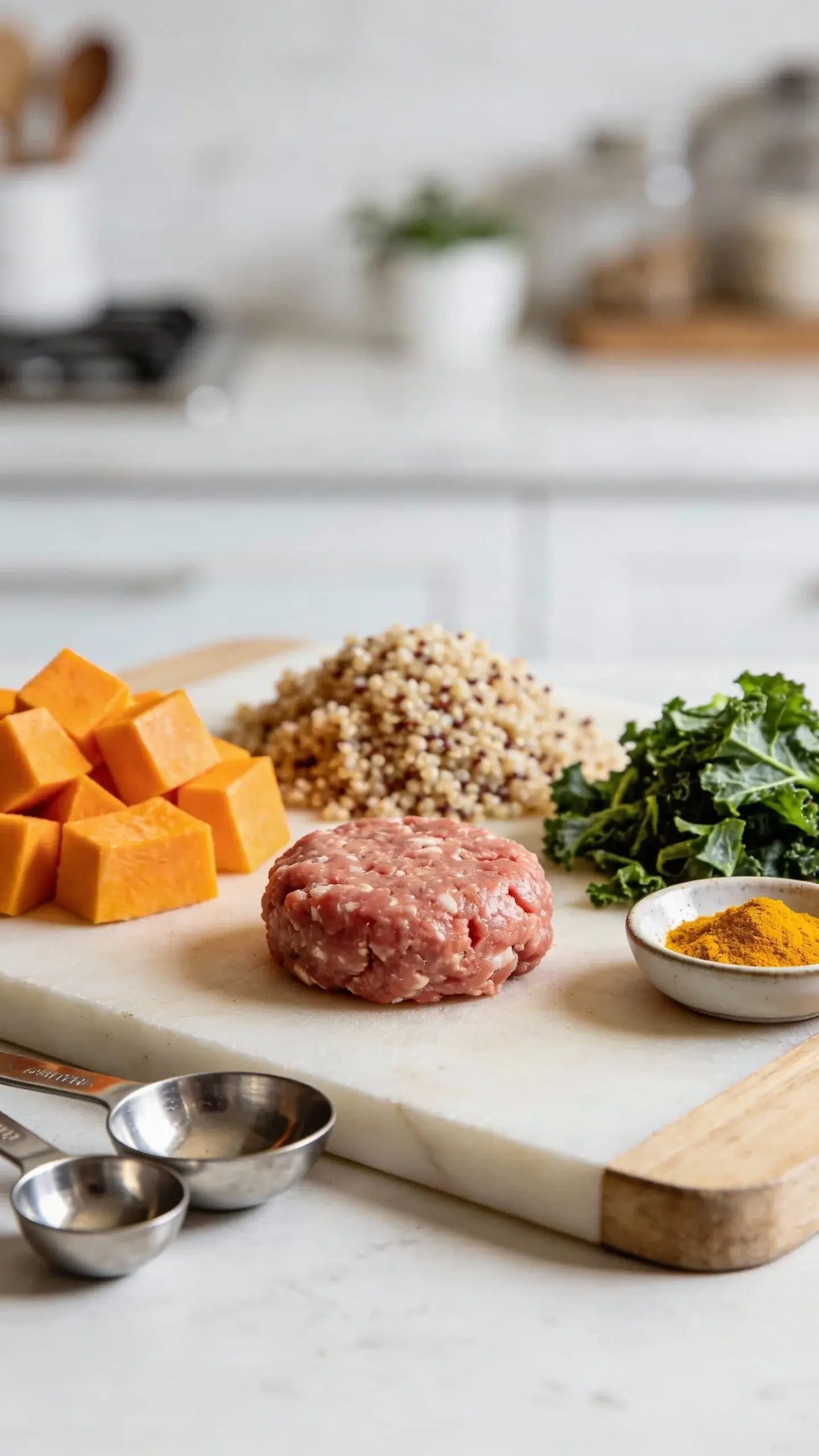
Recipe 3: Duck + Quinoa Power Bowl
- Protein: 1 lb ground duck
- Carb: 1.5 cups cooked quinoa (rinse well before cooking)
- Veg: 1 cup chopped zucchini, sautéed lightly
- Fat: 1 tsp olive oil (duck has more fat already)
- Add-ons: calcium, algal oil, multivitamin
Portioning tip: As a rough starting point, feed about 2–3% of your dog’s ideal body weight per day, split into two meals. Monitor weight and adjust. Ask your vet for precise calorie targets.
Avoid Cross-Contamination Like a Pro
If your dog reacts to a food, even tiny traces can cause issues. Treat your kitchen like a mini allergy lab.
- Dedicated tools: Use separate cutting boards and utensils for dog food prep.
- Label everything: Containers, scoops, even the spoon that lives in the algal oil.
- Clean surfaces: Hot soapy water after each session. Don’t be lazy. Your dog will know.
- Skip shared treats: Don’t undo your hard work with a random biscuit full of wheat.
Transition the Right Way (Because Tummy Drama Is Not Fun)
Switching too fast can upset your dog’s stomach—even if the new food is perfect. Go slow and keep notes.
7–10 Day Transition Plan
- Days 1–3: 25% new, 75% old food
- Days 4–6: 50/50 mix
- Days 7–9: 75% new, 25% old
- Day 10+: 100% new
If your dog gets itchy or gassy, pause and hold at the current ratio. If symptoms get worse, revert and reassess ingredients.
Track Results and Tweak Smartly
You can’t fix what you don’t measure. Keep a simple log to spot patterns.
- Daily notes: Itching score (0–10), stool quality, energy levels, any vomiting.
- Photos: Skin and paws weekly to track progress.
- One change at a time: Introduce new ingredients only after 10–14 stable days.
When to Call the Vet
- Persistent diarrhea or vomiting
- Weight loss or lethargy
- Ear infections that keep returning
A veterinary nutritionist can help design a complete elimination diet and ensure nutritional balance. FYI: Home cooking rocks, but expert input prevents accidental nutrient gaps.
FAQ
How do I know which ingredient my dog is allergic to?
You run an elimination diet: pick one novel protein and one carb your dog hasn’t eaten before, feed only that for 8–12 weeks, and monitor symptoms. If things improve, reintroduce one ingredient at a time and watch for flare-ups. It’s slow, but it’s the gold standard.
Can I use fish oil if my dog reacts to fish?
Probably not. If fish triggers your dog, fish oil can also cause reactions. Use algal oil instead for omega-3s. Same benefits, zero fish drama.
Is raw food better for allergies?
Not automatically. Allergies react to proteins whether raw or cooked. Cooking reduces pathogen risk and makes home prep safer. If you want to explore raw, do it with veterinary guidance and strict food safety.
Do I need a supplement if I cook at home?
Yes. You’ll need a calcium source and usually a canine multivitamin to cover micronutrients. Omega-3s help a lot, too. Homemade without supplements can lead to deficiencies long-term, and your dog deserves better than “close enough.”
What treats can I give during an elimination diet?
Use single-ingredient treats that match your chosen protein or carb: dehydrated turkey, baked sweet potato slices, or your homemade food formed into treats. Avoid mystery chews and anything with “natural flavors” (vague and suspicious, IMO).
Wrap-Up: You’ve Got This
Cooking allergy-friendly meals for your dog doesn’t need a culinary degree or a second mortgage. Choose a novel protein, pair it with gentle carbs, add the right supplements, and keep everything clean and consistent. Go slow, track results, and adjust with your vet’s help. Your dog will feel better, you’ll feel like a hero, and dinner time becomes drama-free—finally.
Printable Recipe Card
Want just the essential recipe details without scrolling through the article? Get our printable recipe card with just the ingredients and instructions.

I’ve spent 10+ years in dog training, digging into what makes dogs (and their humans) tick. At Smart Dog Learning, I share my no-nonsense, fun approach to training so you can enjoy life with a well-behaved, happy pup—no boring lectures, just practical results 😉