5 Dog Bath Tips For Puppy Owners
Puppy bath time doesn’t need to feel like a wrestling match in a slip-n-slide. With a few smart tweaks, you can turn the splash chaos into a calm, quick routine. You’ll protect their skin, build trust, and maybe even save your back. Ready to make your bathroom smell less like wet dog and more like victory? Let’s dive in.
Set the Stage Before You Turn on the Tap
You win bath time by prepping, not by chasing a sudsy puppy around the house. Gather everything you need and keep it within reach. That way, you never leave your pup unattended and you avoid the “oops, I forgot the towel” fiasco.
- Gear checklist: Puppy-safe shampoo, a large cup or spray hose, 2 towels, non-slip bath mat, cotton balls (for ears), soft brush, treats.
- Room temperature: Warm bathroom, warm water. If you shiver, they shiver.
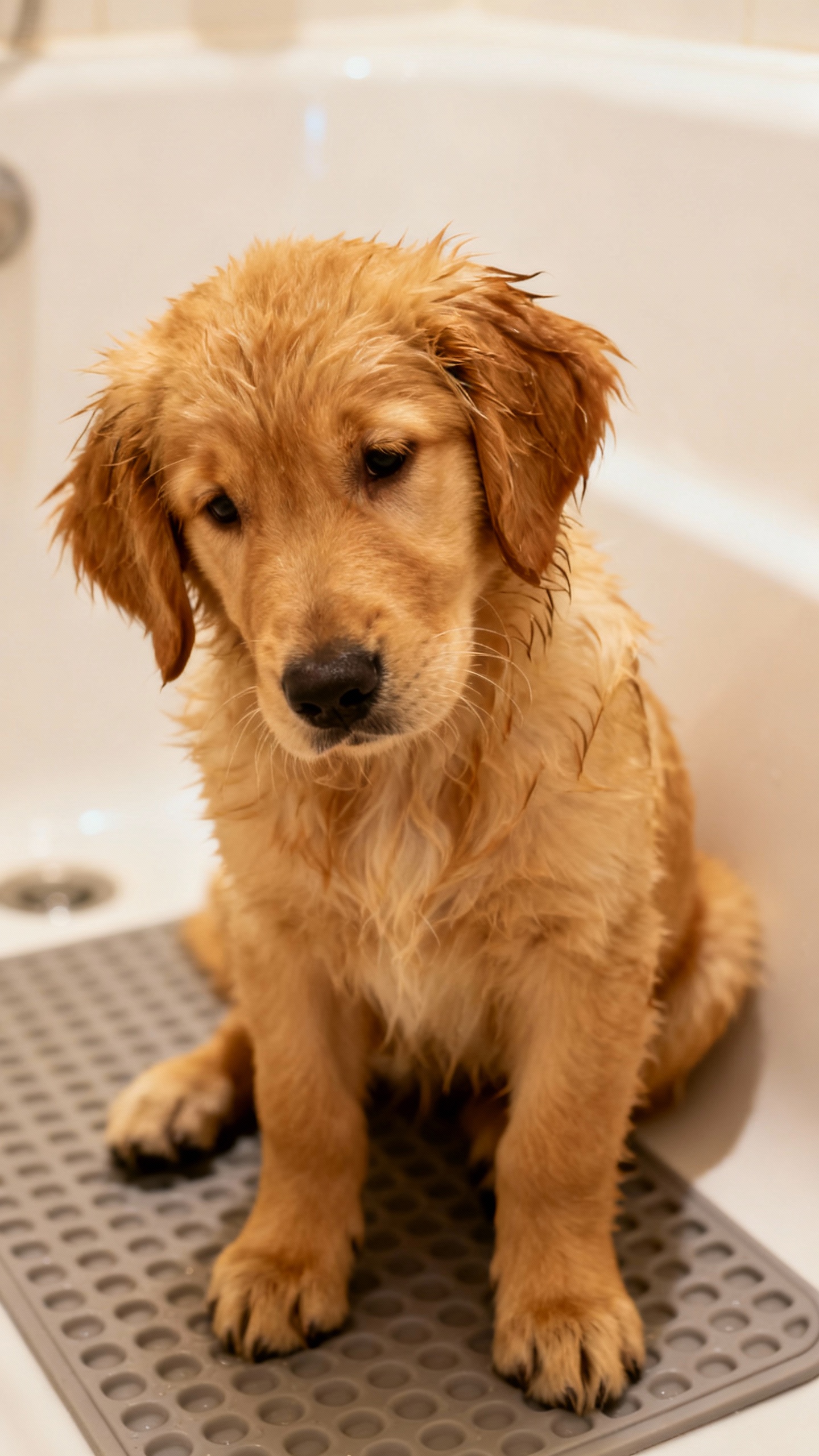
- Non-slip footing: A rubber mat or towel in the tub stops the “Bambi on ice” routine.
Warm Water: The Goldilocks Rule
Use lukewarm water—think baby bath, not hot tub. If it feels comfy on the inside of your wrist, you nailed it. Cold water shocks, hot water irritates, and lukewarm water makes puppies cooperate.
Train the Vibes: Make Bath Time Feel Safe
Your puppy reads your energy like a book. If you rush or worry, they freak out. Slow down, speak softly, and build positive associations.
- Treat trail: Toss treats into the bathroom and tub before turning on any water.
- Touch practice: Outside of bath day, gently handle paws, ears, and belly so nothing feels scary later.
- Short sessions: Keep early baths to 5–10 minutes. End on a win, not a meltdown.
Desensitize the Noisy Stuff
Let the water run while you feed a few treats. Bring the sprayer near without using it. Reward curiosity. You’re basically running a very cute, very wet confidence workshop.
Choose the Right Shampoo (And Use Less Than You Think)
Not all suds are equal. Puppies have sensitive skin, so you need a product that cleans gently and rinses easily.
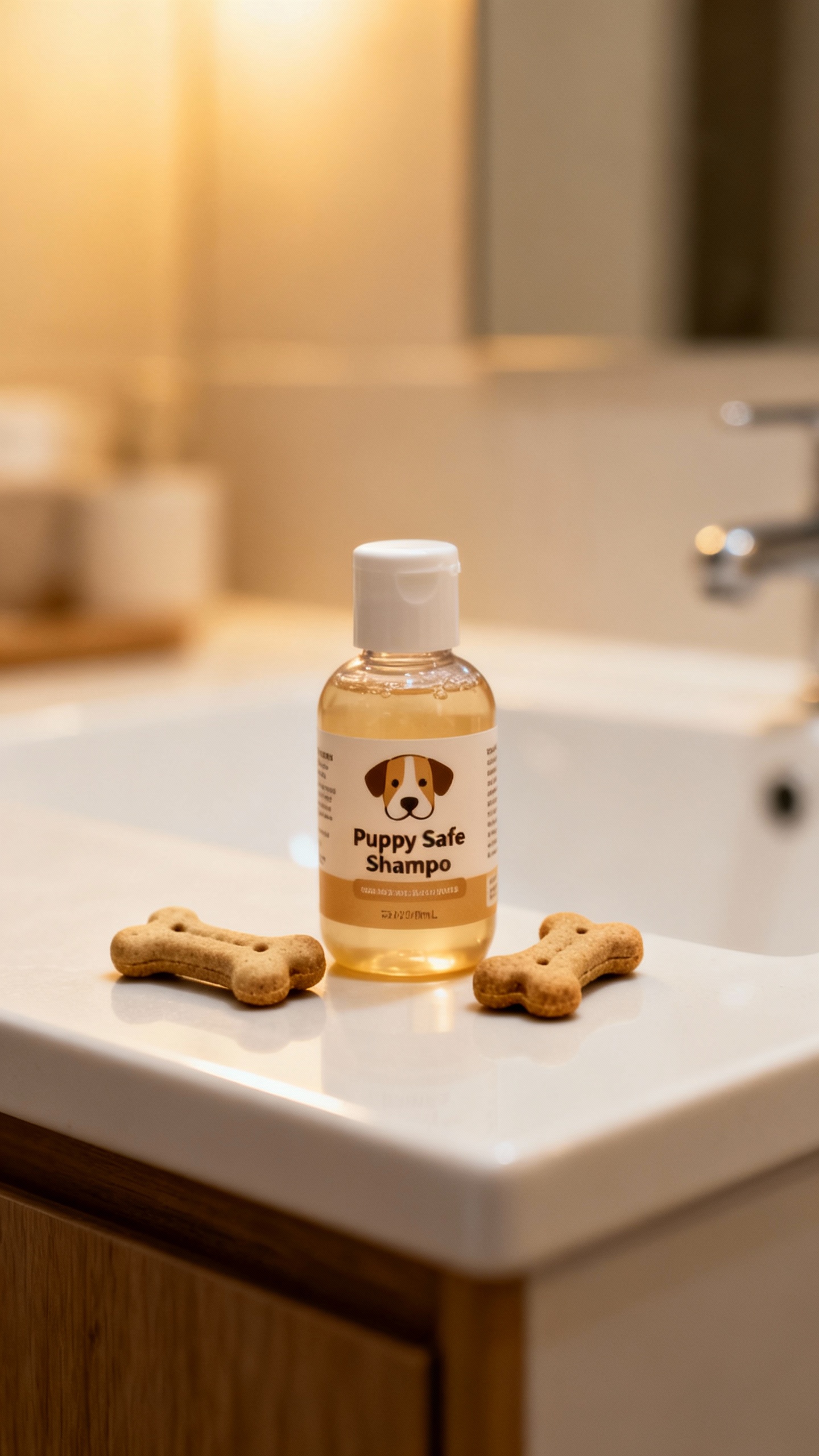
- Go puppy-specific: Look for “puppy” on the label or very mild, fragrance-light formulas.
- Avoid human shampoo: Different pH, more fragrance, more irritation. Just no.
- Dilute to distribute: Mix a small amount of shampoo with warm water in a squeeze bottle. You’ll cover more fur with less product.
Coat Types Matter, FYI
– Short coats: Quick lather, quicker rinse.
– Double coats (huskies, shepherds): Brush before and after. Shampoo must reach the skin.
– Curls/waves (poodles, doodles): Use a wide-tooth comb post-bath to prevent tangles.
Master the Wash-Rinse-Repeat (Spoiler: Don’t Repeat)
You don’t need two rounds of shampoo on a puppy unless they rolled in something unspeakable. Be thorough and gentle the first time.
- Wet slowly: Start at the neck, work down the back, then legs. Avoid blasting the face.
- Shampoo the body: Massage to the skin with your fingertips—not nails. Think relaxing spa, not scrub brush.
- Face cleaning: Use a damp cloth for the muzzle and around the eyes. Soap-free zone.
- Rinse forever: Keep rinsing until the water runs totally clear. Residue = itchiness and flakes.
Ear Safety 101
Water in ears equals future vet bills. Place a small cotton ball in each ear canal (not deep!) while you bathe. Remove them after and gently dry the ear flap. If your puppy shakes like a maraca, good—that helps.
Dry Like a Pro (And Protect the Zoomies)
Towel-drying beats letting them drip all over your sofa. Most puppies tolerate a towel burrito surprisingly well.
- First pass: Gentle squeeze-dry the coat before rubbing. Less friction, fewer tangles.
- Blow-dryer? Only on low heat, low speed, and introduce it slowly with treats. Keep the nozzle moving.
- Contain the chaos: Expect zoomies. Set them up in a warm, safe area so they don’t slip sprinting around corners.
Brush While Damp
For longer or double coats, a light brush during the drying process prevents mats. Work in small sections, reward often, and take breaks if needed. IMO, this is where good grooming habits really stick.
How Often Should You Bathe a Puppy?
Short answer: less than you think. Over-bathing dries skin and strips natural oils.
- General rule: Every 3–4 weeks for most puppies.
- Exceptions: Mud monsters and allergy pups may need more frequent rinses with water only or a vet-approved gentle wash.
- In between baths: Use dog grooming wipes, brush regularly, and spot-clean dirty areas.
Watch the Skin and Coat
Dandruff, redness, or constant scratching means you either bathed too often, didn’t rinse enough, or the product doesn’t agree with your pup. Adjust one variable at a time to troubleshoot. If issues persist, call your vet—Google can’t see your dog’s skin (unfortunately).
Turn Bath Time Into a Confidence Builder
You’re not just washing dirt—you’re shaping how your puppy handles new experiences. Create a consistent routine and keep it upbeat.
- Predictable steps: Same room, same tools, same order. Puppies love patterns.
- Reward generously: Treats mid-bath, not just after. Reinforce calm behavior in the moment.
- Quit while you’re ahead: End before your pup gets overwhelmed. Leave them wanting more—like a good TV episode.
Make It a Two-Person Operation (When Possible)
One person handles gentle restraint and feeding treats. The other washes and rinses efficiently. Teamwork makes the wet-dog work go faster.
FAQ
When can I give my puppy their first bath?
Once your puppy adjusts to your home and you confirm with your vet, you can bathe as early as 8 weeks. Keep it short, warm, and gentle. If they’re scared, start with wipe-downs and paw rinses first.
What temperature should the water be?
Use lukewarm water—comfortably warm on your wrist. Hot water dries and irritates skin, while cold water makes puppies tense and squirmy. Comfortable pups cooperate more, and you finish faster.
Can I use human shampoo on my puppy?
Nope. Human shampoos have a different pH and harsher fragrances. Choose a puppy-formulated shampoo with mild ingredients and minimal scent. Your dog’s skin will thank you.
How do I clean my puppy’s face safely?
Skip shampoo near the eyes and nose. Use a soft, damp cloth to wipe the muzzle, eye corners, and chin. For stubborn gunk, a tiny dab of puppy-safe, tearless shampoo on the cloth works—then wipe again with clean water.
My puppy hates baths—what now?
Break it down. Reward them for entering the bathroom, then the tub, then tolerating water near their paws. Keep sessions short and end with a jackpot treat. FYI, a lick mat on the tub wall can work miracles.
How do I stop the wet dog smell?
Rinse thoroughly, dry completely, and don’t overuse perfume sprays. If the smell lingers after proper drying, check ears and skin for irritation or infection. Persistent odor can signal a health issue—get a vet’s opinion.
Conclusion
Bath time doesn’t need drama. With the right prep, gentle handling, and smart gear, you’ll clean your puppy quickly and build trust along the way. Keep it warm, keep it positive, and keep the shampoo mild. IMO, a calm bath routine is one of the best gifts you can give your future grown-up dog—and your future, much drier self.
I’ve spent 10+ years in dog training, digging into what makes dogs (and their humans) tick. At Smart Dog Learning, I share my no-nonsense, fun approach to training so you can enjoy life with a well-behaved, happy pup—no boring lectures, just practical results 😉