How To Deep Clean Dirty Pans
Some pans just don’t look dirty—they tell a whole saga. Burnt rings, sticky grease, that mysterious brown crust that laughs at your sponge? Yep, we’re going to fix all of it. No judgment—only solutions. Grab a coffee (or a timer), because your pans are about to retire from the “disaster” category and rejoin civilized cookware.
Know Your Enemy: Pan Materials Matter
Different pans need different tactics. If you use the wrong method, you can ruin a finish or, worse, your mood. So let’s match the mess to the material.
- Stainless steel: Tough as nails. Handles heat, scrubbing, and acids well.
- Cast iron: Legendary—but needs love. Avoid soap overload and never soak forever.
- Nonstick: Fragile. Skip abrasives and super high heat.
- Enameled cast iron: Durable coating, but avoid metal scouring pads.
- Copper and aluminum: Reactive. Watch your acids and abrasives.
Quick Rule of Thumb
If you wonder “Can I scrub this like it owes me money?” the answer is usually yes for stainless steel, sometimes for cast iron, and a big no for nonstick and enamel.
The Boil-and-Release Method (For Stuck-On Gunk)
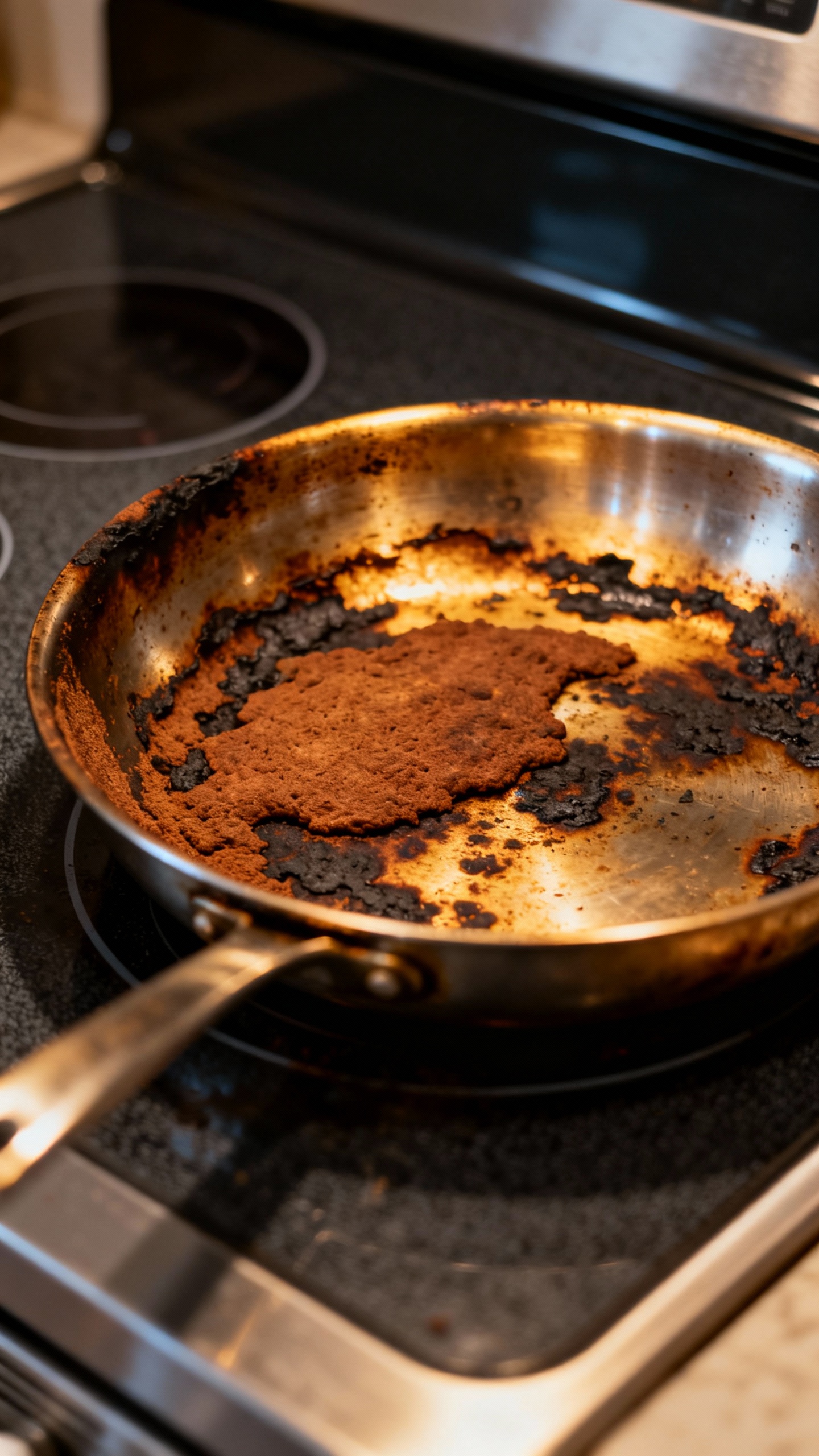
When burnt bits cling like drama, use heat and water to make them let go. Works like a charm on stainless and enameled pans.
- Deglaze with water: Add enough water to cover the stuck areas. Bring it to a boil for 5–10 minutes.
- Scrape gently: Use a wooden spoon while it simmers. The heat loosens the bond. Magic.
- Add a helper (optional): For extra muscle, add a splash of vinegar or a squeeze of lemon. FYI, skip acids on raw aluminum.
- Cool, then wash: Dump the murky water, then hand-wash with dish soap.
When to Upgrade the Attack
If the scorch marks remain, move to baking soda or a specialized cleaner. Don’t keep boiling forever—you’re cooking a story, not stock.
Baking Soda: Your Budget-Friendly MVP
Baking soda (sodium bicarbonate, if we’re feeling fancy) gently abrades without scratching most surfaces.
- For stainless steel: Make a paste (3 parts baking soda, 1 part water). Spread it on, let it sit 15–20 minutes, then scrub with a sponge or nylon brush.
- For enameled cast iron: Use a thinner paste and a soft sponge. Rinse well.
- For nonstick: Only use a mild paste on the outside or very gently inside. No heavy scrubbing. IMO, avoid unless necessary.
Boost It with Dish Soap
Grease and sugar burns sometimes need surfactants. Add a few drops of dish soap to your paste for a degreasing boost.
Stainless Steel: From Rainbow Tints to Mirror Shine
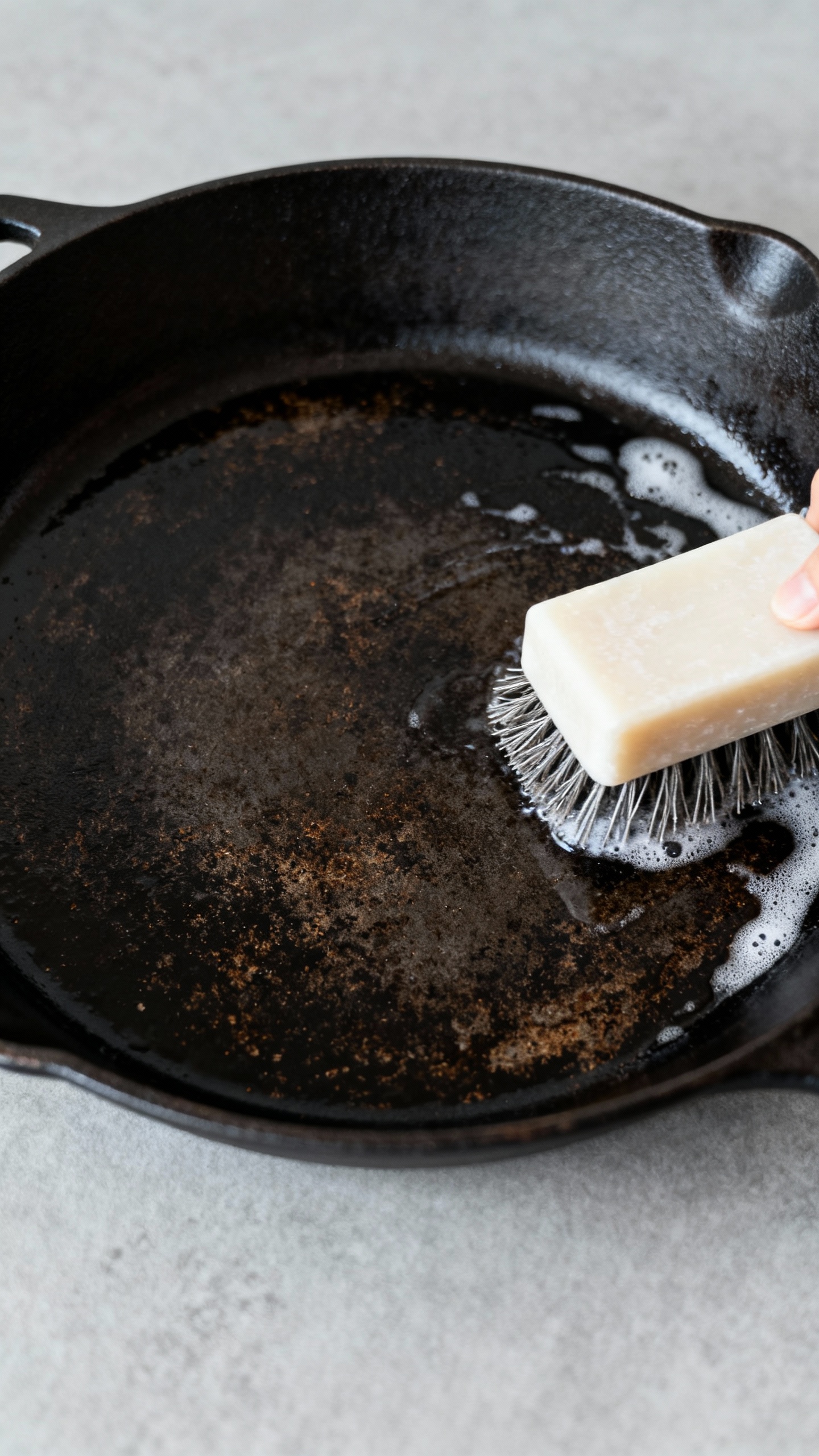
Stainless takes heat like a champ, but it shows every crime you commit. Good news: it forgives.
- Rainbow discoloration: Wipe with vinegar or Bar Keepers Friend. Rinse thoroughly.
- Brown scorch: Baking soda paste first. If stubborn, upgrade to Bar Keepers Friend or a similar oxalic-acid cleanser.
- Exterior polish: Use a non-abrasive cream and buff along the grain.
Pro Moves
– Boil water with a spoonful of baking soda to loosen interior gunk fast.
– Use a non-scratch scrub pad. Steel wool can work, but it may haze the finish—your call.
Cast Iron: Clean It Without Losing the Seasoning
Cast iron deserves respect. You can strip it, but let’s try not to.
- Scrape first: Use a chainmail scrubber or a plastic scraper. No soaking marathons.
- Salt scrub: Add coarse salt and a tiny bit of water or oil. Scrub to lift stuck bits.
- Rinse and dry: Heat it on low to evaporate water. Don’t let it air-dry—rust loves that.
- Re-oil: Wipe a thin film of neutral oil while warm. Buff until it looks barely shiny.
Emergency Resets
If you accidentally stripped seasoning (it happens), coat lightly with oil and bake upside down at 450°F (232°C) for 1 hour. Place foil below to catch drips. Let it cool in the oven. Repeat 2–3 times if needed.
Nonstick: Treat It Like a Tired Celebrity
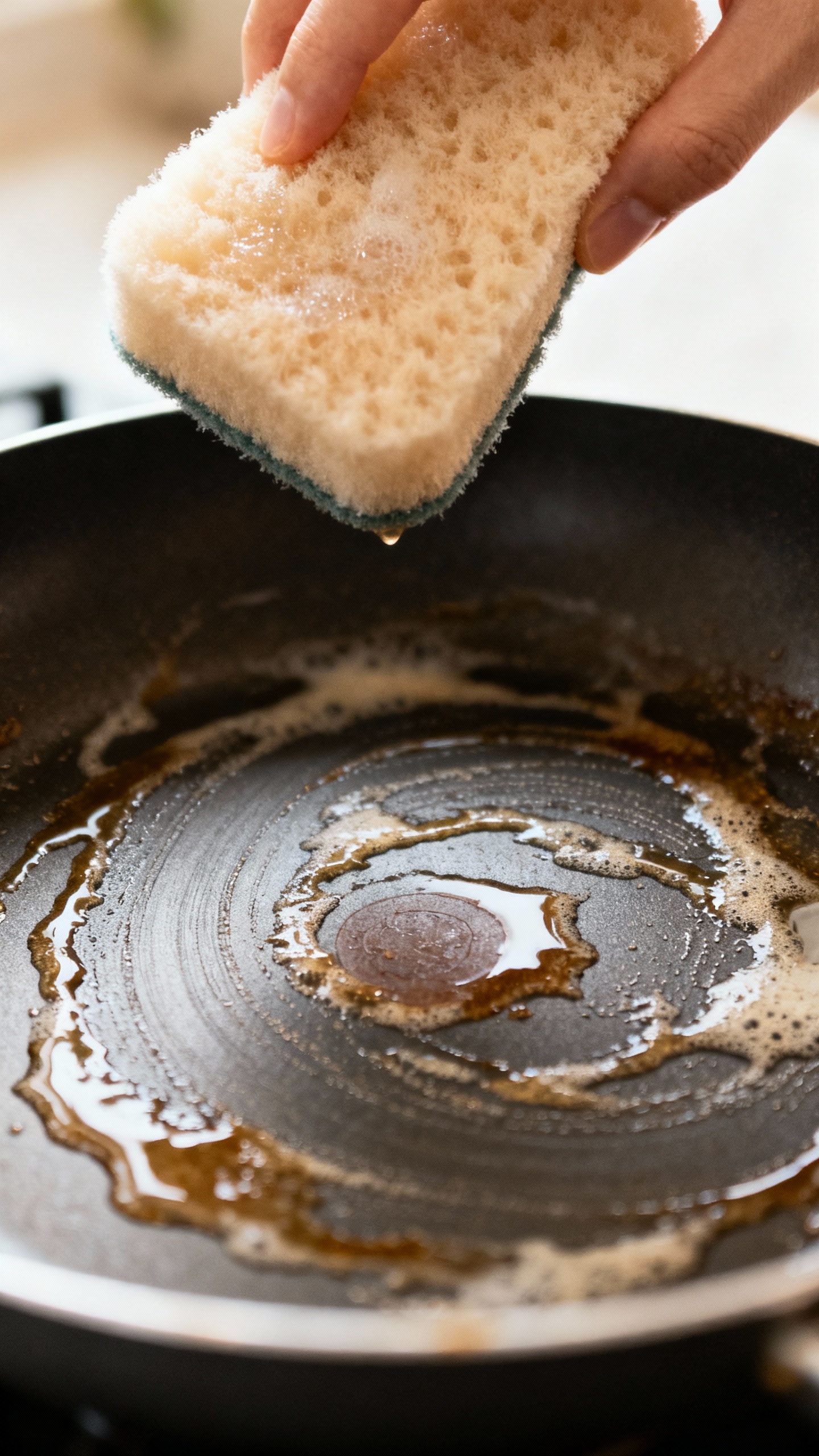
Nonstick hates rough treatment. Handle it gently, and it’ll last.
- Soak and wipe: Warm, soapy water for 20–30 minutes, then a soft sponge. No abrasive pads, ever.
- Baking soda bath: For oily buildup, simmer 1 cup water + 2 tbsp baking soda for 10 minutes. Cool and wash.
- Exterior care: You can scrub the outside more, but keep harsh products away from the coating.
When to Say Goodbye
If food sticks no matter what, or you see scratches or flaking, retire it. FYI, a compromised coating defeats the whole point.
Enameled Cast Iron: Keep It Creamy, Not Scratchy
This workhorse looks pretty and cooks evenly. Keep abrasives light.
- Soak smart: Fill with hot water and a dash of dish soap. Let it sit 30–60 minutes. Avoid long soaks overnight.
- Baking soda boost: Sprinkle, then scrub with a soft sponge.
- Tannin stains: Use diluted bleach (1 tbsp bleach per 1 qt water), soak 5–10 minutes, rinse extremely well. Use sparingly.
Don’t Do This
No metal scouring pads. No knife-edge scraping on the enamel. You’ll regret it.
For the Truly Cursed Pans: Heavy-Duty Options
If you inherited a pan that looks like it survived a campfire, go nuclear—but safely.
- Oven cleaner (exterior only): Works on burnt grease outside stainless or cast iron. Wear gloves, ventilate, and keep it away from nonstick and aluminum. Rinse like your life depends on it.
- Bar Keepers Friend or oxalic cleaners: Amazing for stainless interiors. Don’t overuse on aluminum.
- Lye bath for cast iron: Advanced method to strip seasoning completely. Follow strict safety steps, then re-season. Not for casual Sunday cleaning.
If It’s Sticky, It’s Probably Polymerized Oil
Sticky residue often comes from overheated oils. Heat + mild abrasives + patience fix it. On stainless, a round of Bar Keepers Friend usually does the trick.
Preventative Habits That Save Your Sanity
Good habits beat heroic scrubbing. Future you will send a thank-you note.
- Preheat properly: Add oil after the pan warms. Food sticks less, burns less.
- Use enough fat: Dry pans invite scorching, especially for proteins.
- Deglaze right away: After cooking, add water while the pan’s warm. Loosens bits before they fossilize.
- Avoid aerosol sprays on nonstick: They leave sticky residues. Use bottled oil or butter.
- Hand-wash promptly: Don’t let pans sit with crust for days. IMO, 10 minutes now beats 60 later.
FAQ
Can I use vinegar on every pan?
Use vinegar on stainless and enamel without drama. Avoid it on raw aluminum and cast iron (it can strip seasoning and cause pitting). On nonstick, use it diluted and rarely, and rinse well.
Is dishwasher safe actually safe?
For stainless, usually yes, though it can dull the shine over time. For nonstick, cast iron, and many enamel pieces, hand-wash only. The dishwasher’s harsh detergents and heat can wreck coatings or seasoning.
How do I get rid of that burnt sugar or caramel mess?
Soak with hot water, then boil with water plus a tablespoon of baking soda for 10–15 minutes. Scrape with a wooden spoon. Follow with a baking soda paste if needed. Sugar burns look scary but surrender to heat and patience.
What if my cast iron rusted?
Scrub the rust with steel wool or a chainmail scrubber until bare metal shows. Rinse, dry over heat, then re-season with a thin coat of oil at high oven temps. Rust happens. You can fix it.
Why does my stainless pan always stick?
Likely too cold or too hot, or not enough fat. Preheat until a drop of water beads and dances, then add oil, then food. Also, don’t force a flip—wait until the food releases naturally.
Can I use steel wool on anything?
Use it on cast iron and, if you accept cosmetic scratches, on stainless. Skip it for nonstick, enamel, copper, and aluminum. Non-scratch nylon pads handle 90% of jobs anyway.
Conclusion
You don’t need fancy gadgets—just heat, time, and a few humble cleaners. Match the method to the material, escalate wisely, and don’t panic when things look gnarly. Clean it, season or polish if needed, and you’re back in business. Your pans will look better, cook better, and, FYI, stop silently judging you from the cabinet.

I’ve spent 10+ years in dog training, digging into what makes dogs (and their humans) tick. At Smart Dog Learning, I share my no-nonsense, fun approach to training so you can enjoy life with a well-behaved, happy pup—no boring lectures, just practical results 😉