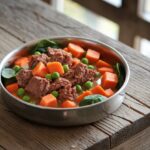
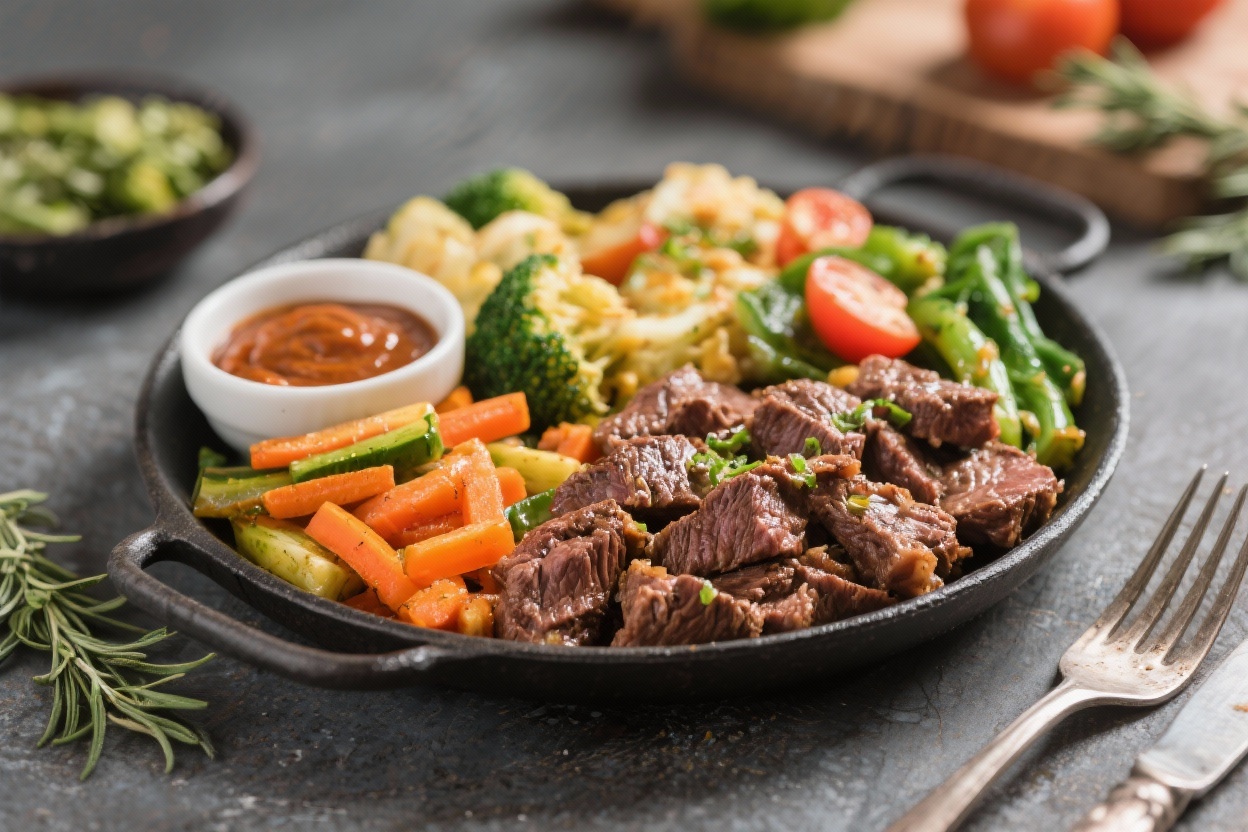
DIY Beef and Veggie Dog Meal – A Simple, Nutritious Home-Cooked Recipe
Homemade dog food doesn’t have to be complicated. This DIY Beef and Veggie Dog Meal keeps things simple while offering real, wholesome ingredients you can feel good about. It’s an easy recipe that works for busy weekdays, picky eaters, and dogs with sensitive stomachs.
If you’ve been curious about cooking for your dog, this is a great place to start. Always remember to chat with your vet if you’re planning to switch your dog to homemade meals long-term.
What Makes This Special
This recipe uses lean ground beef, dog-friendly vegetables, and fiber-rich starches to create a balanced, tasty meal. It avoids heavy seasoning, added salt, and common irritants, keeping your dog’s tummy happy.
It’s also flexible, so you can swap ingredients based on what your dog tolerates best. Most importantly, it’s quick to make and easy to portion for the week.
Shopping List
- Lean ground beef (90–95% lean), 2 pounds
- Brown rice, 2 cups uncooked (or rolled oats if preferred)
- Carrots, 2 large, finely diced
- Green beans, 2 cups, chopped (fresh or frozen)
- Peas, 1 cup (optional, frozen is fine)
- Pumpkin puree (plain, unsweetened), 1 cup
- Spinach, 2 cups, chopped
- Olive oil or salmon oil, 1–2 tablespoons
- Eggs, 2 large (optional for extra protein and nutrients)
- Calcium source (veterinary-approved supplement or finely ground eggshell), per label directions
- Canine multivitamin/mineral supplement (optional but recommended for daily feeding)
- Water or low-sodium bone broth (no onion), as needed
Instructions
- Cook the rice. Rinse 2 cups of brown rice and cook according to package directions with water or low-sodium bone broth. Set aside to cool.
- Brown the beef. In a large skillet or pot over medium heat, cook the lean ground beef until fully browned.
Drain excess fat to keep the meal lighter.
- Add the firm veggies. Stir in the diced carrots and chopped green beans. Add a splash of water or broth, cover, and steam for 5–7 minutes until tender.
- Stir in peas and spinach. Add peas and chopped spinach. Cook for 2–3 more minutes until the greens wilt and everything looks bright and tender.
- Mix in pumpkin. Remove from heat and stir in the pumpkin puree for fiber and moisture.
- Optional eggs. Crack 2 eggs into the hot mixture and stir briskly to gently cook them through.
This adds extra protein and texture.
- Combine with rice. In a large bowl or the same pot, fold the cooked rice into the beef and veggie mixture until evenly combined.
- Add healthy fats. Drizzle in olive oil or salmon oil and stir well. This boosts omega fatty acids and helps with coat health.
- Cool completely. Let the meal cool to room temperature before portioning. This helps avoid condensation and keeps the texture nice.
- Add supplements just before serving. Mix in a calcium source and canine multivitamin according to product directions.
Do not over-supplement.
How to Store
- Refrigerator: Store in airtight containers for up to 4 days.
- Freezer: Portion into single servings and freeze for up to 2–3 months. Label with dates.
- Thawing: Thaw overnight in the fridge. Warm gently before serving, but avoid hot temperatures.
- Serving temperature: Serve slightly warm or at room temp.
Very hot food can burn your dog’s mouth.
Benefits of This Recipe
- High-quality protein: Lean beef supports muscles and energy without extra fat.
- Digestive support: Pumpkin, carrots, and green beans provide fiber to help keep stools regular.
- Balanced carbs: Brown rice adds steady energy and is usually gentle on the stomach.
- Micronutrients: Spinach and peas offer vitamins like A, K, and B-vitamins, plus plant-based antioxidants.
- Healthy fats: Olive or salmon oil supports skin, coat, and joint health.
- Hydration boost: The moisture from veggies and pumpkin helps dogs who don’t drink enough water.
Pitfalls to Watch Out For
- Skipping calcium: Homemade meals without bone or calcium can create long-term deficiencies. Always include a vet-approved calcium source.
- Seasoning mistakes: Do not add salt, onion, garlic, chives, or heavy spices. These can be harmful to dogs.
- Too much fat: Avoid fatty beef and leftover grease, which can trigger pancreatitis in sensitive dogs.
- Portion creep: Homemade food can be calorie-dense.
Measure portions to prevent weight gain.
- Rushing transitions: If switching from kibble, transition gradually over 5–7 days to prevent stomach upset.
Alternatives
- Protein swaps: Use ground turkey, chicken, or venison if your dog prefers them. Choose lean cuts and cook thoroughly.
- Carb options: Try sweet potato, quinoa, or rolled oats instead of rice. Cook until soft and easy to digest.
- Veggie swaps: Zucchini, broccoli florets, or butternut squash can replace carrots or beans.
Keep pieces small and well-cooked.
- Low-allergen version: For sensitive dogs, simplify to beef, sweet potato, and zucchini, then add one new ingredient at a time.
- Broth booster: Add a spoonful of plain, unsalted bone broth for picky eaters and extra flavor.
FAQ
How much should I feed my dog?
Portions vary by size, age, and activity. As a general starting point, feed about 2–3% of your dog’s body weight per day, split into two meals. For example, a 50-pound dog might start around 1 to 1.5 pounds of food daily.
Adjust based on weight changes and your vet’s guidance.
Can I use white rice instead of brown rice?
Yes. White rice is gentler for upset stomachs and cooks faster. It has fewer nutrients than brown rice, but in a balanced recipe with protein, veggies, and supplements, it works well.
Is this complete and balanced for long-term feeding?
It can be, but only if you include a proper calcium source and ideally a canine multivitamin/mineral supplement.
For long-term feeding, ask your vet or a board-certified veterinary nutritionist to review your dog’s diet.
Can I add salt or herbs?
Skip salt and avoid onions, garlic, chives, and leeks. Small amounts of dog-safe herbs like parsley or oregano are generally fine, but keep it light. The goal is clean, simple flavor.
What if my dog has a sensitive stomach?
Start with smaller portions and a slow transition.
Use simpler carbs like white rice and stick to mild veggies like zucchini or pumpkin. If symptoms persist, consult your vet.
Can I cook this in an Instant Pot?
Yes. Brown the beef on sauté mode, then add rice, veggies, and broth.
Pressure cook for 6–8 minutes with a natural release. Stir in pumpkin and oil after cooking.
How long will it last in the fridge?
Stored in airtight containers, it stays fresh for about 4 days. Freeze any extra in single-meal portions to keep it from going to waste.
Is ground beef safe for all dogs?
Most dogs do fine with lean beef, but those with beef allergies or pancreatitis may need alternatives like turkey or white fish.
Always choose fully cooked, lean protein.
In Conclusion
This DIY Beef and Veggie Dog Meal is a practical, wholesome option for pet parents who want more control over what goes in the bowl. It’s simple to make, easy to tweak, and friendly to most dogs’ stomachs. With the right supplements and portions, it can fit into a complete, balanced feeding plan.
If you’re unsure about long-term use, your vet can help tailor it to your dog’s needs.
Printable Recipe Card
Want just the essential recipe details without scrolling through the article? Get our printable recipe card with just the ingredients and instructions.

I’ve spent 10+ years in dog training, digging into what makes dogs (and their humans) tick. At Smart Dog Learning, I share my no-nonsense, fun approach to training so you can enjoy life with a well-behaved, happy pup—no boring lectures, just practical results 😉