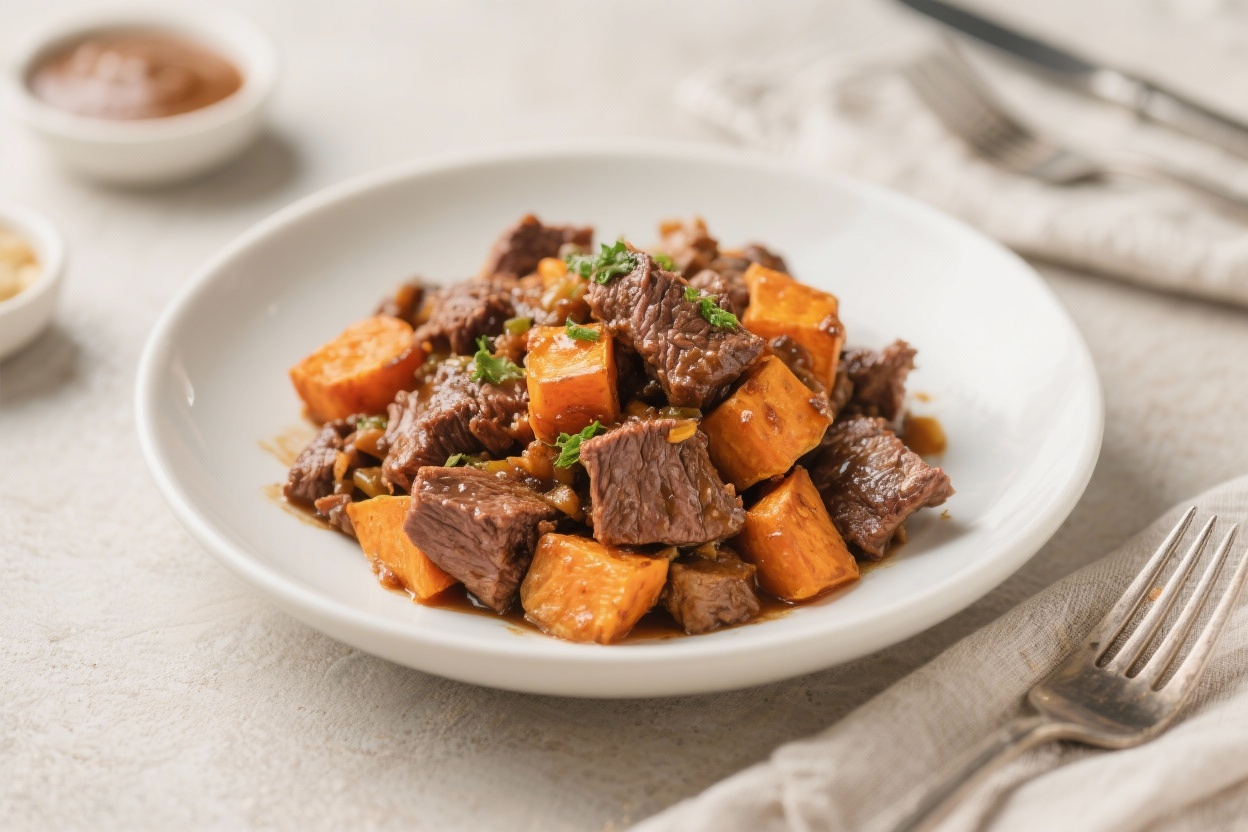
Beef and Sweet Potato Homemade Dog Food – Simple, Nutritious, and Picky-Eater Approved
Homemade dog food doesn’t have to be complicated. This Beef and Sweet Potato recipe is straightforward, budget-friendly, and usually a hit with even the pickiest pups. It’s made with real ingredients you recognize and can pronounce, and it lets you control exactly what goes into your dog’s bowl.
If your dog has a sensitive stomach or you just want a cleaner option than many canned foods, this is a great place to start. You’ll cook it in one pot, portion it out, and feel good about serving it.
Why This Recipe Works
- Balanced basics: Lean ground beef provides protein and iron, while sweet potatoes add fiber, vitamins, and a gentle carb source that’s easy on the stomach.
- Digestible and soothing: Sweet potato helps firm up stools, and the simple ingredient list reduces the chance of upset tummies.
- Customizable: You can adjust the veggies, switch grains, or tweak textures based on your dog’s preferences and needs.
- Easy to batch-cook: One pot, 30–45 minutes, and you’ve got meals for the week.
- Great for picky eaters: The natural sweetness of sweet potato and the aroma of beef make it appealing without needing added flavors.
Shopping List
- 2 pounds lean ground beef (90% or leaner)
- 2 large sweet potatoes (about 2 to 2.5 pounds), peeled and diced
- 1 cup white rice or brown rice (optional but helpful for bulk and energy)
- 1 cup carrots, diced (fresh or frozen)
- 1 cup green beans, chopped (fresh or frozen)
- 2–3 cups low-sodium beef or chicken broth, or water
- 2 tablespoons olive oil or salmon oil
- 1–2 teaspoons ground flaxseed or chia seeds (optional for omega-3s and fiber)
- Dog-safe multivitamin/mineral supplement and/or canine omega-3 supplement (as recommended by your vet)
How to Make It
- Prep the ingredients: Peel and dice the sweet potatoes into small cubes. Dice the carrots and chop the green beans.
Rinse the rice if using.
- Brown the beef: In a large pot or deep skillet, warm 1 tablespoon oil over medium heat. Add the ground beef and cook until browned, breaking it into small crumbles. Drain excess fat if needed.
- Add veggies and liquid: Stir in sweet potatoes, carrots, and green beans.
Add broth or water until ingredients are just covered.
- Cook the rice (if using): Add rice to the pot. Bring to a gentle boil, then reduce to a simmer.
- Simmer until tender: Cook 20–25 minutes, stirring occasionally, until sweet potatoes are soft and rice is done. Add more liquid if the mixture gets too dry.
- Finish with healthy fats: Turn off heat.
Stir in remaining oil and the ground flaxseed or chia if using. Let the mixture cool completely.
- Portion appropriately: Once cool, divide into daily servings based on your dog’s size and activity level. Add a vet-recommended canine multivitamin/omega-3 supplement to each portion as directed.
- Serve: Offer slightly warmed or room temperature.
Start by mixing with your dog’s current food and transition over 5–7 days.
How to Store
- Refrigerator: Store in airtight containers for up to 4 days.
- Freezer: Portion into single-meal containers or freezer bags and freeze for up to 3 months. Label with date and serving size.
- Reheating: Thaw overnight in the fridge. Warm gently on the stove or in the microwave until just warm, not hot.
Stir well and check for hot spots.
Why This is Good for You
- Whole-food ingredients: You know exactly what your dog is eating—no fillers, artificial flavors, or mystery by-products.
- Nutrient-dense: Beef offers protein, iron, and B vitamins. Sweet potatoes bring beta-carotene, potassium, and fiber. Veggies add antioxidants.
- Flexible for sensitivities: This simple base is easy to adapt if your dog has common food sensitivities or needs a gentler diet.
- Portion control: Home cooking gives you direct control over calories, fat, and add-ins to maintain a healthy weight.
Pitfalls to Watch Out For
- Skipping supplements: Homemade food can fall short on micronutrients like iodine, zinc, vitamin D, and others.
Use a vet-recommended canine multivitamin/mineral and omega-3.
- Too much fat: Avoid high-fat beef. Excess fat can cause stomach upset or pancreatitis in sensitive dogs.
- Overcooking or drying out: Keep it moist. Add extra broth or water if it thickens too much while cooking or reheating.
- Unsafe add-ins: Never use onion, garlic, chives, leeks, raisins, grapes, high-sodium broth, or seasoning blends.
Keep it plain and dog-safe.
- Portion mistakes: Calories add up. Measure portions based on your dog’s weight and activity, and adjust with your vet’s guidance.
Variations You Can Try
- Protein swap: Use ground turkey, chicken, or lean pork. If using turkey or chicken, add a little extra oil for healthy fats.
- Grain-free option: Skip rice and add more sweet potato or a bit of cauliflower rice for bulk.
- Leafy greens: Stir in chopped spinach or kale during the last 5 minutes of cooking for extra vitamins.
- Pumpkin boost: Add 2–4 tablespoons of plain canned pumpkin per pound of food for fiber and tummy support.
- Herbal hint: A small pinch of dried parsley can freshen breath.
Keep amounts modest and avoid any strong herbs.
FAQ
How much should I feed my dog?
Portions vary by weight, age, and activity. As a general starting point, many dogs do well with 2–3% of their body weight in food per day, split into two meals. For a 25-pound dog, that’s roughly 8–12 ounces daily.
Monitor weight and adjust, and ask your vet for personalized guidance.
Do I need supplements if I’m using whole foods?
Yes. Whole foods are great, but homemade diets can still miss key micronutrients. A canine-specific multivitamin/mineral and a dog-safe omega-3 supplement help round out the diet.
Follow product dosing or your vet’s recommendation.
Can I use sweet potato skins?
You can, but many dogs digest peeled sweet potatoes more easily. If your dog handles fiber well, leaving the skin on is fine—just wash thoroughly and cut into small pieces.
Is this safe for puppies?
Puppies have higher protein, calcium, and energy needs. This recipe can be adapted, but you should work with your vet or a veterinary nutritionist to make sure it meets growth requirements.
In many cases, a complete puppy formula or a vet-designed home-cooked plan is best.
Can I make this in an Instant Pot or slow cooker?
Yes. For Instant Pot, sauté the beef first, then add ingredients and cook on Manual/High for 8–10 minutes with a natural release. For slow cooker, brown the beef, then cook on Low for 4–6 hours or High for 2–3 hours, adding more liquid as needed.
What if my dog has a beef sensitivity?
Swap beef for turkey or chicken and keep the rest of the recipe the same.
Introduce new proteins gradually and watch for itching, ear issues, or digestive upset.
How long can I store leftovers?
Refrigerated portions last up to 4 days. Frozen portions keep up to 3 months. Always smell and inspect the food before serving, and reheat gently.
Can I season it to make it tastier?
Skip salt and spices.
The beef and sweet potatoes are flavorful on their own, and added seasonings can be unsafe for dogs. If you want more aroma, a splash of low-sodium broth works.
Will this help with diarrhea or soft stools?
Often, yes. The fiber in sweet potatoes and the simple ingredient list can help.
If diarrhea persists more than a day or two, consult your vet to rule out other issues.
Can I add eggs?
Yes. Scramble 1–2 eggs and stir them in at the end for extra protein. Eggs are nutrient-dense and usually well tolerated.
Wrapping Up
Beef and Sweet Potato Homemade Dog Food keeps things simple, tasty, and nourishing.
It’s easy to make in batches, gentle on sensitive stomachs, and flexible enough to fit most dogs’ needs. With the right supplements and portions, it can be a wholesome part of your dog’s routine. Start small, see how your dog responds, and enjoy the peace of mind that comes with home-cooked meals.

I’ve spent 10+ years in dog training, digging into what makes dogs (and their humans) tick. At Smart Dog Learning, I share my no-nonsense, fun approach to training so you can enjoy life with a well-behaved, happy pup—no boring lectures, just practical results 😉